15 Craft Ideas for Visually Impaired Adults

Losing some or all of your sight does not mean giving up the joy of making things. Many crafts rely far more on touch, sound, and smell than on vision.
Your fingers can count stitches, shape clay, and feel when a knot sits tight. Crafting also builds confidence, keeps hands nimble, and gives a calm break from a busy day.
This guide shares 15 craft ideas for visually impaired adults, each picked because it works by touch.
You will find simple setups, helpful tools, and small tips that make each project easier. Some suit total beginners. Others offer a fresh challenge for experienced makers.
1. Small Frame Loom Weaving
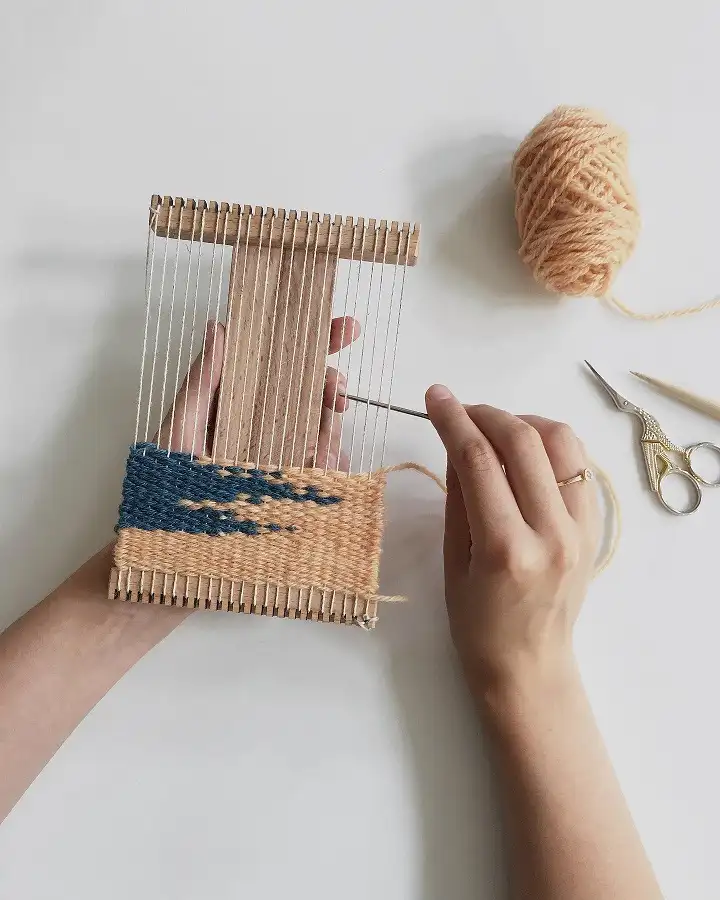
A palm sized wooden loom rests in one hand while the other guides a long metal needle through cream warp threads.
Peach yarn fills the lower rows, and a band of deep teal breaks into jagged points across it. Nearby lie a ball of the same peach wool, gold stork scissors, and a wooden stick for packing rows.
Why it works:
- Notched bars: each warp thread sits in its own groove, so fingers can count them.
- Simple rhythm: over one, under the next, which is easy to follow by feel.
- Small scale: the whole piece fits in your lap and grows fast.
Make it easier: Use a blunt tapestry needle with a big eye, and pick wool that feels thicker than the warp. Your fingers will tell the two apart at once, and the weft covers the warp faster.
2. Colorwork Knit Beanie
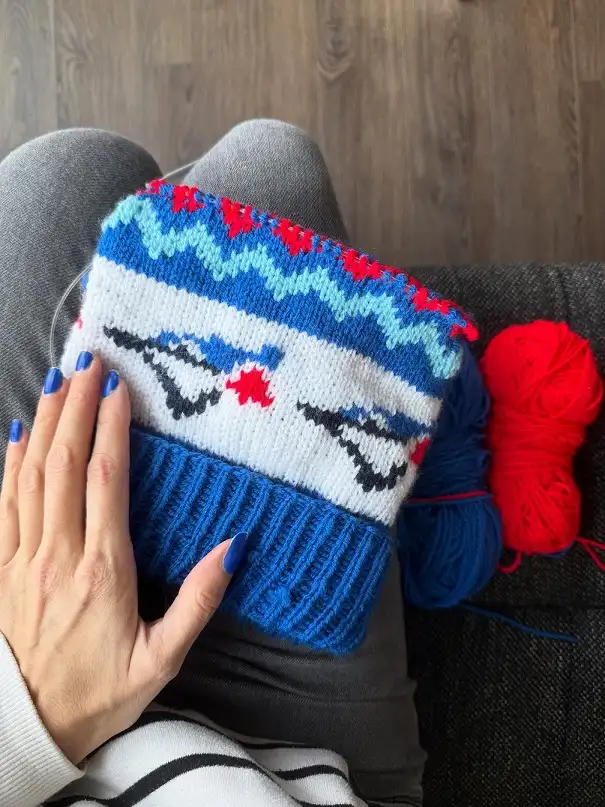
Project formula: soft acrylic yarn + circular needles + a ribbed brim + one simple chart.
This hat sits half finished on circular needles, resting on the knitter’s lap. Its royal blue brim uses a deep rib.
Above it runs a white band with black and blue shapes, small red diamonds, and a light blue zigzag, while skeins of red and cobalt yarn wait beside it.
Knitting in the round suits knitters with low vision because you never turn the work.
Ribbing helps too, since knit and purl columns feel like ridges and valleys under your fingertips. Count by touch and the brim takes shape.
Try instead: Several strands at once can tangle. Start with a plain hat in one bold shade, then add a single stripe by changing yarn at the start of a round. Pick yarns with different textures so you always know which strand you hold.
3. Carved Clay Rainbow Tray
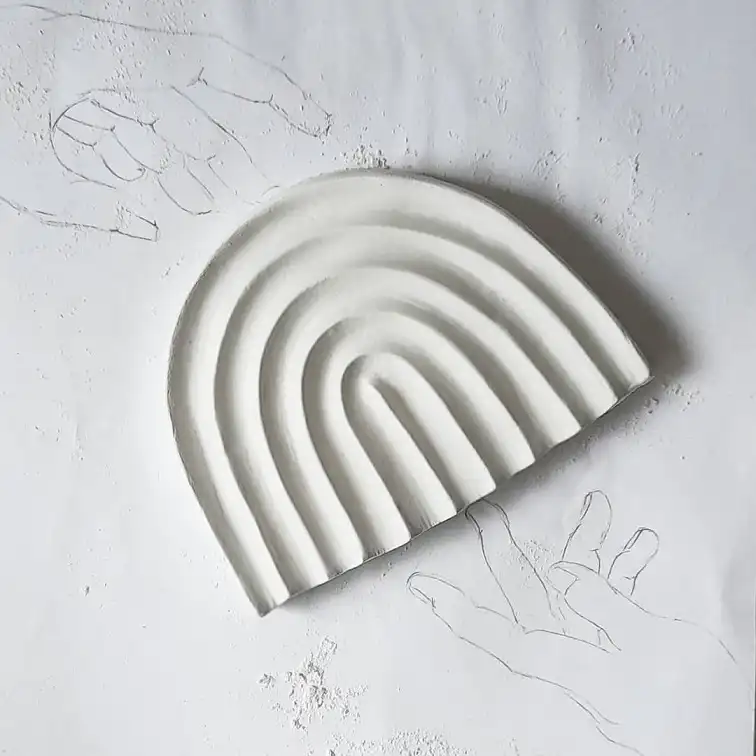
Deep grooves define this small white rainbow made from clay. Five rounded arches curve inside one another, with narrow channels between them. Fine white dust and pencil sketches of hands cover the paper underneath.
Relief work like this suits makers who rely on touch. You can trace each arch with one finger and feel straight away if a ridge runs too thin.
Roll coils of clay, press them side by side, then smooth the seams with a damp thumb.
Little trays make handy catchalls for keys or rings, which gives the project a real purpose.
Let the piece dry slowly under a loose cloth so the edges stay whole. Once hard, sand any rough spots with fine paper and feel for snags as you go.
4. Crochet Triangle Kerchief
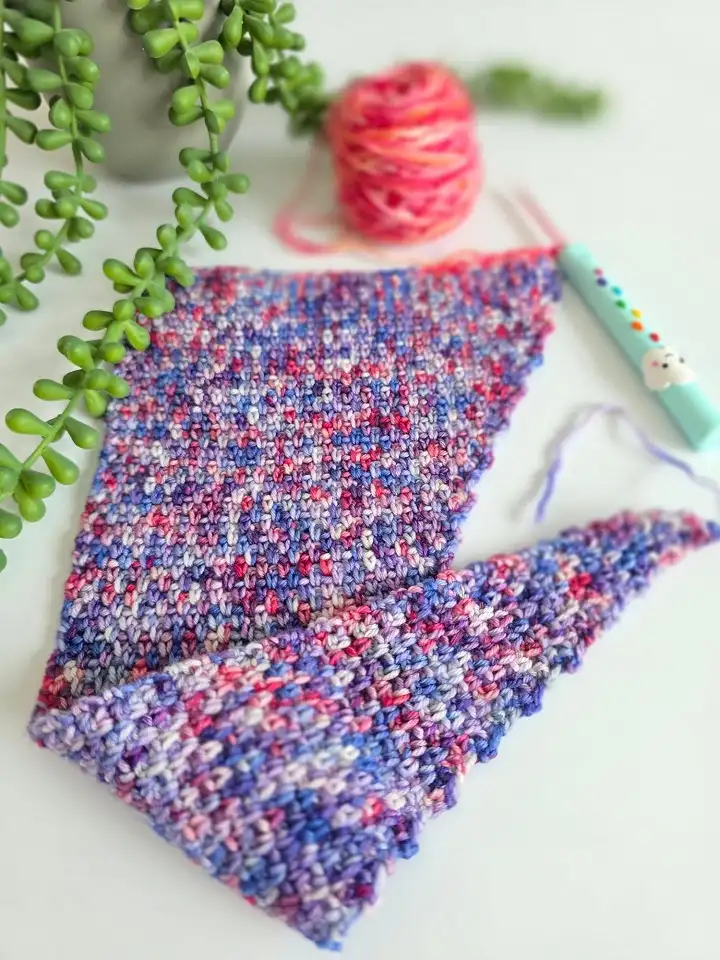
Copy this:
- Yarn: a variegated skein in pink, violet, cornflower blue, and white
- Hook: a chunky mint handle decorated with rainbow dots
- Stitch: a tight, even stitch that forms a pebbly texture
- Finishing touch: the loose lavender tail, woven in last
Growing from a narrow point, this triangle widens by one stitch at the end of each row. Behind it waits a cake of hot pink speckled yarn for the next section.
Variegated yarn does the color work for you, so there is no need to track shades or switch balls, which makes crochet one of the easiest crafts for blind adults to start.
Comfort upgrade: That soft, fat handle matters more than it looks. It spreads pressure across your palm, so your hand stays relaxed through long sessions. Pair it with smooth, plied yarn that will not split around the hook.
5. Macramé Hat Hangers
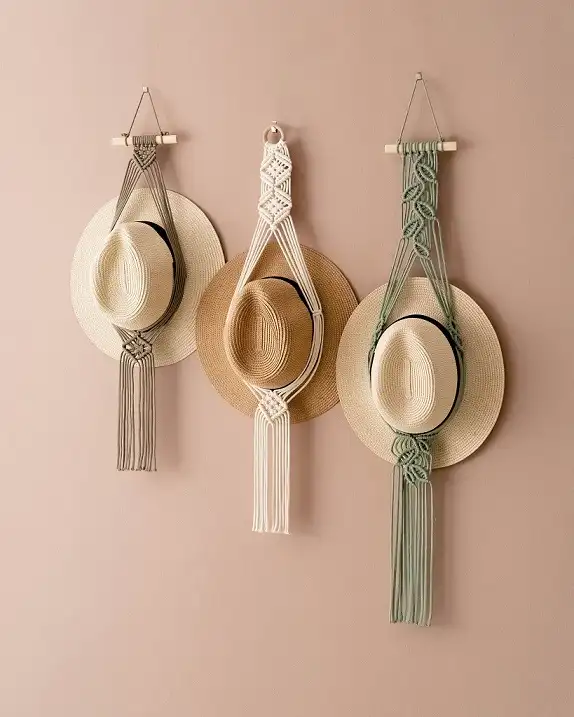
Best for: beginners who want a useful wall piece finished in one afternoon.
Three hangers hold straw fedoras against a blush pink wall. On the left sits taupe cord, in the middle cream, and on the right sage green.
Each one starts at a wooden dowel or ring, splits into a cradle for the hat, and ends in a long fringe.
Subscribe to DIY Craft Bloom
Get updates on the latest posts and more from DIY Craft Bloom straight to your inbox.
Macramé ranks among the friendliest craft ideas for visually impaired adults because every knot has a shape you can feel.
A square knot lies flat and wide. Leaf knots, like the ones on the green hanger, add a raised pattern your fingertips can check.
Upgrade: Choose soft cotton cord around 4mm thick. It slides well, holds a knot firmly, and feels far kinder on hands than jute. Clip the dowel to a door handle so the work hangs at chest height while you tie.
6. Stacked Gemstone and Pearl Bracelets
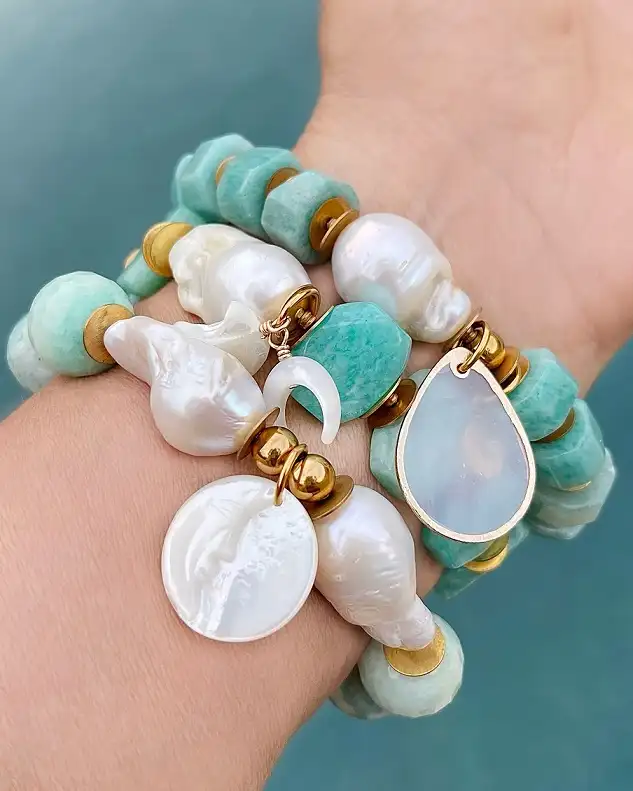
Three bracelets stack on one wrist here. Chunky aqua amazonite beads, some faceted and some cut into hexagons, alternate with lumpy baroque pearls and flat gold spacers.
Charms hang from small gold rings: a mother of pearl crescent, a round shell coin, and a teardrop framed in gold.
Texture note: Each material feels different. Pearls are smooth but uneven, the stone feels cool and angular, and the spacers are thin and flat. That contrast lets you plan a pattern by touch alone.
Easy setup: Choose big beads with wide holes and string them on elastic cord. Set each bead type in its own cup of a muffin tin so you always know where to reach.
Skip this: Tiny seed beads make a poor first project. They roll off trays and vanish into carpet.
7. Latch Hook Moss Rug
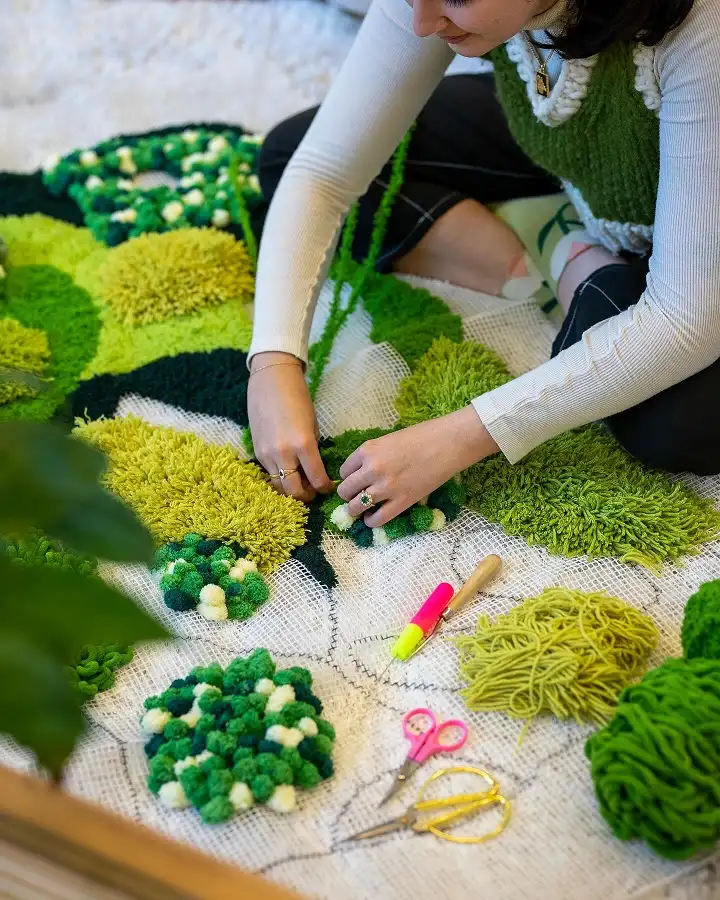
Kneeling over a large rug canvas, a maker works on a design that looks like a forest floor. Shaggy patches in lime, olive, and emerald sit beside dark green loops and clusters of small pom poms in cream and green.
Bundles of cut yarn, a latch hook with a pink and yellow handle, and two pairs of scissors lie on the mesh.
Why it works:
- Grid canvas: the open mesh guides every knot into a square you can find by touch.
- One motion: hook, wrap, pull, and the knot is done.
- Forgiving pile: loose yarn ends hide small gaps, so mistakes rarely show.
Texture idea: Mix pile lengths and yarn types the way this rug does. Long strands, tight loops, and pom poms each feel distinct, which turns the finished rug into a map your hands can read.
8. Painted Paper Collage
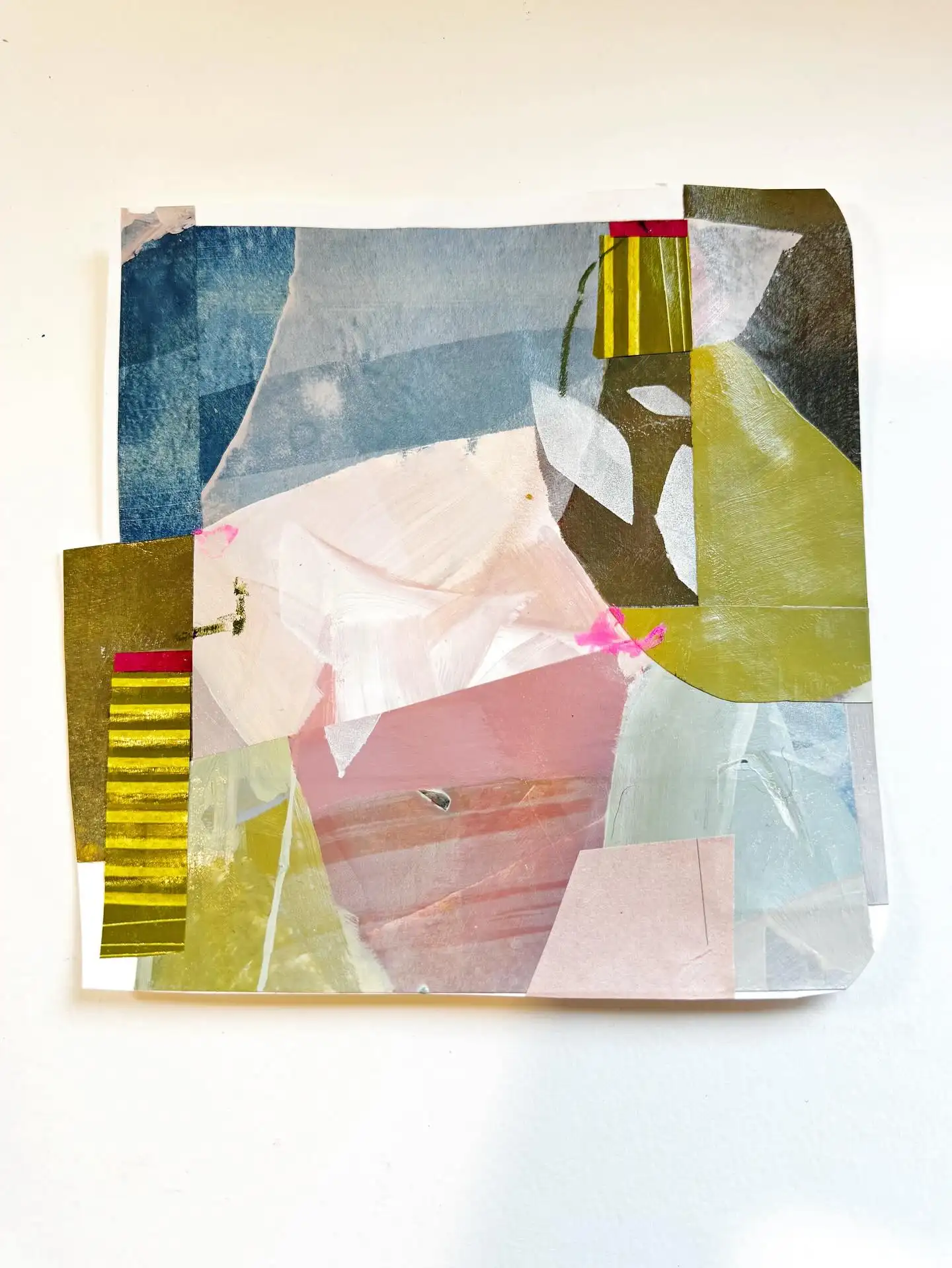
Painted papers overlap in this square collage like puzzle pieces. Dusty blue fills the top, soft pink pools in the center, and olive green wraps the right side.
Two strips of gold corrugated foil, each capped in deep red, add stripes, while small flicks of neon pink pop at the edges.
Collage is a forgiving choice among tactile crafts for adults with low vision. There are no rules about placement.
You can tear shapes by hand, feel each edge, and press pieces down wherever they feel right.
Different papers bring the piece alive for the maker as well as the viewer. Corrugated card, smooth stock, and thin tissue all read differently under your palm.
Keep a glue stick close rather than wet glue, since it lands only where you press and dries clean.
9. Oil Pastel Drawing
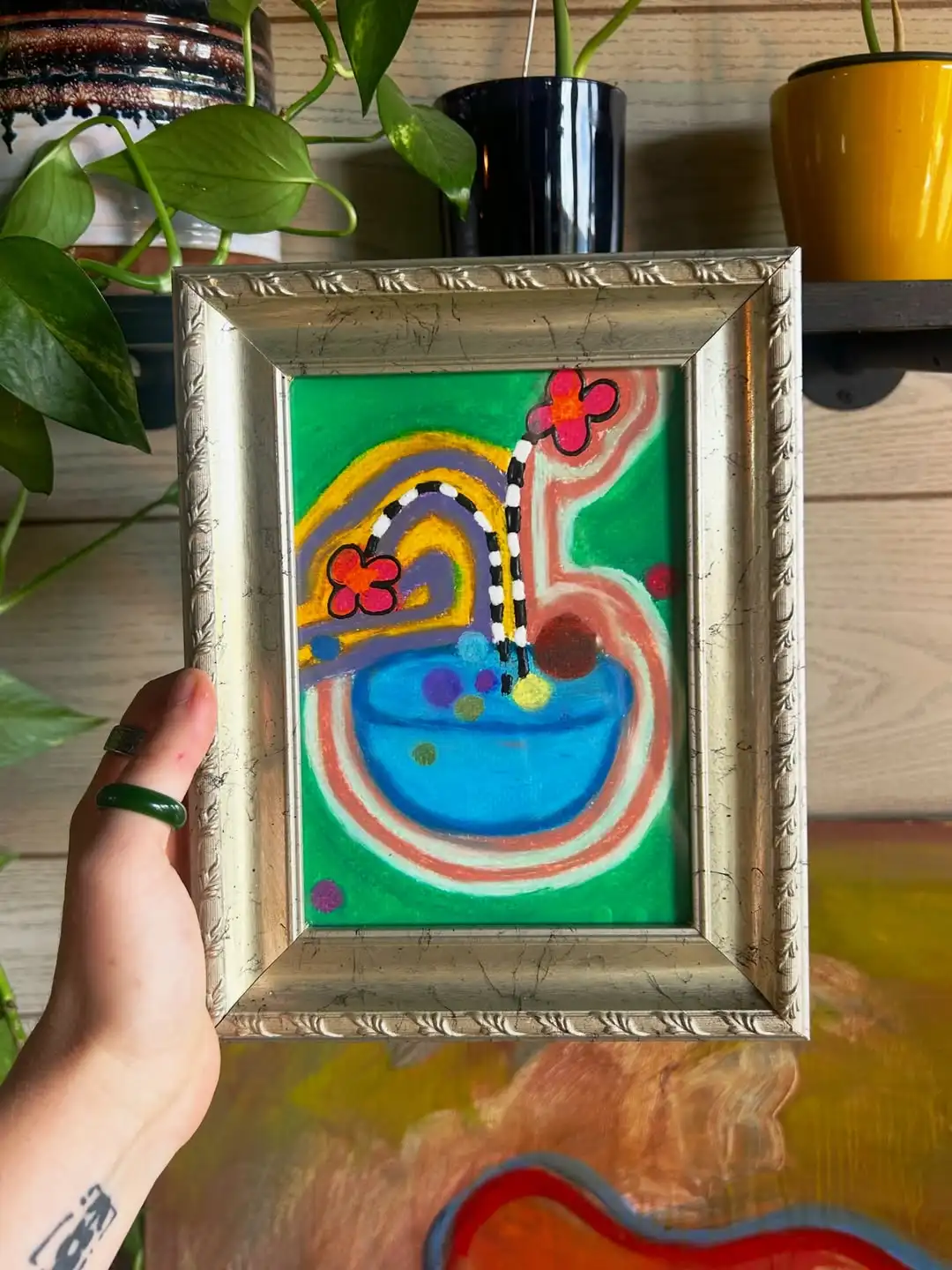
Drawing formula: oil pastels + heavy paper + glue outlines + a bold frame.
A hand holds up a small drawing set in an ornate silver frame. Bright green fills the background, and a turquoise bowl sits near the bottom.
Two pink flowers with orange centers rise on black and white dotted stems, wrapped in bands of yellow, lavender, and coral, with colored dots scattered around them.
Pastels like these glide on thick and waxy, so you can feel where you have already colored.
Try drawing outlines in school glue first and letting them dry overnight. Those raised lines act like fences that keep each shape inside its border.
Color note: Strong contrast helps if you keep some sight. Notice how the black outlines here make the pink petals stand out. Ask a friend to label pastel wrappers in braille or large print so finding a shade takes seconds.
10. Peg Board Pixel Art
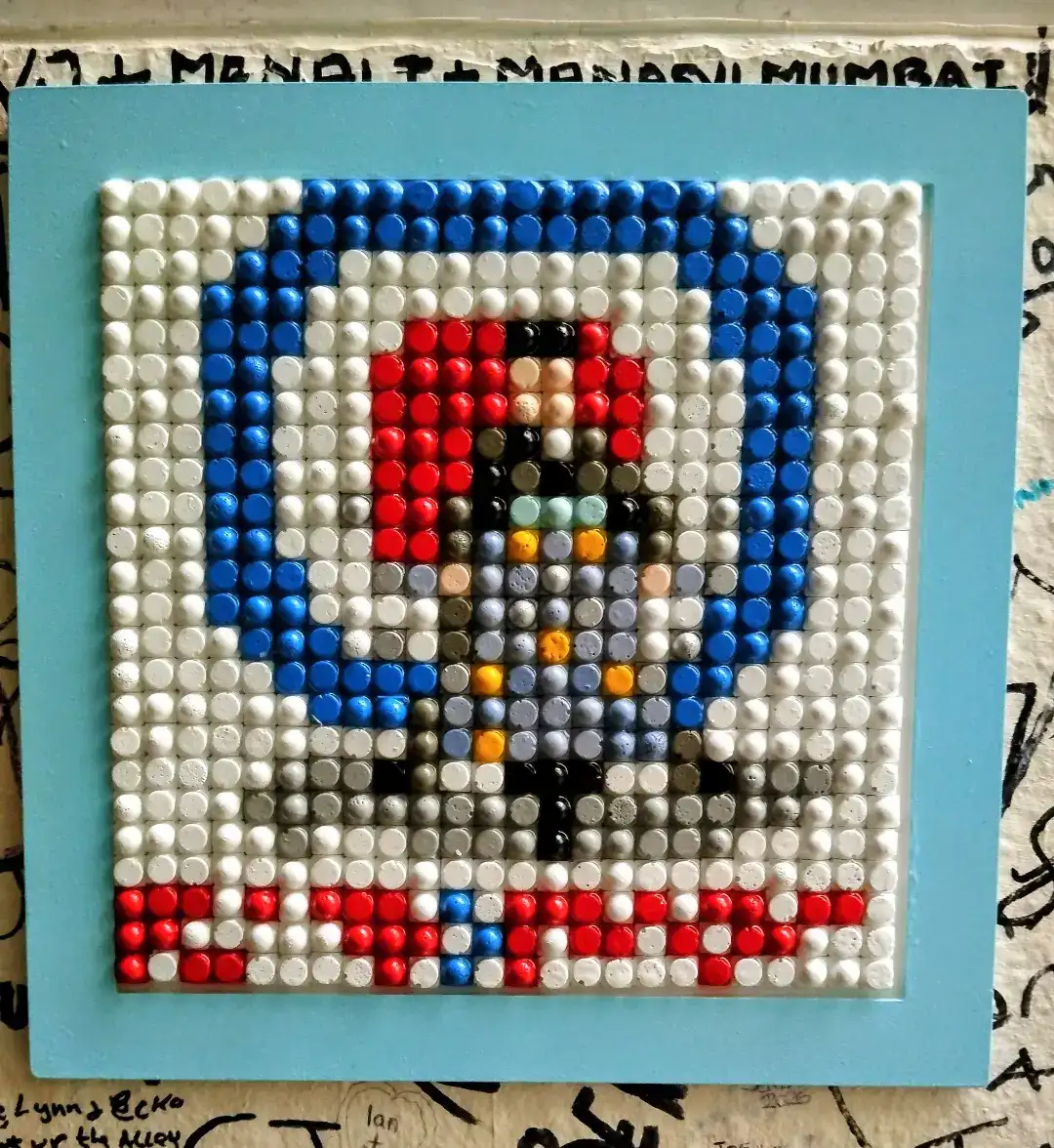
Hundreds of round pegs, each with a domed top, fill a square board framed in pale sky blue. White pegs form the background.
A blue arch curves around a small figure built from red, gray, black, yellow, and peach pegs, and a row of red and white shapes runs along the bottom.
Subscribe to DIY Craft Bloom
Get updates on the latest posts and more from DIY Craft Bloom straight to your inbox.
Why it suits touch: Every peg sits in its own hole, so the grid does the planning. Run a finger along a row and count pegs to keep your place, much like reading a line of braille.
One small change: Start with only two colors, such as white and a deep blue, and build a simple shape like a heart. Ask a sighted helper to sort the pegs into labeled cups before you begin.
Care tip: Store the board flat with a lid on, since loose pegs scatter fast.
11. Stitched Paper Lettering
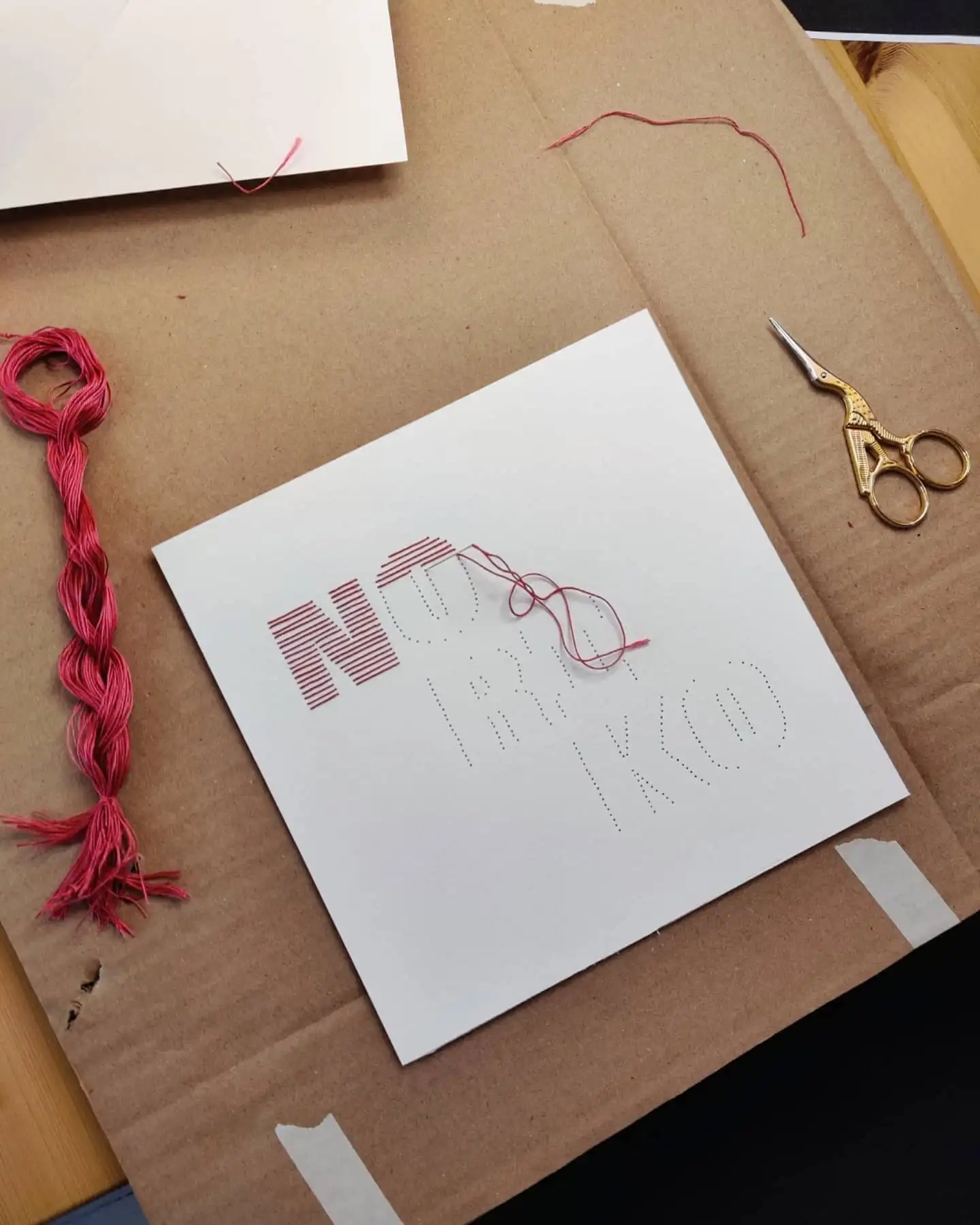
Kit list:
- Base: stiff white card with letters pierced as dotted outlines
- Thread: coral pink cotton floss, kept in a twisted skein
- Tools: one sharp needle and small gold stork scissors
- Finishing touch: straight stitches laid side by side to fill each letter
So far only the first letter, an N, is filled with neat parallel lines of thread. The rest of the words wait as rows of tiny holes on a card taped to a cardboard mat.
Paper embroidery suits makers with sight loss because the holes guide the needle, so you simply feel for the next one and push through.
Prep tip: Place the card on a folded towel and press a pushpin along a stencil to pierce the holes. Use a needle with a large eye, or a needle threader, so setup takes less time than stitching.
12. Botanical Candles in Mugs and Jars
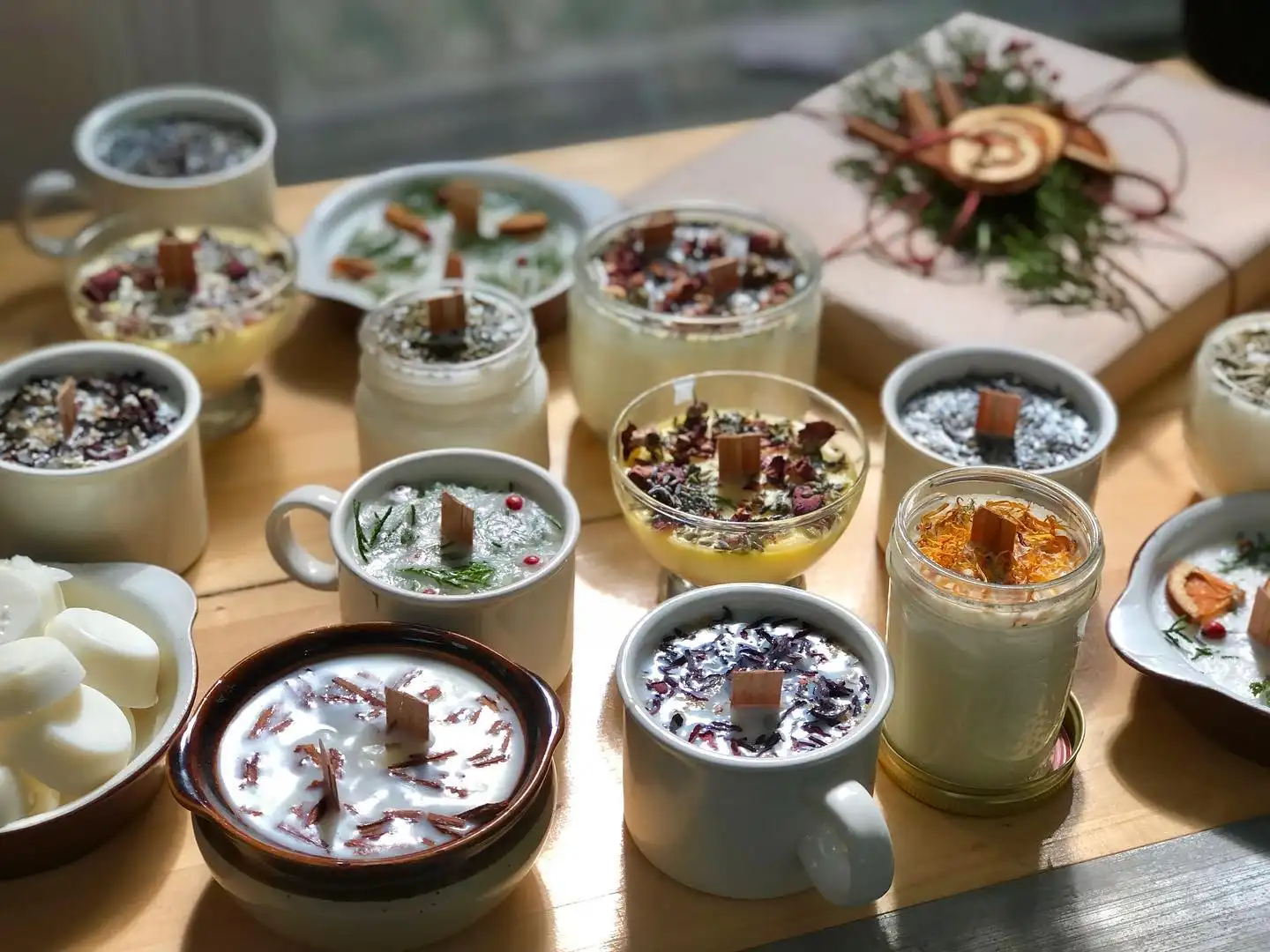
Great for: makers who love scent and want gifts ready by the weekend.
More than a dozen homemade candles fill this table, poured into mugs, mason jars, glass dessert cups, and ceramic dishes.
Each one has a flat wooden wick. Dried rose petals, lavender, orange calendula, hibiscus, cedar sprigs, pink peppercorns, and orange slices decorate the tops, while a wrapped gift and a dish of white wax melts sit nearby.
Scent makes candle making one of the most rewarding hobbies for people with sight loss. You can choose oils by smell alone.
Wooden wicks help as well because they crackle softly when lit, which tells you the flame is burning.
Safer swap: Melt soy wax in a microwave safe jug instead of a pan on the stove. Use a talking thermometer to check heat, and pour over a tray lined with paper to catch spills.
13. Layered Handmade Soap Bars
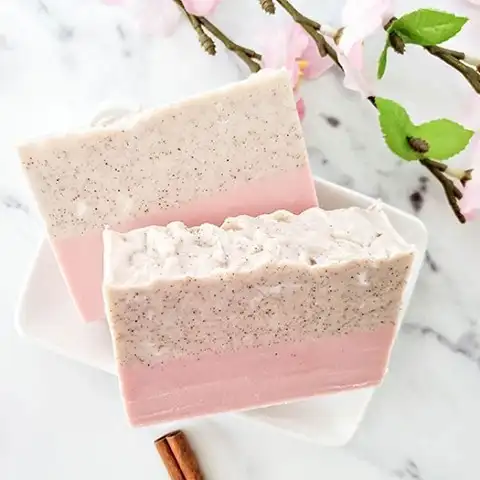
Soap formula: a smooth pink layer + a speckled cream layer + a rustic textured top.
Two thick bars rest on a white dish over pale marble. Each has a blush pink base and a creamy upper half flecked with tiny brown specks.
Soft peaks rise along the tops, and cinnamon sticks and pink blossoms frame the scene. Soap suits tactile makers because every stage has a feel.
Melt and pour bases soften into a smooth liquid, and each layer sets firm enough to sense where one ends and the next begins. Ground spices or oats add grit you can find with a thumb.
Layer tip: Let the bottom layer form a skin before pouring the next one. Tap the surface lightly with a fingertip, and if it feels firm and a little tacky, it is ready.
14. Wet Felted Wool Bowls
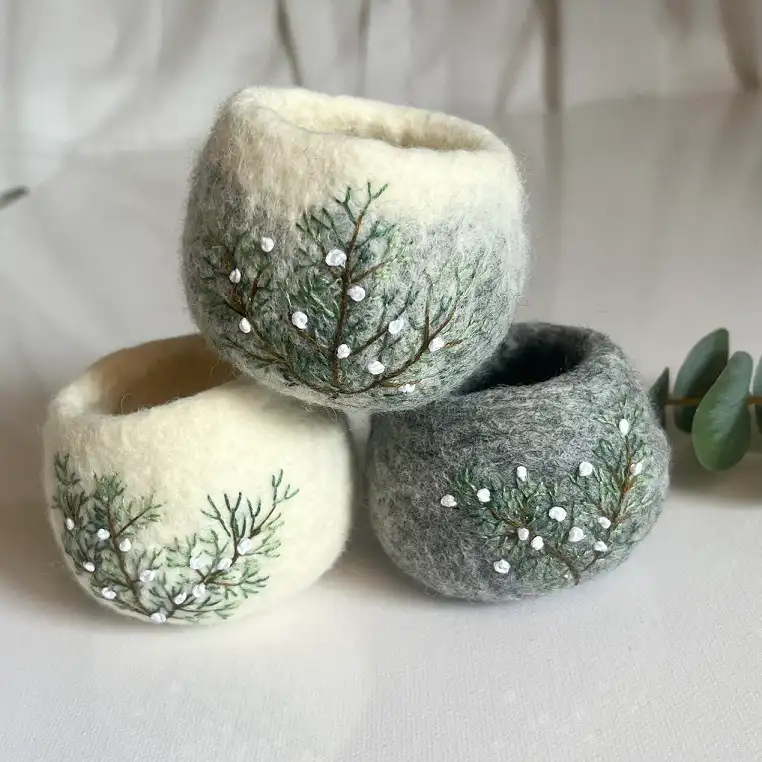
Stacked in a little pyramid, three round felt bowls sit together, two in creamy white and one in heather gray.
Up top, one bowl shades from cream at the rim into gray below. Embroidered juniper branches in brown and two greens sweep across each one, dotted with white French knots.
Hand feel: This craft runs on touch. You rub warm, soapy wool around a ball until the fibers lock, and the change from fluffy to firm is easy to notice.
What to avoid: Needle felting uses barbed needles that are very sharp. Wet felting needs only water, soap, and your hands, which makes it the safer pick.
The detail to steal: Add French knots once the bowl dries. Each knot forms a small bump you can count and space by touch.
15. Reed Basket Weaving
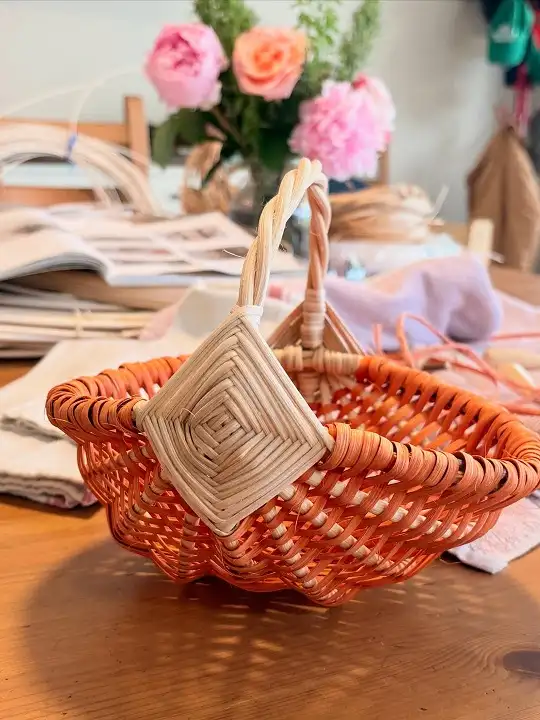
Sunlight falls across a small round basket on a wooden table. Its sides are woven in orange dyed reed with natural spokes showing through, and the rim is rolled thick.
A twisted natural handle arches over the top, fixed in place with a diamond wrap, while coils of spare reed lie behind it.
Why it feels easy:
- Spoke frame: stiff spokes give your hands a clear guide for each pass.
- Steady pattern: in front of one, behind the next, then repeat.
- Big materials: reed is thick enough to handle and track without strain.
Soak tip: Basket weaving stays a classic among crafts for blind and partially sighted adults, and wet reed is the reason. Soaked in warm water for a few minutes, it bends without cracking, and your fingers can feel when it turns supple.