How to Make a Paper Airplane

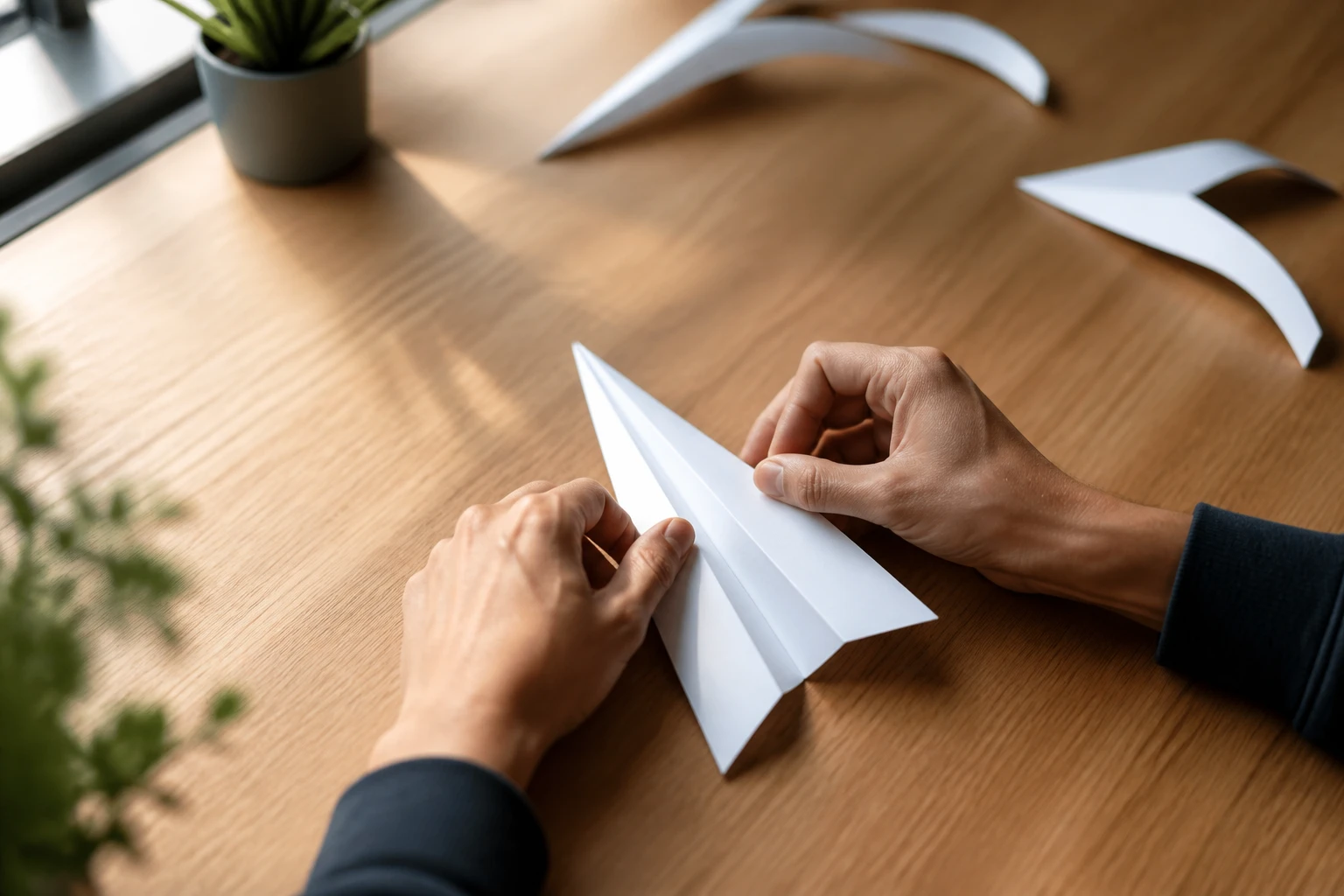
Remember those paper airplanes you folded in grade school that just nosedived into the ground? Yeah, forget everything you thought you knew.
This isn’t your typical paper airplane tutorial—this one’s going to teach you how to make a plane that literally boomerangs back to you.
Sounds impossible? It’s not, and you’re about to become the coolest person at your next office meeting or family gathering.
What Makes This Paper Airplane Different?
Here’s the thing: most people have been folding paper airplanes completely wrong their entire lives. The traditional dart-style plane? Sure, it flies forward, but that’s about it.
This design takes things to another level with a special folding technique that creates airflow channels and a curved flight path.
The secret lies in how you fold the wings and tail section. By creating specific angles and bends, you’re essentially building a boomerang disguised as a paper airplane.
The best part? You only need a single sheet of A4 paper (or A5 if you want something smaller).
What You’ll Need to Get Started
Let’s keep this simple. You don’t need a engineering degree or fancy materials:
- One sheet of A4 paper (standard printer paper works perfectly)
- Your hands (obviously)
- A ruler or way to measure 40mm—though eyeballing it works too
- Optional: A pen tip for one tricky fold later
That’s it. No scissors, no tape, no glue. Just you and a piece of paper about to defy your expectations.
The Step-by-Step Folding Process
Creating the Foundation (Steps 1-2)
Start by folding your paper in half lengthwise. This is your center guideline, so make sure it’s crisp and even. Press down that crease with two fingers—don’t just casually fold it and hope for the best.
Unfold the paper and now fold the right corner down to meet the center line, creating a 45-degree diagonal. Do the same on the left side.
You should now have a triangle sitting pretty at the top of your paper, and it better be balanced. If it looks wonky, start over. Trust me on this.
Building the Body (Steps 3-4)
Here’s where things get interesting. Measure 40mm from the bottom of your paper and mark that spot.
Now fold the entire top section down so the triangle’s point meets your mark. Flatten everything out nice and smooth.
From the middle position, fold the right wing down at another 45-degree angle. Mirror this on the left side.
You’re creating another balanced triangle here, and symmetry is your best friend. If one wing looks bigger than the other, you’ve messed up—fix it now before continuing.
The Critical Wing Fold (Step 5)
Pay attention because this is where most people screw up. Open those two triangle wings you just created and fold them back inward.
This step determines whether your plane actually works or becomes an expensive paperweight.
Make sure both sides are perfectly even. If the tutorial feels too fast, pause and really study what you’re doing.
This inward fold creates the structure that’ll make your plane return to you instead of smacking someone in the face across the room.
Subscribe to DIY Craft Bloom
Get updates on the latest posts and more from DIY Craft Bloom straight to your inbox.
Locking Everything Together (Steps 6-7)
Fold that triangular section in the middle upward to tighten the wings. Then fold the top of the airplane down to your marked position and unfold it again—you’re creating a crease here for the next move.
Now fold the front part along that crease you just made. Here’s a pro tip: use a pen tip to extend and fold it downward.
This gives you way more control than fumbling with your fingers. Once it’s folded, secure both wings inward. You don’t want this thing unfolding mid-flight like some origami disaster.
Shaping the Wings (Steps 8-9)
Fold the whole plane in half again. Now you’re going to fold the wings themselves, and this part needs to be precise. The wing folds should run horizontal and parallel to the airplane’s body, starting right from the nose.
Fold the other wing to match perfectly. The paper might bunch up a bit since you’ve folded it multiple times—that’s normal. Just press everything flat and make sure both wings align on the same line.
The Final Touches (Step 10)
At the end of each wing, fold up a 10mm section. These little flaps? They’re your airflow channels, and they’re absolutely crucial. Fold them evenly on both sides or your plane will spin out like a drunk mosquito.
Unfold the airplane and inspect your work. The very last step involves using your finger to bend the tail section upward at the marked position. This curved tail is what creates the boomerang effect, so don’t skip it.
How to Actually Throw This Thing
You didn’t come this far just to chuck your masterpiece randomly into the air, right? The throw technique matters just as much as the folding.
The Angle Rule
Always throw your plane at a 20-30 degree angle from the horizontal. Think of it like you’re gently tossing it upward, not launching a missile.
If you throw it straight up like you’re starting a prayer circle, it won’t fly back—it’ll just fall down and mock you.
The Direction Rule
Here’s the kicker: don’t throw it straight ahead. Aim slightly to the left or right instead. This gives the plane the curved path it needs to circle back around.
IMO, starting with a slight right-hand throw works best for most people, but experiment to find your sweet spot.
Give it a gentle release with a flick of your wrist. You’re not trying to break any speed records here—smooth and controlled wins the race.
Troubleshooting Common Problems
Your plane nosediving immediately? Your wings probably aren’t even, or you didn’t fold them flat enough. Go back and press those creases harder.
Flying in circles but not coming back? Check your tail bend and those 10mm wing flaps. They need to be identical on both sides, or you’ll get weird flight patterns.
Not flying at all? You either threw it wrong (check your angle), or something in steps 5-7 went sideways. The paper needs to be crisp and all the folds need to be sharp. Floppy folds equal floppy flights.
Why This Design Actually Works
The magic happens because of how air flows over and under your carefully folded wings. Those little flaps at the wing tips create turbulence that helps curve the flight path.
The bent tail section acts like a rudder, steering the plane in an arc rather than a straight line.
When you combine the right throw angle with the aerodynamic design, physics does the rest.
The plane gains lift, curves through the air, and if you’ve done everything correctly, swings back toward you like a loyal dog playing fetch.
Subscribe to DIY Craft Bloom
Get updates on the latest posts and more from DIY Craft Bloom straight to your inbox.
Taking Your Skills to the Next Level
Once you’ve mastered the basic design, start experimenting. Try different paper weights—heavier paper flies differently than standard printer stock. Adjust the tail bend angle slightly to see how it affects the return path.
You can also play with the size. An A5 sheet creates a smaller, tighter-turning plane that’s perfect for indoor flying. Just remember: the smaller you go, the more precise your folds need to be.
FYI, wind is your enemy with this design. Save your boomerang plane for indoor spaces or very calm days outside. Even a slight breeze will throw off that carefully calculated flight path.
Wrapping Up Your New Superpower
Congratulations—you now know how to fold a paper airplane that 99% of people have never seen before.
This isn’t just a party trick (though it absolutely is that); it’s a demonstration of how small adjustments in design can create completely different results.
The key takeaways? Precision matters, symmetry is non-negotiable, and your throwing technique can make or break the performance.
Take your time with each fold, press everything flat, and don’t get discouraged if your first few attempts don’t work perfectly.
Now go forth and amaze people. Just maybe warn them before you start launching planes around the room.
Frequently Asked Questions
Can I use any type of paper for this airplane?
Standard A4 printer paper works best for this design. You can use A5 if you want a smaller version, but avoid anything too thick like cardstock or too thin like tissue paper.
The weight and stiffness of regular copy paper creates the perfect balance for the boomerang effect. Construction paper might work, but it’s usually too heavy and won’t curve back as smoothly.
Why does my paper airplane keep crashing instead of flying back?
Nine times out of ten, this comes down to uneven folds or the wrong throwing angle. Check that both wings are perfectly symmetrical and that your 10mm wing flaps are identical.
Also make sure you’re throwing at a 20-30 degree upward angle, not straight ahead or straight up. If everything looks good but it’s still crashing, press all your creases flatter—loose folds kill the aerodynamics.
How much space do I need to fly this airplane?
You’ll want at least 15-20 feet of open space for the plane to complete its arc and return to you. A medium-sized room works great, or you can use a hallway.
Outdoor flying is possible but only on completely calm days—even a light breeze will mess with the flight path and your plane won’t return properly.
What’s the most important step in the folding process?
Step 5 is absolutely critical—that’s where you open the triangle wings and fold them back inward. This creates the structural foundation that makes the boomerang effect possible.
If you mess up this step or make it uneven, your plane simply won’t work correctly no matter how perfect everything else is. Take your time here and make sure both sides are mirror images of each other.
Can kids make this paper airplane, or is it too complicated?
Kids around 10 years and older should be able to handle this with some adult guidance, especially for the trickier steps like the inward wing fold and the pen-tip technique in step 7.
Younger kids might struggle with the precision required, but it’s a great learning opportunity about symmetry and following instructions carefully. Just be patient and maybe help them with the measuring parts.
How do I know if I’ve folded the tail section correctly?
The tail bend should create a gentle upward curve, not a sharp crease. You’re essentially curving the tail with your finger, not folding it flat. If you’ve done it right, when you look at your plane from the side, the tail should angle slightly upward.
This curved tail is what redirects airflow and creates the returning flight path, so if it’s too flat or bent at a harsh angle, your plane won’t boomerang back.