15 Summer Wreath Ideas for the Front Door

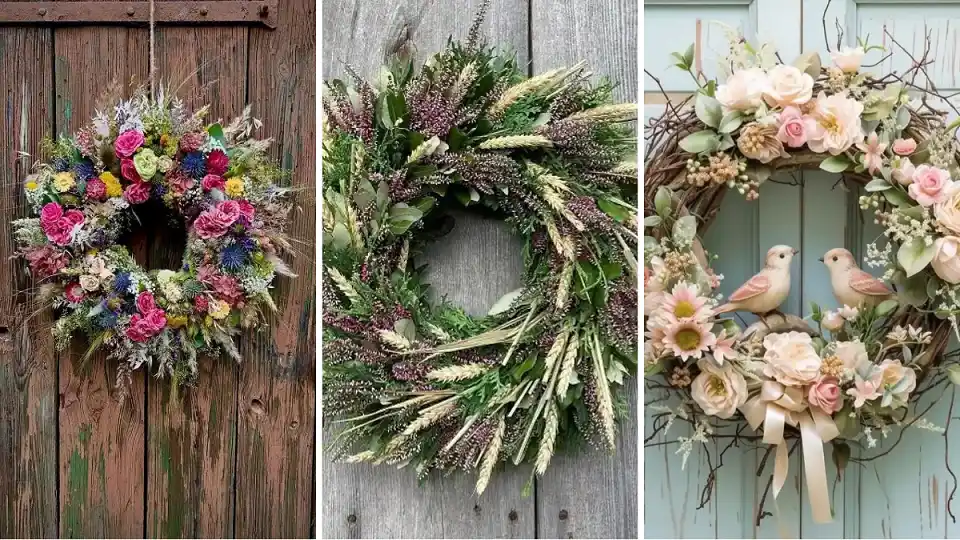
Not every summer wreath needs to be bright florals crammed onto a grapevine ring.
Some of the best summer wreath ideas skip color altogether and lean on texture, like wheat and heather, or swap flowers for yarn entirely.
Others break the circle on purpose with wild branches, or trade the wreath shape for a hanging basket when the door is mostly glass.
What ties this whole list together is restraint. The strongest entries here leave something bare, whether that’s an exposed vine base, an empty half of a hoop, or a door frame that gets to peek through instead of disappearing behind petals.
Whether your porch leans coastal, cottage, or somewhere between summer and early fall, there’s a version here that will fit without looking like it came from the same five templates as everyone else’s front step.
15 Summer Wreath Ideas for the Front Door
1. A Jewel-Toned Lemon and Lavender Wreath That Skips Pastels Entirely
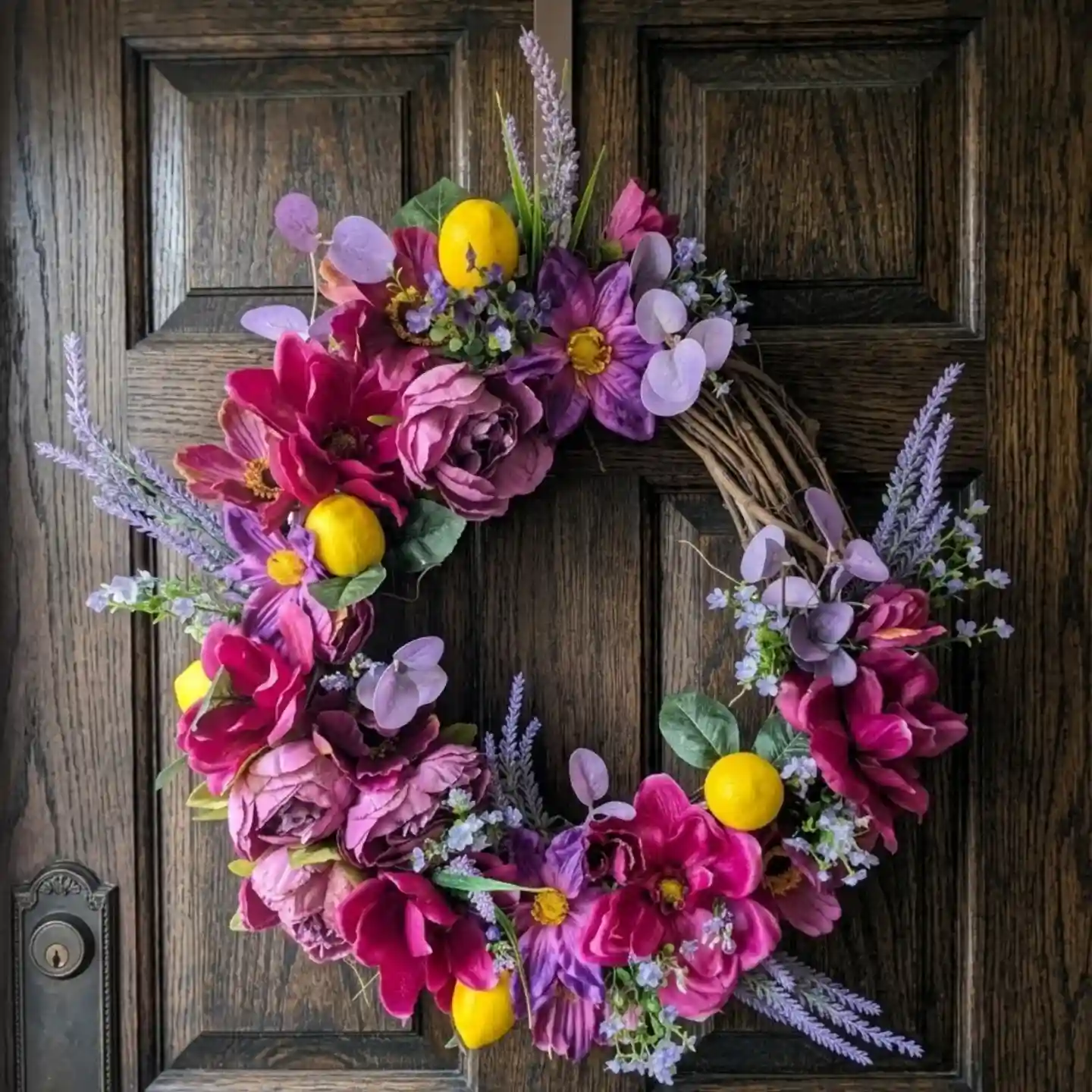
Most summer wreaths lean soft and washed out, but this one goes rich instead.
Magenta and burgundy blooms sit shoulder to shoulder with deep purple clematis and lavender sprigs, and small yellow lemons are tucked in like punctuation marks rather than the main event.
The open grapevine base peeks through in a few spots, which keeps the whole thing from feeling too stuffed.
It reads more like a garden bouquet than a typical door wreath, and it works especially well against a dark wood or painted door where the jewel tones actually pop instead of disappearing.
If your porch gets full sun, faux florals in these deeper shades hold their color far longer than anything pastel.
2. A Minimalist Wood Hoop Wreath That Lets a Bow Do the Talking
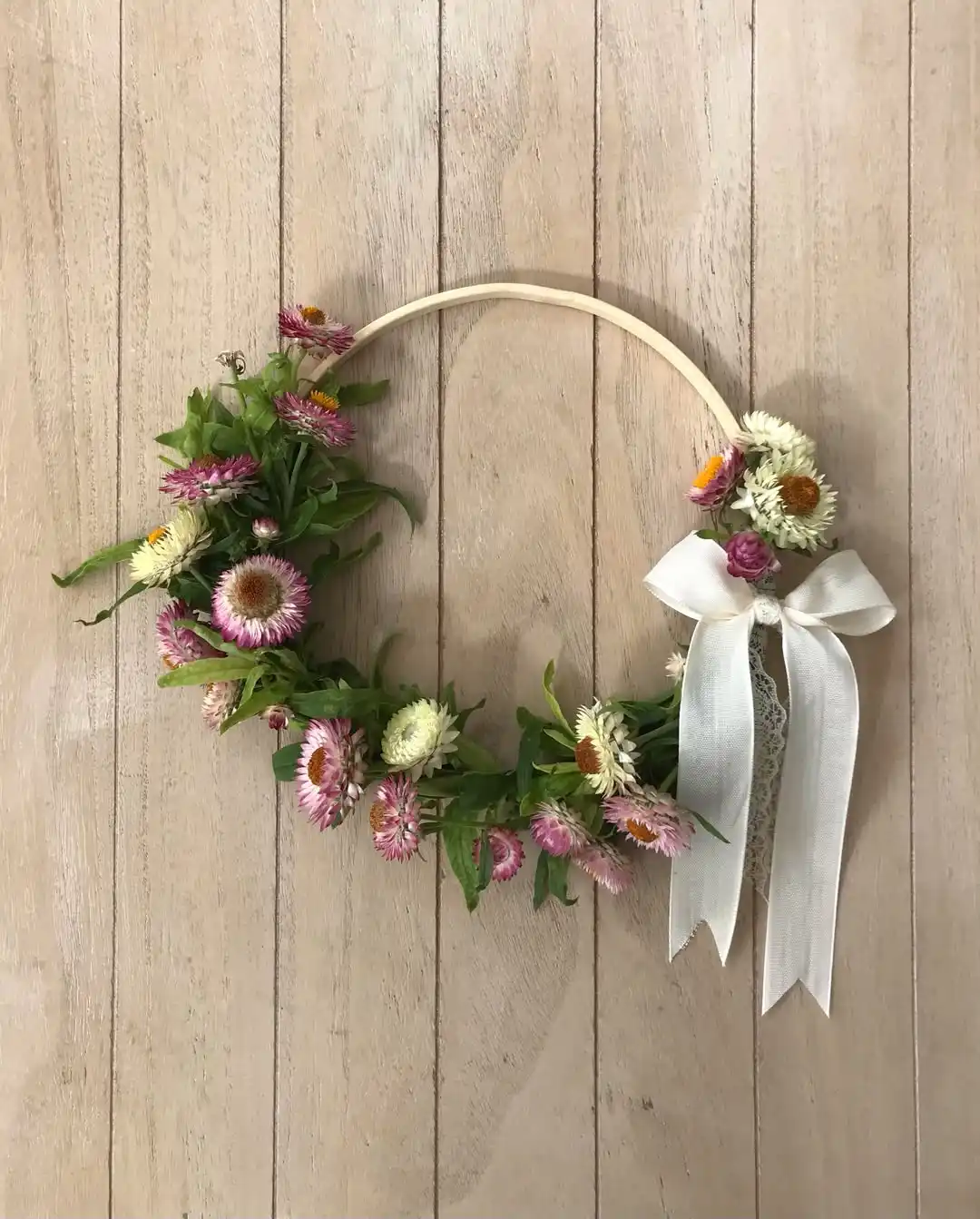
Half the hoop stays completely empty here, and that restraint is what makes it feel current instead of crowded.
Dried strawflowers in dusty pink, cream, and soft white cluster along the bottom third only, their papery petals and warm orange centers giving the whole thing a slightly rustic, sun-faded quality.
A generous ivory linen bow with a lace underlay anchors the right side, taking up almost as much visual weight as the florals themselves.
This style works best on a plain wood or light-painted door where the natural hoop can actually read against the background instead of blending in.
Skip the glue gun rush here. Attach the florals loosely first, then tighten the cluster once you see how the empty space is balancing out.
Leaving most of the ring uncovered keeps the design light instead of heavy.
They hold their shape and color far longer outdoors than fresh blooms would.
It balances the empty side of the hoop instead of just sitting there as trim.
3. A Crochet Flower Wreath for Anyone Who Wants Summer Color Without the Upkeep
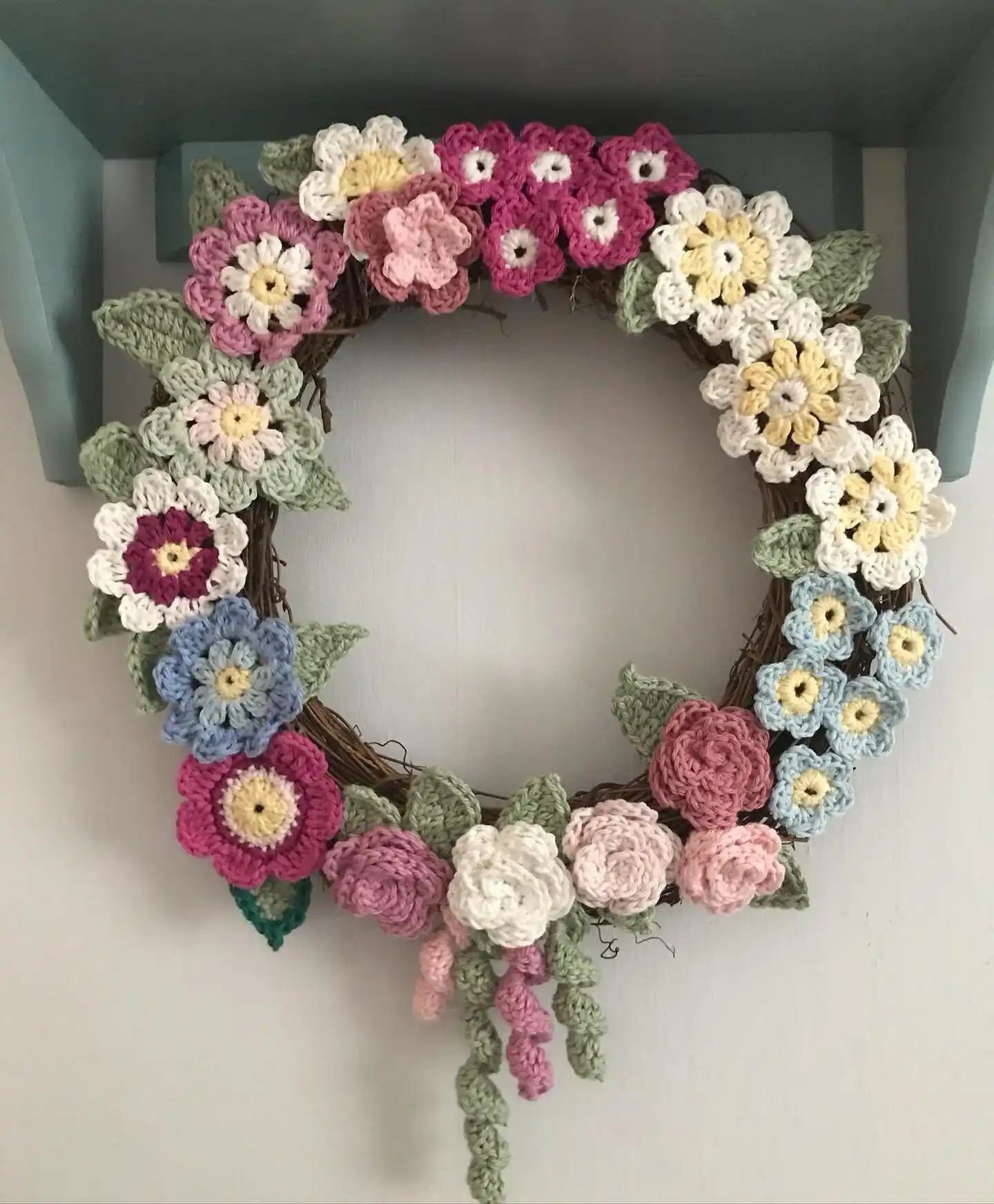
This one swaps fresh and dried botanicals for yarn entirely, and it changes the whole personality of the piece.
Dozens of crochet flowers in dusty pink, powder blue, cream, and magenta cover the grapevine base edge to edge, with soft sage leaves and a few trailing vine pieces spilling off the bottom.
Nothing here will fade, wilt, or shed petals on a hot porch, which makes it a genuinely different category of summer wreath rather than just another floral variation.
Watch out: with this many small pieces, cluster them by color first before attaching, or the finished wreath can start to look scattered instead of intentional.
4. A Textured Wheat and Heather Wreath That Skips Florals Almost Entirely
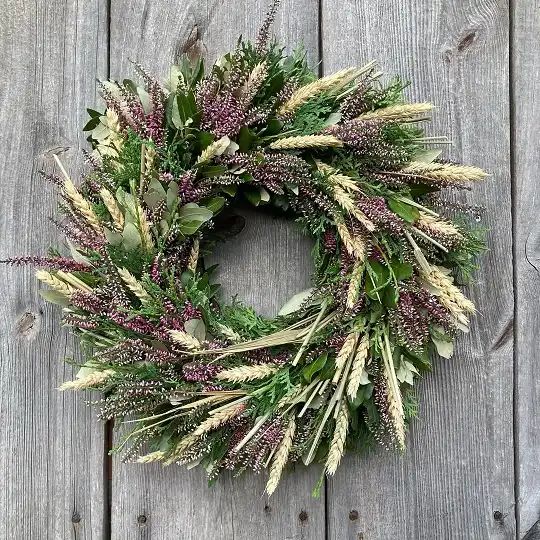
Wheat stalks, purple heather spikes, and mixed greenery take over here instead of a single showy bloom, and the effect reads more like a foraged bundle than something ordered from a florist.
The color palette stays muted, mostly sage, olive, and dusty mauve, which lets the texture carry the whole design.
Against a weathered gray fence or barn wood, it almost disappears into the setting in a good way, like it grew there.
For anyone tired of bright, busy wreaths, this is the quiet alternative. Bunch the wheat in small groups before wiring it down, loose single stalks tend to look thin once they’re attached.
Subscribe to DIY Craft Bloom
Get updates on the latest posts and more from DIY Craft Bloom straight to your inbox.
5. A Soft, Wispy Wreath Built From Airy Texture Instead of Bold Color
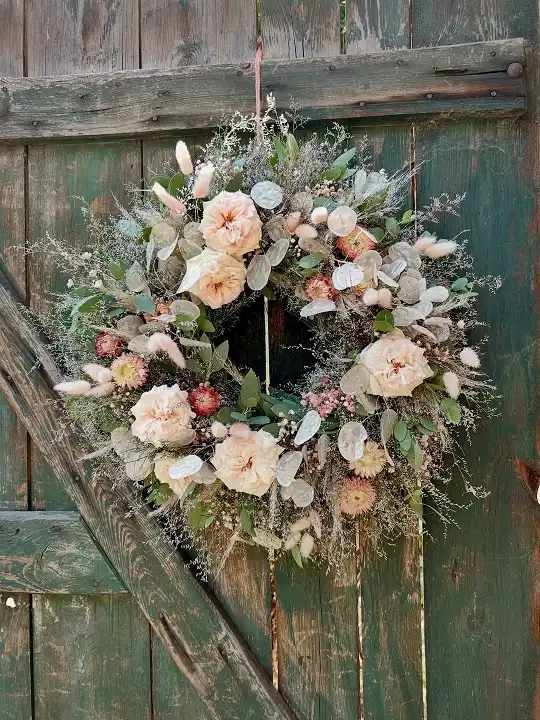
Peachy garden roses and blush blooms anchor this one, but the real work is happening in the background layer: bunny tail grass, silver dollar eucalyptus, and feathery baby’s breath sprays fill in the gaps with movement instead of solid greenery.
Nothing here sits flat against the base. The result feels loose and a little wild, closer to something gathered from a meadow than arranged.
A trailing ribbon at the top adds height without competing with the florals below.
Why this works: the negative space between the sprigs is doing as much visual work as the flowers themselves.
Airy fillers do more for texture here than the flowers do.
6. A Cottage Garden Wreath That Packs In Every Color at Once
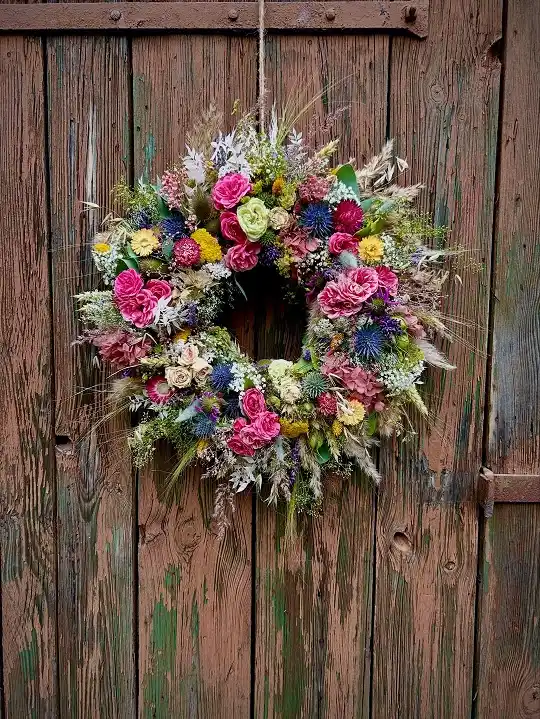
Pink garden roses, chartreuse blooms, blue thistle, and dusty rose hydrangea are all fighting for attention here, and somehow it still holds together.
Wheat and pampas grass spikes shoot out past the main ring in a few spots, breaking the perfect circle shape on purpose.
Hung from simple jute twine against a weathered barn door, the whole arrangement leans wild instead of tidy, closer to a cutting garden armful than a store-bought wreath.
Let the pink roses lead, then treat everything else as support.
A few blue thistle heads break up the warm palette without taking over.
A few stalks poking past the edge keep the shape from looking too stiff.
7. Why a Hanging Basket Beats a Wreath on a Glass-Paneled Door
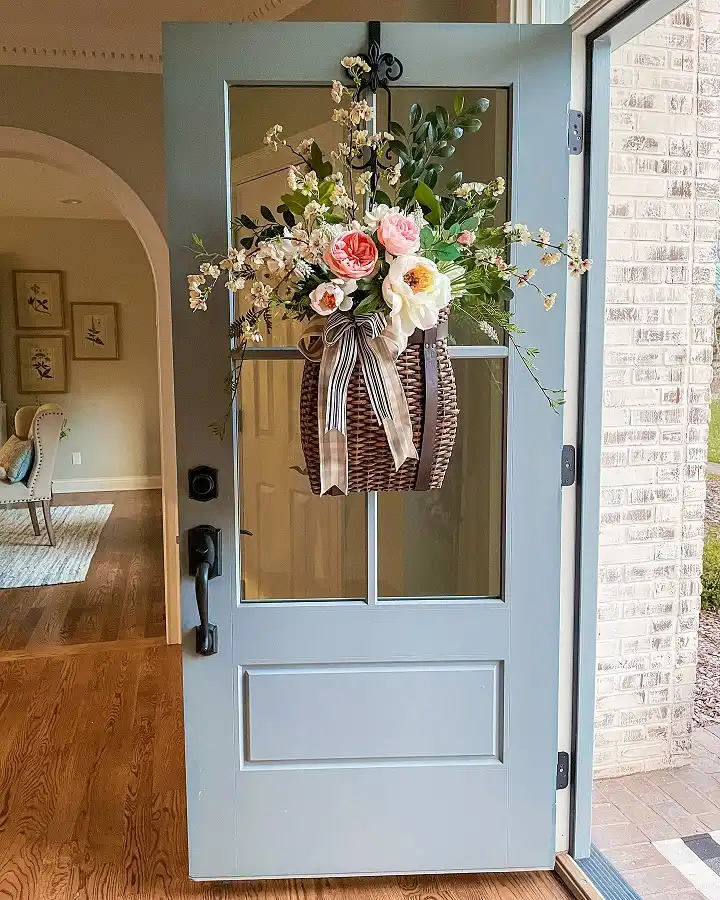
Glass panels eat wreaths. Half the design disappears behind the mullions and all that’s left is a flat circle pressed against the pane.
A woven basket solves that problem by sitting lower and spilling upward instead of sideways, so peachy garden roses, cream ranunculus, and loose greenery arch above the rim like they’re growing out of it.
A striped gingham bow ties the basket to the black scroll hook, and the whole thing reads as intentional even though it’s really just a basket with flowers stuffed inside.
If your door is mostly glass, this swap is worth trying before you buy another traditional wreath.
8. A Twig Wreath With Small Ceramic Birds Perched Inside It
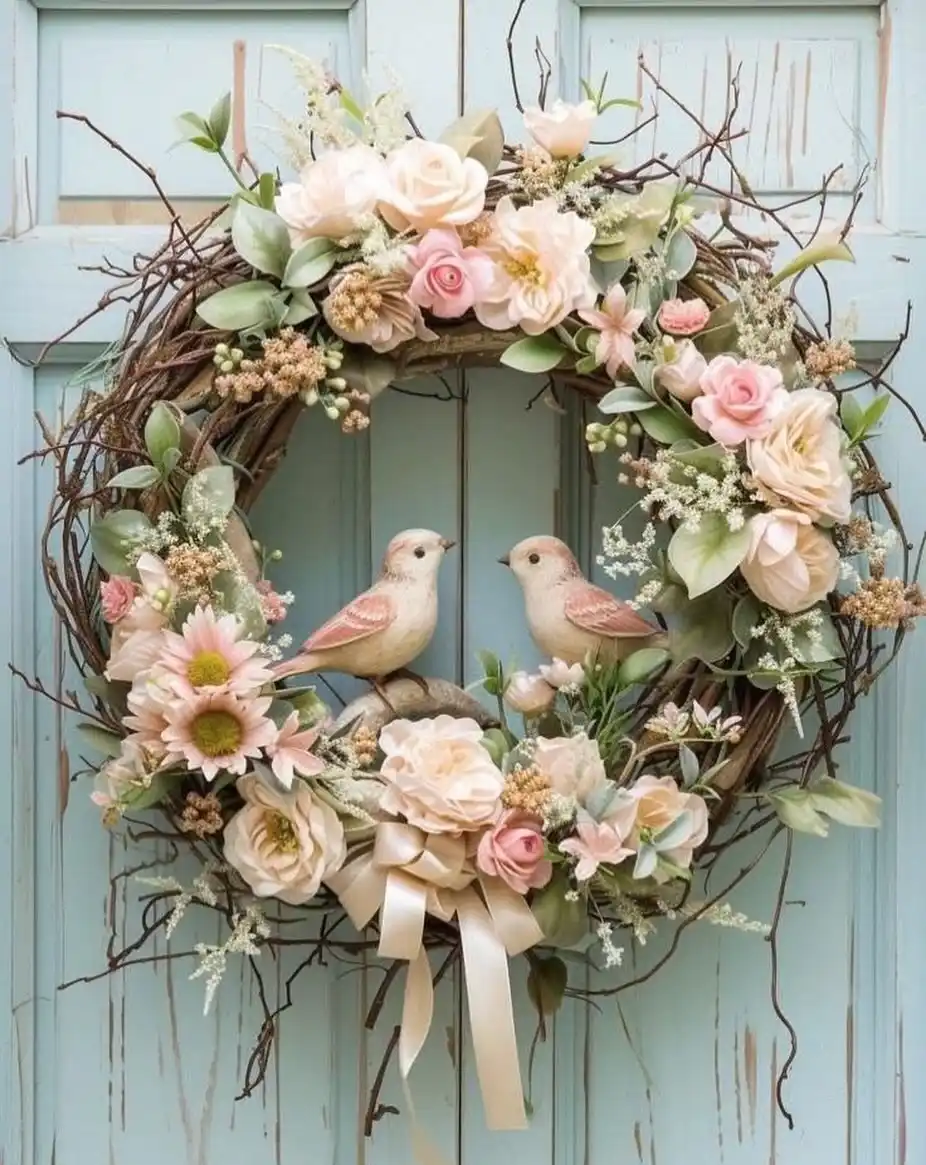
Blush roses, cream peonies, and green-centered sunflowers wrap a loose branch base here, but the detail that makes this one stand out is a pair of small ceramic birds tucked into the greenery near the bottom.
They sit on a tiny painted stone, giving the whole wreath a scene instead of just a shape.
Wispy astilbe sprays and a soft cream ribbon bow round out the pastel palette, which leans warmer than most spring-adjacent wreaths without tipping into summer brights.
Adding a small figurine or two is an easy way to make a florist-style wreath feel more personal, but it only works if you get the scale right.
Pick a figurine small enough to nestle into the foliage, not perch on top of it.
Give it a little surface, like a stone or a nest, so it looks placed on purpose.
Oversized figurines that dwarf the florals and steal focus from the wreath itself.
Placing them dead center, which flattens the natural, scattered look.
9. A Wild Meadow Wreath With Branches That Break the Circle
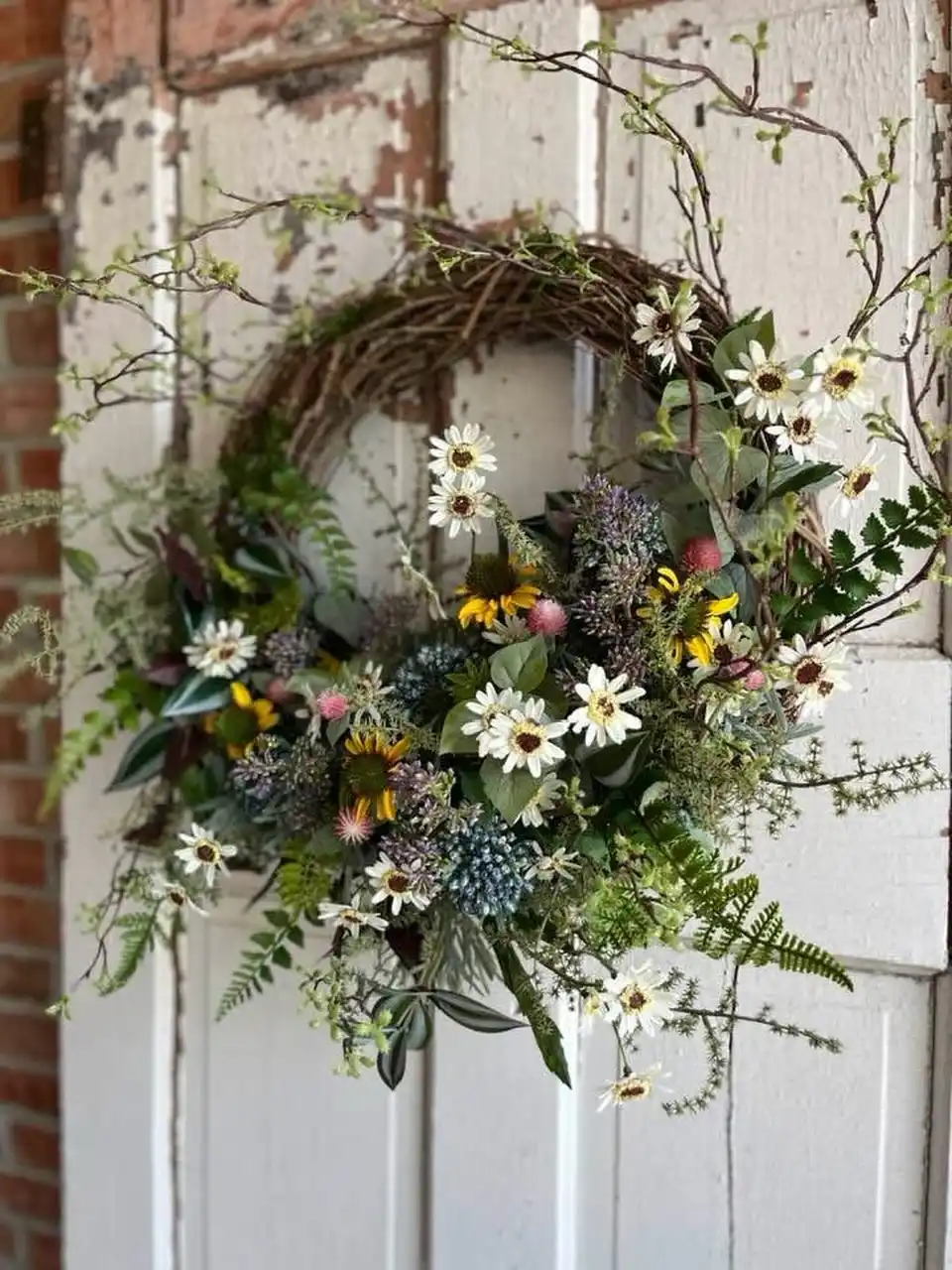
Curly willow branches shoot out past the top right corner here, refusing to stay inside the wreath shape, and that’s exactly what gives it a foraged, just-picked feel.
White zinnias, black-eyed susans, and a few dusty blue thistle-like blooms scatter through fern fronds and trailing greenery, with no real symmetry to the arrangement.
It looks less like something built around a grapevine base and more like a meadow that happened to grow in a circle.
Subscribe to DIY Craft Bloom
Get updates on the latest posts and more from DIY Craft Bloom straight to your inbox.
This is the wreath to copy if your porch style leans cottagecore or if you want something that photographs well without looking styled.
10. A Sunflower Wreath Anchored by Navy, Not Green
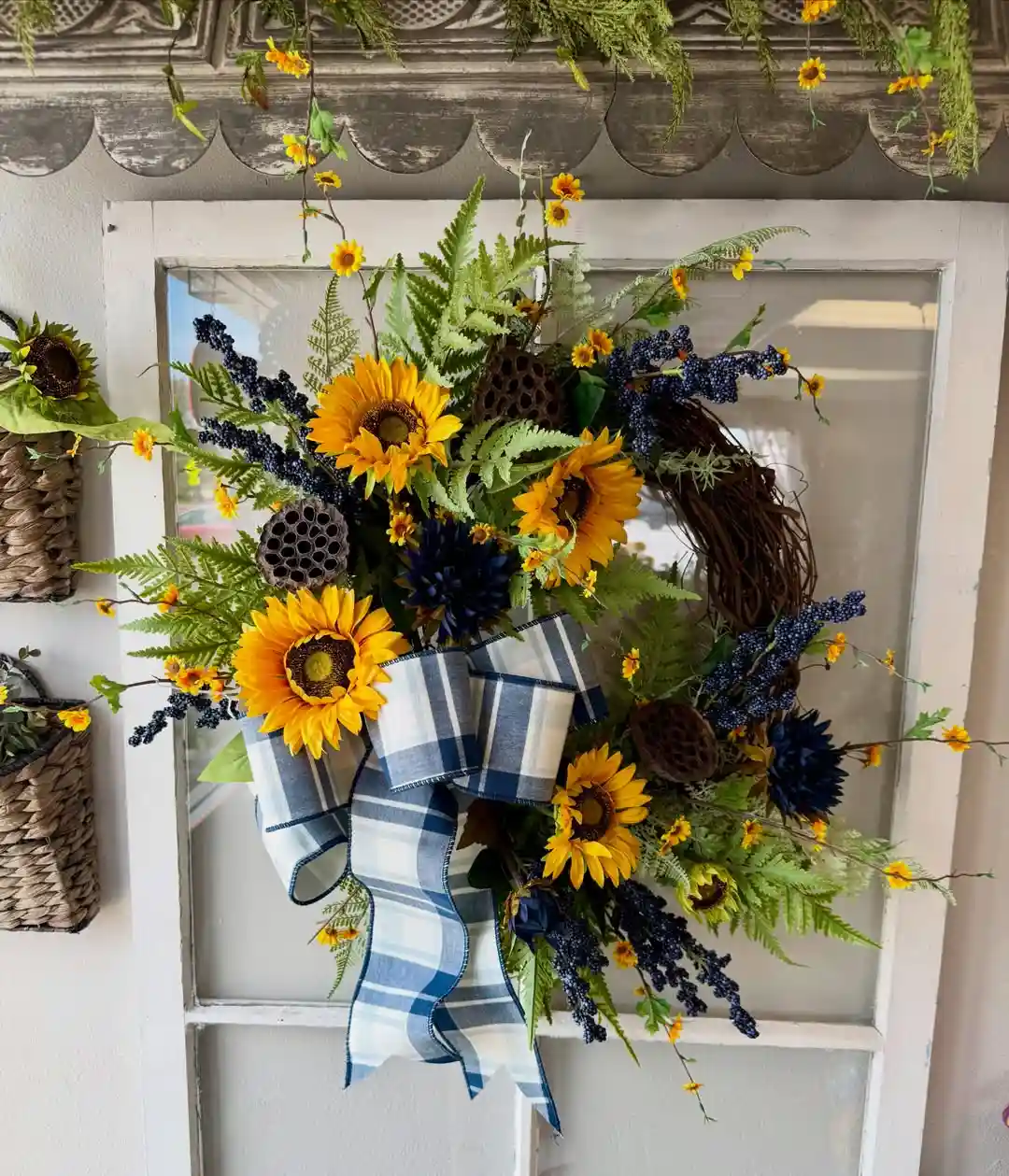
Sunflowers usually get paired with straw and burlap, but this one leans into deep navy blueberries and thistle instead, and that swap changes everything.
The dark clusters sit heavy against the bright yellow petals, giving the whole arrangement more contrast than the usual rustic-sunflower look.
Dried lotus pods add an unexpected textural note low in the design, ferns fan out for height, and a chunky blue plaid bow ties the palette together at the base.
Hung against an old window frame instead of a solid door, the light behind it makes the navy pieces read almost black.
11. A Foliage-First Wreath Where Greenery Outnumbers Flowers Ten to One
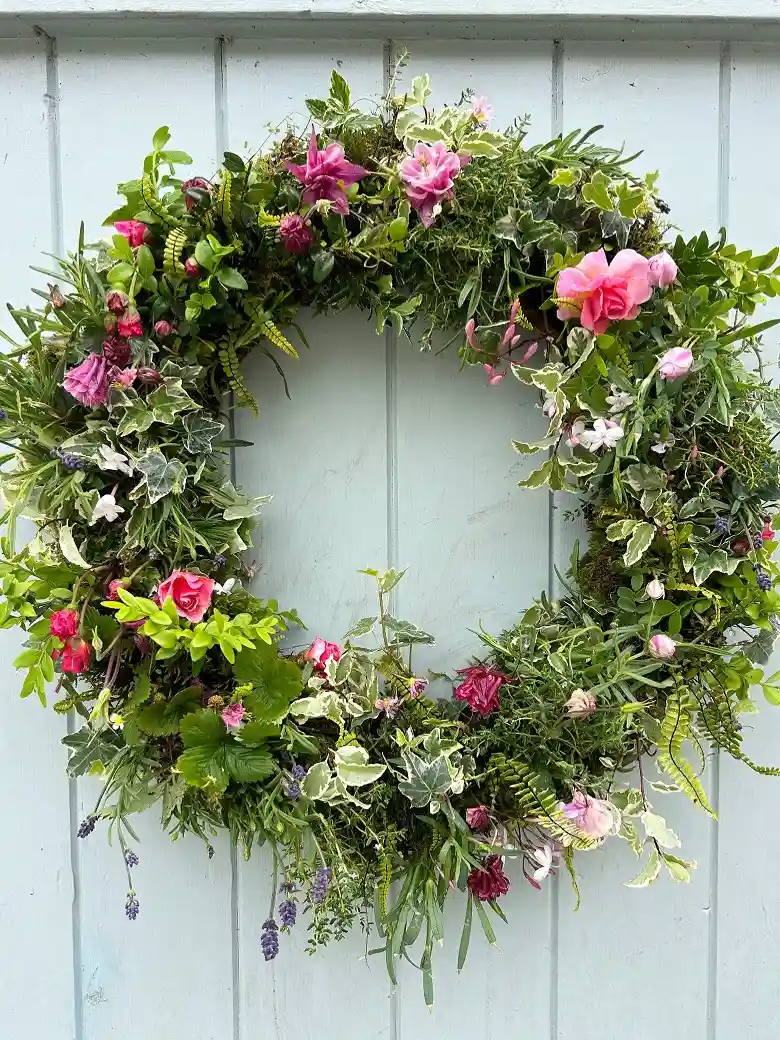
Green does the heavy lifting on this one. Variegated ivy, ferns, and patches of real-looking moss cover nearly the entire base, while pink roses and magenta clematis show up almost like an afterthought scattered across the top and bottom.
Small lavender sprigs dangle loose near the base instead of being tucked in tight.
Against a pale blue-gray paneled door, the effect feels more like a living plant than a decorated wreath, which makes it a good pick for anyone who wants summer texture without a lot of bold color.
| Flower-heavy wreath | This foliage-first version |
|---|---|
| Blooms are the focal point. | Layered greenery is the focal point. |
| Tends to read as styled. | Reads more like something growing. |
| Suits neutral or dark doors. | Suits soft, muted door colors. |
12. A Coastal Wreath Built Around One Small Ceramic Turtle
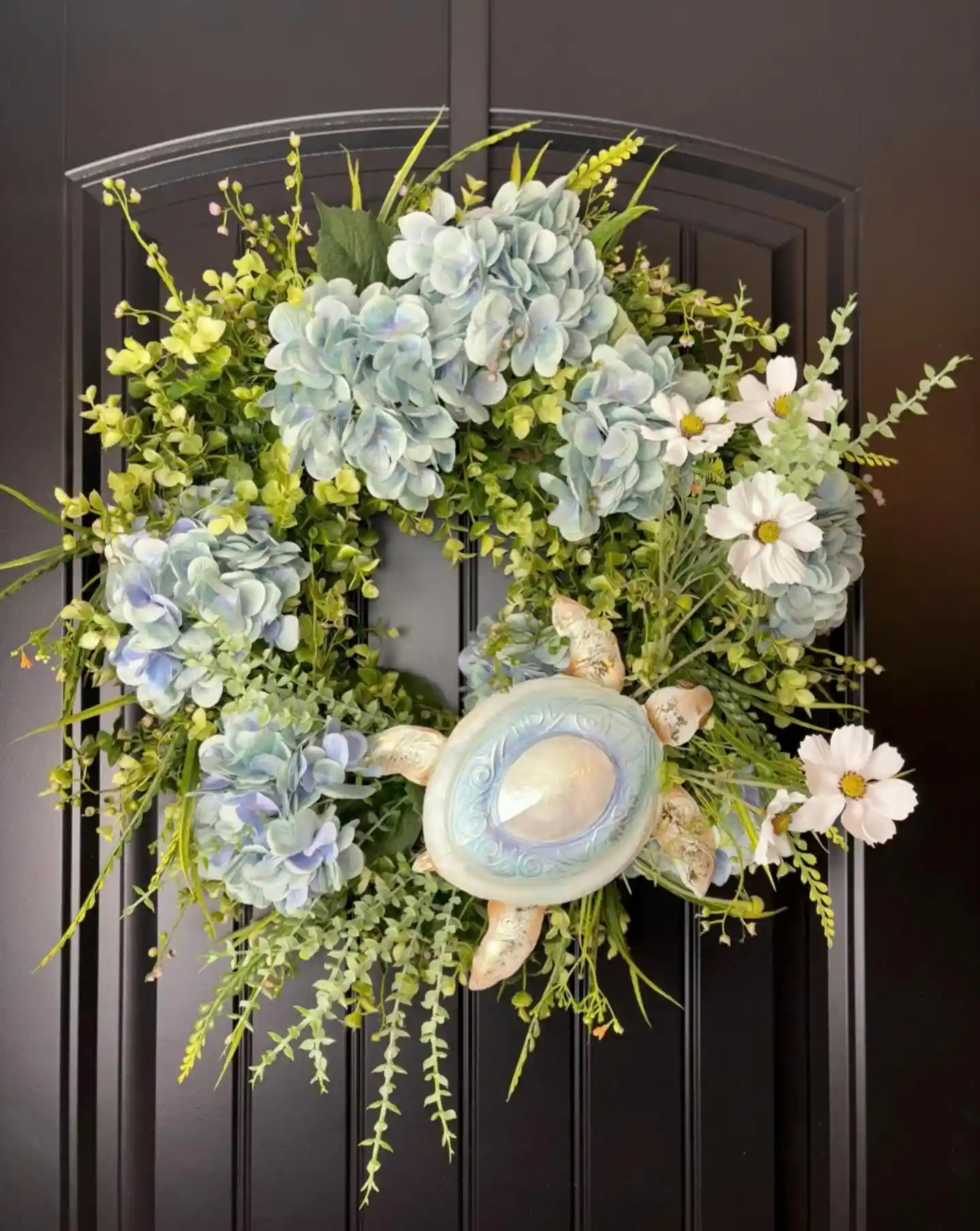
Blue and lavender hydrangea heads make up most of the bulk here, but a glazed ceramic sea turtle tucked into the bottom center is what turns this from a pretty hydrangea wreath into a themed one.
White cosmos daisies scatter through chartreuse greenery on the right side, keeping the palette from feeling too monochrome.
Hung against a nearly black door, every soft blue and green tone gets pushed forward instead of washed out.
A single well-placed figurine like this does more for a themed wreath than adding more flowers ever would.
A dark door background makes pale coastal colors pop far more than a light one would, so this palette is worth saving for a deep-toned entryway.
13. A Moody, Late-Summer Palette That Leans Toward Fall Without Fully Crossing Over
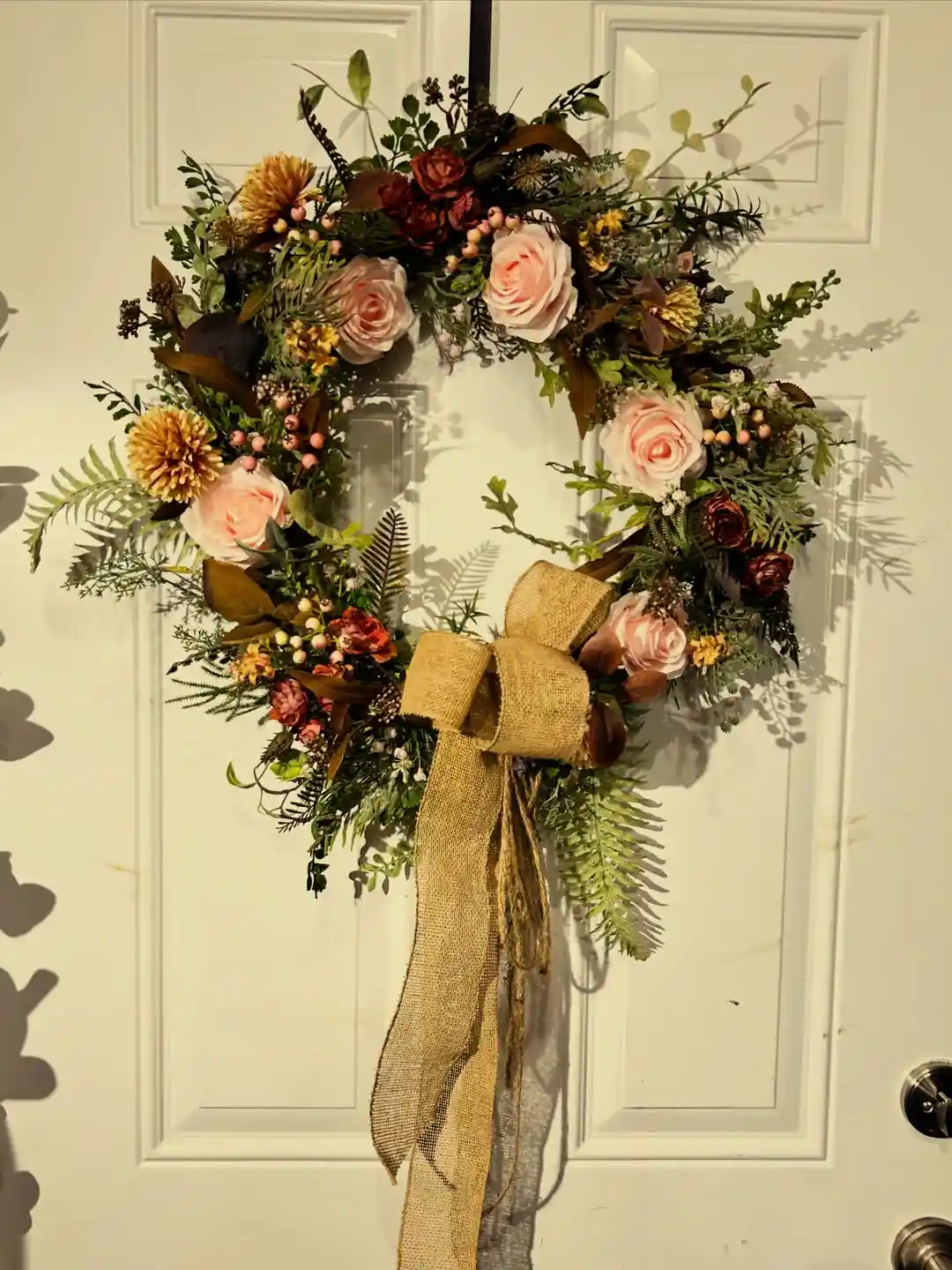
Blush and burgundy roses share space with mustard dahlias and deep brown foliage here, giving this wreath a warmer, dustier feel than the bright, saturated ones.
A long burlap ribbon trails almost to the bottom of the door, adding weight and length that keeps the eye moving past the florals.
Ferns fill in low and loose rather than tight against the base. On a plain white door, the warm tones read as richer instead of muddy, which is the trick to pulling off this transitional color story in summer without it looking premature.
14. A Full Eucalyptus Base With Three Small Bows Instead of One Big One
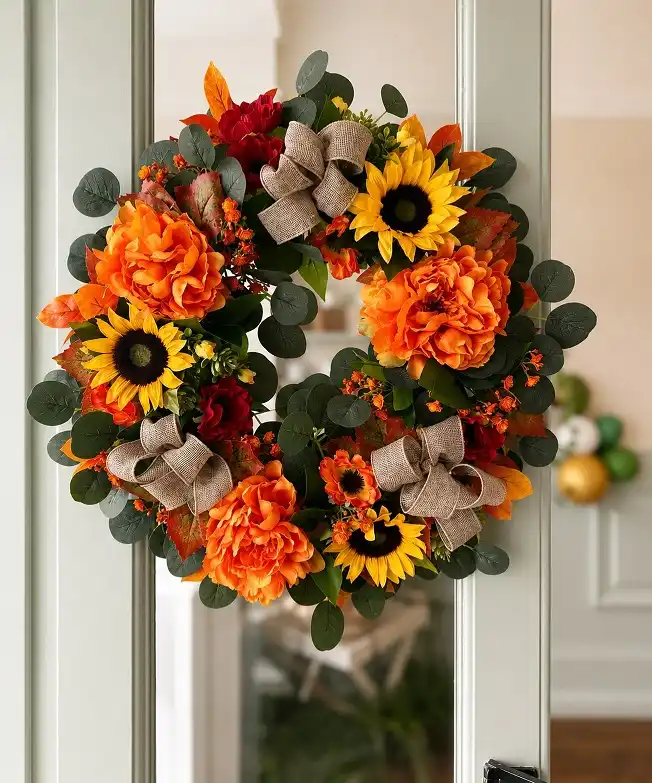
Three small burlap bows scattered around this wreath instead of one dominant bow at the bottom, and that repetition is the trick worth stealing.
Dense silver dollar eucalyptus covers the entire base with almost no gaps, giving sunflowers, orange peonies, and a few deep red blooms a solid backdrop to stand out against.
A handful of maple leaf sprigs sneak in near the top, nudging the palette slightly toward fall without fully committing to it.
Hung on a glass French door, the eucalyptus reads almost silvery against the light behind it.
Repeating a small accent three times around a wreath, instead of once, makes the whole thing feel more balanced from every angle.
15. A Pastel Bouquet Wreath That Leaves the Vine Base Bare on Purpose
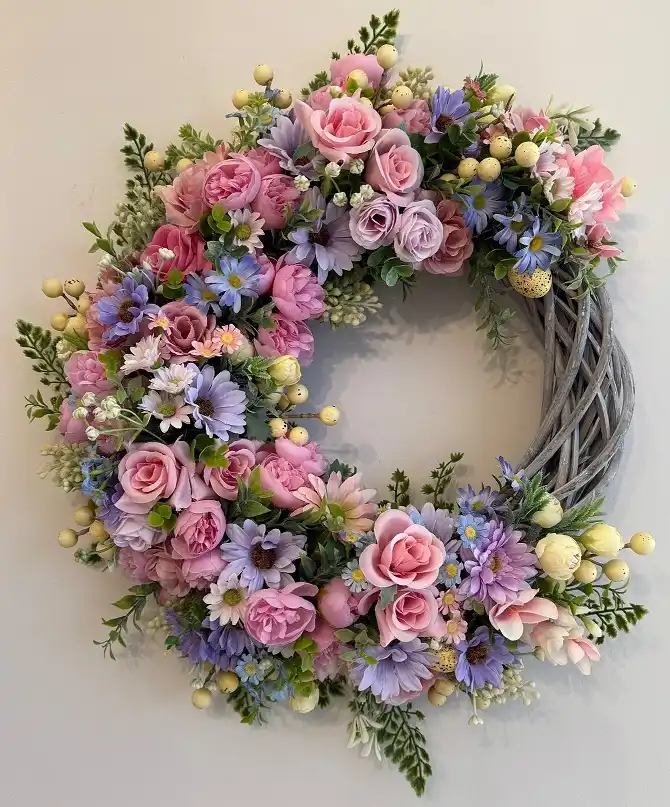
Pink garden roses and lavender daisies crowd two-thirds of this wreath, but the right side stays almost untouched, showing off a gray-washed vine base instead of hiding it.
Yellow speckled berries and pale periwinkle blooms fill the gaps between the pinks and purples, keeping the palette soft without going flat or one-note.
It’s the fullest, most bouquet-like wreath in this whole roundup, yet the bare vine section keeps it from tipping into overdone.
A lush floral cluster reads richer when it has bare vine to contrast against.
Conclusion
Fifteen different takes, and barely two of them share a color palette or a structure. That’s the point.
A front door only needs one wreath at a time, so pick the mood that actually matches your space, whether that’s the wild meadow look, the quiet wheat and heather bundle, or the pastel bouquet with the bare vine showing through.
Save this for the next time you want fresh ideas for your own front door.