18 Entryway Storage Ideas for Small Spaces

Every entryway carries more weight than its square footage suggests. Shoes pile up by the door, coats land wherever there’s a free hook, and before long the first thing you see walking in is clutter instead of a welcome.
The fix isn’t always a bigger space, it’s smarter storage. These entryway storage ideas cover everything from basket-lined benches and slim flip-front cabinets to backless shelving units and vertical hook walls, each one built for a hallway or corner that has no room to spare.
Some lean on baskets to hide the mess, others keep shoes on open display and let a tidy routine do the work.
A few stack storage in layers, from floor to eye level, so a single wall handles coats, bags, and shoes at once.
Whether your entryway is a wide mudroom or a two foot sliver by the front door, there’s a setup here that fits the footprint you actually have.
Scroll through for a mix of DIY builds, furniture swaps, and small styling tricks that turn a chaotic entry into one of the most organized corners in the house.
18 Entryway Storage Ideas for Small Spaces
1. Turn a Backless Bench Into a Basket Storage Wall
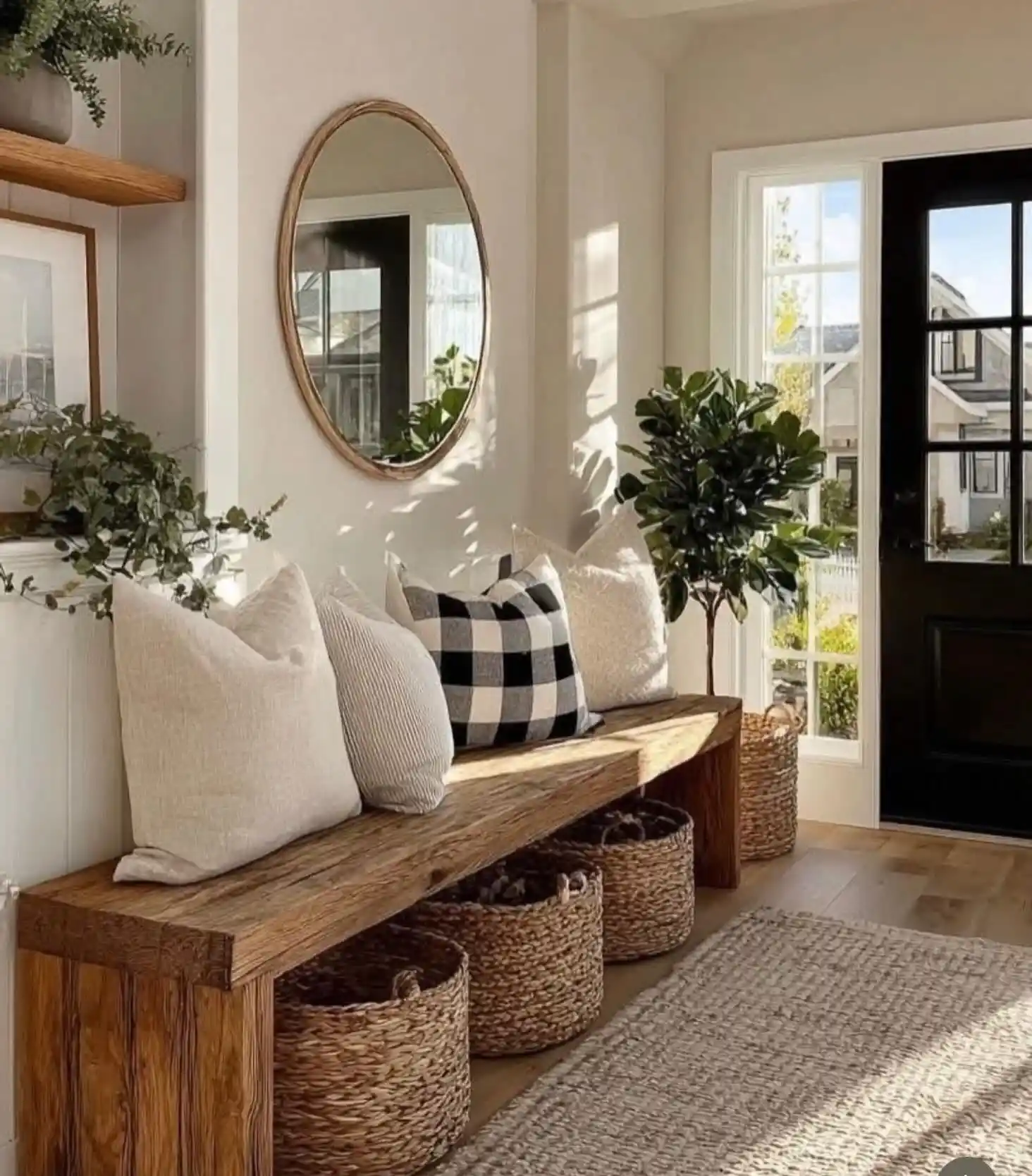
A single bench with open space underneath does more work than any closet. This one skips drawers entirely and leans on a row of matching woven baskets instead, each one sized to swallow shoes, scarves, or stray dog leashes the second you walk in.
What makes it work for a small entryway:
- The bench sits flush against the wall, so it reads as furniture, not clutter
- Baskets are uniform in size and material, which keeps a busy mix of shoes hidden and calm looking
- A round mirror above bounces light back into the space and makes the narrow hallway feel wider
- Layered pillows soften the reclaimed wood and give the bench a reason to double as seating
2. Layer Storage in Three Zones: Shelf, Bench, and Hook
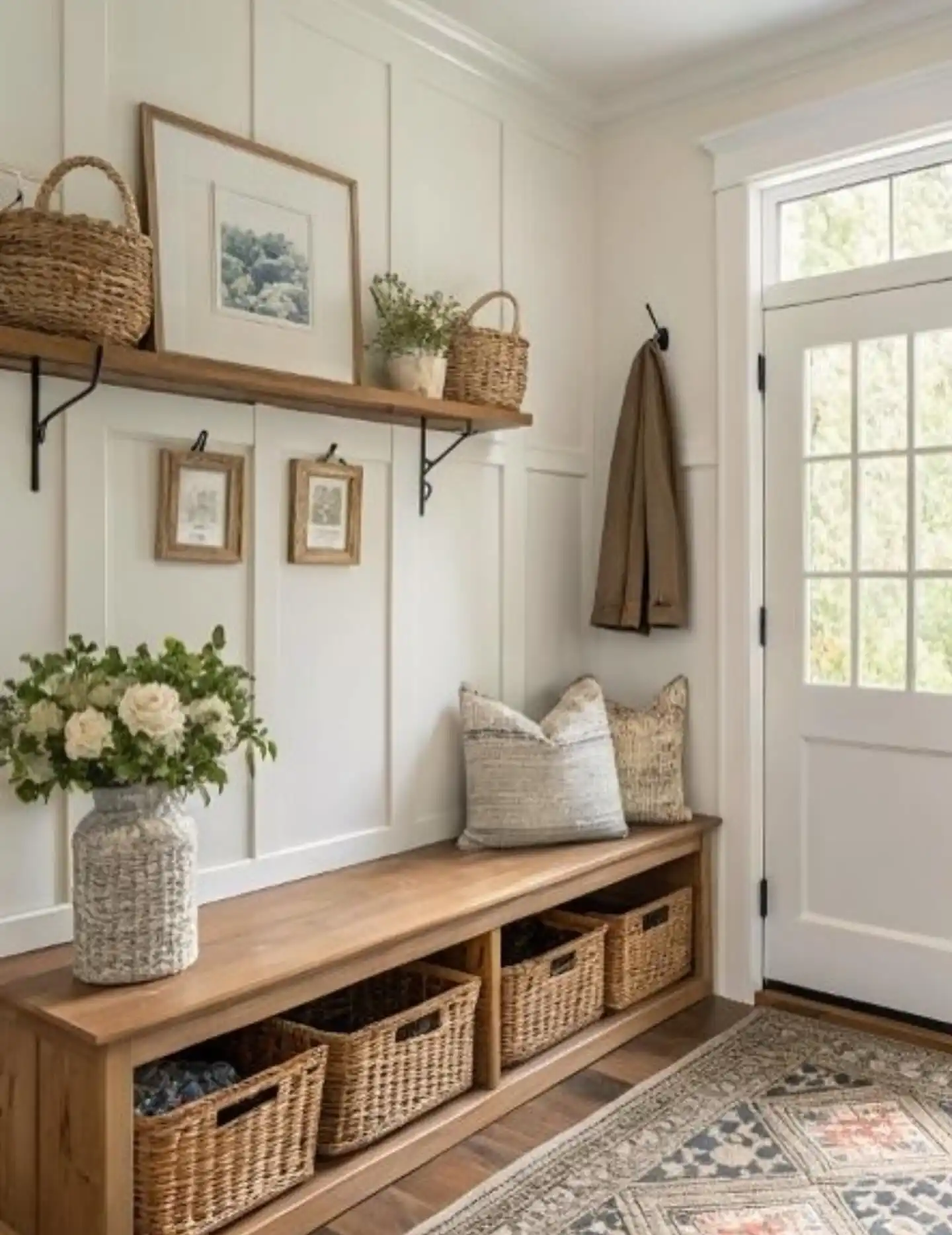
Small entryways run out of room fast when storage is only at floor level. This built-in stretches vertically instead, splitting the wall into a display shelf up top, a cubby bench in the middle, and a single hook for whatever coat is in rotation.
Wicker baskets slide into each cubby like drawers, so the wood stays visible and the whole wall still feels calm instead of crammed.
Here’s how to build the same layered setup:
- Start with a bench and open cubbies
Build or buy a bench with divided slots underneath, sized to fit baskets snugly so nothing shifts. - Add a floating shelf above
Mount it high enough to clear heads but low enough to reach, and use it for a mix of baskets and one framed piece. - Finish with a single hook
One sturdy hook by the door catches the jacket or bag you actually grab on your way out, so it never lands on the bench.
Divide the base into equal slots sized for standard rectangular baskets.
Use it for one basket, a small framed print, and a plant for a lived in feel.
Keep it single and sturdy so it holds real weight without crowding the wall.
3. Skip the Baskets and Let a Slatted Shelf Do the Work
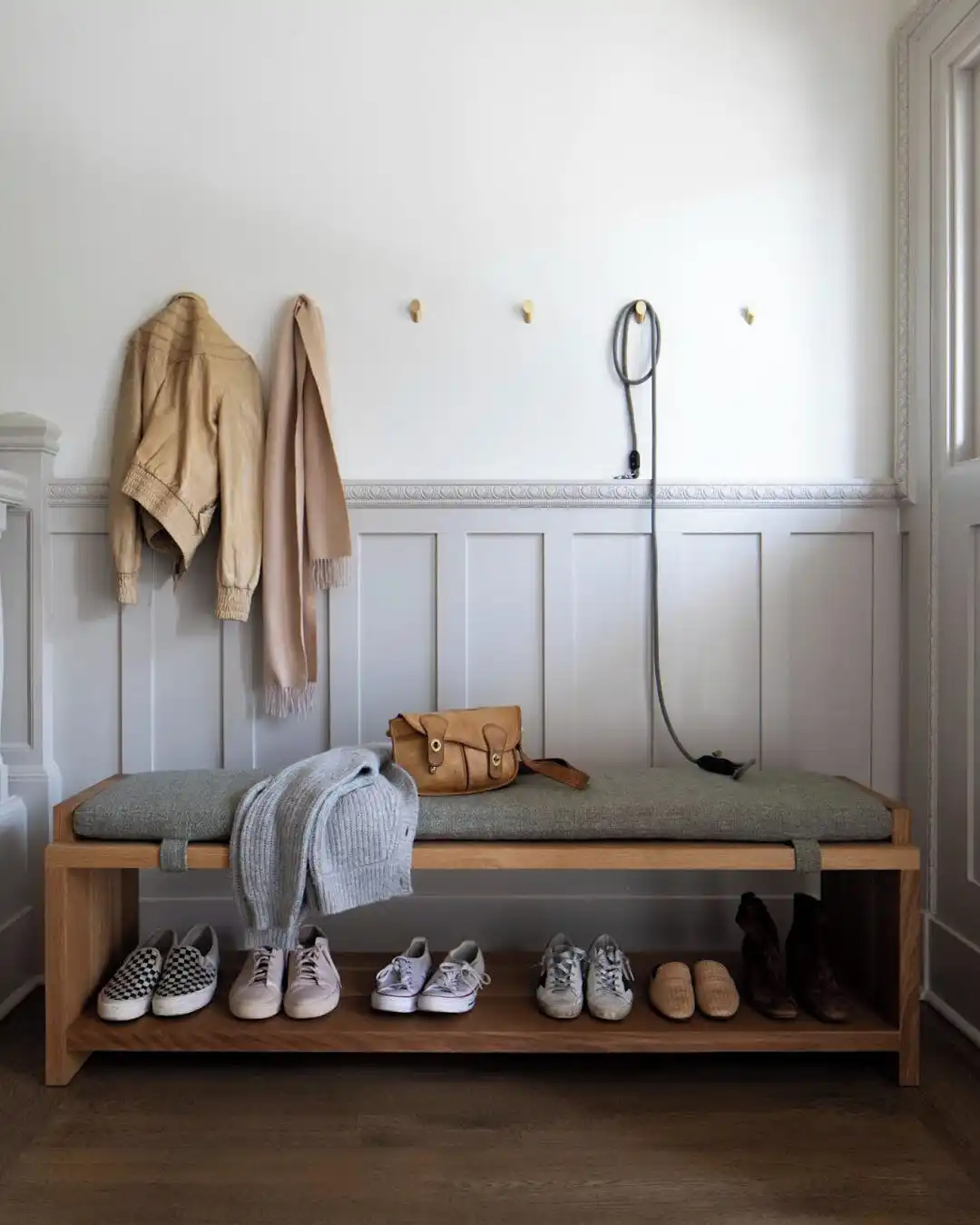
Not every entryway needs baskets to hide the mess. Here, the shoes stay in full view on a slatted lower shelf, lined up neatly enough that the open storage reads as intentional rather than lazy.
A cushioned top turns the whole piece into a seat for pulling boots on, and a row of small wooden pegs above handles coats, scarves, and even a leash without a single cabinet in sight.
What’s different about this approach:
- No baskets means no digging around for a matching shoe
- The open shelf forces a bit of daily tidying, which actually keeps clutter down
- Pegs sit low and close together, so light layers hang without stretching out
| Basket storage | Open slat shelf |
|---|---|
| Hides shoes completely from view. | Keeps shoes visible and easy to grab. |
| Forgiving if shoes are tossed in messy. | Needs shoes lined up neatly to look tidy. |
| Best for busier households with more pairs. | Best for a smaller, curated shoe rotation. |
4. Choose a Slim Cabinet When You Need Doors, Not Baskets
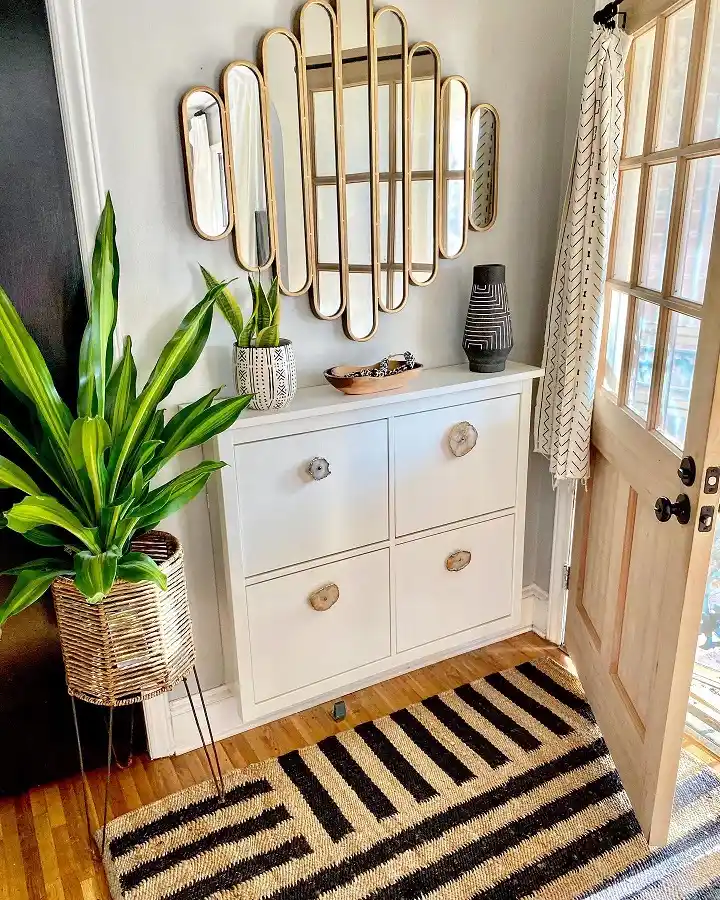
A narrow shoe cabinet with flip-down drawers solves a different problem than open shelving. Everything stays fully hidden behind flat white fronts, so the entryway can double as a spot for styling instead of storage.
Swapping the stock hardware for a few polished stone knobs is what keeps this piece from looking builder grade, and the flat top becomes its own little display shelf for a vase and a catchall bowl.
- Detail one: the cabinet sits low and slim, so it slides into a narrow wall gap where a bench would not fit
- Detail two: raw agate slice knobs add texture without competing with the mirror above
- Detail three: the flat top holds a bowl for keys, a vase, and one sculptural object, kept to three pieces max
Keep shoes and clutter fully out of sight behind a clean flat front.
A small hardware upgrade makes a flat pack piece look custom made.
A vase, a bowl, and one sculptural piece turn the top into a mini vignette.
5. Go Vertical With an All-in-One Hall Tree
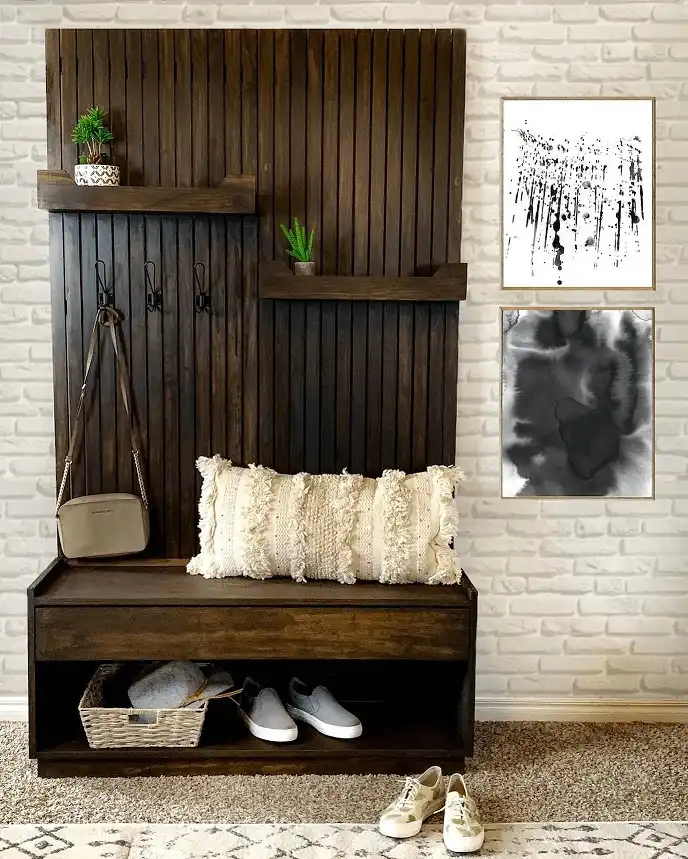
Some entryways don’t have room to spread storage across a wall, so this build stacks it instead.
Hooks, two staggered shelves, and a bench with a hidden cubby all live on one tall footprint of dark stained wood, which means a single piece handles coats, bags, plants, and shoes without eating up floor space anywhere else.
The slatted back adds texture so the whole thing reads as a design statement, not just a shoe rack with extra steps.
The staggered shelf heights are the small trick that makes it work. One sits low enough for a small plant you’ll actually water, the other higher for something decorative, and neither blocks the hooks below it.
6. Tuck a Lift-Top Ottoman Into an Awkward Corner
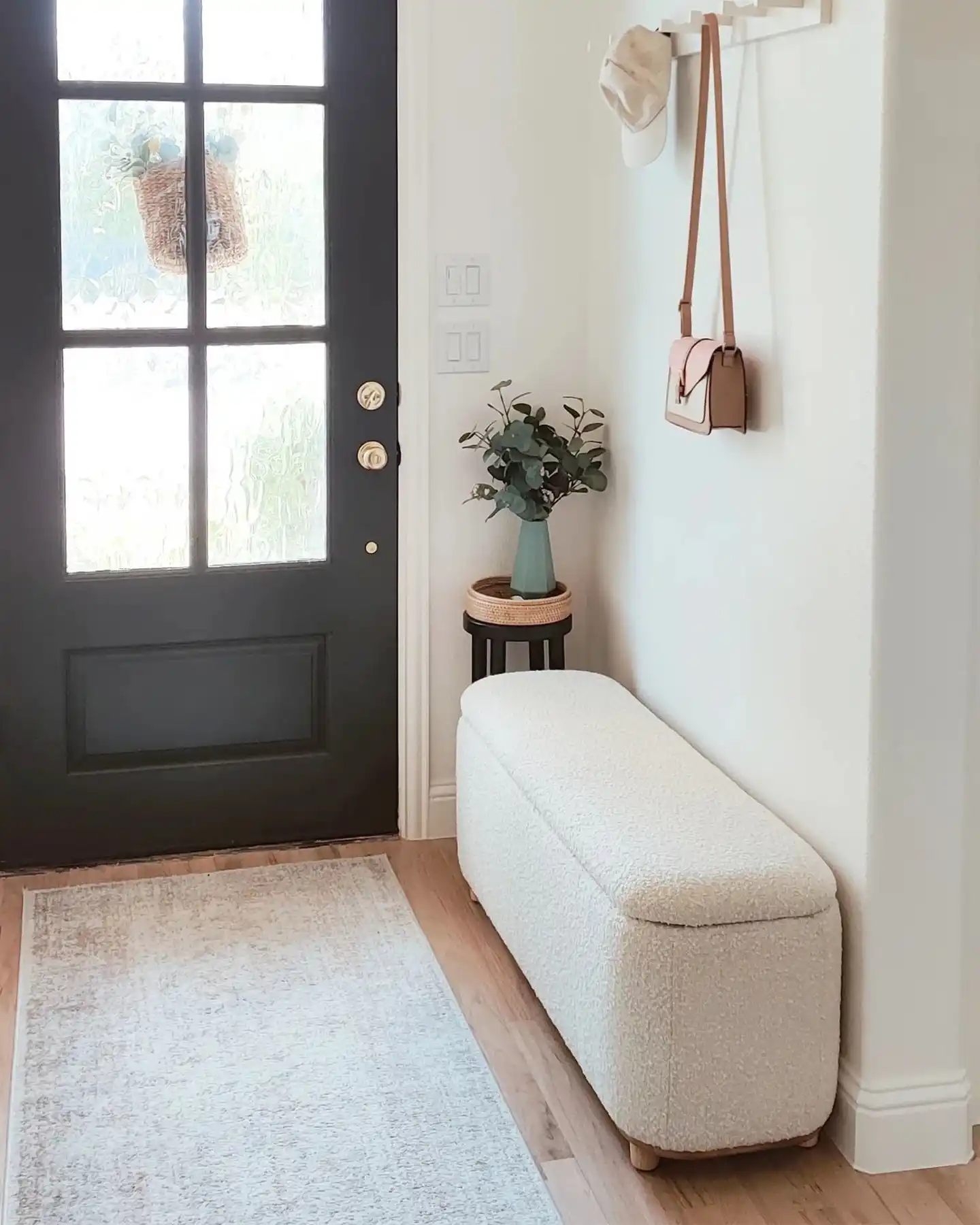
Not every entryway has wall space for a built-in. This tight nook solves that with a soft, upholstered storage ottoman instead, its rounded front edge letting it slide into a corner that a boxy wood bench never would.
Lift the cushioned top and there’s a hollow interior for hats, gloves, or dog leashes, all hidden behind bouclé fabric that feels more like living room furniture than mudroom gear.
A round rattan side table fills the gap beside it for a vase, and a wall-mounted peg rail overhead catches bags and caps so the ottoman itself stays clear for actually sitting down to change your shoes.
Subscribe to DIY Craft Bloom
Get updates on the latest posts and more from DIY Craft Bloom straight to your inbox.
A rounded ottoman fits corners a squared off bench cannot, so measure the tightest angle in your entry before you shop for shape.
7. Split Storage Across Drawers, a Basket, and Bare Floor
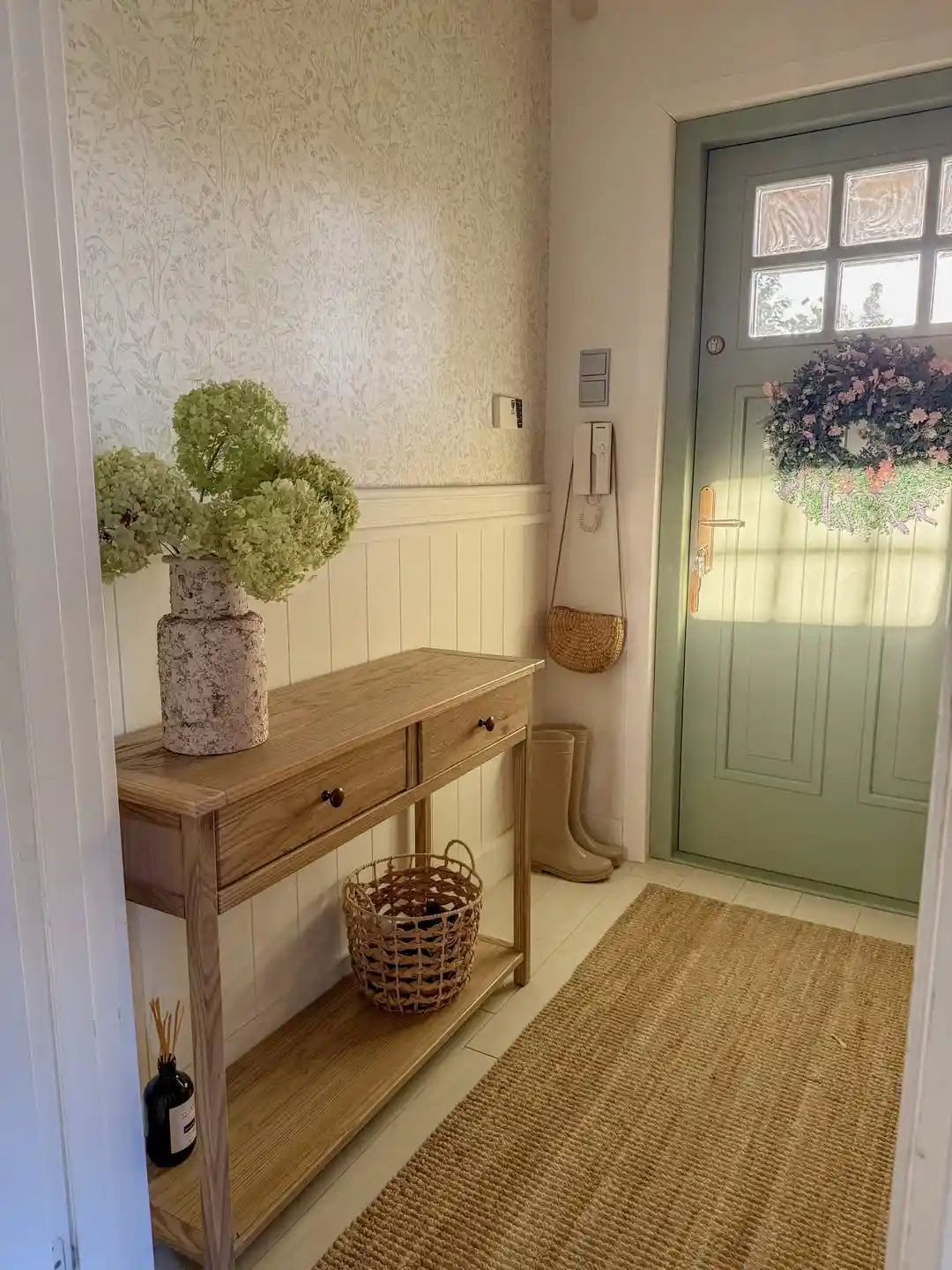
This narrow console proves you can layer three storage types without any of them competing.
Two shallow drawers up top hold small stuff like keys and sunglasses, a woven basket underneath swallows anything bulkier, and the boots simply stand on the floor beside it because not everything needs a container.
A single hanging basket by the door catches whatever you’re carrying in from the car.
Reserved for flat, small items like keys and sunglasses only.
Catches soft, shapeless items that would slide loose in a drawer.
Gives boots their own spot so they never compete with baskets for room.
8. Stack Four Slim Drawers Instead of One Wide Cabinet
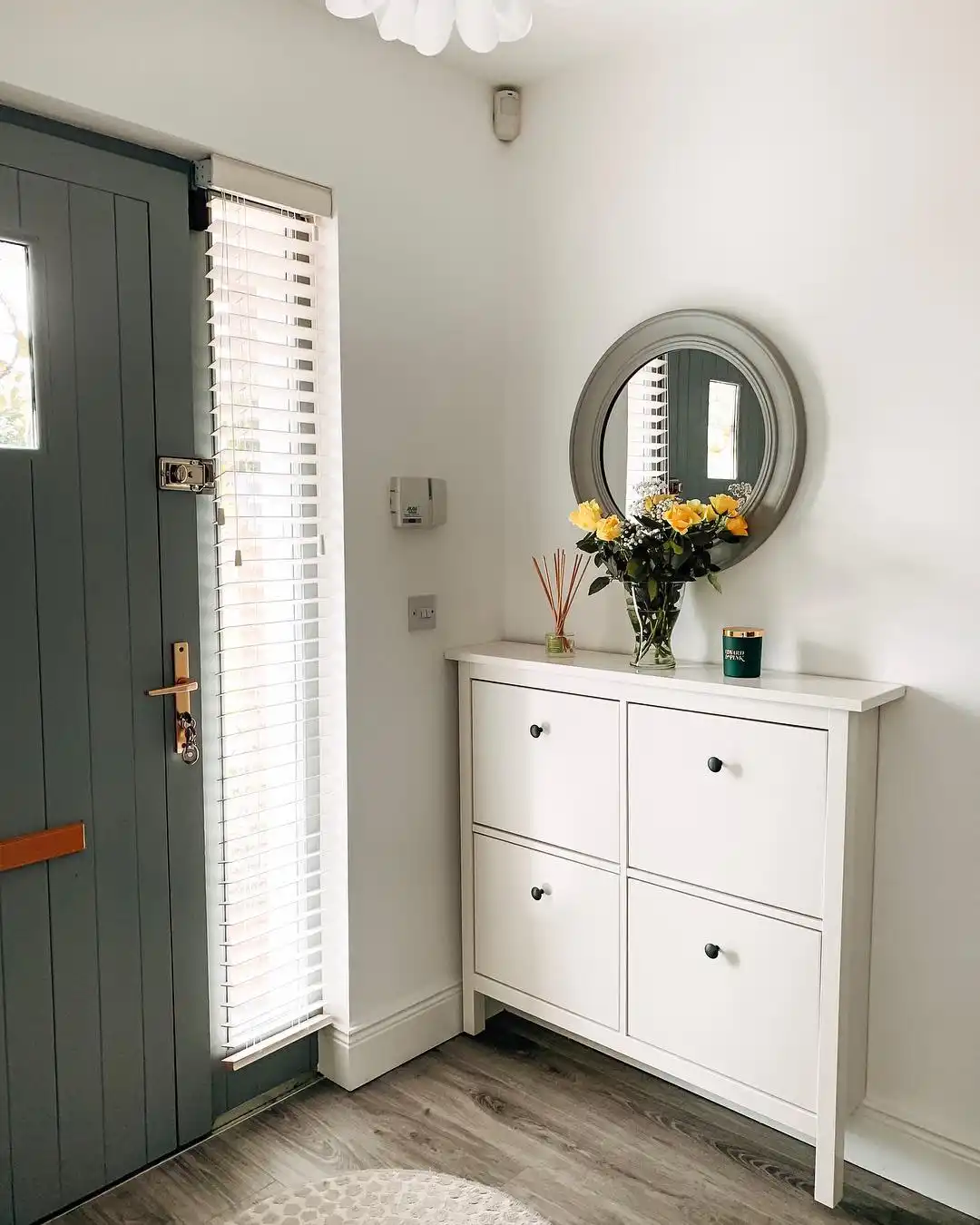
Four flip-front drawers stacked two by two give this cabinet more storage per square foot than a single wide door would, without adding any extra depth to the hallway.
Matte black knobs keep the hardware quiet against the white paint, and the flat top becomes prime real estate for a mirror-facing vignette instead of a catch-all shelf.
At a glance:
- Drawer count: four, stacked in a two by two grid
- Depth: shallow enough to leave the hallway walkable
- Top styling: flowers, a candle, and a reed diffuser, kept low so the mirror stays the focal point
9. Combine a Drawer Cabinet and a Bench in One Build
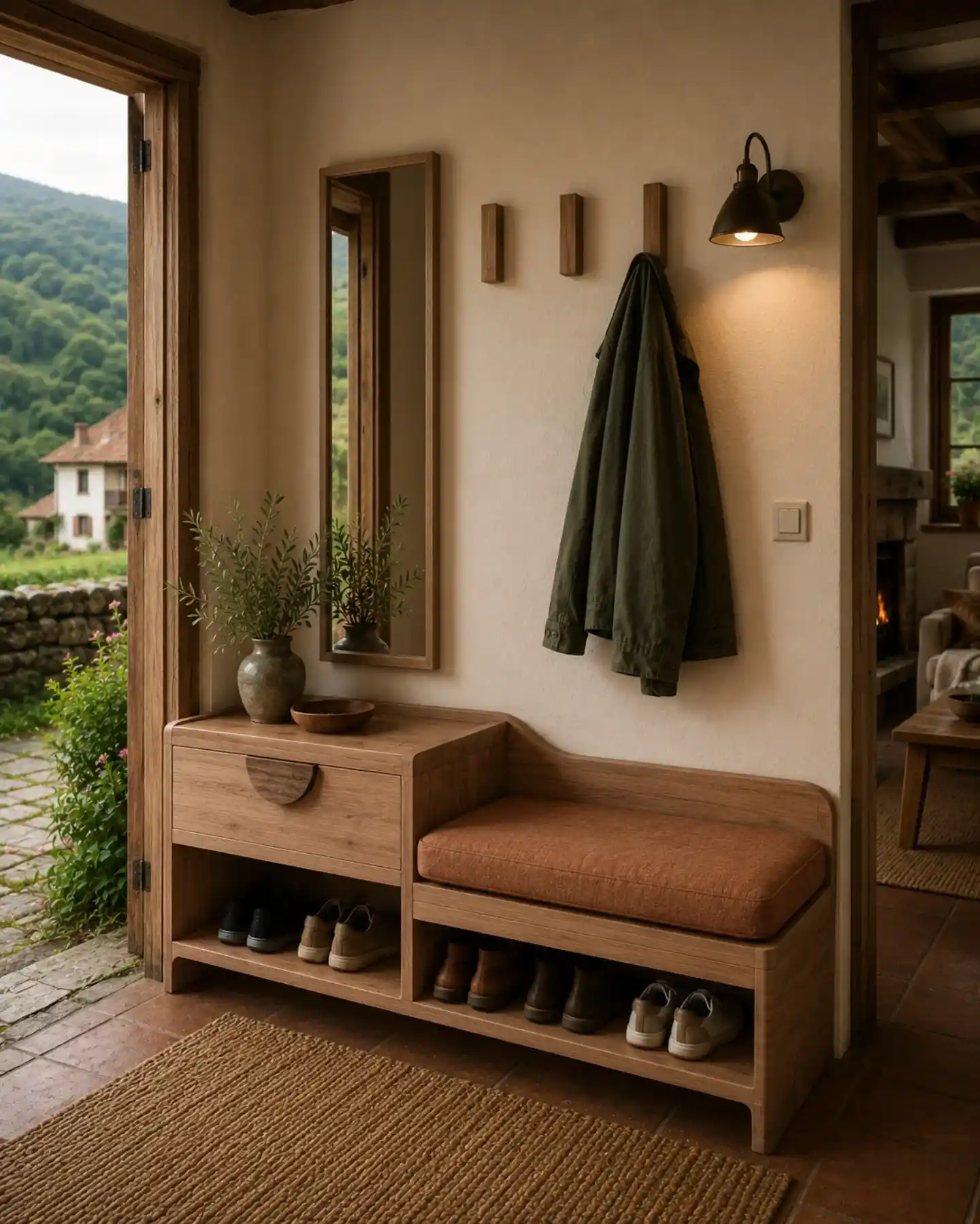
This piece splits down the middle: half closed storage, half open seating, both built on matching open shoe shelves below.
The drawer side handles small things you want tucked away, while the cushioned bench side gives you a place to actually sit while you swap shoes, something a straight run of drawers never offers on its own.
A narrow mirror stretches the full height beside it, which does double duty checking your outfit and bouncing extra light back toward the door.
Warm wood tones and a rustic wall sconce keep the whole corner feeling like part of the house rather than a bolted on utility station.
10. Split Storage Across Both Walls of a Narrow Entryway
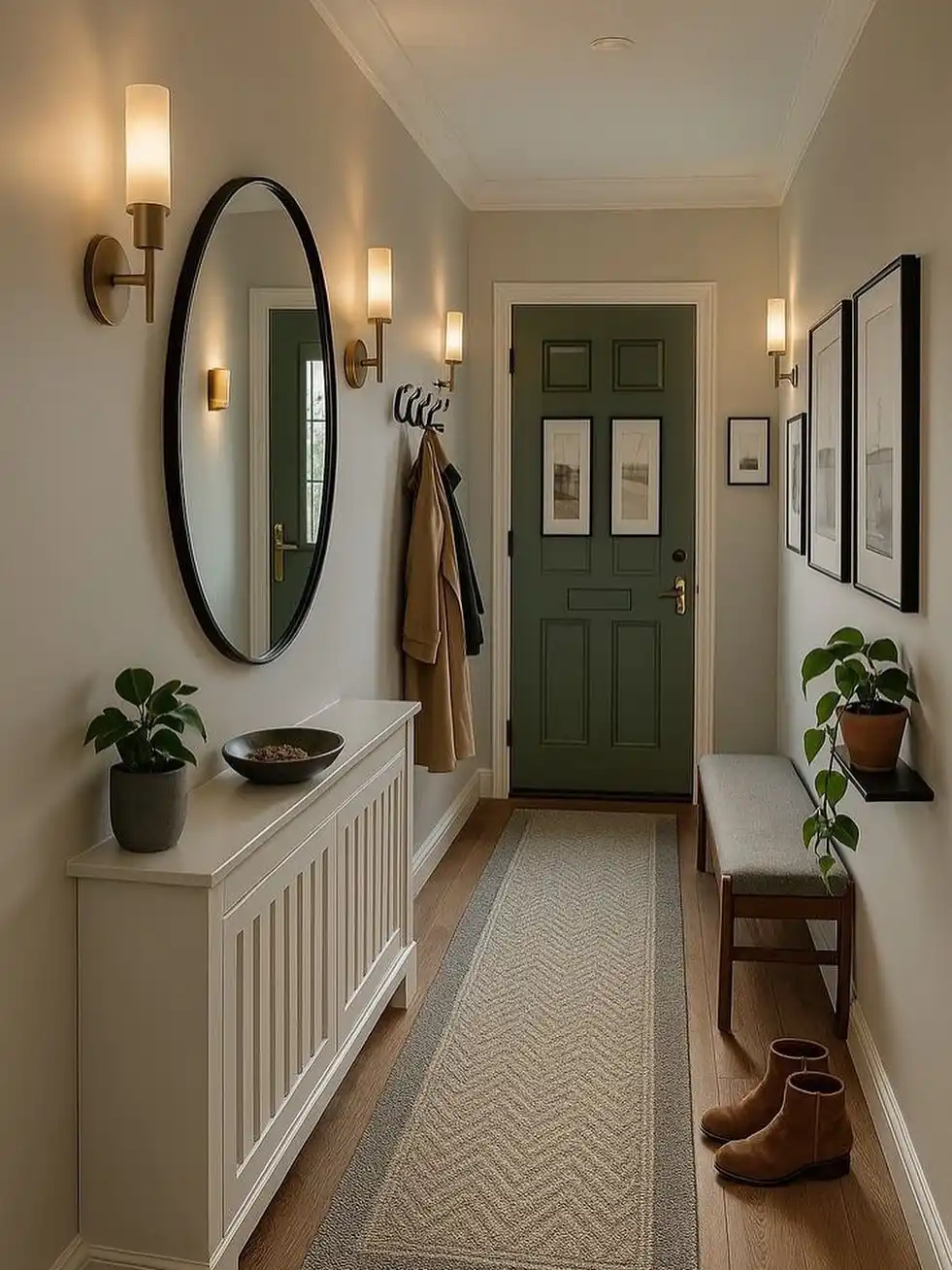
Squeezing storage into a tight entryway usually means picking one wall and cramming everything onto it.
This one splits the job instead: a slim closed cabinet with a round mirror on the left, a small bench with its own floating shelf on the right, so weight and function are spread evenly instead of piled up on one side.
The runner rug down the middle keeps a full walking path clear even with furniture flanking it on both sides in this narrow entryway.
- Skip stacking every basket and cabinet on one wall, since it visually narrows the entryway further
- Do use the opposite wall for something lower profile, like a bench with a single small shelf above it
- Skip matching furniture styles exactly, a mix of white cabinet and wood bench still reads as intentional with repeated metal finishes
- Do keep a clear path at least two feet wide between the two sides of the entryway
Spread storage across both entryway walls to balance the weight visually.
Keep at least a two foot clear path down the middle.
Piling every piece onto one wall, which crowds the entryway.
Choosing deep furniture on both sides of a narrow entryway.
11. Use Two Fully Open Shelves Instead of One
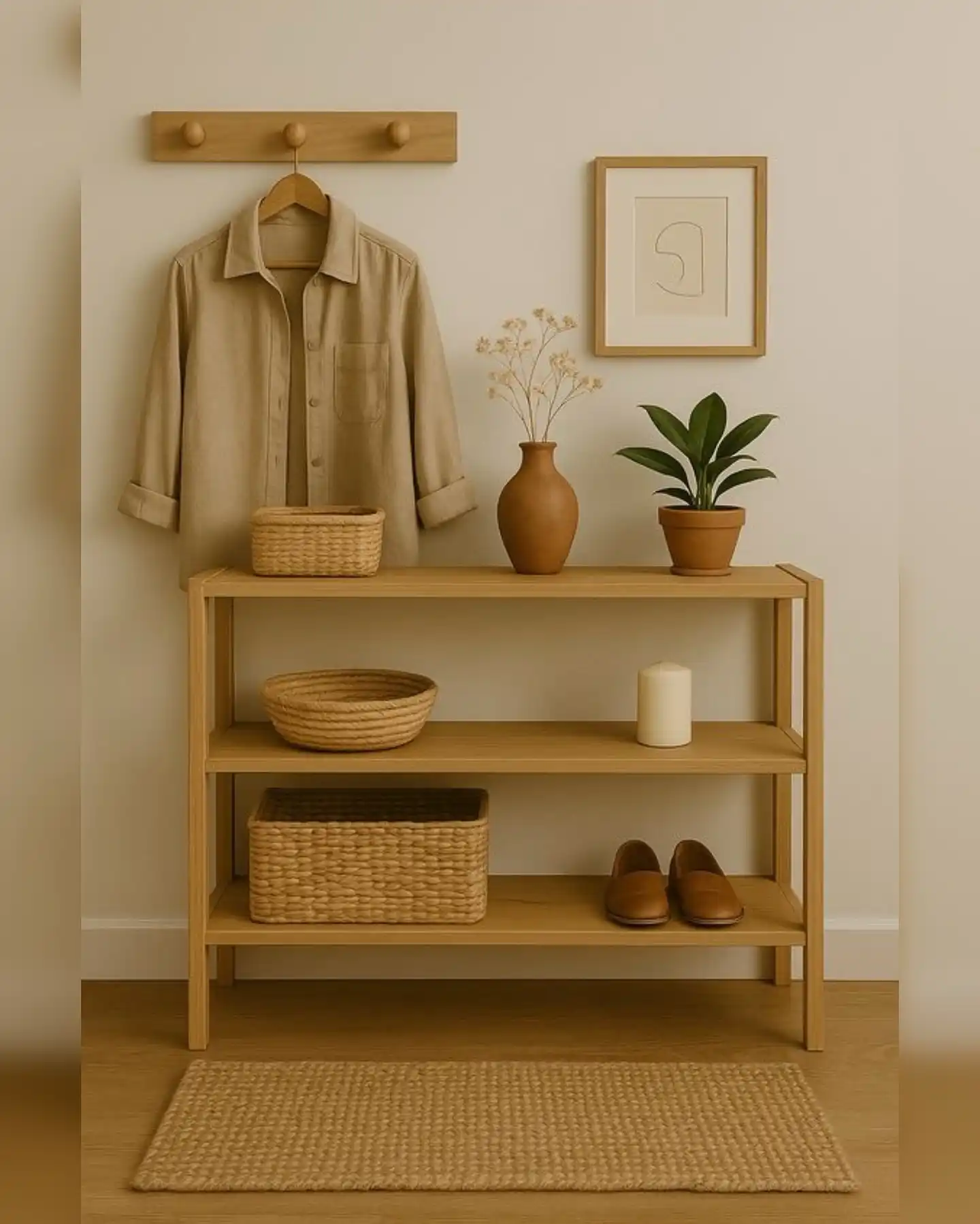
Two open shelves stacked under a console top hold more than most closed cabinets, they just ask you to be a little more deliberate about what goes where.
Small baskets here corral loose items on each shelf, so the openness never tips into visible clutter, and a peg rail above keeps outerwear off the surface entirely so the top stays styled with a vase and a plant.
The real trick with a piece like this is treating each shelf as its own zone rather than one long storage strip.
The top open shelf holds a shallow round basket for scarves, the bottom one holds a deeper rectangular basket for shoes, and everything else in the entryway gets left in view on purpose, from the candle to the loafers waiting by the door.
12. Line Up Six Hooks in a Row Above a Basket Bench
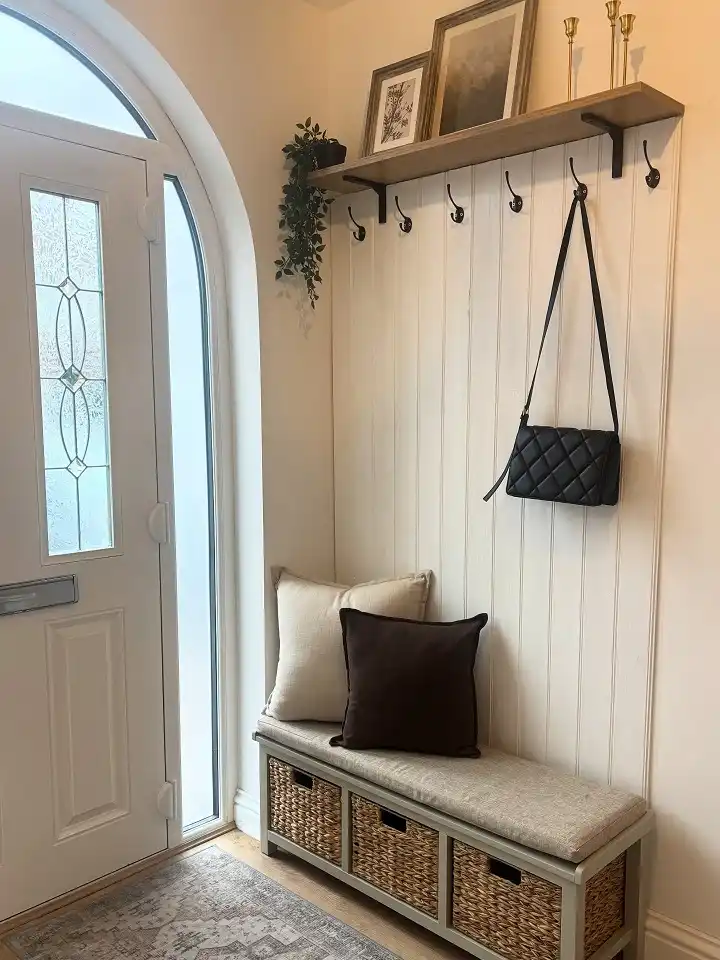
A full run of hooks changes how a household actually uses an entryway. Instead of one shared hook for whoever gets there first, six separate pegs mean bags, coats, and leashes each get their own spot, so nothing ends up piled on top of anything else.
A floating shelf above holds framed art and a set of brass candlesticks, keeping the display purely decorative while the hooks and bench below handle the daily traffic.
Three woven baskets slide under the cushioned bench seat like drawers, splitting shoe storage into separate compartments instead of one open jumble.
It’s a setup built for a house with more than one person walking through the door.
Subscribe to DIY Craft Bloom
Get updates on the latest posts and more from DIY Craft Bloom straight to your inbox.
One hook per person beats one hook for everyone in a busy entryway.
13. Add a Side Table Next to the Hall Tree for Overflow
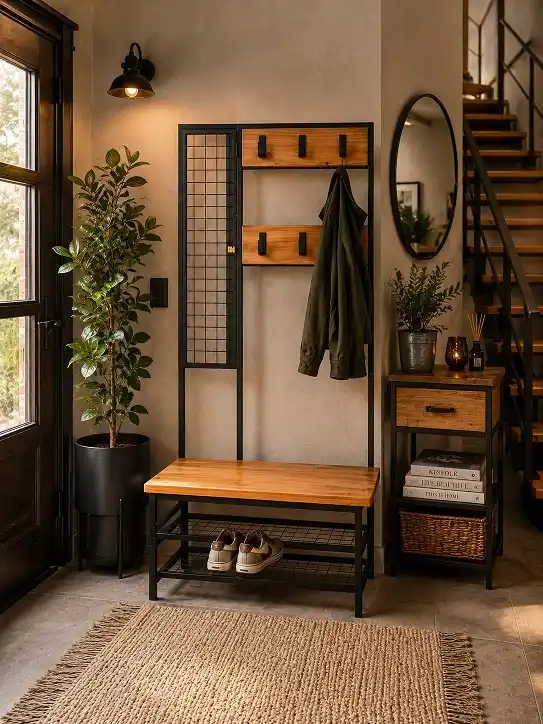
An industrial metal-frame hall tree handles the basics: hooks for jackets, a wood bench top, and a slatted shelf for shoes underneath.
What extends the storage further is the small side table planted right next to it, adding a drawer for stray items and an open lower shelf that holds a stack of books and a woven basket.
Together they turn one corner into a full mudroom setup without a single built-in.
The black metal frame and warm wood tones repeat across both pieces, which is what keeps two separate furniture items from looking mismatched.
A round mirror on the wall between them ties the grouping together and gives the entryway one last check before heading out.
14. Let Oversized Floor Baskets Handle What the Bench Can’t
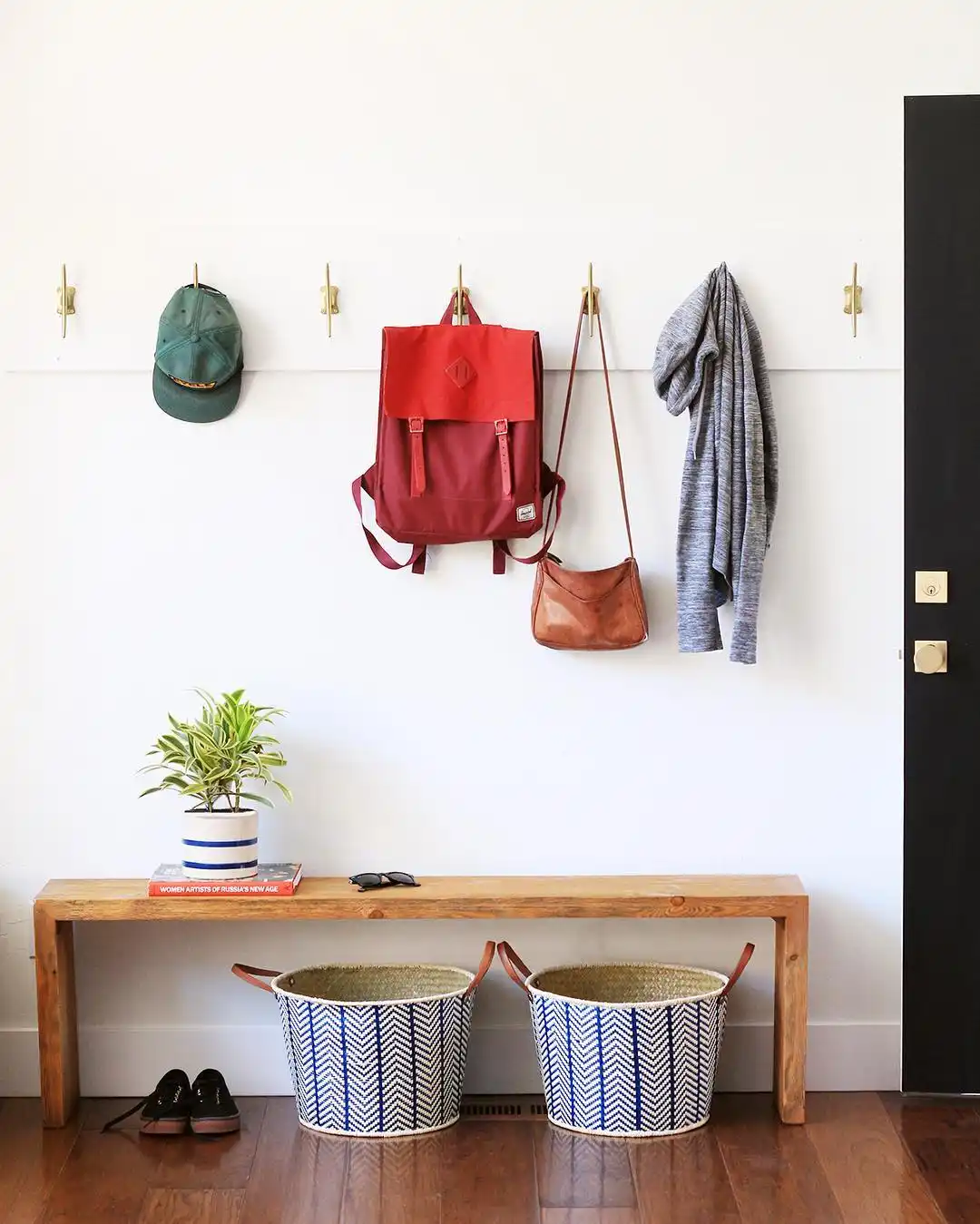
Five brass hooks in a single row do the job for bags, hats, and layers, but this entryway solves floor level storage differently than most.
Instead of a bench with built in cubbies, two patterned floor baskets sit directly under a simple wood bench, big enough to take umbrellas, extra shoes, or a rolled up blanket that would never fit in a standard basket.
No cubbies, just a flat surface for a plant, a book, and sunglasses.
Patterned and roomy enough for umbrellas or a rolled up blanket.
Enough spacing that bags and layers never crowd each other.
15. Skip Furniture Entirely With a Stacked Hook Wall
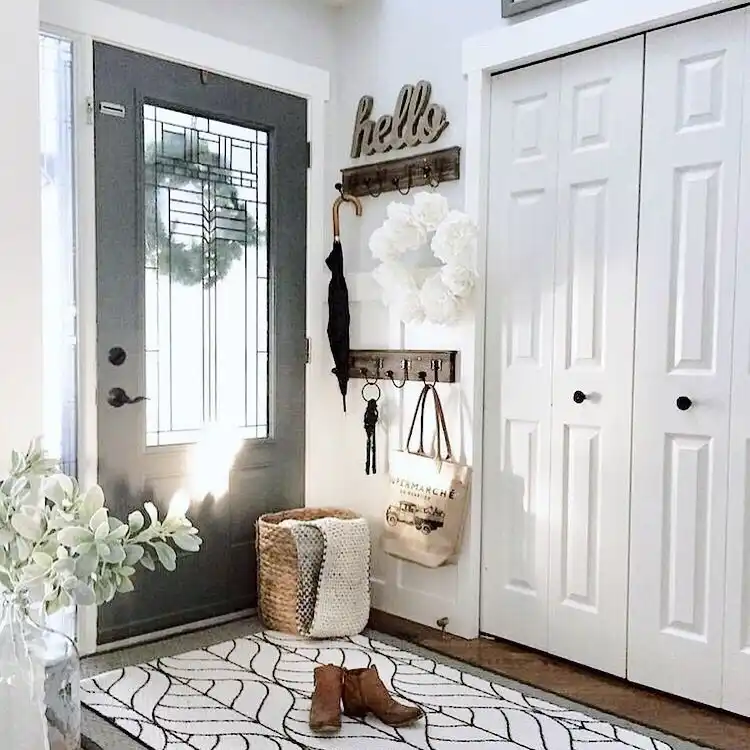
Sometimes the smallest entryway needs no furniture footprint at all. This one uses two narrow hook racks mounted directly on top of each other beside the door, holding an umbrella, keys, and a canvas tote without a single inch of floor space lost.
A woven basket at the bottom catches the umbrella when it’s wet, and a small wreath dresses up what would otherwise be a plain strip of wall.
It works because the storage never competes with the door swing or the closet beside it. Everything hangs flat against the wall, out of the walking path entirely.
If the entryway has no floor space to spare, put the storage on the wall instead.
16. Fit Four Storage Types Into a Single Bench
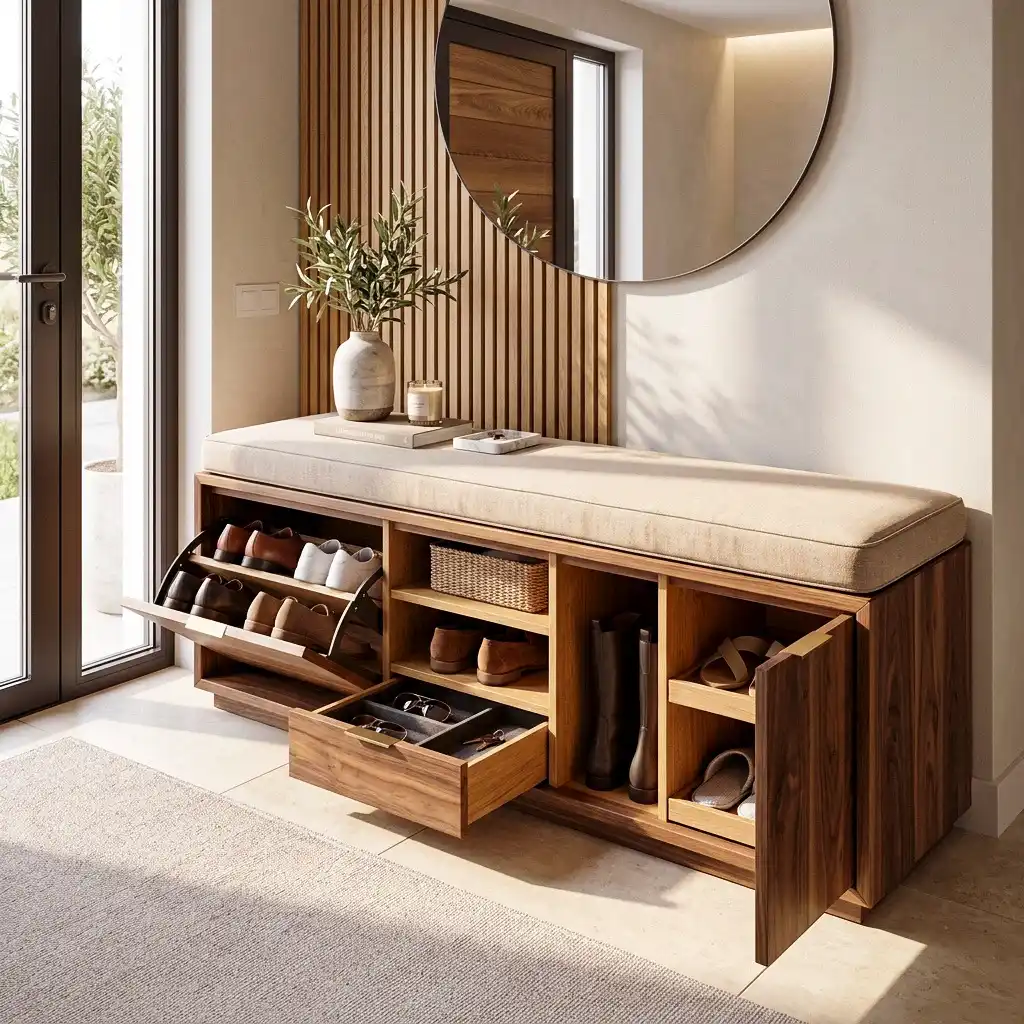
This walnut bench packs the most variety of any piece in this list. A tilt-out front on one end hides two shoe racks stacked behind a hinged panel, the middle splits into open cubbies for boots and a basket, a slim pull-out drawer holds glasses and small accessories, and the far end closes behind a full cabinet door.
One long cushioned seat ties all four storage types together into a single visual line.
The wood slat panel behind the mirror repeats the vertical lines of the bench itself, which is a small detail that keeps a piece this busy from feeling chaotic. Nothing about the compartments shows unless you open them.
17. Skip a Solid Bench and Build Baskets Into the Base Instead
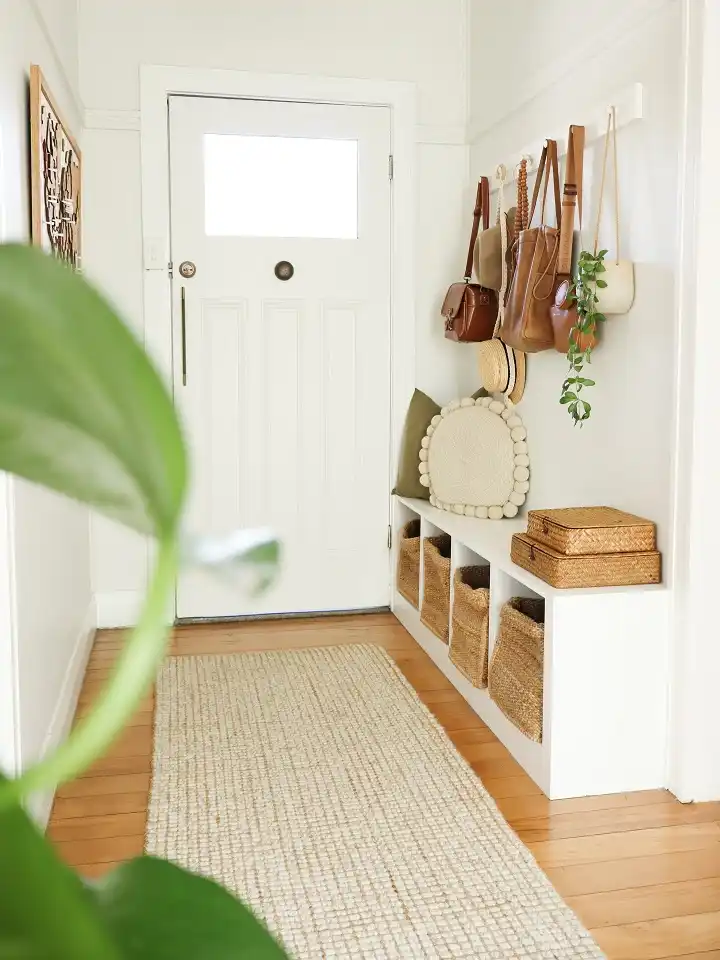
A backless white base with four basket cubbies takes up barely more depth than a shelf, which matters in a hallway this narrow.
No cushioned top means no seating, but the wall above earns its keep with a full row of hooks holding bags, hats, and a trailing plant, plus a stacked pair of lidded boxes on the ledge for anything that shouldn’t be visible.
Baskets here are matched but not identical in what they hold, one keeps gloves, another keeps dog gear, so a glance tells you which one to grab.
It trades a place to sit for a hallway that still feels wide enough to walk through two abreast.
18. Let Two Oversized Baskets Anchor an Open Shelf Console
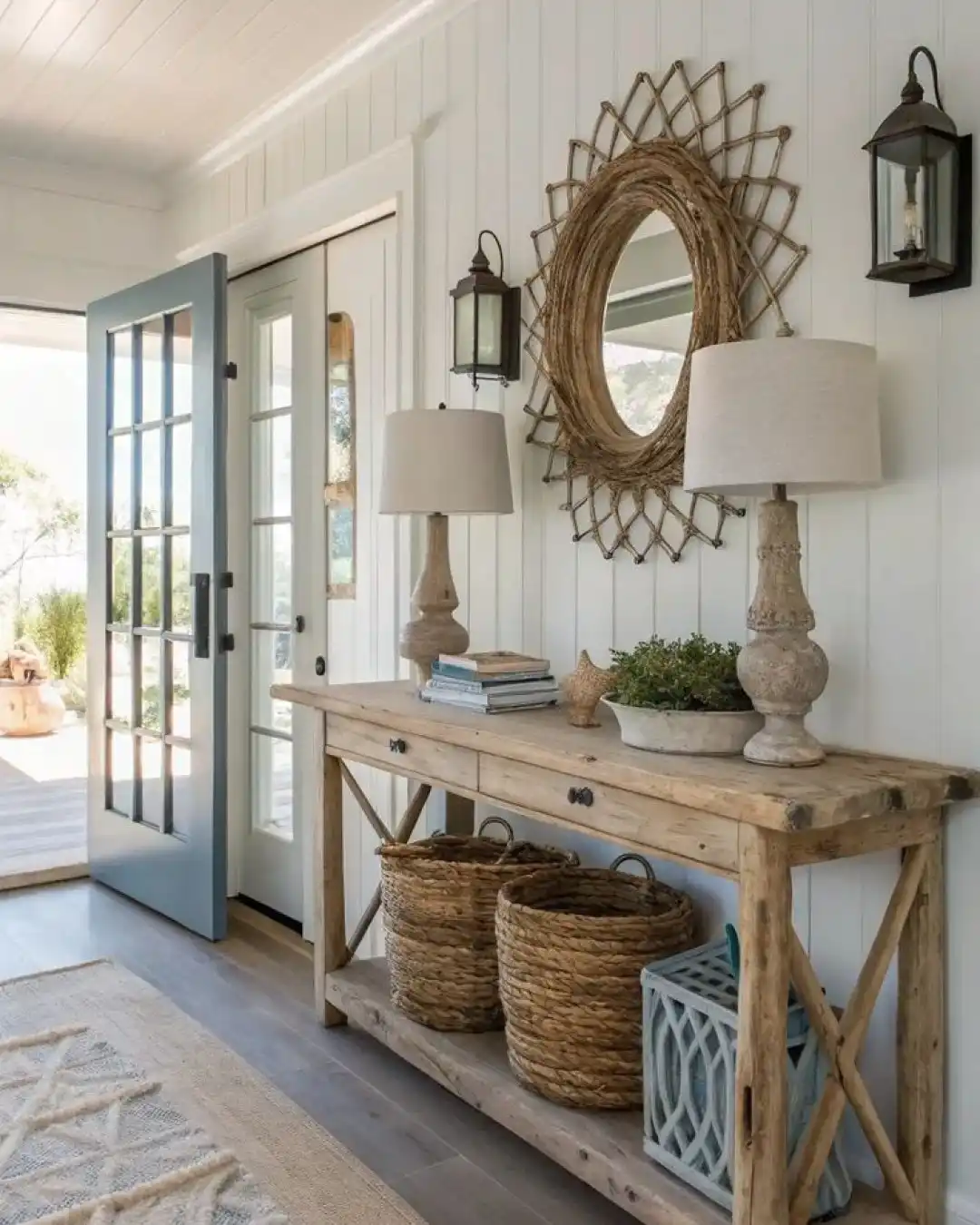
The lower shelf of this reclaimed wood console skips small matching baskets entirely, opting instead for two large woven baskets sized to hold blankets or a stash of outdoor gear.
A single drawer up top handles the small stuff, while books, a plant, and a pair of stone lamps dress the surface so the piece reads as a furniture moment first and storage second.
The open X-brace legs keep the whole thing from feeling heavy despite the amount it holds.
The scale here is the real lesson: oversized baskets on an open shelf can store more than a full bank of small cubbies, and they read as intentional decor instead of a hidden fix.
conclusion
Small entryways don’t need less storage, they need storage that’s chosen on purpose.
A bench with cubbies, a slim cabinet with doors, or even a couple of oversized floor baskets can each solve the same problem in a completely different way, so it’s worth matching the style to how your household actually moves through the door.
Save this for the next time you want fresh entryway storage ideas.