14 Pet Friendly Entryway Ideas for Dog Owners

As much as I love my dog, I’ll admit that my entryway used to be a disaster. Every walk ended the same way: muddy paw prints on the floor, a tangled leash on the console table, and dog toys somehow scattered from the front door to the kitchen.
The problem wasn’t my dog. It was the lack of a system.
After a few small changes, our entryway became much more functional. We added a dedicated spot for leashes, a washable rug for dirty paws, and a few storage solutions that kept everything organized without sacrificing style.
If you’re a dog owner, your entryway works harder than most spaces in your home. It’s the first stop after walks, park visits, and rainy-day adventures, which means it needs to be both practical and welcoming.
1. Build a Feeding Station Into the Cabinetry
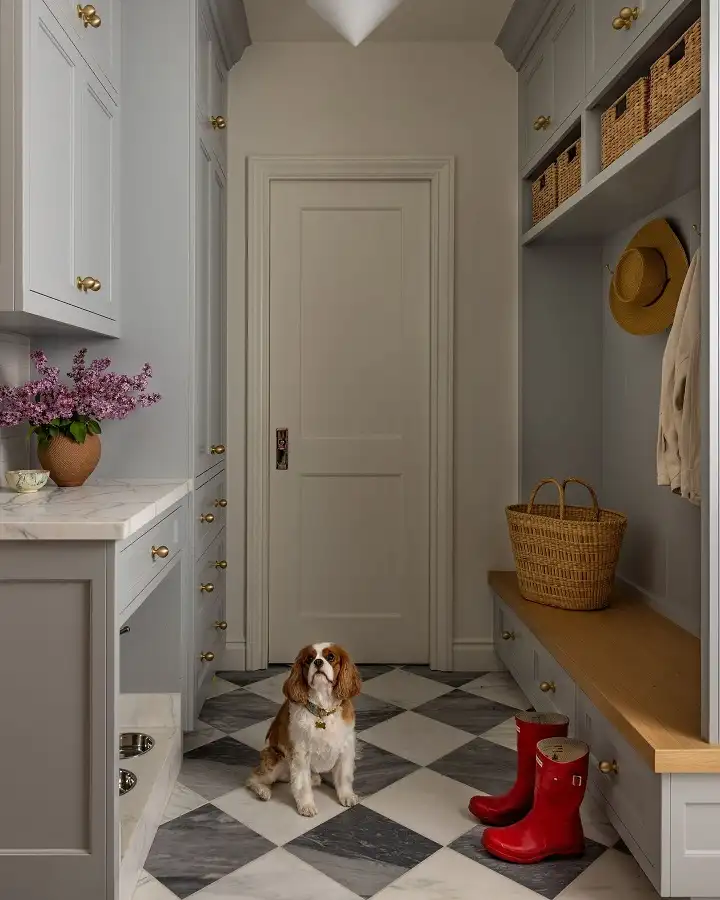
Two bowls sit fitted into a marble ledge low to the ground, tucked between rows of soft gray cabinets.
Food and water stay off the main floor, which keeps the checkerboard tile clean after every meal. Rattan baskets stack above, holding towels and treats within easy reach.
Copy this by carving out one low shelf near your own entry, even a narrow gap under a bench works. Line it with a washable mat so spills wipe up fast. Keep bowls close to the door so muddy paws never track through the rest of the house.
A bench with drawers nearby gives you a spot to store boots while the dog waits by the bowls.
Small details like brass hardware make the setup feel intentional rather than makeshift. Your dog gets a routine spot, and you get one less mess to chase.
2. Give the Leash a Home on a Slim Console Table
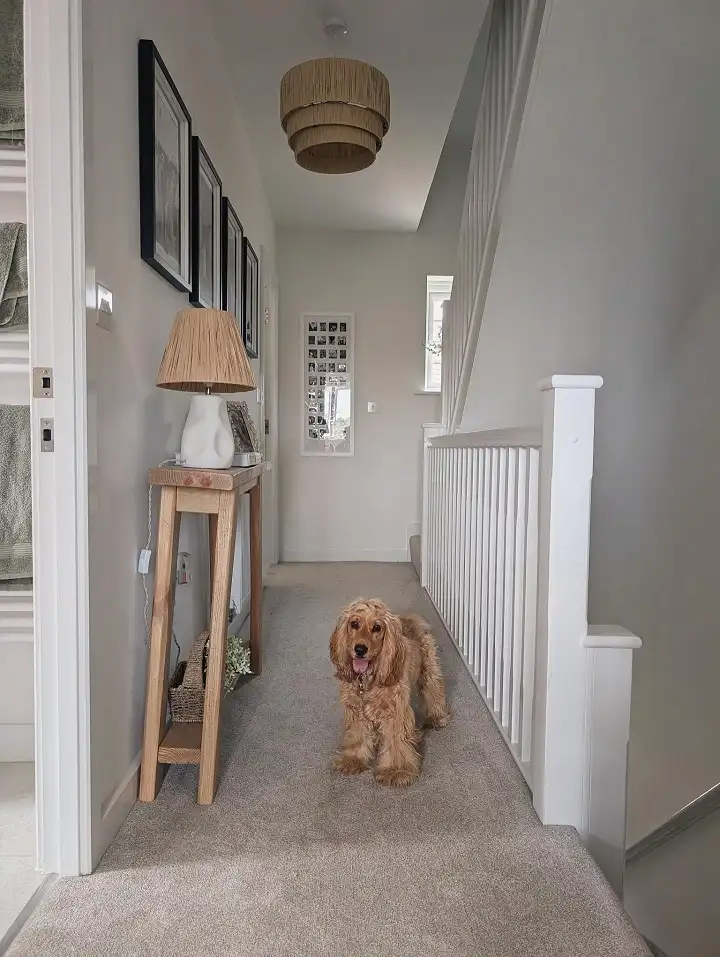
A narrow oak table stands right where the dog waits before walks, holding a lamp and a small basket underneath for spare items.
The open shelf below sits close to the floor, easy for a dog to sniff without bumping into anything. Soft carpet covers the hall floor so paws land quietly and comfortably.
Hang hooks above a similar table for the leash and collar, so you never search for them at the door.
Choose a low pile carpet or runner for the space, since it hides shed fur better than a plush weave. Keep the surface underneath the table clear so your dog has room to sit while you get ready.
Photos or art along the wall turn a working hallway into a space you actually enjoy walking through. Neutral tones on the walls and carpet mean muddy paw prints show up less between cleanings.
A little planning here saves the scramble that usually happens right before a walk.
3. Set a Wipe Zone Right at the Front Door
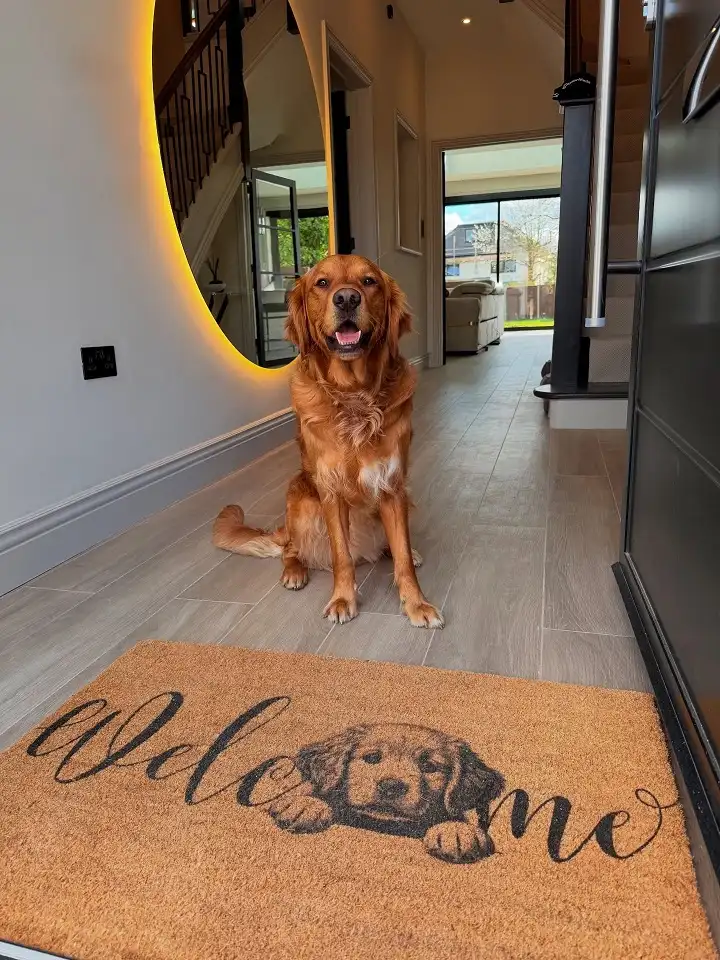
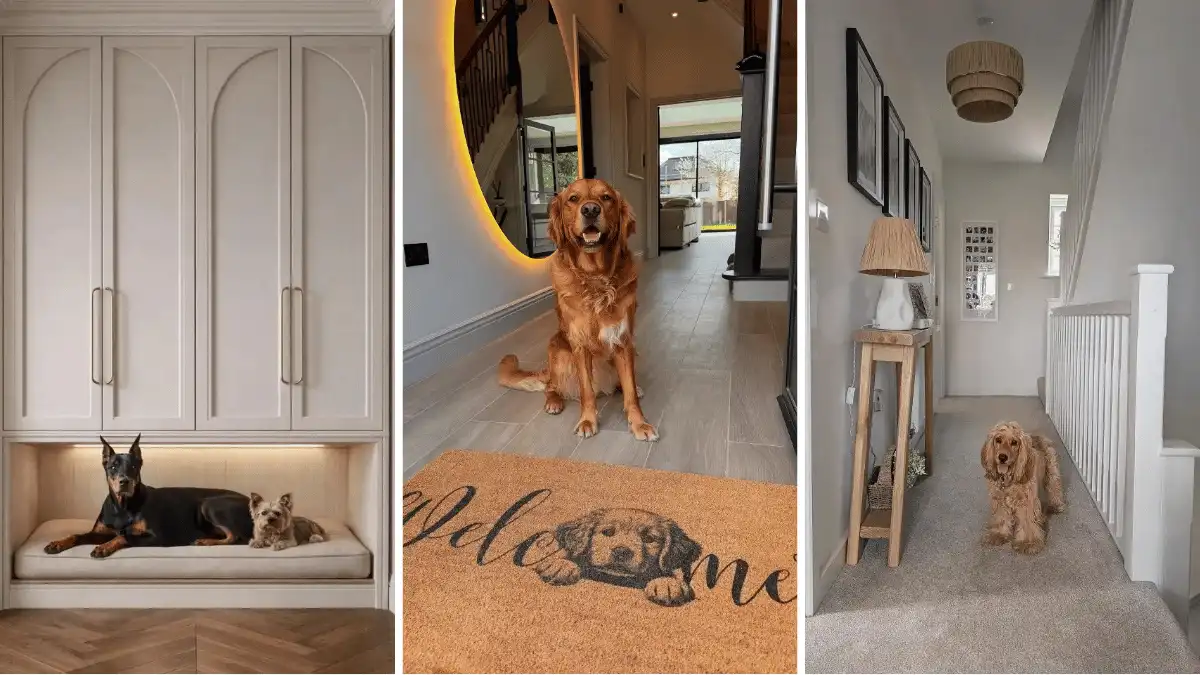
This golden retriever waits directly on a textured coir mat, the roughest surface right where it’s needed most. Hard tile flooring continues down the hallway, tough enough to handle wet paws after a walk.
A round mirror above adds light without taking up floor space the dog needs to sit.
Place a coir mat exactly where paws first land, since its rough texture scrapes off grit better than smooth fabric.
Choose tile, stone, or vinyl for the first stretch of floor rather than carpet, because it forgives water and mud. Save softer flooring for further inside, once paws have had a chance to dry.
A personalized mat with your dog’s likeness adds warmth without slowing down the cleanup routine. Wipe the mat clean or hose it off outside when it starts looking dull.
Small choices like this stop most of the mess before it ever reaches your floors.
4. Add a Soft Landing Pad Near the Stairs
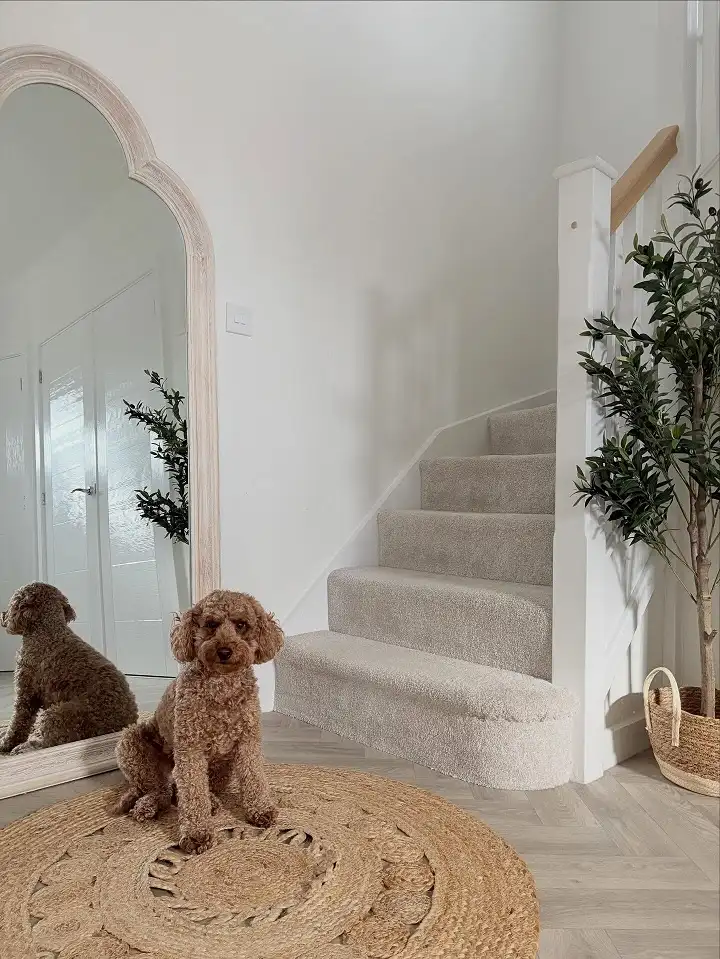
A curly poodle sits on a round jute rug positioned right where the hallway opens up. Just behind it, a small carpeted step sits at the base of the staircase, giving shorter legs an easier first move up.
An arched mirror and a potted olive tree soften the space without crowding the dog’s path.
Lay a natural fiber rug like jute in any spot your dog rests between rooms, since it grips paws better than polished floors.
Add a low step or ramp at the bottom of stairs if your dog is small, older, or recovering from an injury. Keep the area open so your dog can turn around easily.
Round rugs work well in tight corners where a rectangular one would stick out awkwardly. This kind of small fix costs little and prevents slips before they happen.
Your dog gets steadier footing, and the entry still looks pulled together.
5. Carve Out a Built In Nook for a Dog Bed
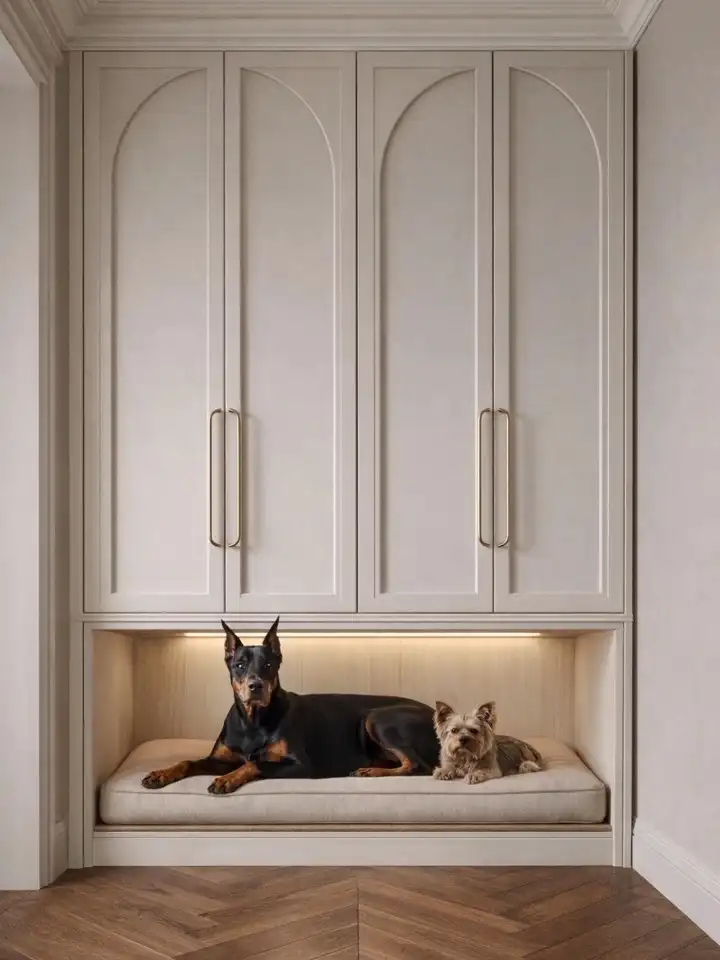
Two dogs of very different sizes share one cushioned bench, fitted into a gap beneath a wall of arched cabinets. Soft under lighting glows along the back wall, warming the spot without needing a lamp nearby.
Subscribe to DIY Craft Bloom
Get updates on the latest posts and more from DIY Craft Bloom straight to your inbox.
Herringbone wood flooring in front lets muddy paws land somewhere easy to sweep.
Measure a similar gap in your own entryway, even a single cabinet width works for one dog. Fill it with a firm cushion cut to size rather than a bulky bed, since a flatter profile tucks in neater.
Add a strip of warm lighting underneath if you want the nook to feel cozy after dark.
This kind of spot gives a dog somewhere to wait calmly while you handle coats and bags.
Two pets can share it comfortably if the bench runs wide enough. It turns wasted wall space into the busiest corner of the house.
6. Turn the Front Mat Into a Sit and Wait Spot
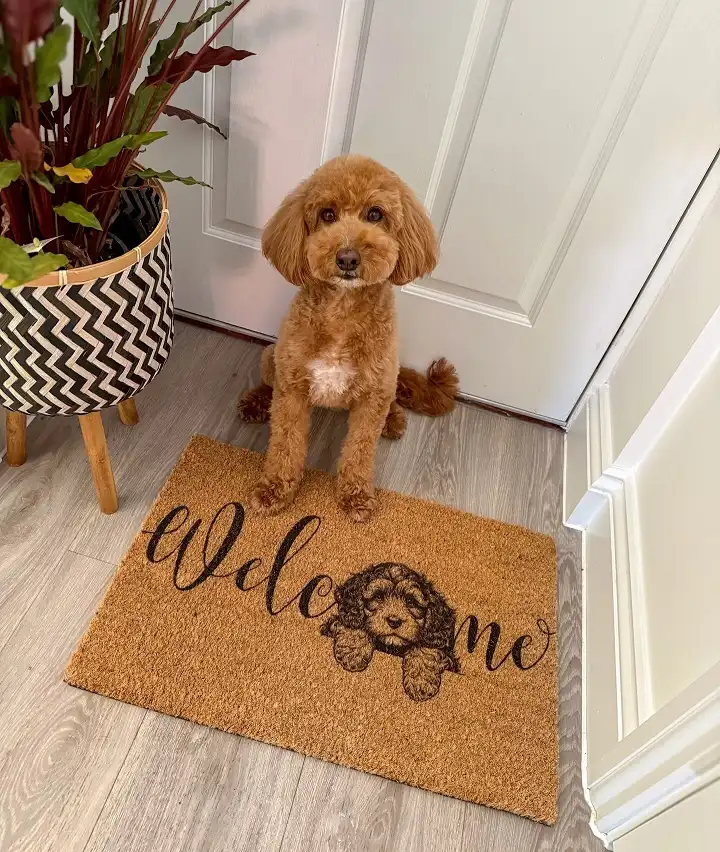
This cockapoo sits squarely on a patterned mat, framed by a tall planter on one side and the door on the other. The mat is large enough to hold the dog’s full body, not just a paw or two. Wood flooring around it stays free of clutter, giving a clear view of the door.
Pick a mat sized for your dog to sit on comfortably, since a bigger surface makes the spot easier to recognize as its own.
Practice a short sit and wait routine right there before you open the door for walks or visitors. Reward calm waiting so the mat becomes a signal your dog understands on sight.
A tall plant nearby fills empty corner space without blocking the path in or out. Consistency matters more than the exact mat you choose, so pick one and stick with it.
Over time the routine becomes automatic, and the door stops turning into chaos.
7. Disguise the Crate as Part of the Cabinetry
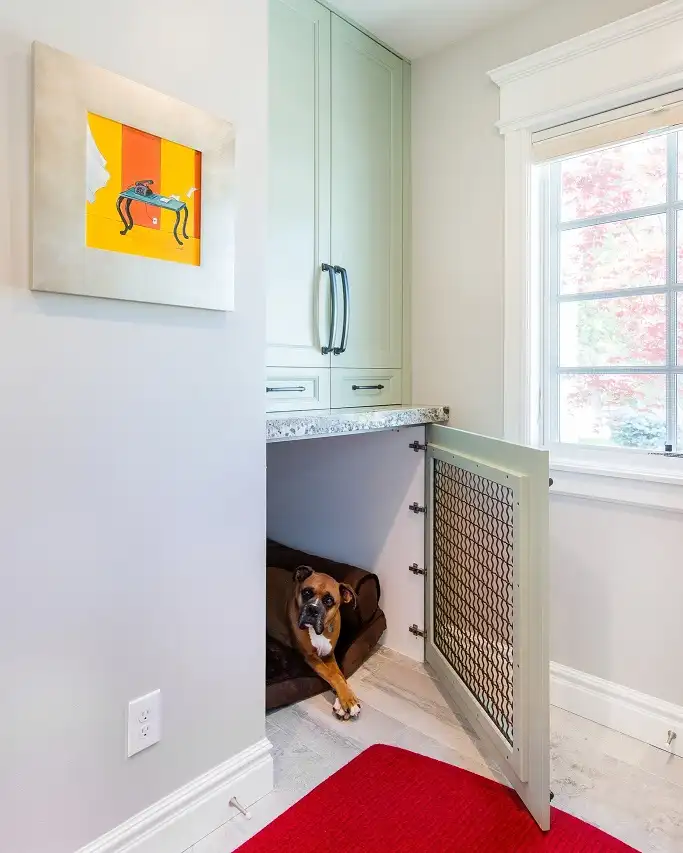
A boxer rests inside a cushioned nook hidden behind a cabinet door with a woven metal panel for airflow. Matching paint on the door lets the crate blend into the rest of the built ins instead of standing out.
Just outside, a red runner adds a bright, practical landing spot by the window.
Frame an existing crate with a simple cabinet door if you want the same disappearing act, leaving gaps for air to move through.
Choose a panel with holes or mesh so your dog never feels shut in. Keep the cushion inside easy to pull out and wash after muddy days.
Natural light from a nearby window keeps the spot from feeling closed off. This kind of build works well in a mudroom or hallway where floor space is tight.
Your dog gets a den to retreat to, and the room still looks finished.
8. Build a Full Command Center Into the Entryway
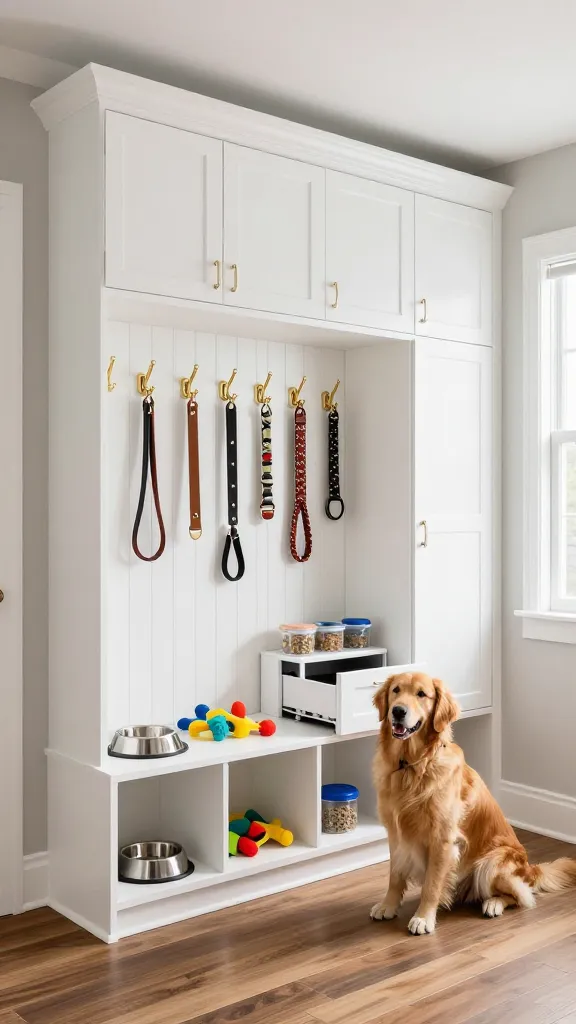
Floor to ceiling built ins give every piece of gear its own spot, so leashes, bowls, and grooming supplies stop piling up on the floor.
Lower cubbies hold bowls, treats, and toys where a dog can actually reach them, while hooks set at dog height keep leashes within easy grab. Upper cabinets stay reserved for house keys and mail, so the whole family gets sorted in one wall.
Durable tile or vinyl flooring underneath handles muddy paws without much fuss.
A built in bench with a washable cushion gives you somewhere to sit while pulling off boots or drying a wet dog, and towel hooks mounted low mean paw wiping does not require bending down every time.
A pull out drawer keeps the food bag out of sight until mealtime.
Homes with more than one dog benefit most from this setup, since separate zones stop gear from getting tangled together. Nothing here needs to be fancy, just organized enough that everyone, including the dog, knows where things live.
9. Go Coastal With Boot Trays and Woven Baskets
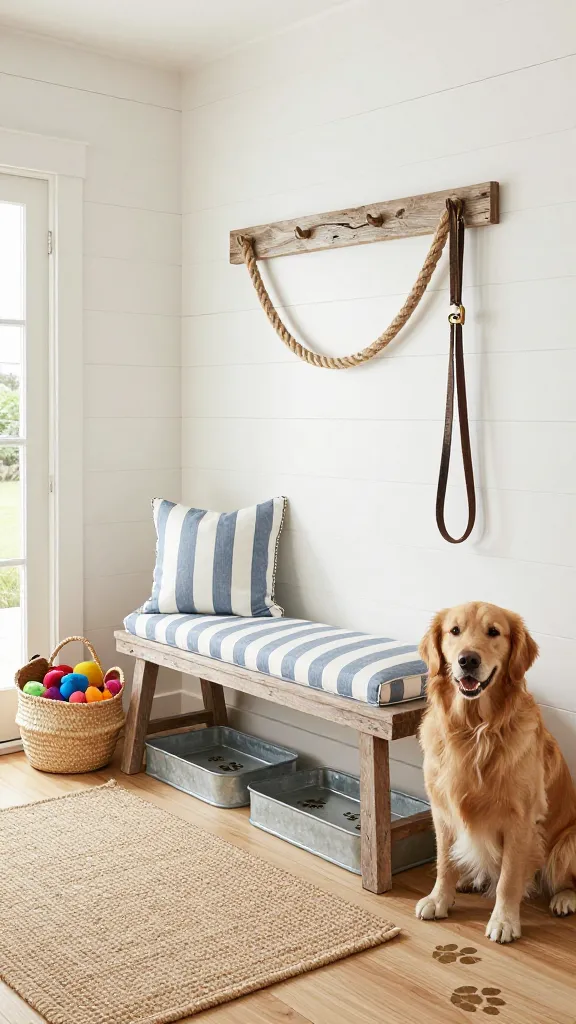
Whitewashed shiplap, rope accents, and weathered wood furniture set a relaxed beach house tone that hides new scuffs instead of showing them off.
Galvanized metal boot trays placed under the bench catch mud and water before they reach the floor, which matters most on rainy days after a walk.
Indoor outdoor fabric on the bench cushion stands up to wet fur and muddy paws far better than regular upholstery, and a jute rug in front does a good job of masking everyday dirt between cleanings.
Woven baskets tucked nearby hold toys and spare towels without adding clutter to the surface.
A driftwood coat rack finishes the look and gives leashes somewhere to hang besides the doorknob. The casual palette of blues and whites means small messes read as part of the style rather than something to hide.
10. Add a Built In Pet Washing Station Under the Farmhouse Look
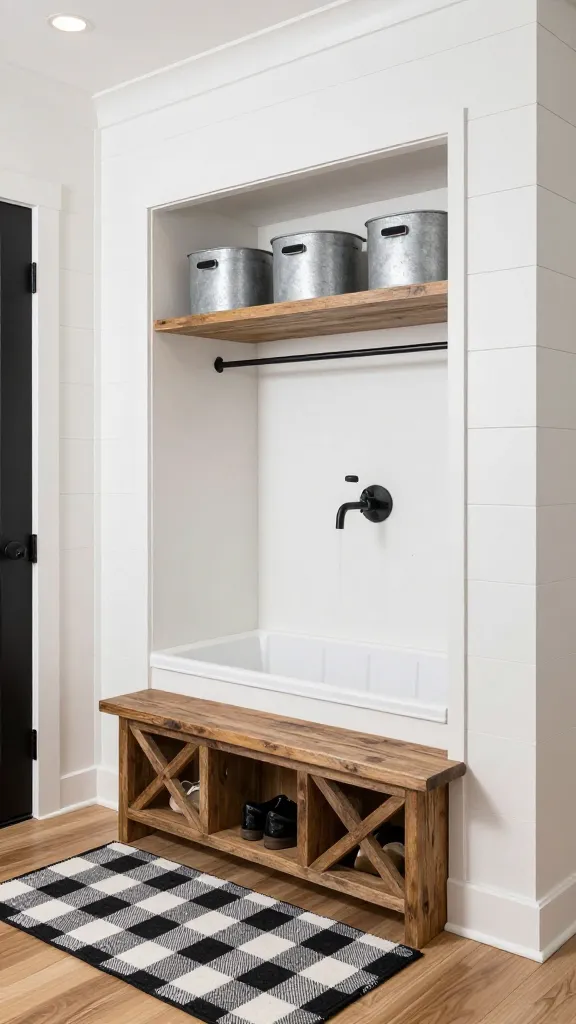
White shiplap walls and black matte hardware set a classic farmhouse backdrop, but the real workhorse here is a built in washing station with a pull down sprayer.
Subscribe to DIY Craft Bloom
Get updates on the latest posts and more from DIY Craft Bloom straight to your inbox.
Bath time moves from a struggle in the tub to a quick rinse right at the door, which matters most after a muddy walk.
Open shelving nearby holds galvanized bins for shampoo, towels, and brushes, keeping wash day supplies close without cluttering the counter.
A farmhouse style bench with cubbies underneath gives shoes somewhere to go, and a buffalo check runner in black and white handles foot traffic while staying machine washable.
Sliding barn door hardware lets you close off the washing station when it is not in use, so the space still looks tidy the rest of the week. Active dogs that come home dirty benefit the most from having a rinse spot this close to the front door.
11. Keep It Minimal With Scandinavian Storage
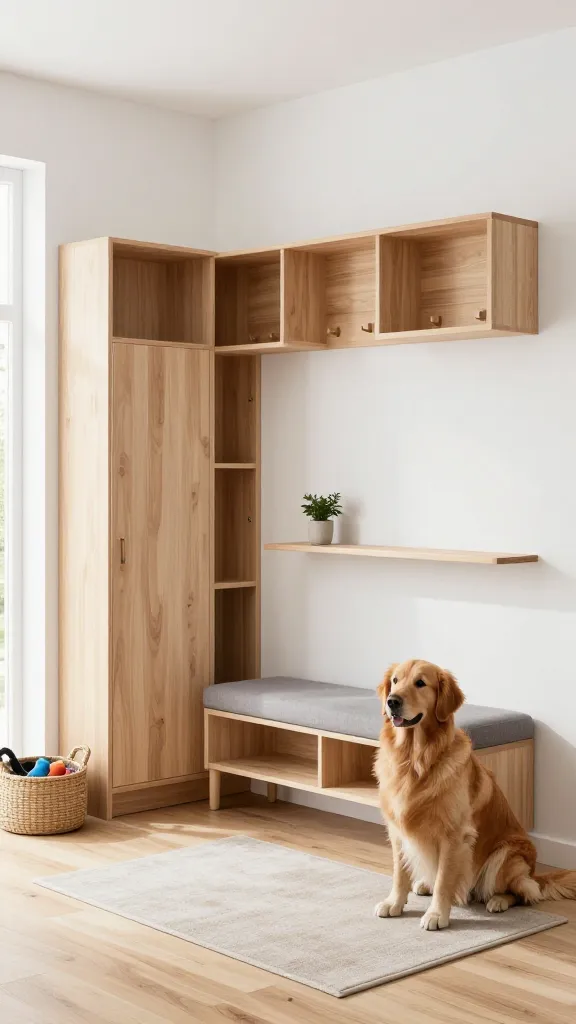
Light oak tones, white walls, and simple furniture keep a Scandinavian entry calm even with a dog’s worth of gear stored inside.
A wall mounted system with hooks, shelves, and small cabinets gives every item a spot without the space feeling crowded or busy.
Leashes hang from a floating shelf in plain view, almost like they are on display rather than shoved in a drawer.
Simple ceramic bowls in white or matte black blend into the palette instead of standing out, and a large woven basket handles toy storage without needing a lid.
A black rubber mat with a plain geometric pattern sits by the door and takes the brunt of daily foot and paw traffic.
Small apartments and tight hallways suit this approach well, since nothing here takes up more room than it needs to.
12. Bring In Stone and Reclaimed Wood for a Lodge Feel
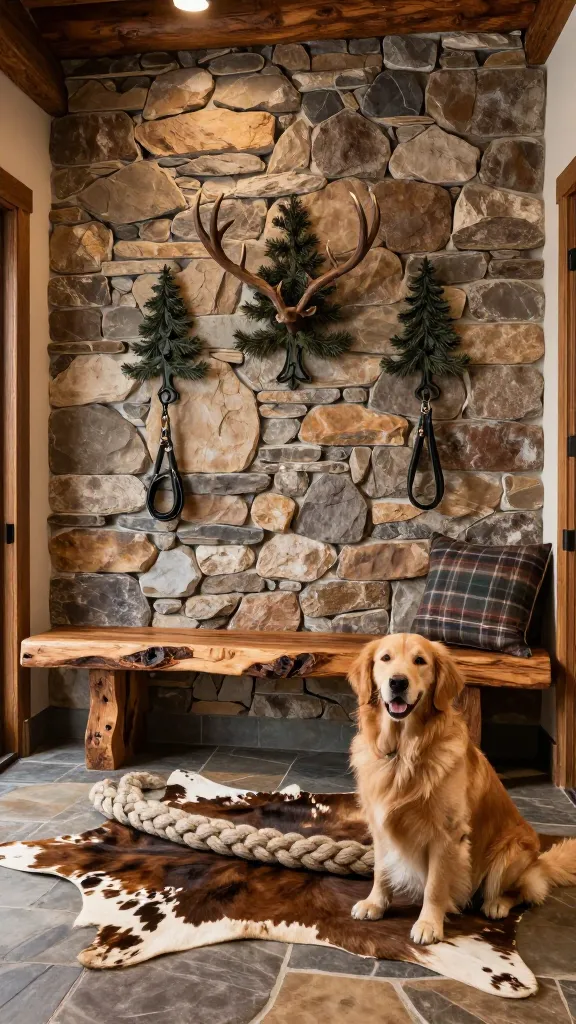
Stacked stone on an accent wall or a stone tile floor gives a mountain cabin feel that holds up to years of wear from muddy boots and paws.
A bench built from reclaimed barn wood, left with its knots and rough edges showing, fits the same rugged spirit.
Wrought iron hooks shaped like pine branches or antlers hold leashes and jackets side by side, and a thick braided wool runner or cowhide rug adds warmth underfoot during colder months.
A few plaid textiles or a repurposed wooden crate used as a toy bin round out the look without much effort.
Dogs that spend weekends on trails fit naturally into a space built around this kind of durability. Nothing here needs babying, which is exactly the point for an active household.
13. Choose Glossy Finishes for a Glam Entry
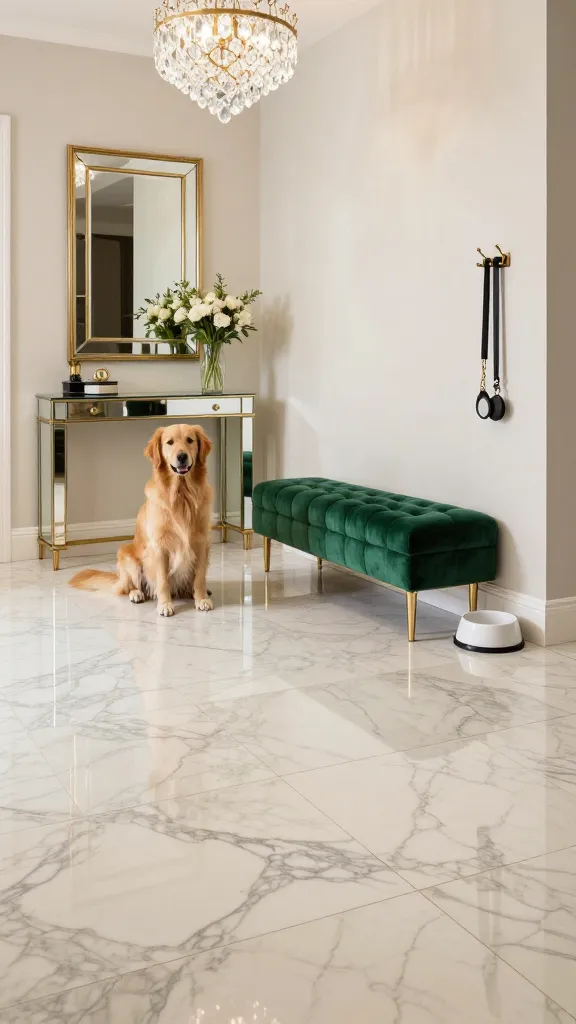
Glossy porcelain tile in a marble look brings drama to the floor while staying tough enough for daily paw traffic.
A performance velvet bench in a deep color like emerald or navy adds richness without holding onto fur the way regular fabric does.
A mirrored console table nearby wipes clean in seconds, and gold or brass hardware carries the polished feel through the rest of the space.
Storage bins in clear acrylic keep leashes and poop bags out of sight while still looking intentional on a shelf. A faux fur throw in a pet safe color hides shedding better than most fabrics.
A statement light fixture overhead, whether a small chandelier or a geometric pendant, signals that this entry was designed on purpose.
Owners who want their home to feel polished do not have to give that up just because a dog lives there too.
14. Try Industrial Touches With Metal and Concrete
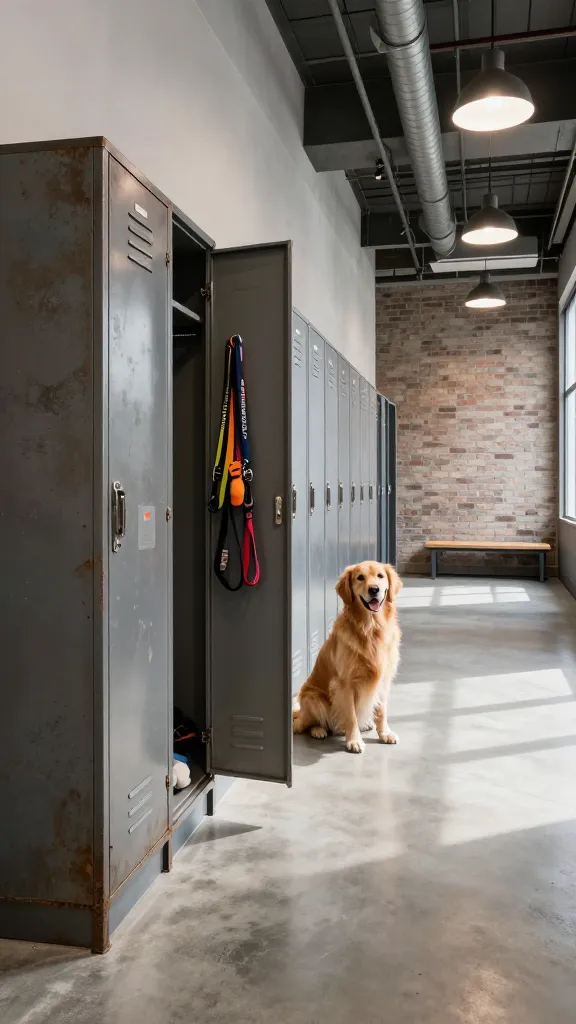
Polished concrete floors shrug off scratches, spills, and muddy paw prints, and a quick mop is usually all they need.
Vintage style metal lockers give each family member a spot for their own gear, dog included, with room for leashes, harnesses, and bags behind one door.
An exposed brick wall, real or faux, sets an industrial tone that pairs well with black metal light fixtures overhead.
A rolling metal cart nearby keeps brushes and grooming supplies mobile, so they can move wherever bath time happens to be.
This finish holds up especially well in homes with large or high energy dogs that put entryways through daily wear.
The patina that develops on the metal over time only adds to the look rather than taking away from it.