How to Teach Painting to Adults with Special Needs


I overloaded my first painting class at a day program. I set out 12 colors, 3 brush sizes, and a sunset I was sure everyone would love. Within 10 minutes, 2 painters had left the table and one sheet was solid brown. That afternoon taught me more about how to teach painting to adults with special needs than any book did.
Nobody in that room did anything wrong. I had handed them too many decisions, slippery paper, and brushes too thin to hold.
The staff who run these classes every week know something new volunteers don’t: most of the work happens before anyone sits down. Good prep lets adults with disabilities paint on their own terms, make real choices, and go home proud of something that looks grown-up, not childish.
Plan on about 1 hour of setup the first time and around 20 minutes before each class after that. The class itself runs 60 minutes.
What You’ll Need
- Washable tempera paint in 5 colors: red, yellow, blue, white, and black
- Wide flat brushes, 1 to 1.5 inches across, plus a roll of foam tubing
- Heavy mixed-media paper, blue painter’s tape, and a non-slip mat for each seat
- Paper plates, water jars, paper towels, and a small spray bottle
- A plastic tablecloth, a cotton line, and wooden clothespins for hanging work
Meet Each Painter Before the First Class

Picture a quiet table a week before class. You lay 6 painted color squares in front of a new painter and ask which one she likes best. She points at red without pausing. In about 5 seconds, you’ve learned she can choose by pointing and that she has opinions worth asking for.
Keep this meeting to around 15 minutes. Ask her first, then her support staff. Write down how she communicates, which sounds or smells bother her, how she holds a pencil, and how she shows she’s done. Those notes shape every step that follows.
Buy Washable Paint So Spills Don’t Ruin Anything
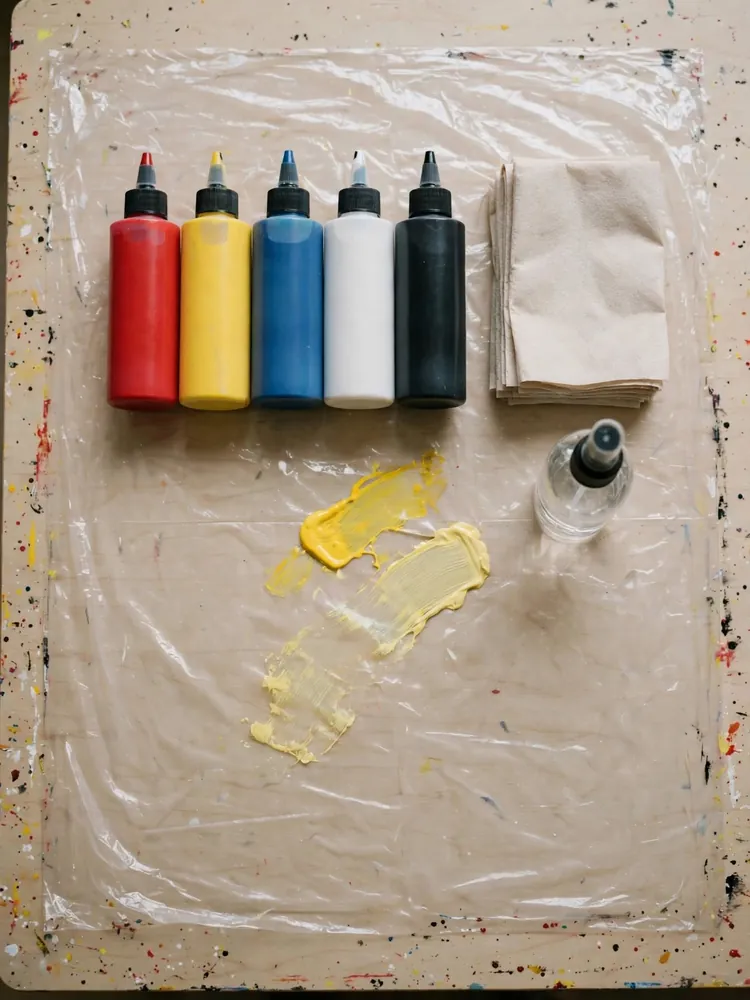
Washable tempera in squeeze bottles works for nearly every group. It wipes off skin, clothes, and tables with plain water, it has almost no smell, and the nozzle lets you control how much lands on each plate.
Red, yellow, blue, white, and black will mix into anything a painter asks for. Check the label for an AP seal, which means the paint is certified non-toxic. Keep paper towels and a spray bottle of water close, since a quick mist loosens a smear before it dries.
Thicken the Brush Handles
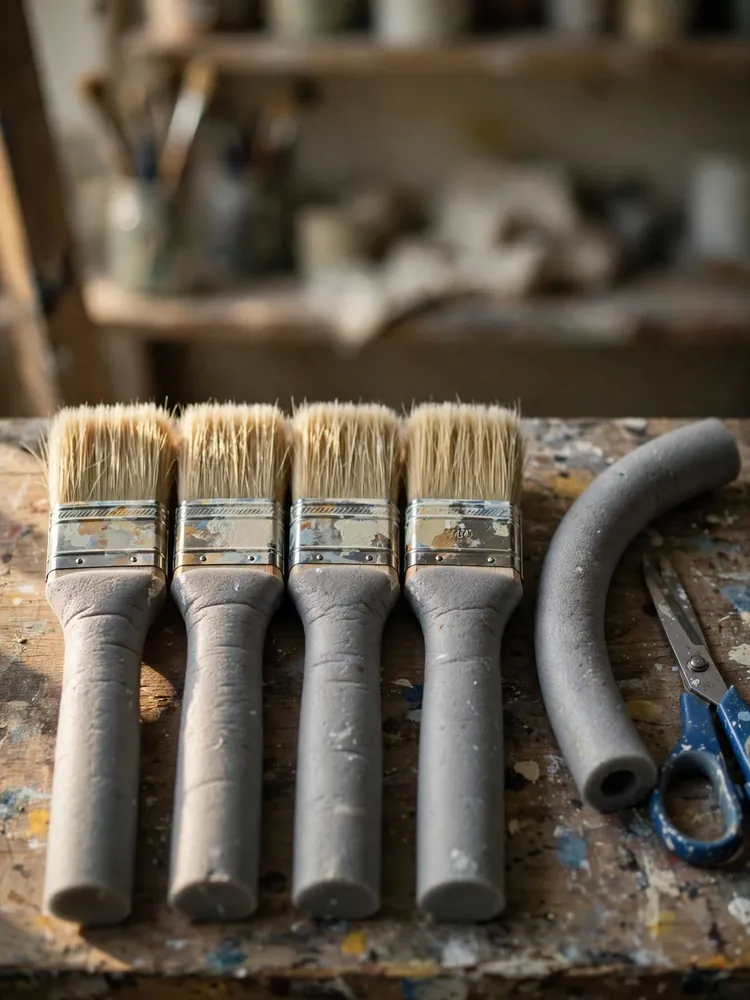
4 inches of foam tubing turns a thin handle into one most hands can hold. Slide a piece over each brush until it sits snug against the metal band, then trim any extra with scissors.
Subscribe to DIY Craft Bloom
Get updates on the latest posts and more from DIY Craft Bloom straight to your inbox.
Grip trouble looks different from person to person, so match the fix to what you see:
Space the Chairs 3 Feet Apart
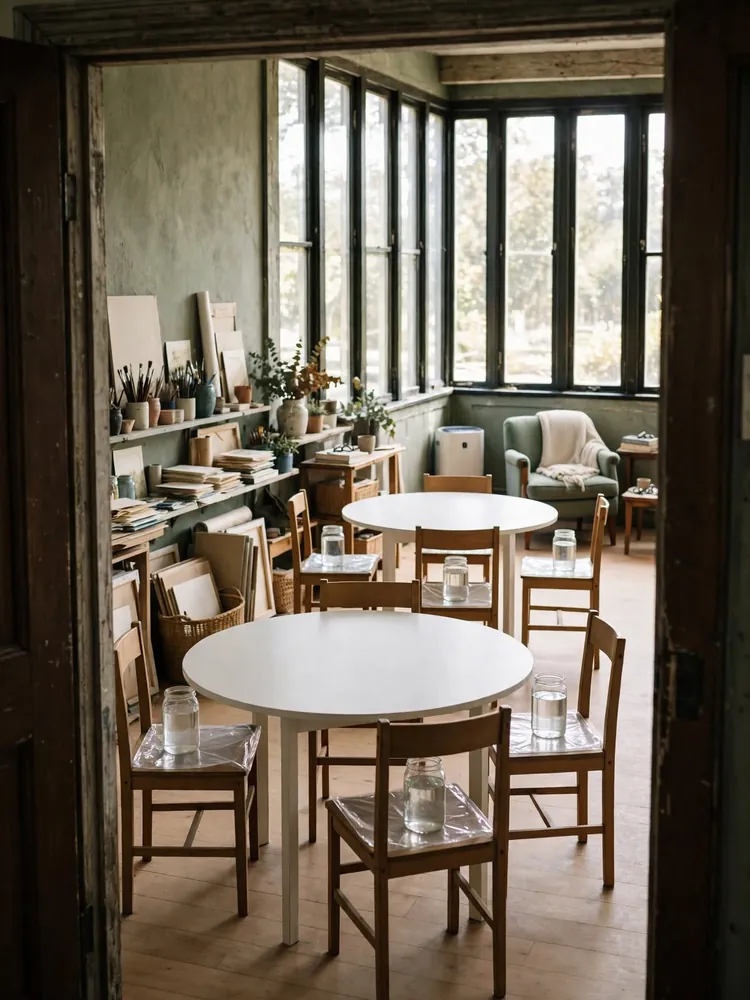
Crowding causes more walkouts than hard projects ever do. Elbows bump, water tips over, and one noisy neighbor can end someone’s afternoon. Walk the room before anyone arrives and check for:
- 3 feet between chairs, so brushes and elbows stay apart
- One open spot per table, about 30 inches wide, for a wheelchair
- Plastic covers on the seats and a water jar set out for every painter
- A calm armchair near a window, away from the tables
- A clear path to the door and the restroom
Tape Paper Down Before Anyone Sits
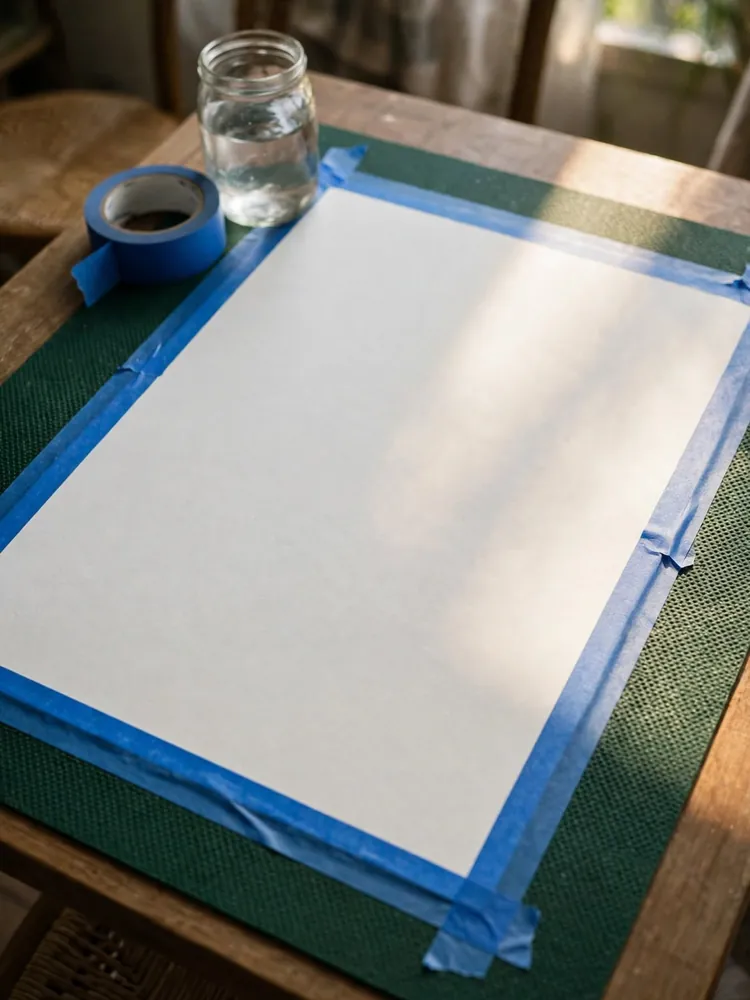
Taping paper sounds like a fussy extra for perfectionists. In practice, a sliding sheet is one of the fastest ways to lose a painter. A hand that presses hard pushes the paper across the table, the stroke smears, and frustration takes over.
Tape all 4 sides of a heavy 11 x 14-inch sheet onto a non-slip mat, overlapping the tape at the corners. Finish before people arrive so nobody waits with empty hands. No mats? Rubber shelf liner cut to size grips the table well.
Teach Painting to Adults with Special Needs One Step at a Time

Do this: paint 1 stroke, say 1 short sentence, and hold your brush up so everyone sees it.
Not that: fill the whole sky while explaining 5 steps.
Many adults with intellectual disabilities need extra time to process spoken directions. Give it to them. After you demo, wait a full 10 seconds before repeating yourself, and use the same words every class, like “Blue across the top.” Familiar phrases build confidence week after week.
A steady rhythm helps too. Here’s how a 60-minute class usually breaks down:
Offer Two Colors, Not Ten
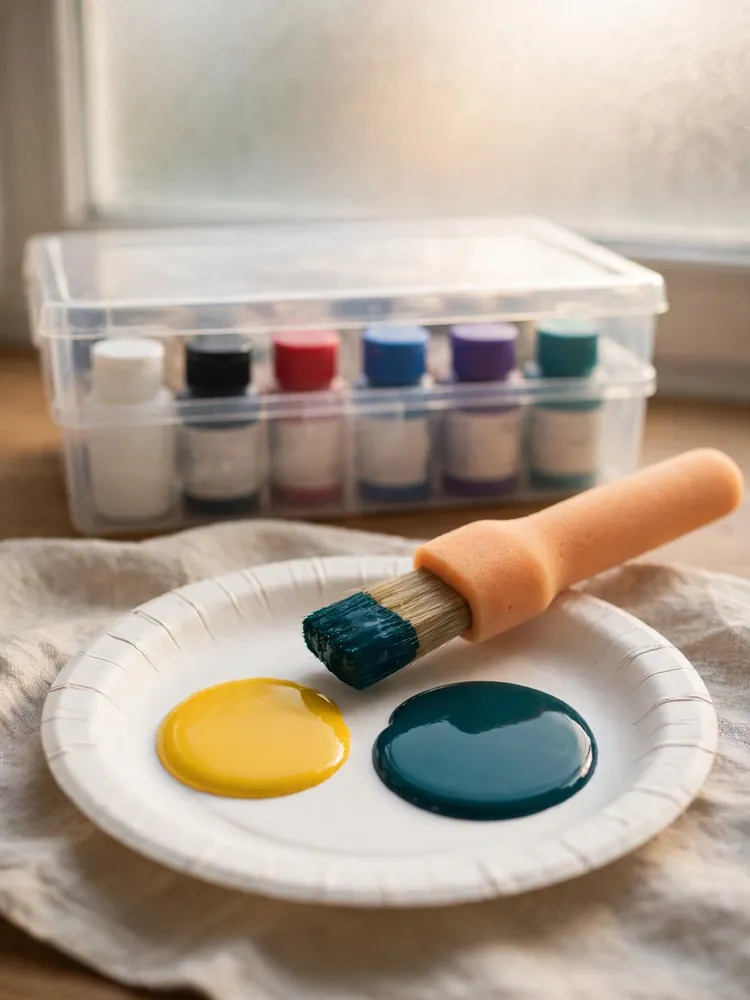
What happens when a painter faces 12 open colors? Often, nothing. They freeze, or they stir everything together until it turns brown. Put 2 colors on a paper plate, like sunny yellow and deep teal, and the same person starts painting in seconds.
Two colors is still a real choice. Keep the other bottles in a clear box nearby so they stay visible, and swap one in whenever someone asks. A point, a glance, or a nod all count as an answer.
Subscribe to DIY Craft Bloom
Get updates on the latest posts and more from DIY Craft Bloom straight to your inbox.
Support Their Hand From Underneath So They Stay in Control

If a painter needs physical help, ask first, every time. When they say yes, sit beside them and rest your hand under theirs instead of on top.
Hand-under-hand lets them lead. They can steer, stop, or pull away, and the painting stays theirs. Hand-over-hand moves their hand for them, which many adults find controlling. Start with the lightest help that works, and step down as the weeks go by:
Display Every Finished Painting

48 to 57 inches from the floor to the center of each painting keeps the work in view for standing and seated painters alike. A cotton line and wooden clothespins along one wall turn your studio into a small gallery in minutes.
Ask before you hang anything, since some people want to take their work straight home. Offer each painter the chance to add initials in a corner. Then step back and let them look. Seeing their own sunflower or color study on a wall, right beside everyone else’s, is often the part they talk about all week.
How to Teach Painting to Adults with Special Needs: Your Questions Answered
Can I teach this class without art therapy training?
Yes. Art therapy is a licensed profession with its own training, and you’re running an art class, so avoid calling it therapy. Patience, solid prep, and close contact with support staff matter more here than credentials.
How many painters can one instructor handle?
About 4 to 6 works well with one helper. If each painter arrives with their own support staff, you can stretch to 8.
What if someone doesn’t want to paint today?
Let them watch, rest in the calm chair, or hold a brush without painting. Offer again in 10 minutes, and treat a no as a real answer, not a problem to fix.
Should I pick adult subjects or kid-style projects?
Pick adult subjects. Landscapes, flowers, abstract color blocks, and still lifes all work with wide brushes and few colors, and they respect the painter’s age.
What’s the difference between tempera and acrylic for this group?
Tempera washes out with water and dries flat, which makes it the safer place to start. Acrylic is brighter and lasts longer but stains clothes for good, so save it for painters with steady brush control and a smock. Save this pin to your art board so the setup list is on your phone before next week’s class.