How to Make a Small Gift Box: A Step-by-Step Guide to Personalized Giving

There is something inherently magical about receiving a gift that didn’t come off a mass-produced shelf. While the item inside matters, the presentation speaks volumes about the effort and love you’ve poured into the gesture.
Learning how to make a small gift box is one of those essential DIY skills that elevates your gifting game from “thoughtful” to “unforgettable.”
In this comprehensive guide, we will walk through the art of paper engineering to create a sturdy, beautiful, and professional-looking box.
Whether you’re prepping for a birthday, a wedding favor, or a “just because” surprise, this method is versatile, eco-friendly, and surprisingly therapeutic.
Why DIY Your Gift Packaging?
Before we dive into the “how-to,” let’s talk about the “why.” In a world of digital clicks and overnight shipping, a handmade box stands out.
- Customization: You aren’t limited to the three patterns available at the local drugstore. You can match the box to the recipient’s favorite color or the specific theme of an event.
- Sustainability: By using recycled cardstock or upcycling old calendars and maps, you reduce the waste associated with traditional wrapping paper.
- Cost-Effective: Once you have the basic supplies, the cost per box drops to pennies.
- The “Wow” Factor: People often keep handmade boxes long after the gift inside has been used. It becomes a keepsake in itself.
Essential Supplies You’ll Need
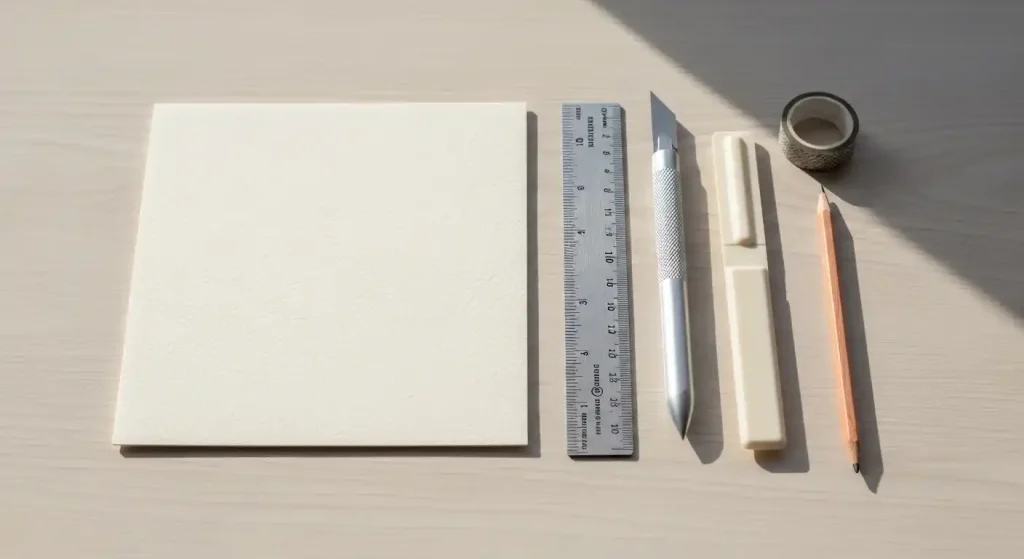
To learn how to make a small gift box that doesn’t collapse or look lopsided, you need the right tools. Precision is your best friend here.
1. The Paper (The Foundation)
You want something sturdier than standard printer paper but more flexible than heavy corrugated cardboard.
Cardstock (between 65lb and 80lb) is the sweet spot. Scrapbooking paper is also excellent because it often comes with beautiful double-sided patterns.
2. Measuring and Marking Tools
- A metal ruler (plastic ones can get nicked by blades).
- A sharp pencil for light markings.
3. Cutting Tools
- A craft knife (like an X-Acto) or a dedicated paper trimmer for perfectly straight lines.
- Sharp scissors for fine adjustments.
4. Folding and Adhesives
- A bone folder (or the back of a butter knife) to create crisp, professional creases.
- Double-sided tape or a high-quality glue stick. Avoid “runny” school glue, as it can warp the paper.
Phase 1: Calculating Your Dimensions
The secret to a perfect box is the math. A standard gift box consists of two parts: the Base and the Lid.
Pro-Tip: The lid must be slightly larger than the base so it can slide on easily. Usually, making the lid piece $1/8$ of an inch (or about $3$mm) larger than the base piece ensures a snug but comfortable fit.
For a standard small square box, let’s start with two square pieces of paper:
Subscribe to DIY Craft Bloom
Get updates on the latest posts and more from DIY Craft Bloom straight to your inbox.
- Base Paper: $7.5 \times 7.5$ inches.
- Lid Paper: $7.625 \times 7.625$ inches (that extra $1/8$ inch is vital!).
Phase 2: Step-by-Step Construction
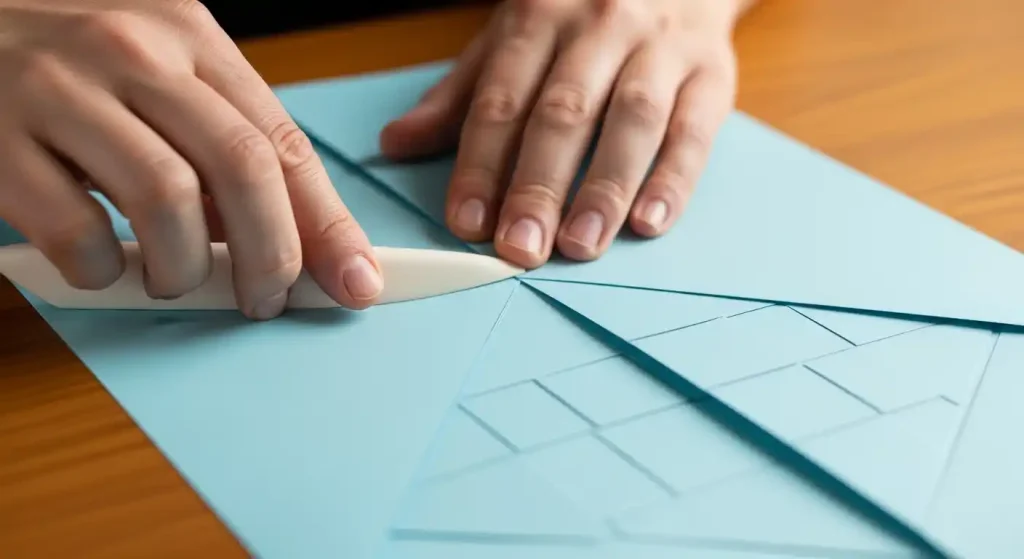
Follow these steps carefully. We will start with the base; the lid follows the exact same logic.
Step 1: The “X” Marks the Spot
Place your square paper patterned-side down. Use your ruler to draw two light diagonal lines from corner to corner. Where they intersect is your exact center.
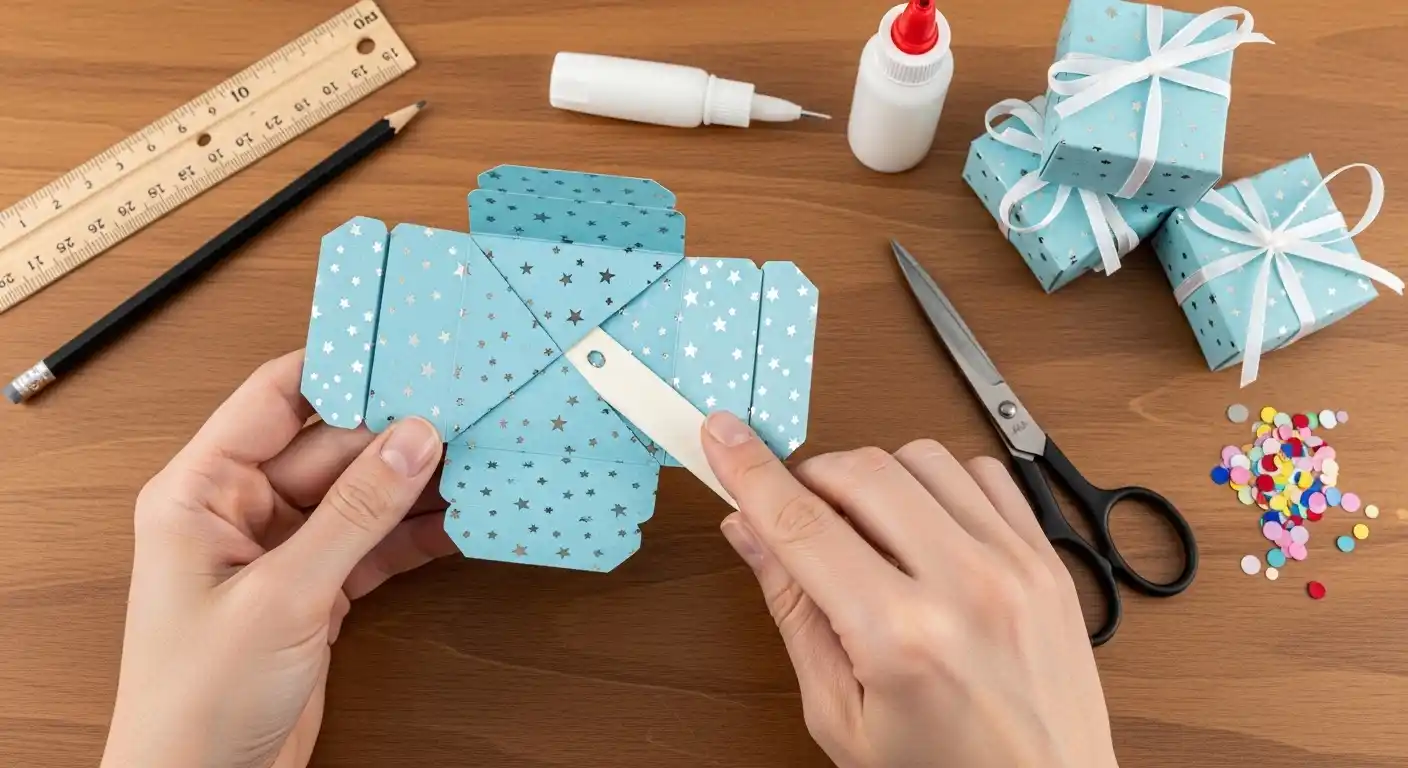
Step 2: The Initial Folds
Fold each of the four corners inward so the points meet exactly at the center mark. Press down firmly. You should now have a smaller square. Do not unfold yet.
Step 3: Creating the Walls
Take the bottom edge of your new square and fold it up to meet the center line. Repeat this with the top edge.
Use your bone folder to create a very sharp crease. Unfold these two “wall” folds, but keep the corners tucked in.
Now, repeat this with the left and right sides, folding them to the center and then unfolding.
Step 4: The Preparation
Unfold everything except for two opposite corner triangles (let’s say the top and bottom ones). You should see a grid of creases on your paper.
Step 5: The Precise Cuts
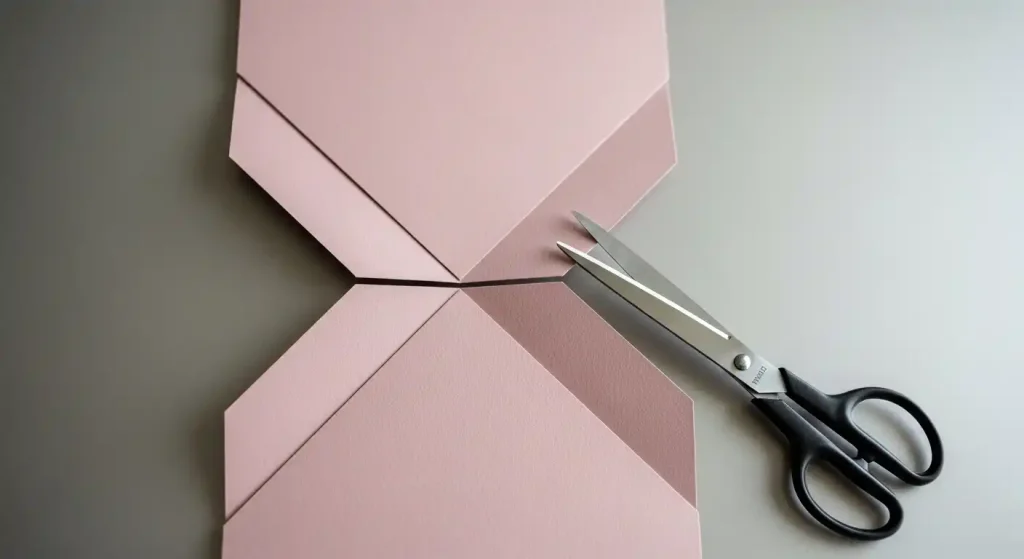
This is where most people get nervous, but it’s simple! Look at the two triangles that are still folded in. Along the sides of these triangles, you will see crease lines heading toward the edges.
Use your scissors to cut along these creases only until you hit the “inner square” (the base of the box). You will make four cuts in total (two on the top side, two on the bottom).
Step 6: Assembly
- Fold the two side corners (the ones you didn’t cut) into the center.
- Lift the side walls up.
- Take the “flaps” created by your cuts and tuck them inward.
- Fold the remaining top and bottom tabs over these flaps and into the center of the box. The points should meet in the middle, locking the walls in place.
Phase 3: Finishing the Lid
Repeat the steps above using your slightly larger piece of paper. Because you added that extra $1/8$ inch, the lid will slide over the base like a glove.
If you find the lid is too tight, you can use a slightly larger gap next time, but $1/8$ inch is usually the industry standard for cardstock.
Subscribe to DIY Craft Bloom
Get updates on the latest posts and more from DIY Craft Bloom straight to your inbox.
Elevating Your Creation: Decoration Ideas
Now that you know how to make a small gift box, it’s time to make it pretty. A plain box is a blank canvas.
1. The Ribbon Wrap
Instead of just tying a bow, try a “diagonal wrap.” Run the ribbon from the bottom left corner to the top right. It looks modern and prevents the ribbon from sliding off the square corners.
2. Nature’s Touch
Tuck a sprig of dried lavender, a small eucalyptus leaf, or a tiny pinecone under the twine. It adds a sensory element (scent!) to the visual appeal.
3. Wax Seals
If you want to go full “vintage aesthetic,” use a wax seal on the center of the lid. It adds weight and a sense of luxury to the unboxing experience.
4. Interior Lining
For a truly high-end feel, glue a piece of silk tissue paper or a contrasting color of thin paper inside the base before you assemble it. When the recipient opens the box, they’ll get a “pop” of color.
Troubleshooting Common Issues
Even if you follow a guide on how to make a small gift box perfectly, things happen. Here is how to fix the most common DIY hiccups:
| Problem | Cause | Solution |
| Lopsided Walls | Uneven folding or measuring. | Always use a ruler; never “eyeball” the center. |
| Lid won’t fit | Lid paper was the same size as the base. | Trim $1/8$ inch off the edges of your base paper before folding if you’ve already cut it. |
| Paper Cracking | The cardstock is too dry or thick. | Lightly score your fold lines with a bone folder before bending to break the fibers cleanly. |
| Box Feels Flimsy | Paper weight is too low. | Glue two sheets of paper together before starting to create a “double-thick” wall. |
The Environmental Impact of DIY Boxes
One often overlooked benefit of learning how to make a small gift box is the reduction in plastic waste.
Most commercial gift boxes are coated in plastic films or glitter that make them non-recyclable.
By using plain Kraft paper or FSC-certified cardstock, you ensure that your packaging can return to the earth. Furthermore, these boxes are so sturdy that they are rarely thrown away.
They end up on dressers holding jewelry, in desk drawers holding paperclips, or on shelves as miniature organizers. Your gift essentially becomes two gifts in one.
Conclusion
Mastering the art of the handmade gift box is a small skill that yields huge emotional returns. It shows the recipient that they were worth the fifteen minutes of focused effort it took to measure, cut, and fold.
Once you get the hang of the basic square box, the possibilities are endless. You can experiment with rectangular shapes, “matchbox” sliding styles, or even hexagonal containers. The physics remains the same—it’s all about the ratio of the walls to the base.
Now that you’ve finished this guide, you have the blueprint. All you need is a beautiful piece of paper and a little bit of patience.