13 Friendship Bracelet Ideas for Preschool Crafts

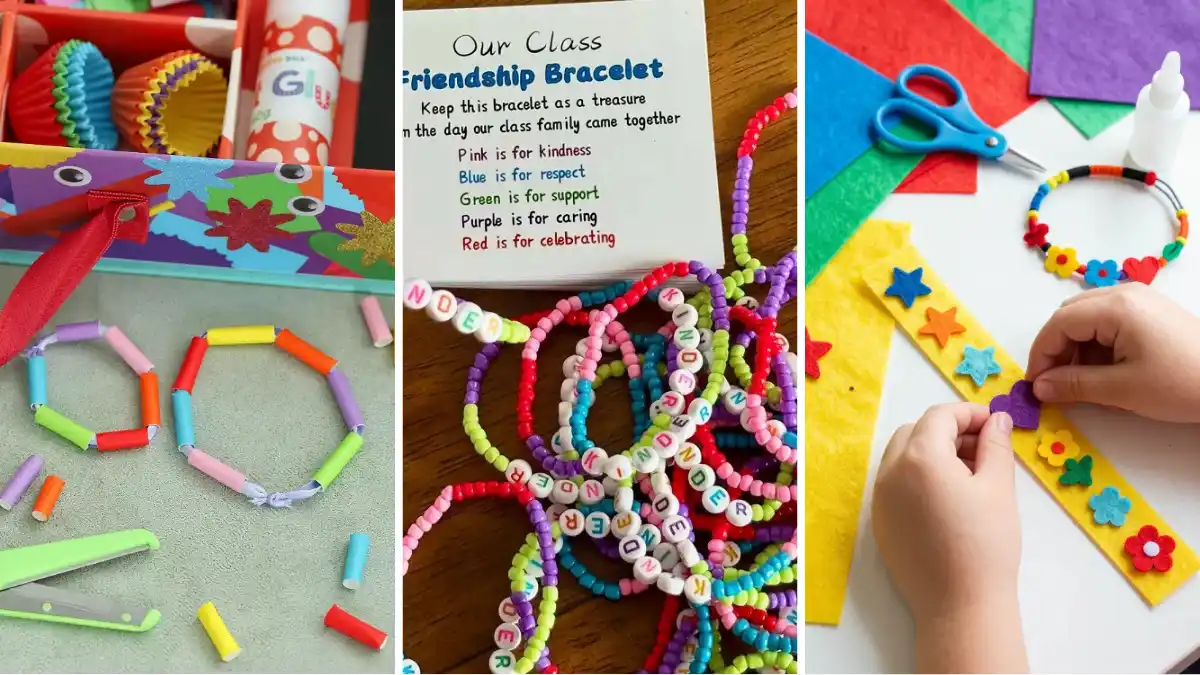
Preschoolers want to make things for the people they love, but most bracelet tutorials online assume a child who already has steady hands and real patience for tiny knots.
That leaves a lot of parents stuck searching for friendship bracelet ideas for preschool crafts that a three or four year old can actually finish without help at every step.
Every idea below solves that problem. Each one uses materials you likely already have, from pantry pasta to a craft bin full of felt, and each one skips the fussy stringing that trips up small fingers.
Your child stays in charge of the colors and the pattern the whole time, which is where the real fun lives anyway.
By the end of this list you will have 13 different ways to fill an afternoon, whether your child wants to sit at the table or head outside for a walk first. Pick whichever one matches the mess you feel like cleaning up today.
1. Paper Strip Bracelets for Kids Who Aren’t Ready for Beads
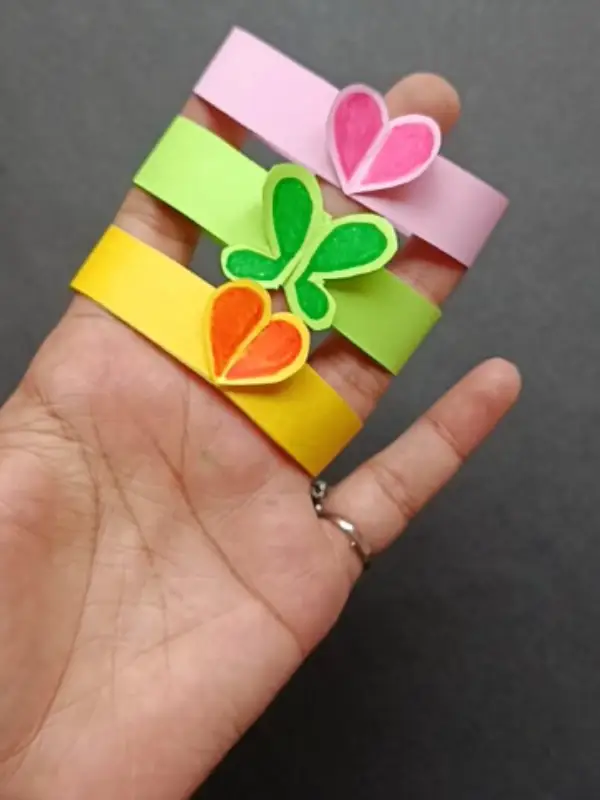
Some preschoolers still struggle to grip tiny beads, and that is exactly where paper strip bracelets earn their spot on this list. Strips of construction paper loop into a simple circle, and a dab of glue holds each one closed. It is a friendship bracelet idea that meets little hands where they are.
The small cut paper hearts and a clover shape glued on top turn a plain loop into something a child feels proud to hand a friend.
You can cut these shapes ahead of time so preschoolers only need to glue and press, which keeps frustration low during the activity.
This project works well for a first crafting session before beads enter the picture. Keep the paper light and the strips short, and expect a few torn edges. That is part of how three and four year olds learn to make something with their hands.
2. Color Coded Bead Bracelets That Teach a Value
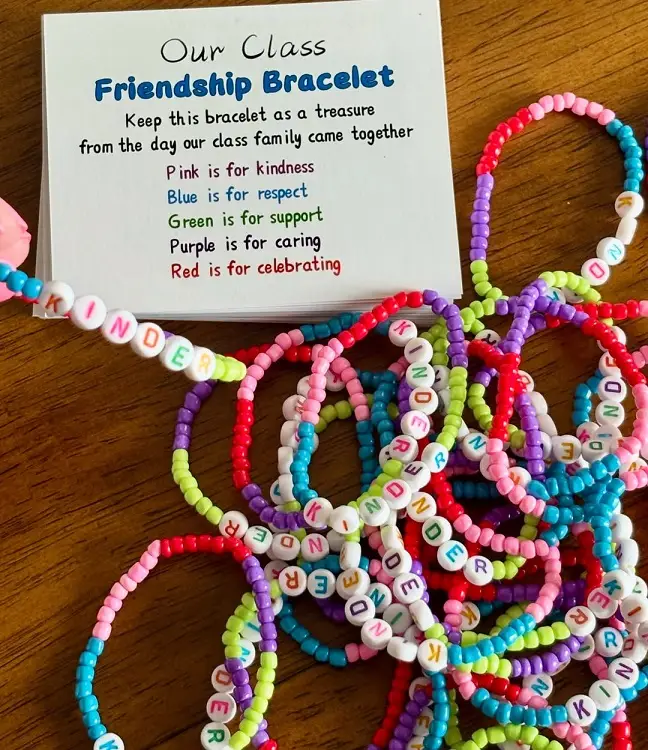
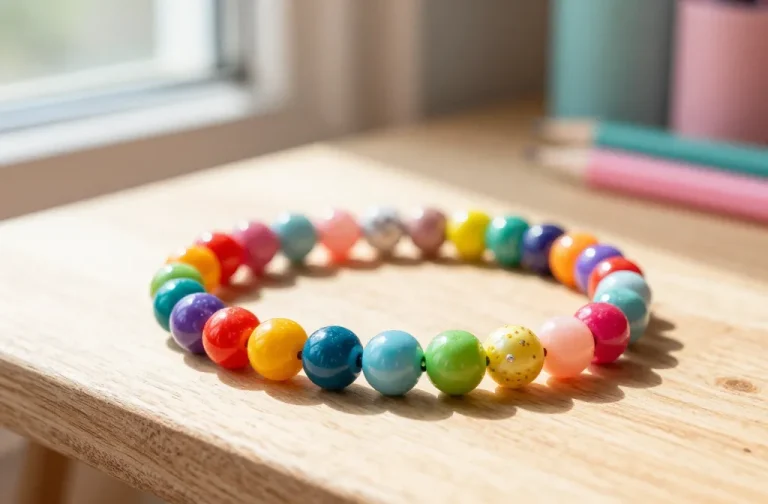
A pile of pony bead bracelets spelling out a class word becomes more meaningful once each color carries its own message.
Pink for kindness, blue for respect, green for support, purple for caring, and red for celebrating gives preschoolers a reason to choose their beads on purpose instead of just picking favorites.
Teachers and parents can print a small card explaining what each color means and send it home with the finished bracelet.
Preschoolers love the idea that their bracelet has a hidden meaning, and it turns a simple craft into a little lesson about how to treat a friend.
Keep the bead colors limited to five so the meaning stays easy to remember. This idea works especially well for a first week of school activity, when a class is still learning each other’s names and how to be kind.
3. Rolled Paper Bead Bracelets for Fine Motor Practice
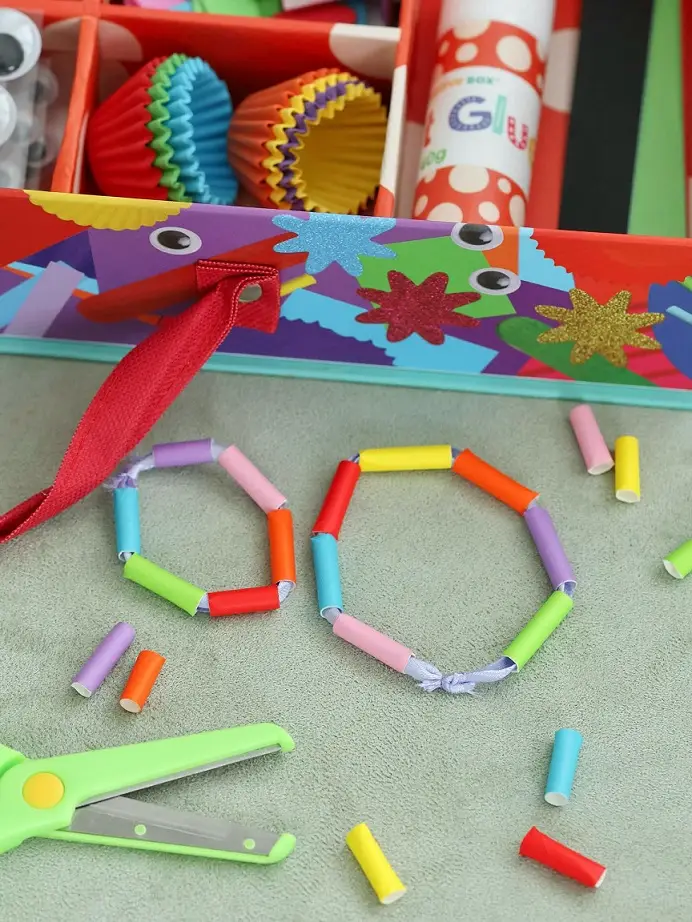
Rolling a strip of paper around a straw or pencil to make a bead is trickier than it looks, and that is what makes it such a good preschool activity.
Once glued shut, each paper tube becomes a bright, chunky bead that a small child can string with confidence.
A pair of safety scissors and a glue stick are really all this idea needs, along with paper cut into strips ahead of time.
The mix of rolling, snipping, and threading builds hand strength preschoolers will use later for writing and buttoning.
String six to eight paper beads onto ribbon or yarn and knot the ends for a bracelet a child can wear home the same day. It costs almost nothing to make and gives kids a real sense of finishing something on their own.
4. Welcome Bracelets That Double as a First Day Gift
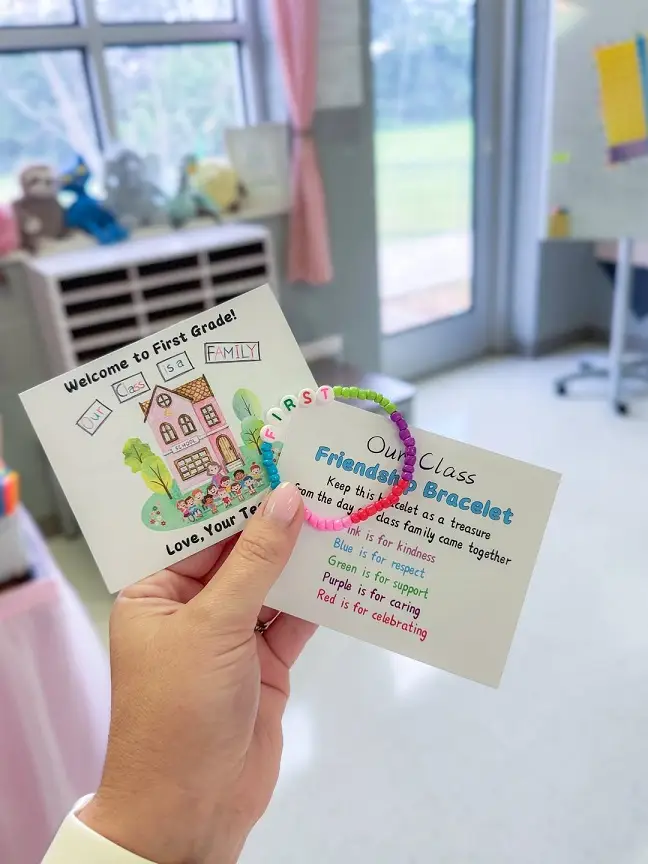
Handing a new student a bracelet spelling out their grade, like FIRST, turns a nervous morning into something a little more special. Paired with a small welcome card, this idea works as both a craft and a gift a teacher can prepare before the first bell.
Letter beads keep this simple enough for a teacher to assemble quickly, even for a full class.
Preschool and early elementary kids respond well to a physical object that says they belong, and a bracelet is something they can touch all day long.
This idea suits a teacher more than a parent crafting at home, but it translates easily. Swap the word for a child’s name or their teacher’s name, and you have a welcome gift a five year old will want to show every classmate.
5. Bagged Bracelet Favors With a Keepsake Card
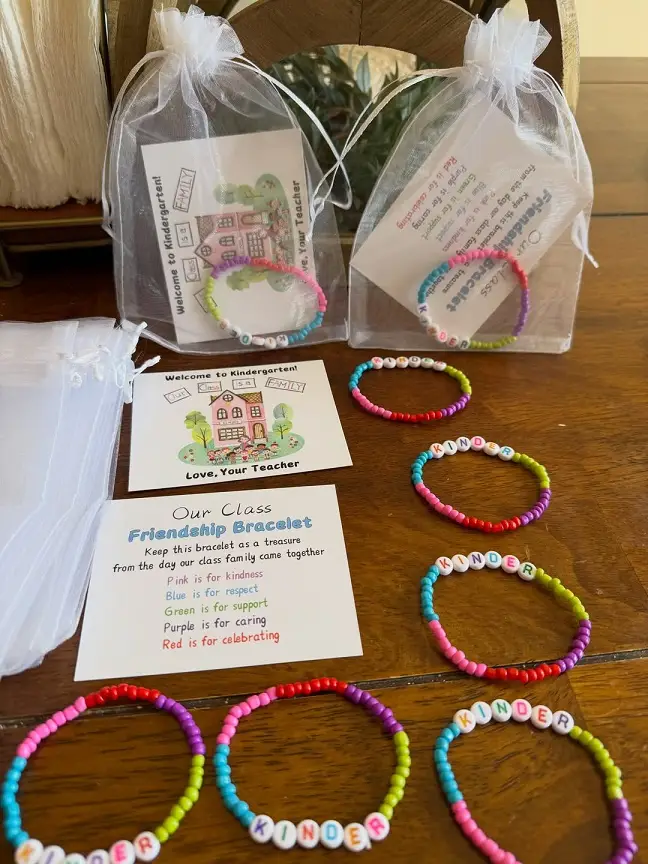
Slipping a finished bracelet into a small organza bag along with a printed card changes how it feels to receive one.
These bagged favors, each holding a KINDER bracelet and a note explaining the bead colors, work well for a whole class of new students on day one.
Bulk pony beads keep the cost low even when you are making a dozen or more. Lay out five bead colors and a simple word in letter beads, then let an adult or older sibling assemble them ahead of the school year to save time that morning.
Sending a bracelet home in its own little bag makes it feel like a gift instead of just a craft project.
Subscribe to DIY Craft Bloom
Get updates on the latest posts and more from DIY Craft Bloom straight to your inbox.
It is a small touch that preschool parents tend to remember, and kids like having something to unwrap.
6. Stackable Word Bracelets Kids Can Spell Themselves
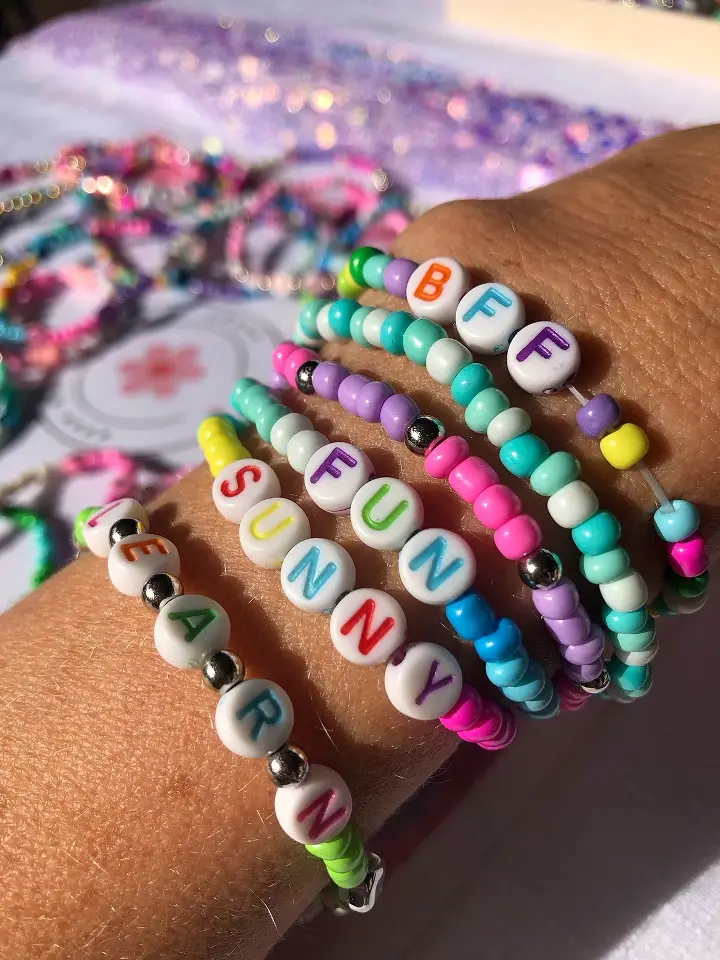
Letting a child pick letter beads to spell a short word like FUN or SUNNY gives them real ownership over their bracelet, and stacking several on one wrist makes the whole set look like a finished collection rather than one lonely piece.
Preschoolers may need help sounding out letters, so keep word choices short, four or five letters at most.
Mixing in plain pony beads between the letters gives small fingers a break from hunting for the right letter and adds color to the design.
Once a child has made one word bracelet, they usually want to make three or four more.
Keep a bin of extra beads on hand for rainy afternoons, since this is the kind of project preschoolers return to again and again.
7. Stretch Cord BESTIES Bracelets for First Timers
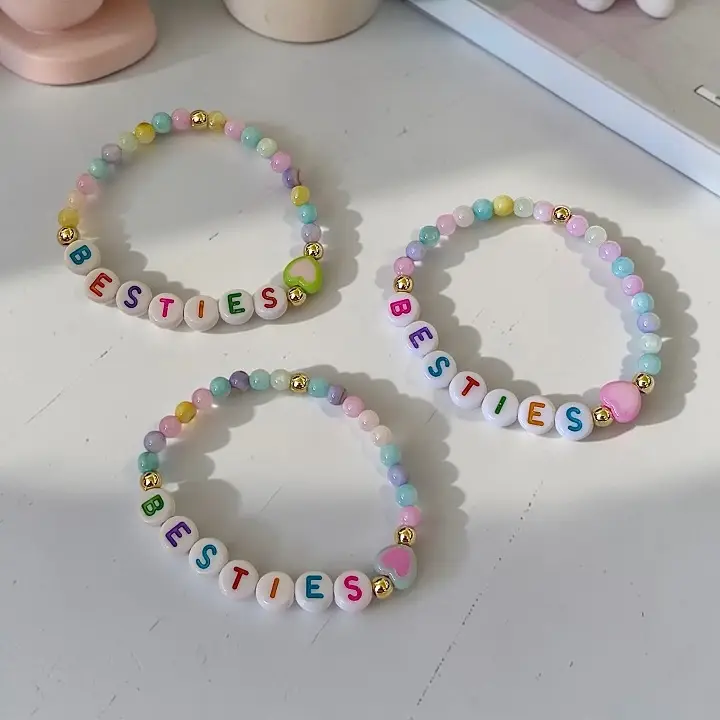
Stretch cord removes the hardest part of bracelet making for a preschooler, since there is no clasp to fasten and no knot that needs adult hands.
That makes an idea like a BESTIES bracelet, built from letter beads and pastel spacer beads, a strong choice for a child’s very first attempt.
A single gold accent bead and a small heart charm bead lift the design without adding difficulty, since a child only needs to slide beads onto stretchy cord in whatever order pleases them.
The letters can go in the front, back, or middle, and it still reads as a gift made with care.
Because the cord stretches to fit over small hands, one size works for almost any preschooler. Make a few extra and keep them in a drawer for the next birthday party favor or playdate goodbye gift.
8. Sparkly Pipe Cleaner and Bead Friendship Bands
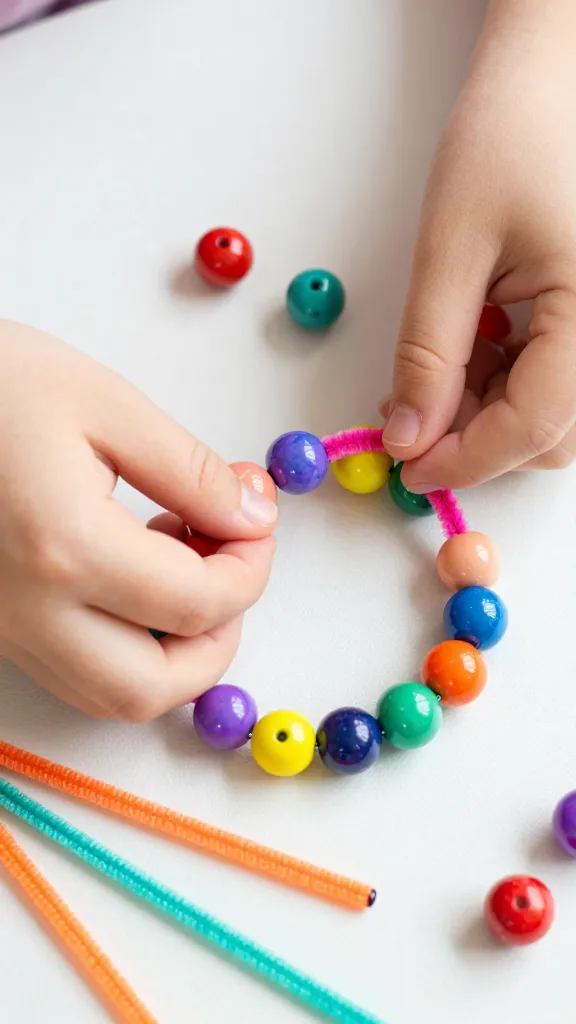
Soft pipe cleaners and big beads make a bracelet with no knots to fight and no thread thin enough to lose between small fingers.
A child slides beads on in whatever order feels right, then twists the ends together once the band is long enough to circle a wrist.
Nothing about the process punishes a wobbly grip, which makes it a solid first bracelet for a child who gives up fast when a craft gets fiddly.
Glittery pipe cleaners add a little shine without any extra steps, and bending the pipe cleaner into a heart or a star before adding beads turns a plain band into something with real shape.
Twisting the ends flat and tucking them in keeps the finished bracelet comfortable against the skin.
The whole project builds color recognition and grip strength at the same time, which matters more at this age than the finished look.
Grandparents tend to keep these bracelets for years, so a child who wants to make a gift rather than something for their own wrist should start here.
Set aside fifteen quiet minutes and a bowl of beads, and the bracelet builds itself.
9. Rainbow Pasta Noodle Art Bracelets
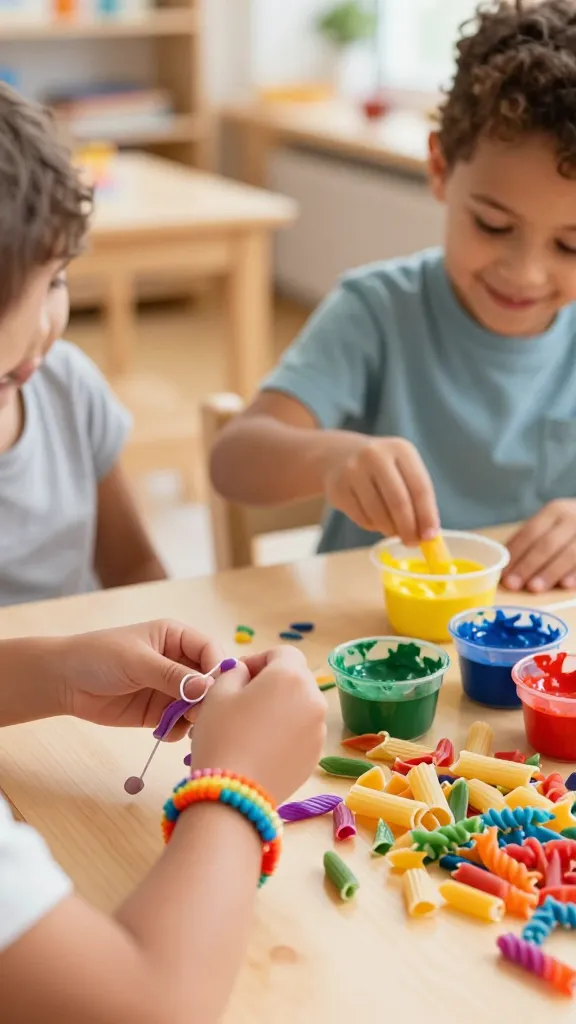
Plain pasta from the pantry turns into bright beads once your child paints it or dips it in a little food coloring. Ditalini, penne, and rotini each dry into a different shape, so mixing a few kinds gives the bracelet texture instead of one flat row of circles.
Painting the pasta is honestly half the appeal, so plan for a few stained fingers along the way.
Once the pasta dries on a sheet of wax paper, a length of yarn or elastic cord does the rest of the work. Your child threads pieces on in any order, and a double knot at the end holds everything in place.
Because this craft splits into two separate sessions, painting first and stringing later, it suits a child who already enjoys a slower project with a clear middle step.
The color choices belong entirely to your child, so no two pasta bracelets from the same batch ever look alike.
That built in variety is worth pointing out once the bracelet is finished, since it gives a preschooler a real reason to feel proud of what they made.
Subscribe to DIY Craft Bloom
Get updates on the latest posts and more from DIY Craft Bloom straight to your inbox.
10. Soft and Cuddly Felt Shape Wrist Hugs
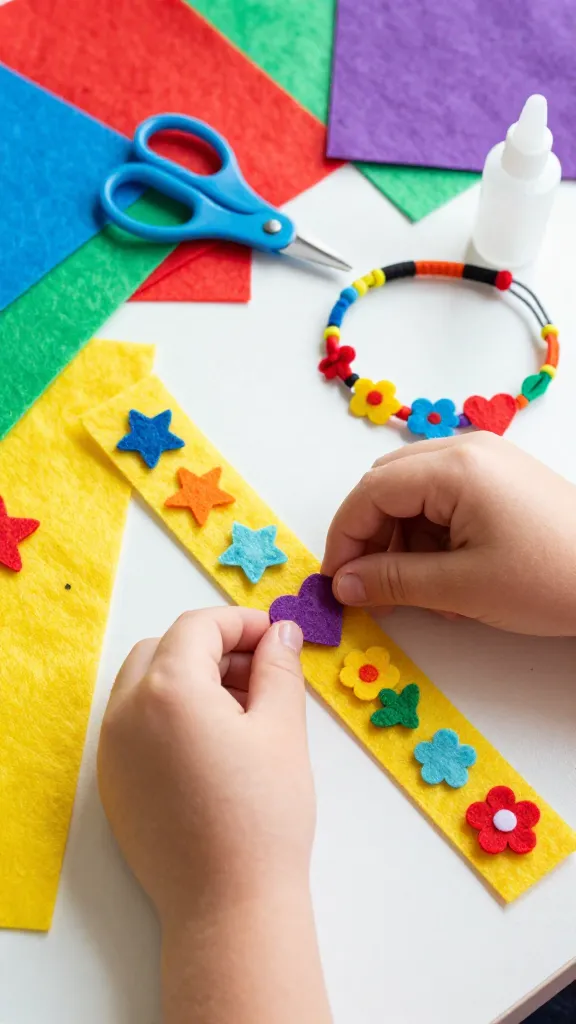
Felt shapes glue onto a felt strip, so there is no string, no knot, and nothing small enough to roll under the couch. A child cuts hearts, stars, or circles from colored sheets and arranges them however they like before an adult helps close the band.
The finished bracelet stays soft against the wrist, which matters for a child who complains about scratchy jewelry.
Cutting the shapes builds scissor skills, and younger preschoolers can skip that step entirely if an adult pre cuts a small pile of shapes ahead of time.
Gluing and layering the pieces is where the design comes together, and a child often narrates a little story as they place each shape. Once the glue dries, a strip of velcro or a small snap closes the loop without needing a needle anywhere near it.
A bracelet this soft works well as a gift for a younger sibling too, since there is nothing stiff or sharp on it.
Ask your child what each shape means before you close the band, and you will usually get a small story worth remembering.
11. Colorful Washi Tape and Cardboard Cuffs
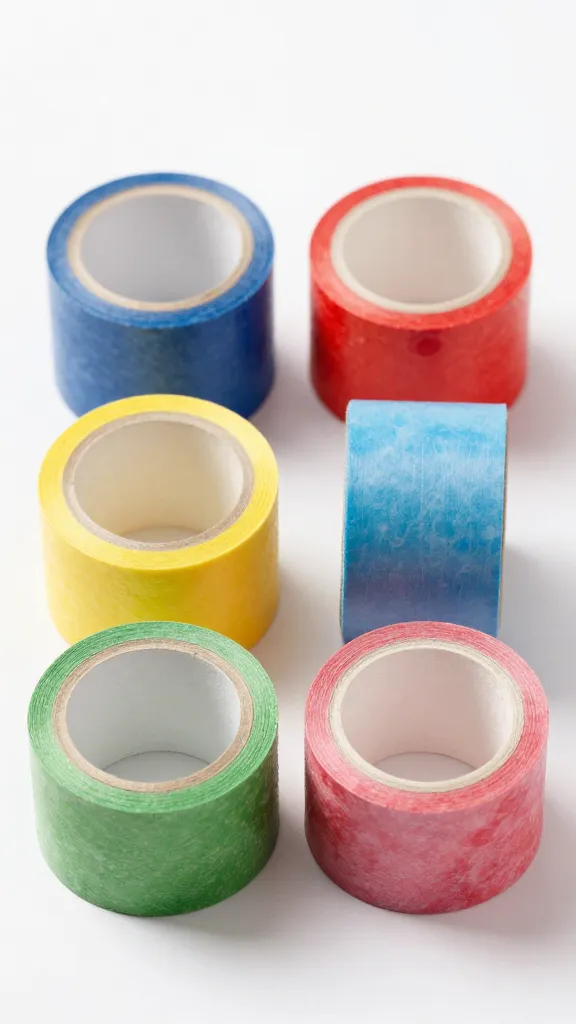
Washi tape covers a recycled cardboard cuff in color without a drop of glue or paint anywhere near it.
A toilet paper roll cut into rings, or a strip of cereal box cardboard bent into a loop, gives your child a clean base to decorate. This is the tidiest craft on the list, so it fits well on a day when cleanup time is short.
Tearing tape and pressing it flat builds the same fine motor skills as threading beads, just without any small pieces to lose.
Solids, stripes, and a glitter roll if you have one give your child real choices to make, and wrapping the tape around both the inside and outside edge gives the cuff a finished look.
A child who likes fast results tends to enjoy this one most, since the whole cuff can be covered in a few minutes.
The lightweight cuff stays comfortable for all day wear, whether that means a play date or just running around the yard. Keep a few extra rolls of tape on hand, since one cuff rarely satisfies a child who is on a roll.
12. Big Button and Yarn Threading Bracelets
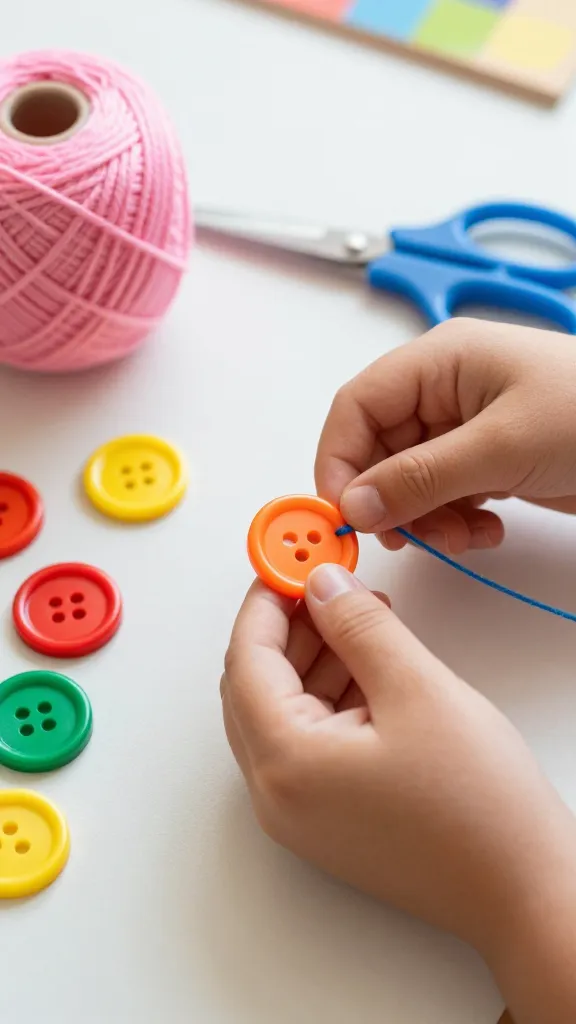
Big buttons and thick yarn build a chunky bracelet that gives small hands something real to hold onto.
Wrapping a bit of masking tape around one end of the yarn creates a stiff tip that pushes through a buttonhole far more easily than bare yarn ever could. The repeated motion of threading one button after another helps a fidgety child settle into a calm rhythm.
Buttons with two holes work well for a first attempt, while buttons with four holes give an older preschooler a small new challenge once they have the basic motion down.
Swapping in a wooden bead every few buttons breaks up the pattern and keeps the process interesting past the first few minutes. A double knot at the end, followed by a small bow if your child wants one, finishes the bracelet off.
Children who like to see a project through from start to finish tend to gravitate toward this idea, since threading gives them a clear sense of progress the whole way through.
The finished bracelet also has real weight to it, which some kids find satisfying in a way lighter crafts never quite match.
13. Nature’s Treasure Sticky Bracelets
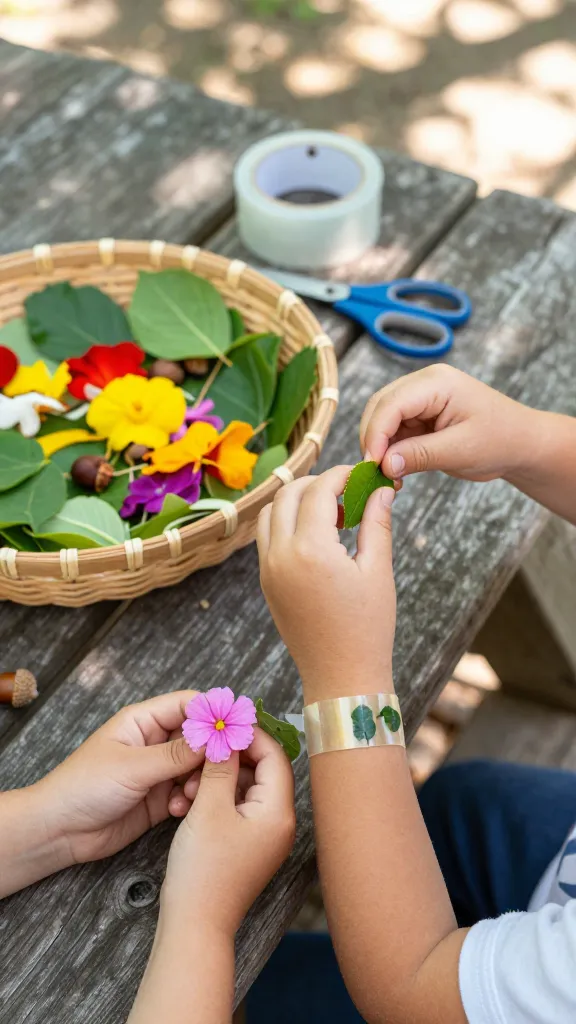
A strip of tape, turned sticky side out, becomes a wearable collector for whatever your child finds on a walk outside.
Petals, small leaves, blades of grass, and even a stray feather all press right onto the surface without needing glue or a single knot. The walk itself becomes part of the craft, not just a warm up before the real project starts.
Back inside, an adult forms the tape into a loop around a child’s wrist, sticky side facing out, and your child presses their finds onto the surface in whatever pattern feels right.
Checking that everything collected is clean and free of anything sharp only takes a second, but it matters before the bracelet goes anywhere near skin. The bracelet only lasts a day or two before the leaves start to curl, so a quick photo is worth taking before that happens.
Families who already spend time outside will get the most out of this one, since it turns an ordinary walk into a small keepsake.