Handmade Vs Store Bought Birthday Cards

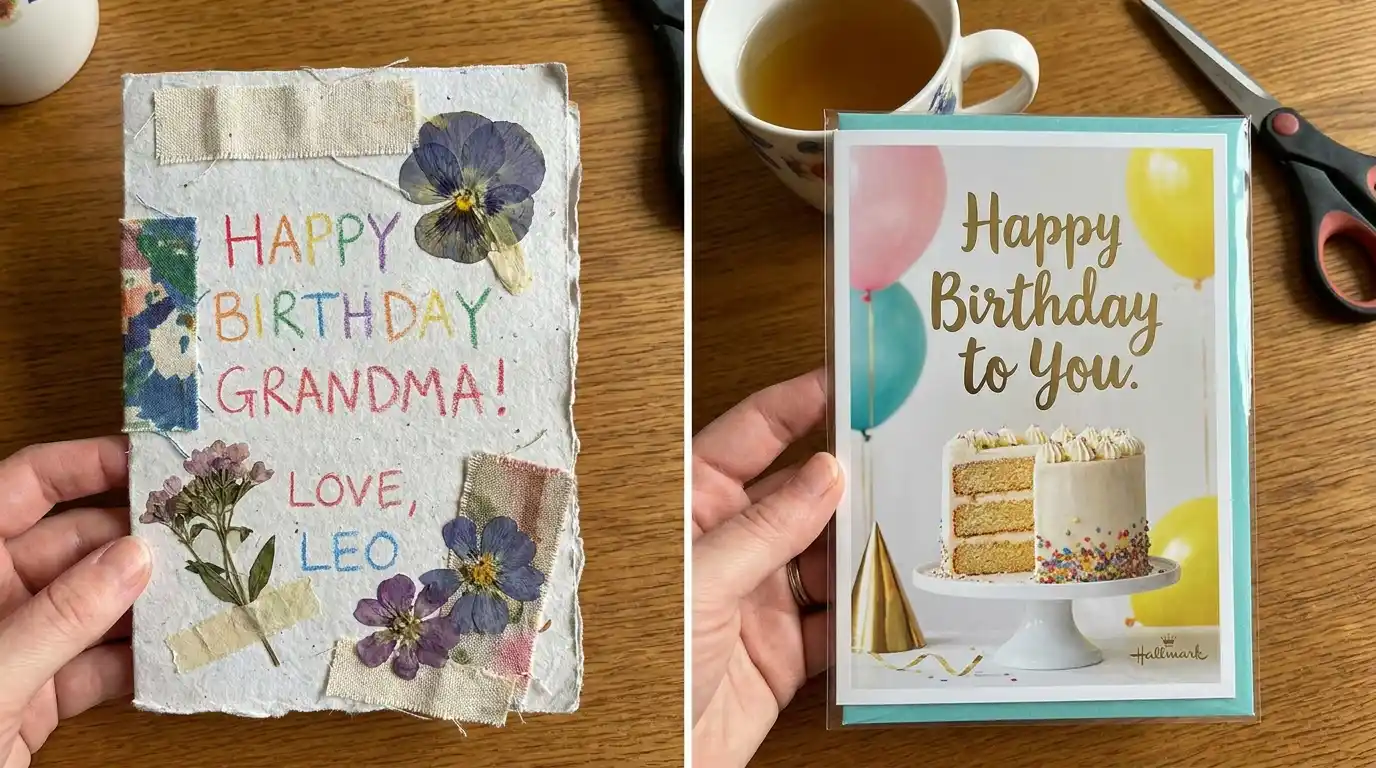
You stand in the card aisle and stare at a wall of paper. You need a birthday card. One smells like fresh print, while the other—a DIY project—might smell like Elmer’s glue and a slight sense of panic.
In a world of AI and phone pings, a physical card is a rare “tangible hug” in the mail. But things have changed.
By 2026, premium store cards often cost $7 to $10. That is a lot of money for a piece of cardstock someone might toss in a week. Now you have a choice.
Do you grab a quick card at the pharmacy? Or do you reach for the glue stick and markers? We will look at handmade vs store bought birthday cards to see which wins.
You will learn about the cost, the environmental impact, and why your brain reacts differently to each one.
Why Your Brain Loves the “Effort Effect”
It is not just paper. It is a signal. When you give a gift, you are sending a message about how much you care.
Psychology experts say that “perceived effort” makes a recipient feel seen. If you spend time making something, the other person feels more valued.
Subscribe to DIY Craft Bloom
Get updates on the latest posts and more from DIY Craft Bloom straight to your inbox.
Current 2026 market data shows that 65% of people now prefer a card with a personalized sentiment. They want something that feels real.
When you put in emotional intention, it creates a memory that lasts longer than a generic store message. Handmade vs store bought birthday cards both say “Happy Birthday.”
But the handmade one says “I sat down and thought about you for thirty minutes.” As Psychology Today notes, that extra effort is what creates a true emotional bond.
3 Ways to Save: The 2026 Price Tag
Let’s talk numbers. Prices have gone up, and buying a card isn’t as cheap as it used to be. Here is how the costs break down today:
- Store-Bought Cards: These now average $5 to $12. You pay for the convenience. You walk in, pick one, and leave.
- DIY Cards: These can cost as little as $1.50 in materials.
- The Hybrid Option: Tools like Canva or Cricut allow you to design something digital and print it at home.
The real cost of DIY is your time. A store trip takes ten minutes. Making a card takes thirty to sixty minutes.
If you are busy, the store wins. If you want to save money and add a personal touch, the glue stick is your best friend.
Quick Cost Comparison
| Feature | Store-Bought | Handmade |
| Price | High ($7+) | Low ($1.50) |
| Time | Low (10 mins) | High (45 mins) |
| Sentiment | Standard | Very High |
| Eco-Impact | High | Low |
How to Save the Planet with One Card
The hidden cost of birthdays is environmental. A standard mass-produced card creates about 140g of CO2e. Many of these cards use glitter. Here is a secret: glitter is just tiny bits of plastic. It never goes away.
Subscribe to DIY Craft Bloom
Get updates on the latest posts and more from DIY Craft Bloom straight to your inbox.
About 55% of new cards in 2026 now focus on eco-friendly designs. If you want to send eco-friendly birthday wishes, handmade is usually better.
You can use recycled paper or even old maps. Using recycled stock can cut the carbon footprint of your card by 50%. Choosing sustainable greeting cards shows you care about the person and the planet.
Should You Buy or Make? The Decision Matrix
You don’t have to make every single card. That would be exhausting. Use this simple guide to decide:
When to Buy:
- For your boss or a new co-worker.
- When you are running late to the party.
- When you find a card with an inside joke that is too perfect to pass up.
When to Make:
- For your parents or partner.
- For a “big” birthday like a 21st or 50th.
- When you want to save money but still look like a hero.
The Final Verdict on Connection
Whether you choose the speed of a store or the heart of a handmade craft, the goal is the same. You want to connect with someone you love. A card is a simple way to say “I’m glad you were born.”
If you have the time, try making one this year. If you don’t, look for a sustainable brand at the store. Both work. But remember: the best card is the one you actually send.