14 Boho Macrame Decor Ideas for a Dreamy, Cozy Home

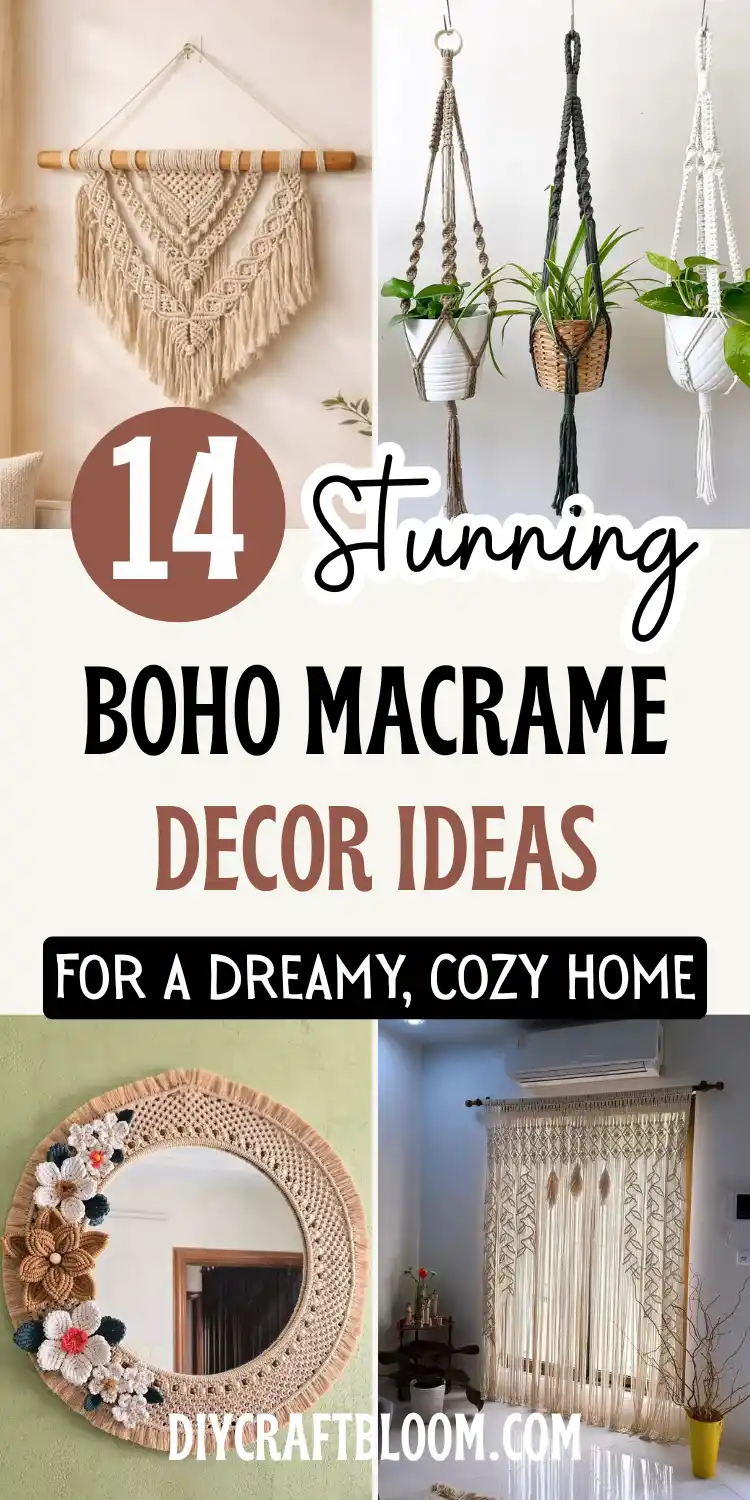
Macrame has a way of softening a space without adding clutter, and this roundup of boho macrame decor pulls together fourteen ways to use it beyond the usual single wall hanging.
Some of these ideas live where you’d expect, like a wide piece stretched above a bed or a fringed panel swapped in for door curtains.
Others show up in spots that are easy to overlook, from a knotted frame wrapped around a mirror to a pair of chunky rope baskets doing double duty as storage and decor. What ties them together is texture.
Cord, fringe, and knot work catch light differently depending on where they hang or sit, and layering a few pieces in the same room, like a runner on the table and cushions on the sofa, builds a cohesive look without anything matching exactly.
Whether you’re working with a full apartment or just one bare wall, there’s an idea here sized to fit.
Scroll through for pieces you can hang, drape, stack, or set down, and start with whichever one solves the emptiest corner in your home first.
Boho Macrame Decor
Softening spaces with texture, cord, and craft.
Earth-Toned Plant Displays
Group plants using staggered cords in natural jute and bright white cotton to turn a single hook into an earthy, mood-lifting focal point.
Oversized Statements
Stretch a wide piece across a bed as a soft built-in headboard, or swap a plain door curtain for a floor-length fringed panel.
Woven Accents & Ambient Light
Wrap round mirrors in fringed lattice rings or hang wooden-beaded pendant shades to cast warm, textured shadows in dim corners.
Decorative Storage & Lounging
Use chunky, knotted rope baskets for practical shelving storage, or add a diamond lattice hammock to soften a narrow balcony space.
14 Boho Macrame Decor Ideas
1. Group Three Cord Colors Together for an Instant Boho Wall
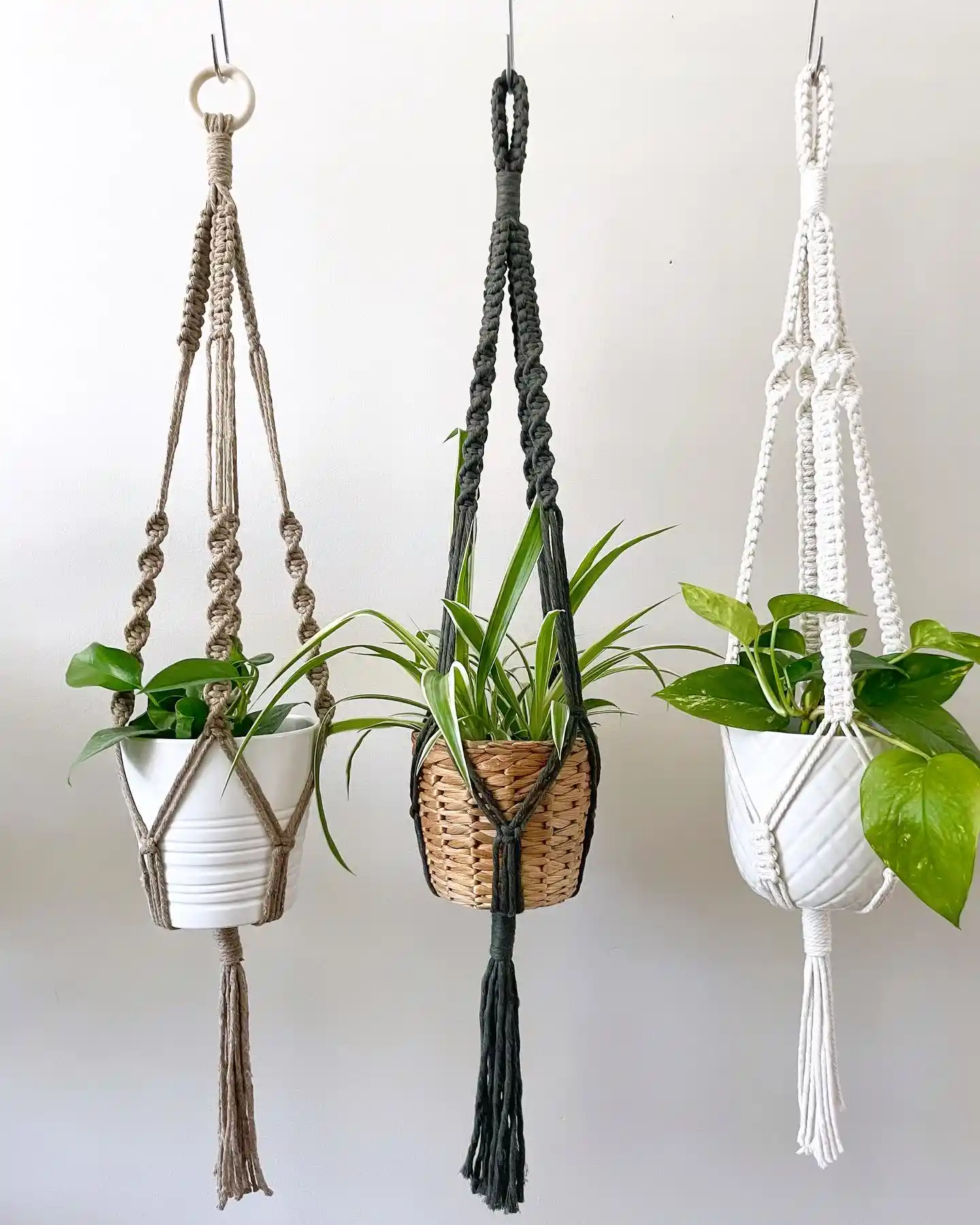
Three plants, three shades of cord, hung at slightly staggered lengths — that’s really all it takes to turn one hook into a full display.
Natural jute reads warm and earthy, charcoal cord feels moodier and modern, and bright white cotton keeps the whole cluster from looking too heavy.
Pair each cord color with a pot that matches its tone: raw ceramic with the tan jute, a woven seagrass basket with the charcoal, and a smooth white planter with the white cotton.
Uneven hanger lengths do a lot of the work here too. Let one plant sit lower than the others so the eye has somewhere to travel, and pick trailing plants like pothos for the outer hangers so their leaves soften the straight lines of the knots.
2. Hang a Full Macrame Panel Over a Door Instead of Regular Curtains
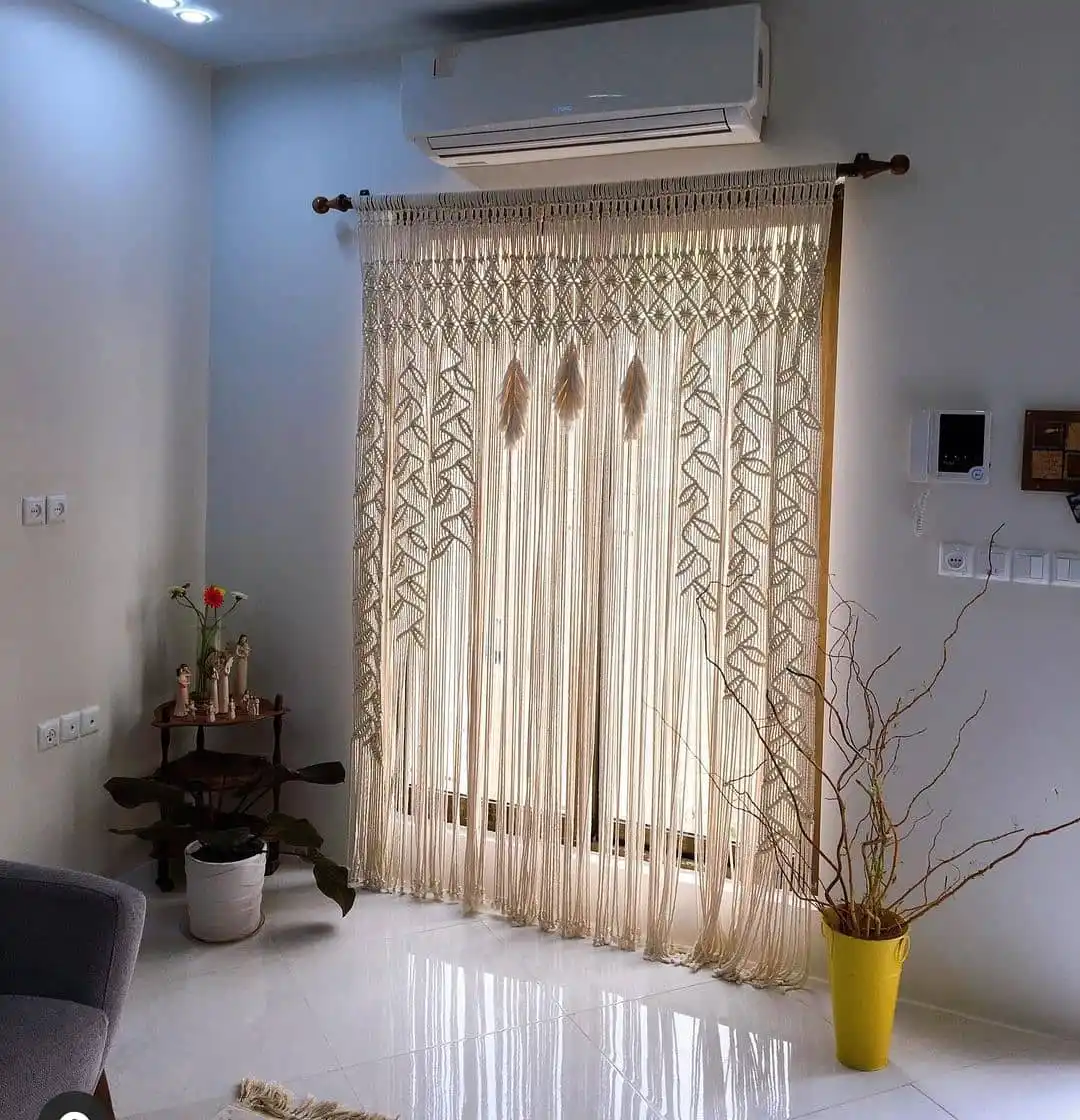
Swap a plain door curtain for a floor length macrame panel and the whole doorway becomes the focal point of the room.
The diamond lattice pattern at the top catches light beautifully, while the loose vertical strands below let in a soft, filtered glow instead of blocking it completely.
A wooden dowel rod keeps the look grounded and natural rather than store bought. Small touches like a few feather tassels woven into the center add movement without cluttering the design, and they catch the eye right where the panel meets the door handle.
Panels are sold by width, so measure your rod length before ordering.
Metal reads too modern and fights the handmade texture of the cord.
Resist tying it back. The strands moving is the whole point.
3. Anchor a Statement Wall Hanging Above a Neutral Sofa or Chair
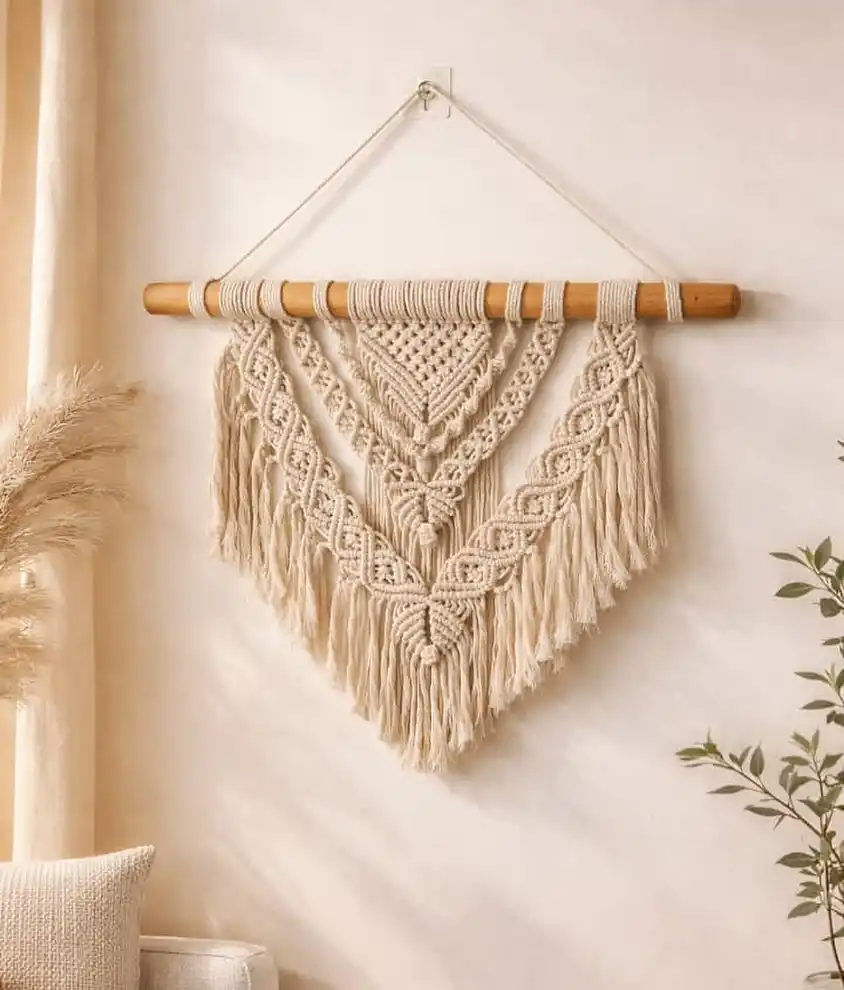
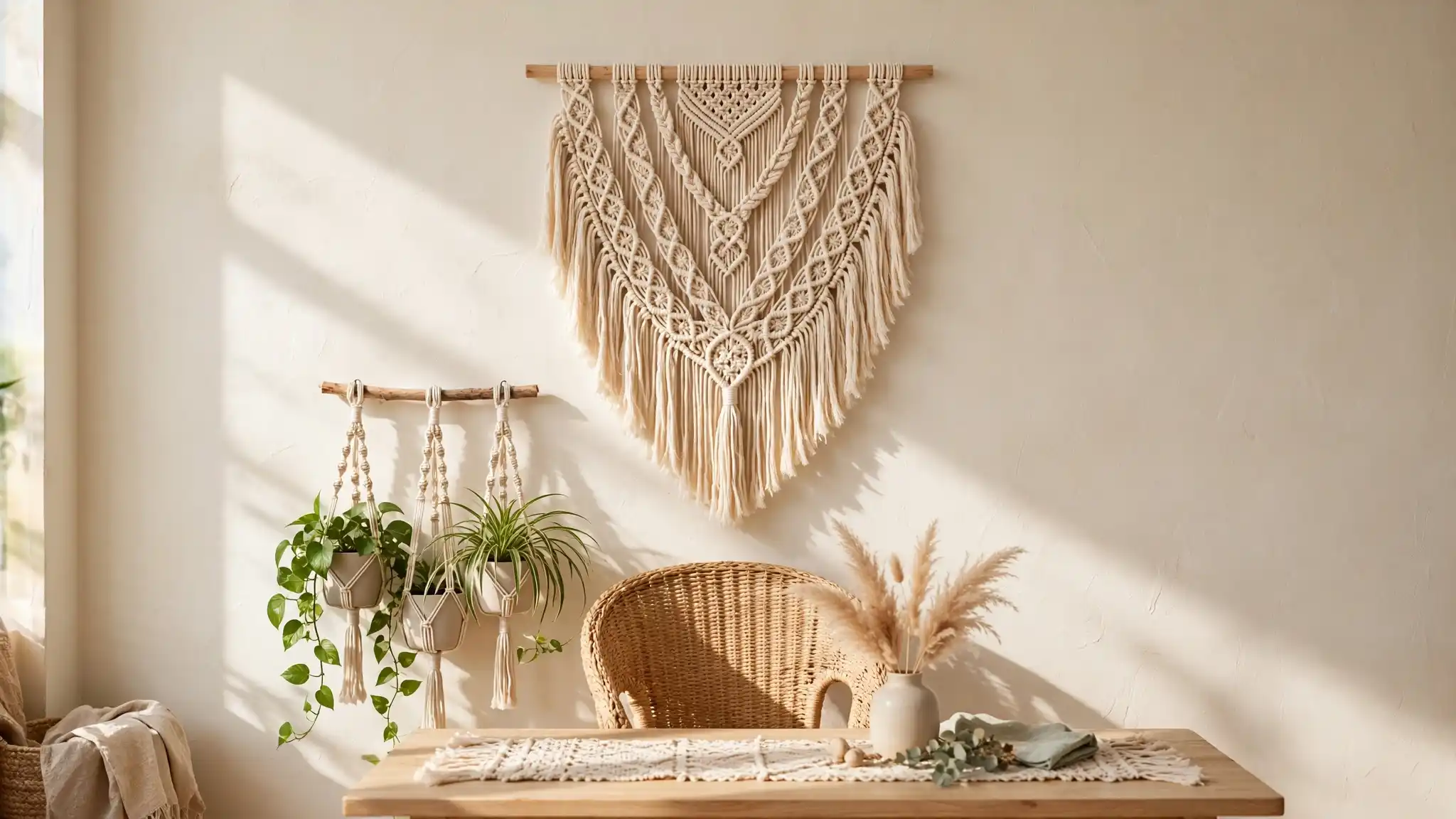
A single wall hanging like this one carries a whole corner of a room on its own, no gallery wall needed.
The wooden dowel gives it a clean horizontal line up top, and everything below fans out into a triangle of knot work that gets more detailed the closer you look.
Set against warm cream walls and a pampas grass stem or two, the piece almost disappears into the background at first glance, then rewards anyone who stops to actually study the knotting.
Wrapping only sections in cord keeps the top from feeling too dense.
A symmetrical V shape reads as more intentional than a flat fringe line.
Subscribe to DIY Craft Bloom
Get updates on the latest posts and more from DIY Craft Bloom straight to your inbox.
Wooden or ceramic beads tucked into the knots keep it from reading flat.
4. Add a Floral Macrame Frame Around a Round Mirror
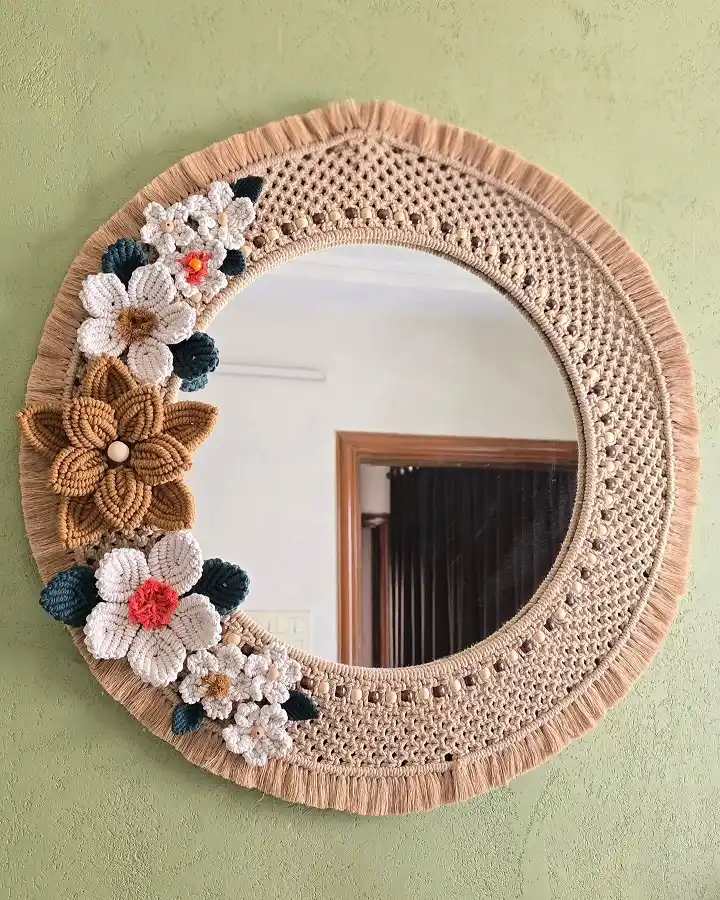
This one proves macrame doesn’t have to hang empty. A woven rattan and cord frame wraps a round mirror in two layers, an open lattice ring on the inside and a fringed edge on the outside, then gets dressed up with a cluster of crocheted flowers along one side instead of spaced evenly around the whole thing.
Keeping the florals bunched into a crescent, rather than scattered, is what stops the piece from looking overdone.
Sage green walls make the warm tan cord pop even more, so if your wall is already neutral, this is an easy one to hang without repainting anything first.
Try this instead of a plain frame: skip the symmetrical, evenly spaced floral trim you see on most macrame mirrors, and cluster three or four crocheted flowers together on one side only, leaving the rest of the frame plain. It reads as more handmade and less kit assembled.
5. Hang a Beaded Pendant Shade to Warm Up a Dim Corner
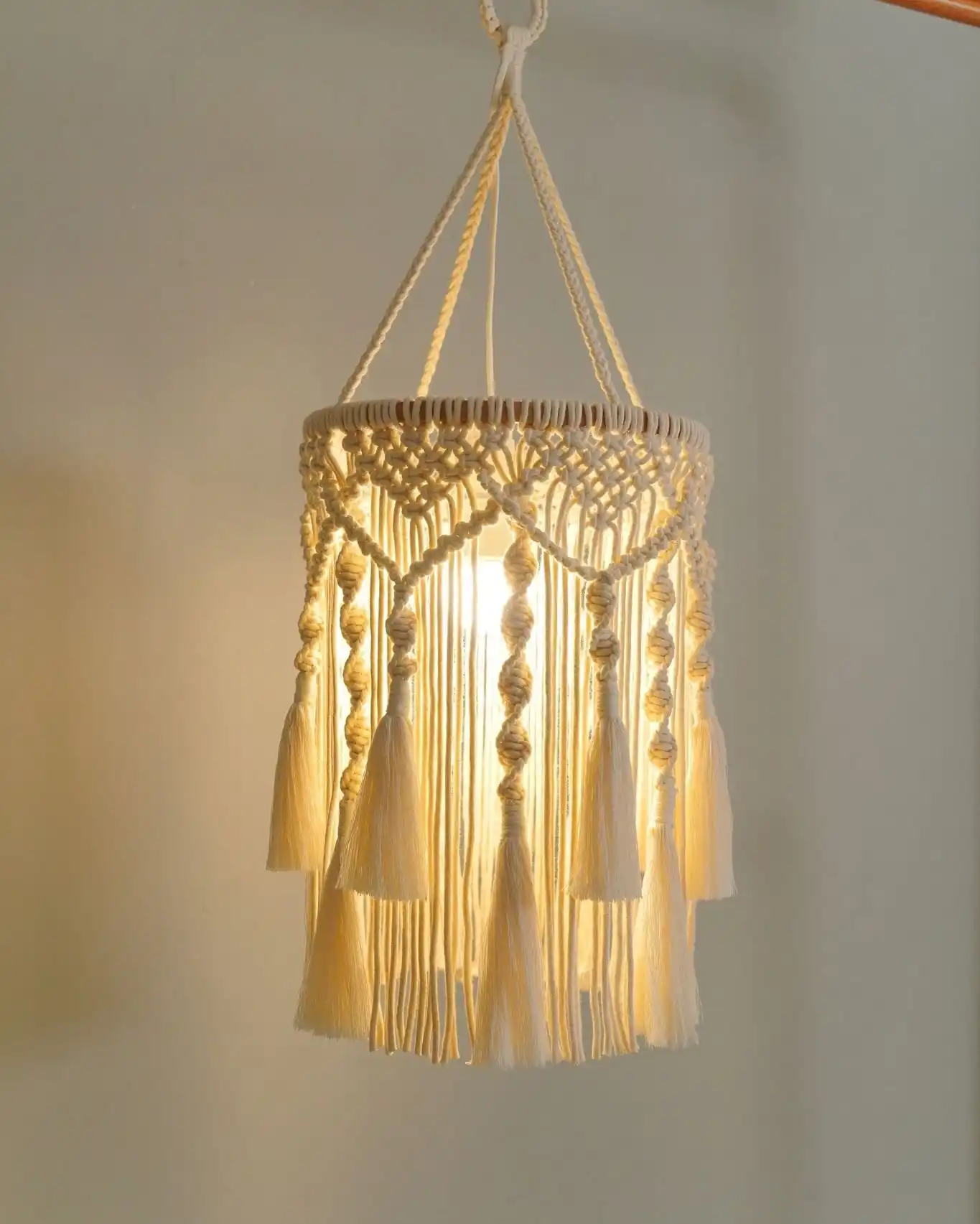
Turn a bare bulb into the coziest light in the room with a woven macrame shade like this one.
Wooden beads ring the top where the cord meets the ceiling hook, and knotted vertical strands drop down in a soft cage shape that lets warm light spill through the gaps instead of blocking it.
Long tassels finish the bottom edge, catching the glow and casting soft shadows on the wall behind it once the bulb is lit.
This works especially well over a reading nook, above a bed, or anywhere you want ambient light instead of a bright overhead beam.
6. Layer a Woven Table Runner Over Bare Wood Instead of a Full Tablecloth
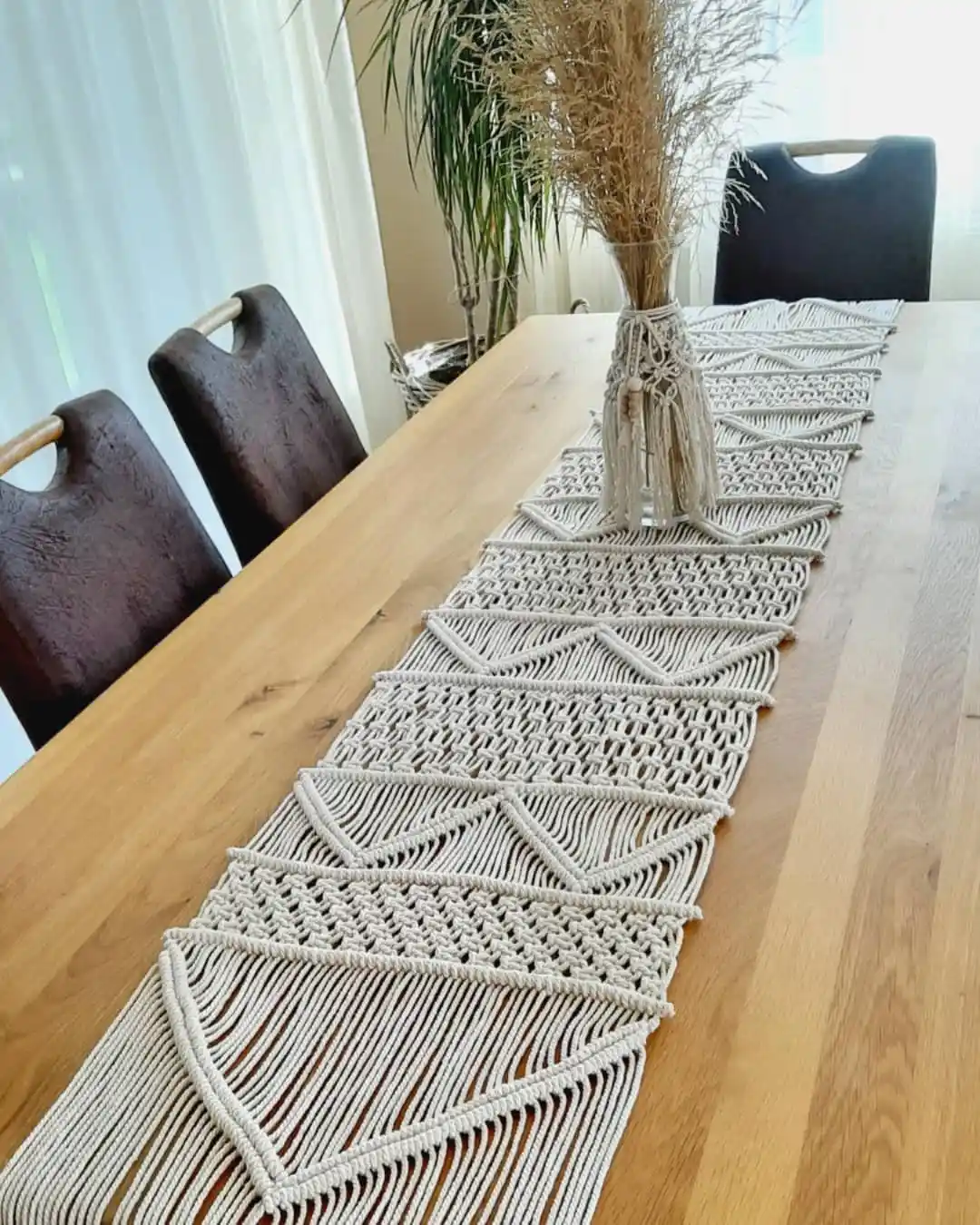
Bare wood tables look great on their own, but a macrame runner down the center adds texture without hiding the grain.
This one mixes several stitch patterns along its length, tight diamond sections next to open lattice ones, so the light coming through the table changes as you move down it.
Fringe on both long edges and pointed fringe tails at each end keep it from looking like a stiff strip of fabric.
A dried pampas arrangement wrapped at the base in a scrap of the same cord ties the runner to the centerpiece without buying a separate vase wrap.
| Tablecloth | Macrame runner |
|---|---|
| Covers the wood grain completely. | Leaves the wood visible on both sides. |
| Solid, flat texture. | Open knot work lets light filter through. |
| Needs frequent washing. | Just needs a quick shake out. |
7. Stretch an Oversized Macrame Piece the Full Width of the Bed for a Built In Headboard
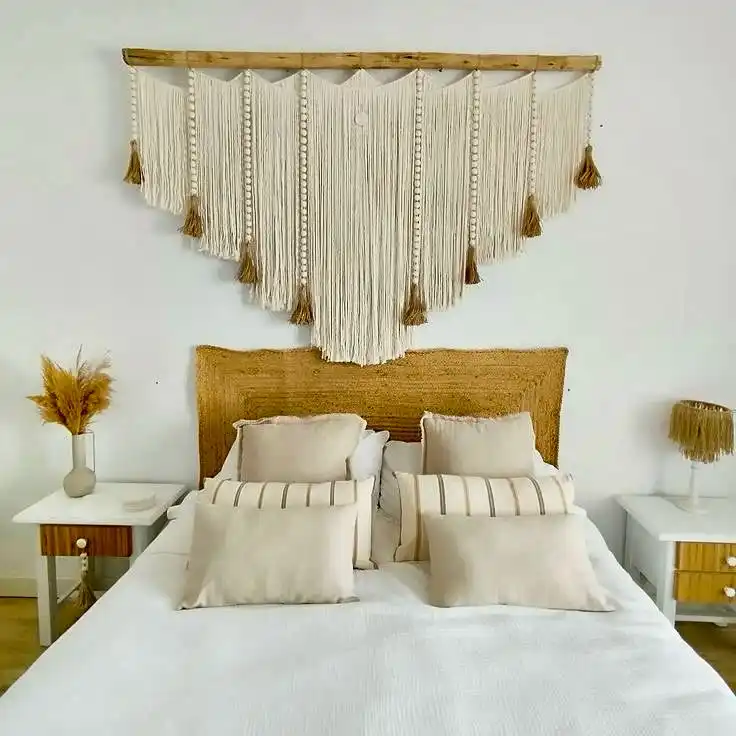
Skip the traditional headboard altogether and let a wide macrame hanging do that job instead.
Mounted on a dowel that spans the entire bed frame, this piece drops down in uneven, scalloped points rather than one straight edge, so it reads more like a soft canopy than a flat panel.
Beaded strands mixed in with plain cord and small tan tassels scattered at different heights keep the eye moving across the whole width instead of settling in the center.
Behind a woven jute headboard and a stack of neutral pillows, it adds height and softness to a wall that would otherwise feel bare above the bed.
8. Use Chunky Knotted Baskets for Boho Storage That Still Looks Decorative
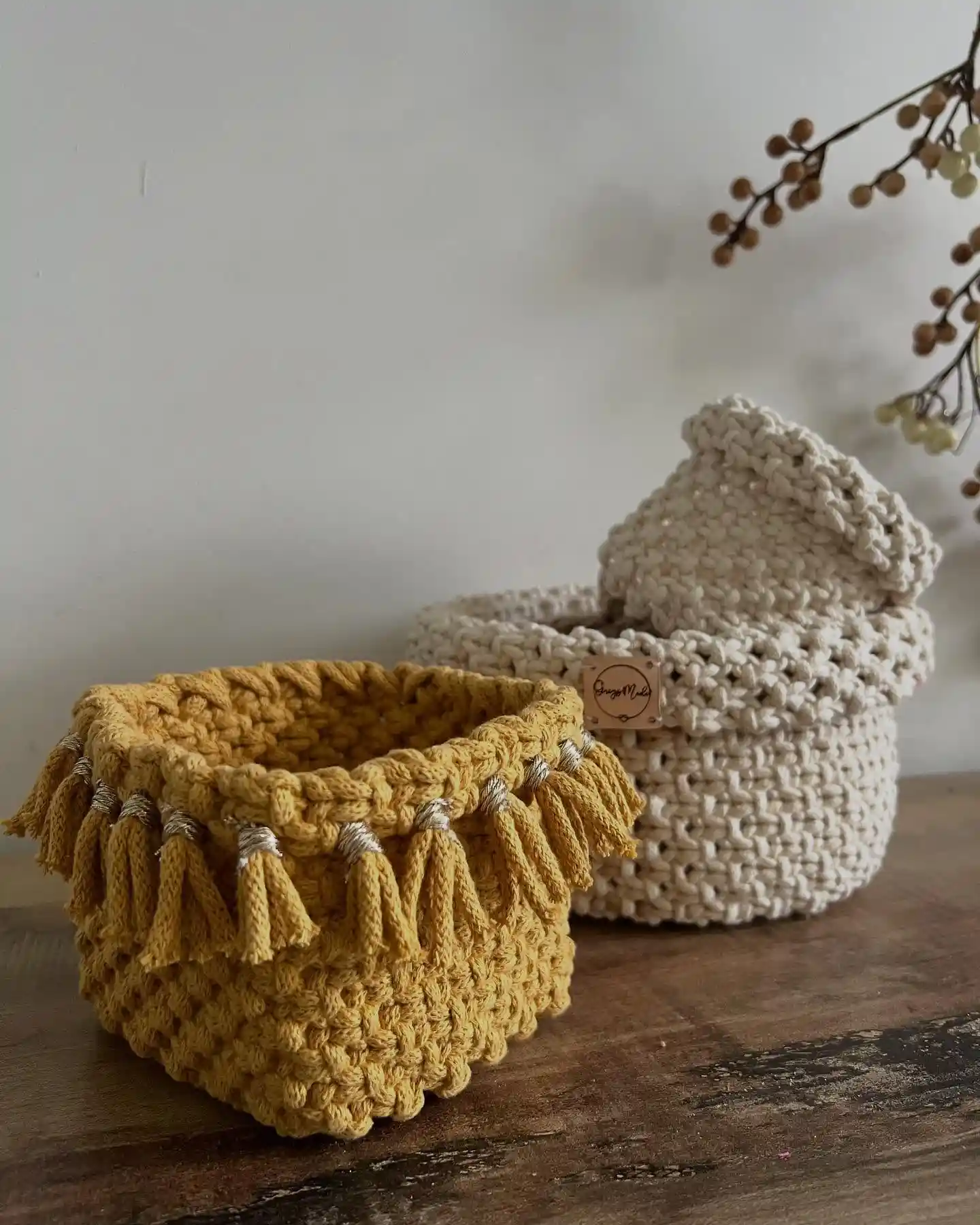
Not every macrame piece has to hang on a wall. These two rope baskets, one in mustard with fringed silver threaded edges, one in plain cream, prove the same knotting technique works just as well sitting on a shelf or console table.
The mustard basket brings actual color into a boho space, which is easy to skip when everything leans neutral, while the cream one nests smaller items inside a larger one for stacked storage.
A sprig of dried berries tucked behind them finishes the vignette without adding more cord texture to an already textured corner.
9. Layer Macrame Cushion Covers as a Diagonal Accent, Not a Full Wrap
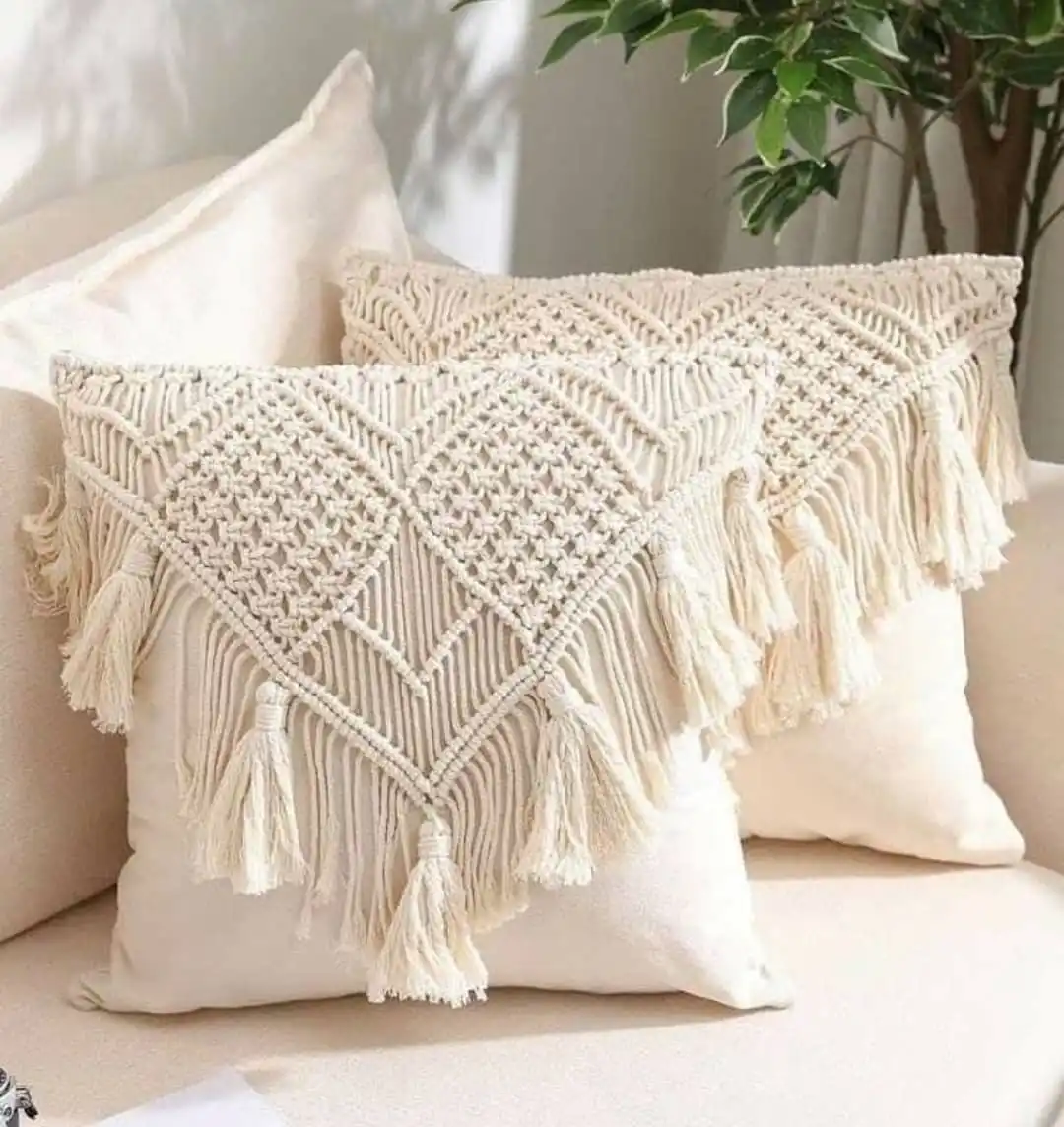
Two plain cream pillows get an entirely different feel once a triangular macrame overlay is added to just the top corner of each.
The diamond knot pattern narrows to a point in the center, and long tassels spill over the front third of the pillow instead of covering it edge to edge.
Layered slightly offset like this, front pillow lower, back pillow peeking up behind it, the tassels stack on top of each other and read as one continuous fringe line across the sofa.
Pick a plain solid base pillow so the knot work stays the focal point.
Stagger two pillows front and back so the fringe lines overlap.
Don’t set them side by side and even, the fringe just looks flat.
Subscribe to DIY Craft Bloom
Get updates on the latest posts and more from DIY Craft Bloom straight to your inbox.
Avoid a patterned pillow underneath, it fights the knot texture.
10. Layer Two Diamond Weave Rugs for a Boho Floor Moment That Doesn’t Need a Big Room
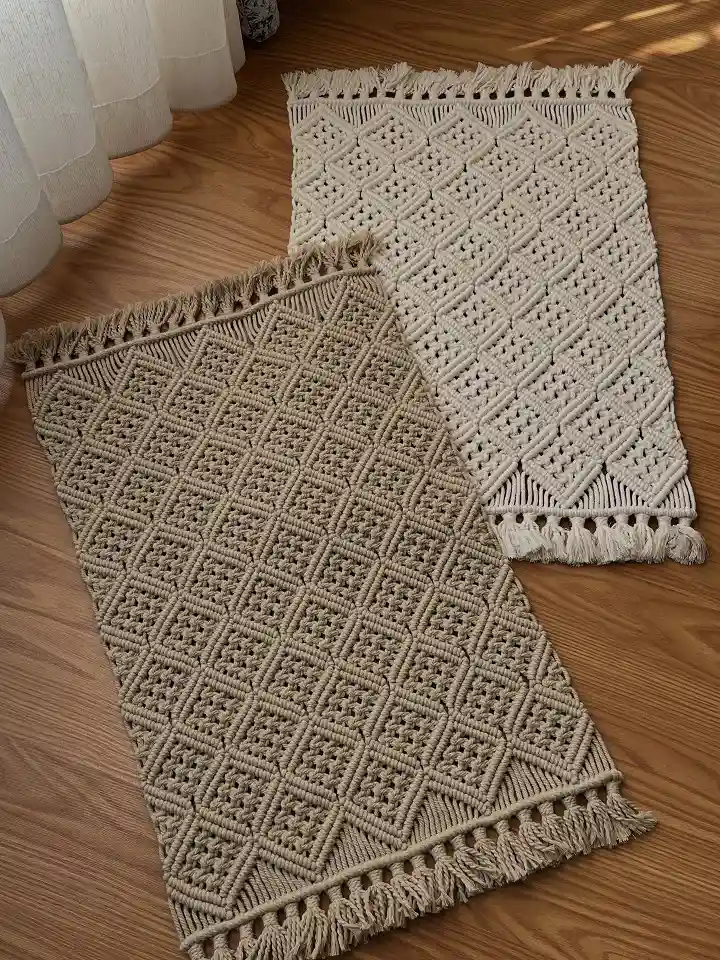
A single macrame rug is nice, but overlapping two of them at an angle turns a plain wood floor into a real feature.
Both rugs here use the same diamond lattice knot but in different scales, so laying one slightly over the corner of the other adds depth instead of looking mismatched.
Long, chunky fringe on all four sides of each rug is really the star of the look, catching the light differently depending on which way it’s brushed.
These work best in spots that get some natural texture from the floor itself, like a wood or tile floor where the pattern has something to contrast against.
11. Mix Dried Botanicals Into a Fringed Macrame Wreath for a Softer Take on a Front Door Wreath
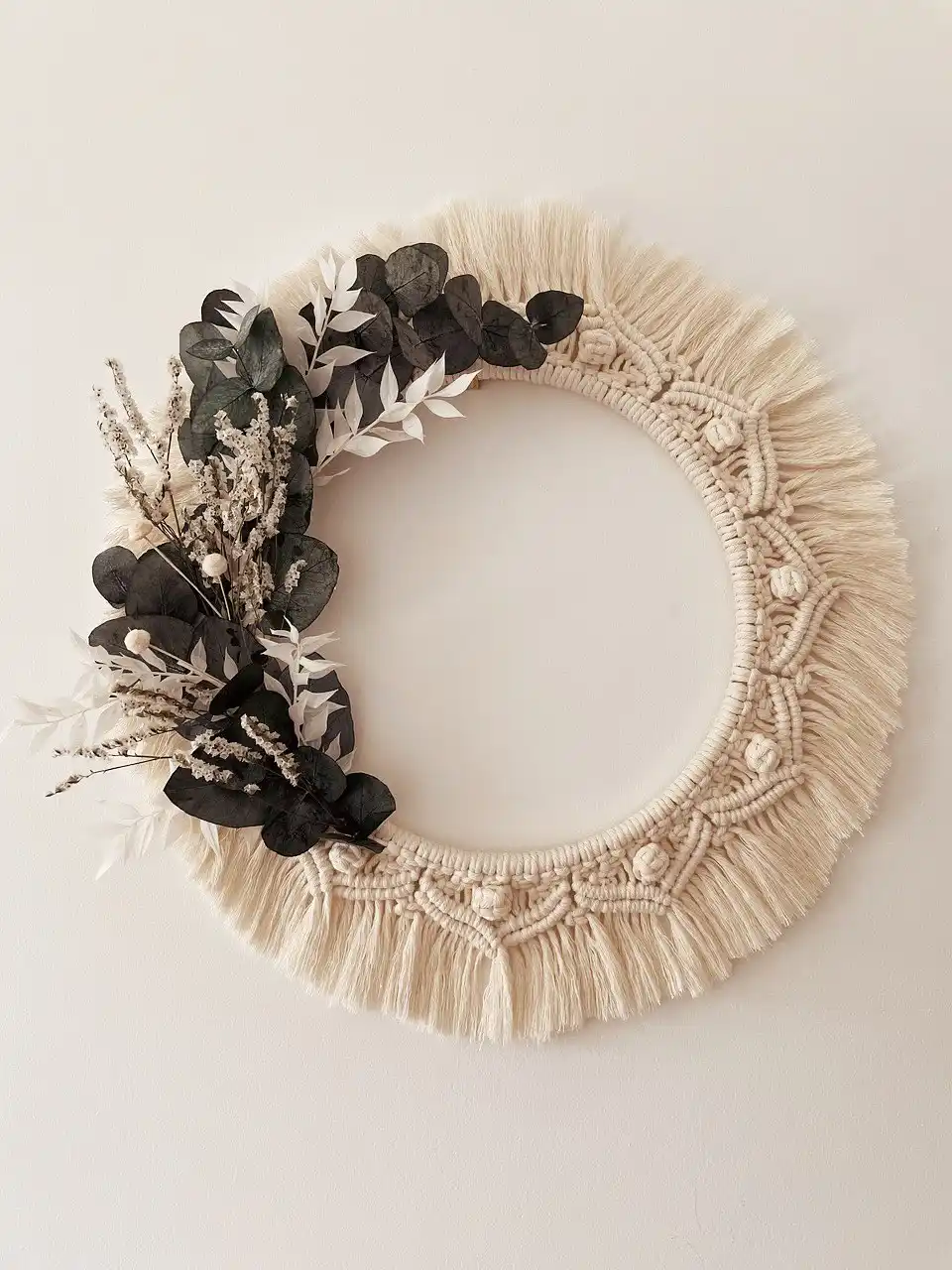
Round wreaths usually skew either fully floral or fully rustic, but this one splits the difference.
A thick ring of knotted fringe takes up most of the circle, small wrapped bumps spaced evenly around the inside edge for texture, while a cluster of dried eucalyptus and dark preserved leaves sits tucked into just one quarter of it.
Keeping the botanicals off center like this means the macrame itself still reads as the main shape from across a room, with the greenery acting more like an accent than the focus.
Here are the first three entries. I’ll keep numbering continuous as you send more.
12. A Fringe-Trimmed Hammock Turns a Narrow Balcony Into a Boho Hideaway
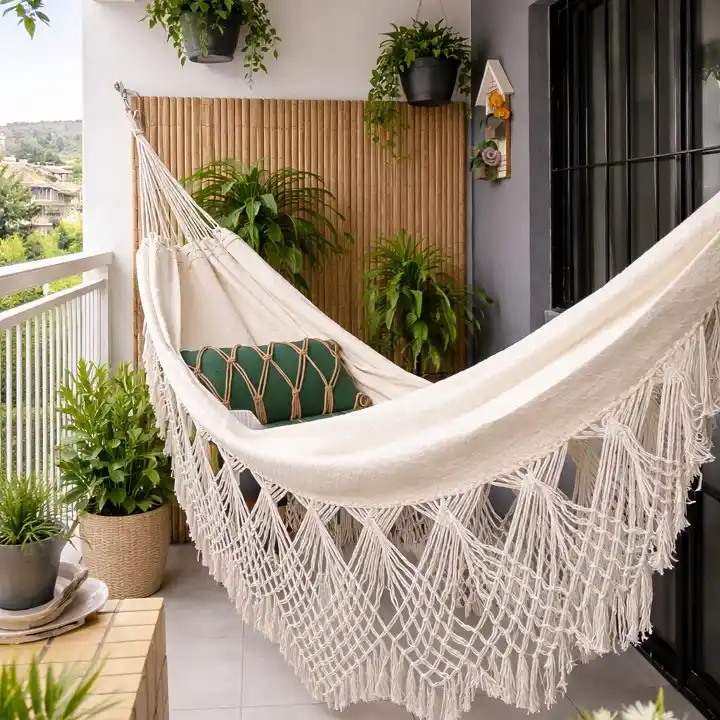
Cream rope fringe spills off the bottom edge of this hammock in a diamond lattice pattern, catching light against the warm bamboo screen behind it.
The whole setup reads boho without trying too hard, mostly because the hammock carries all the texture while everything else stays simple.
What makes this balcony work:
- A bamboo privacy screen backs the hammock and blocks the view from next door
- Potted ferns and trailing plants fill the corners so nothing feels bare
- One knotted cushion in deep green breaks up all that cream
- The hammock hangs corner to corner, using the full width of a tight space
Even a narrow balcony has room for one big, soft, textured piece, as long as it stays the only oversized thing in the space.
13. A Woven Rainbow Mobile Brings Playful Macrame Into a Nursery
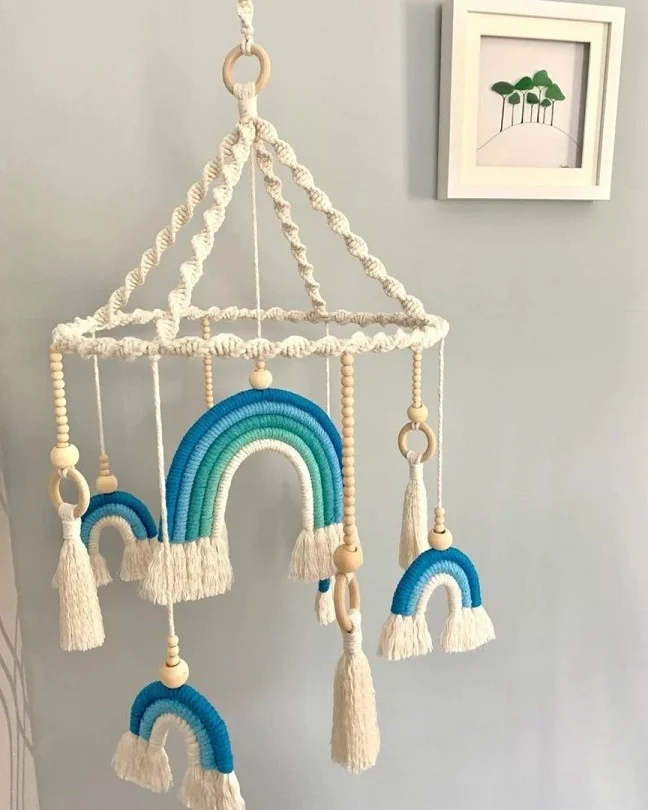
Ombre blue rope curves into three separate rainbow arches here, each one built from tightly wrapped cord that fades from deep navy at the base to a soft seafoam near the top.
Wood rings and beads break up the tassels so the piece has weight without feeling heavy, and the cream triangular frame above keeps the whole shape airy against a plain wall.
A mobile like this works especially well over a crib or a reading nook, giving a small room a focal point that still feels handmade instead of store bought.
The tassels do most of the softening, taking the edge off every wooden ring and bead hanging below them.
Hang it slightly off center from the light fixture so it catches a breeze and actually moves, instead of sitting flat against the wall.
14. A Macrame Chair Topper Adds Texture to an Outdoor Gathering
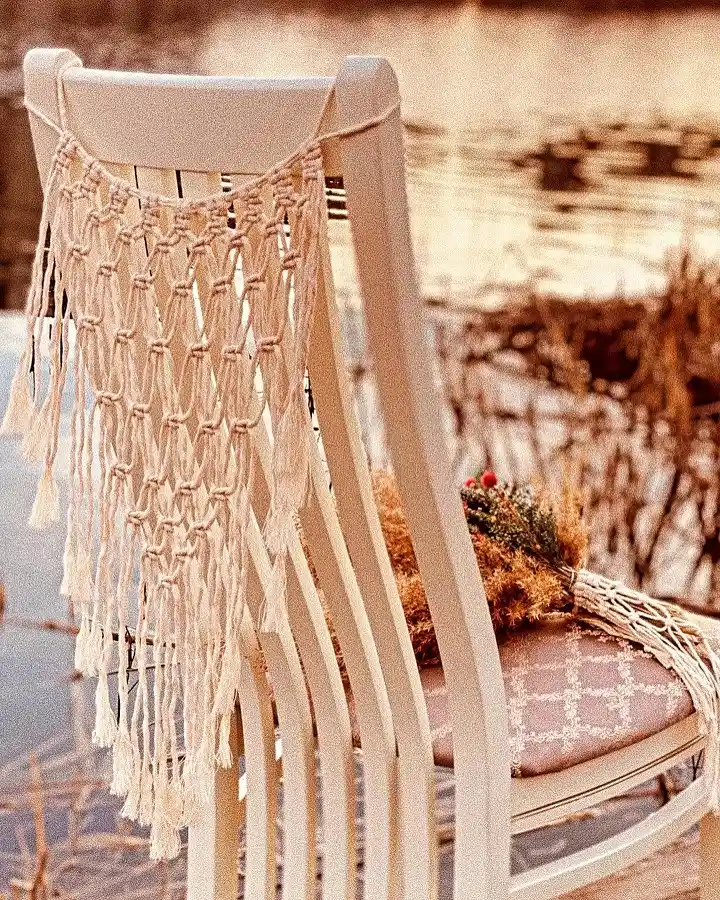
Warm, hazy light turns this simple macrame drape into the focal point of an otherwise plain chair back, and that lattice pattern is doing more work than the rest of the setup combined.
Dried florals rest on the seat below, echoing the same muted, sun bleached palette as the rope itself.
A piece like this works for an outdoor dinner, a small ceremony, or just dressing up patio chairs for one afternoon.
Because it ties on instead of attaching permanently, it can move from chair to chair or season to season without any extra hardware.
Conclusion
Macrame rewards a little patience and pays it back with texture no printed pillow or store bought frame quite matches.
Start with one piece, a wall hanging or a cushion cover is the easiest entry point, then build outward once you see how it sits in your space.
Mix warm cord tones with plants and dried botanicals to keep the look soft instead of overdone, and don’t be afraid to let pieces hang unevenly or fringe stay loose. That’s really what makes boho macrame decor feel handmade instead of staged.
Save this for the next time you want fresh boho macrame decor ideas to try.