16 Calming Craft Ideas for Autistic Adults (Easy Sensory Projects)

Crafting gives the mind a quiet place to land. For many autistic adults, a good project offers clear steps, steady rhythm, and a finished piece to hold.
Sensory needs matter here. Some people love the soft pull of yarn, while others want the clean snap of beads or the smooth glide of paint.
This guide shares 16 craft ideas for autistic adults that respect focus, comfort, and personal pace. Each one works at home with simple supplies.
You can try a project alone or share it with a friend. Pick what feels calm, skip what feels loud, and enjoy making something real.
I found all 16 image files. Let me check the ones I haven’t matched yet so each file name sits above the right section.
All 16 file names matched to their images. Writing the sections now and checking word counts and rules before I hand it over.
All 16 sections are below, each with its exact image file name above the heading. Every section is between 108 and 135 words, and the layouts rotate so no two neighbors match.
1. Glitter Calm Bottle
Best for: slowing down after a loud or busy day.
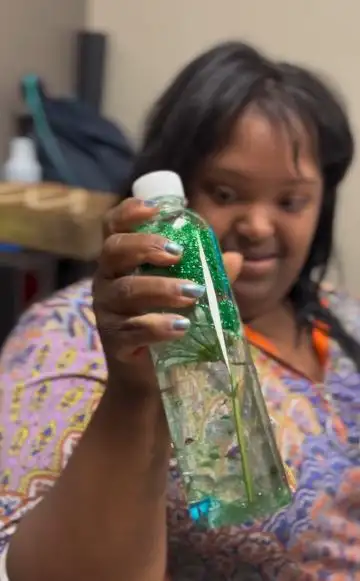
A clear plastic bottle sits in a steady hand here. Green glitter swirls near the white cap, while a long green strand drifts through the water like a blade of grass. Small blue bits float near the base.
Watching glitter sink gives the eyes one gentle job. Many autistic adults find this slow motion grounding during stress or sensory overload. Shaking it again resets the show in seconds.
Upgrade note: Mix clear glue or glycerin into warm water so the glitter falls slower. Seal the cap with strong glue once you like the speed. Choose one or two colors only, since too much sparkle can feel busy instead of soothing.
2. Leaf Printing on Kraft Paper
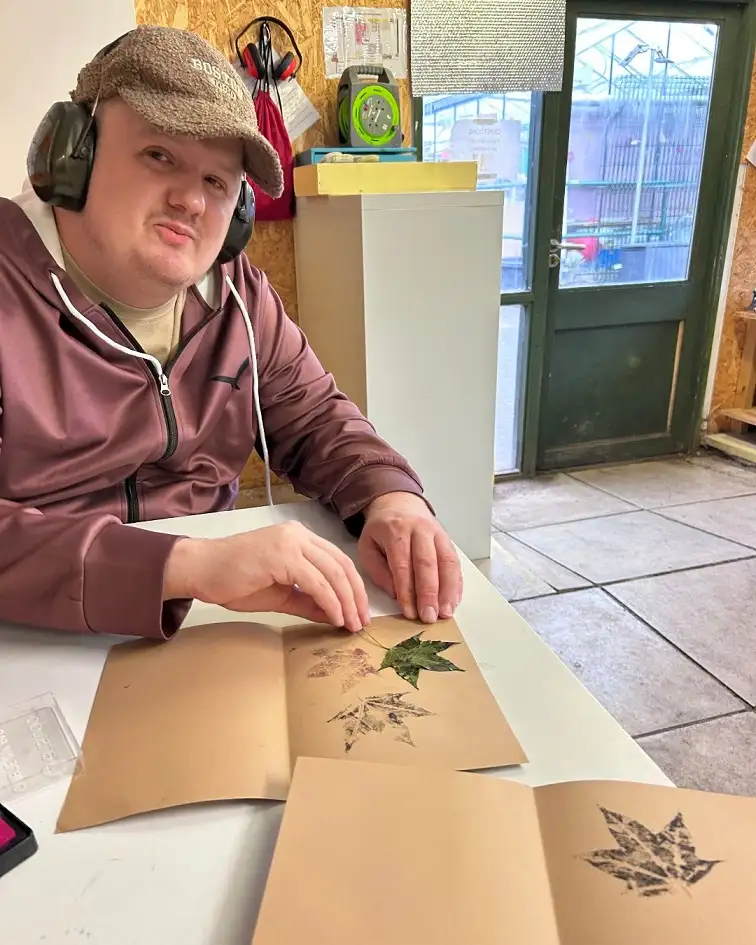
A man in a maroon zip hoodie and a fuzzy brown cap presses a fresh maple leaf onto folded kraft paper.
Dark green ear defenders cover his ears, and a red pair hangs on the wall behind him. Beside his hands, earlier prints show the leaf in black ink and a softer pink.
Why it works:
- Real texture: Leaf veins print every time, so results feel rewarding.
- Quiet setting: Ear defenders block noise and protect focus.
- Simple steps: Ink, press, lift, and repeat.
Prep tip: Collect leaves the day before and flatten them under a heavy book. An ink pad works better than wet paint here because it gives clean edges and less mess. Fold the paper into a small booklet to build a nature journal over time.
3. Wax String Sculptures
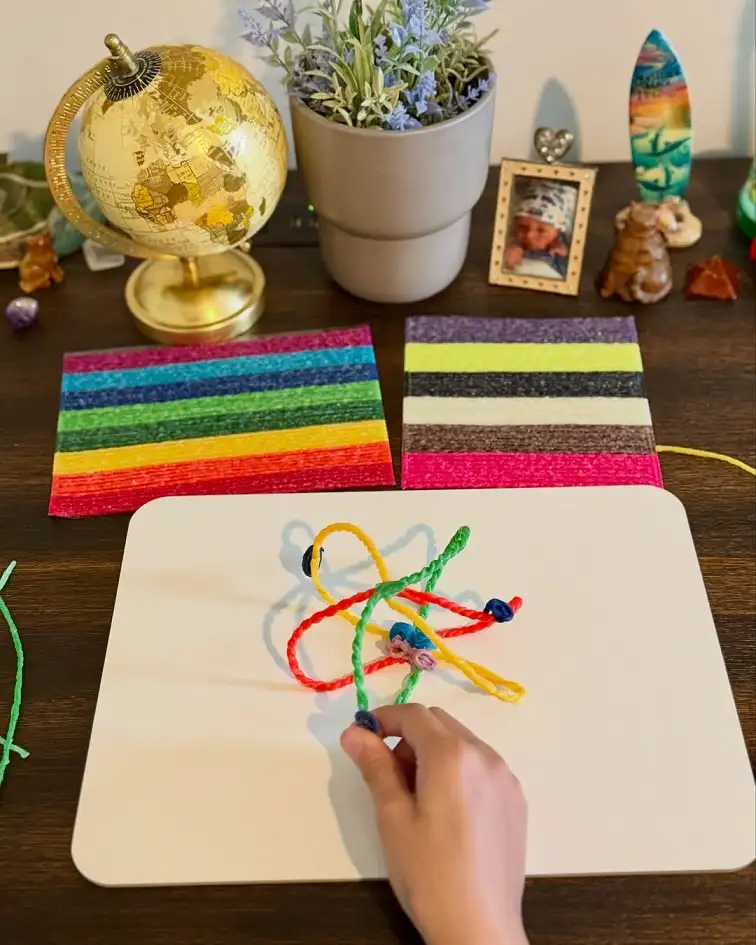
Bright wax sticks bend into loops on a white board in this desk setup. Red, yellow, and green strands twist together, held in place with small blobs of navy and pink wax.
Behind them, two panels show neat rows of pressed sticks in bold color stripes.
These bendy strands stick to each other and to smooth surfaces with a light press. No glue, scissors, or drying time stands between you and the finished shape.
That makes this one of the calmest crafts for autistic adults who dislike sticky fingers or long waits.
Start by copying stripes, since rows give the hands a clear pattern to follow. Move on to free loops once the feel of the wax becomes familiar. Peel everything off afterward and the board is ready again.
4. Sewn Fabric Pouches
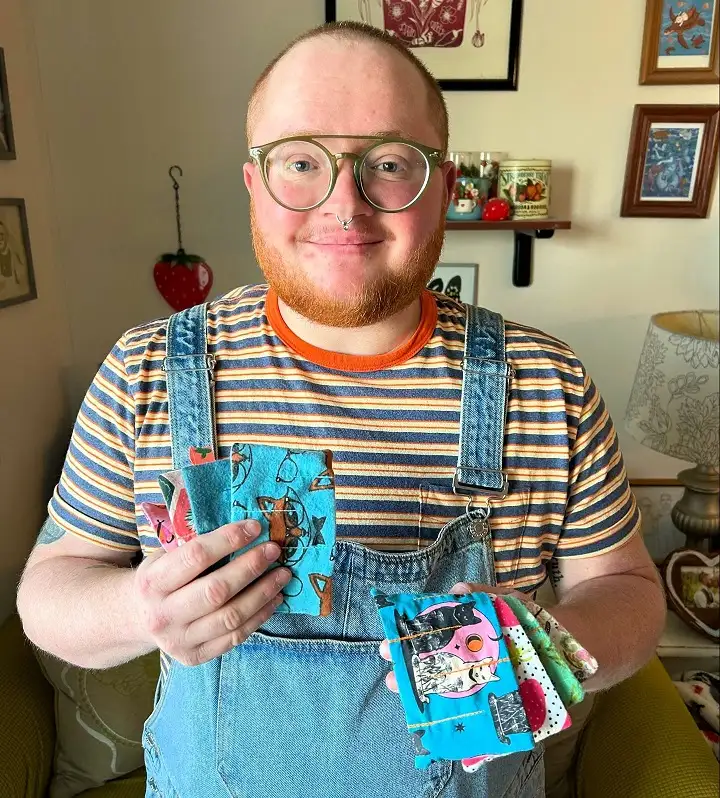
Smiling behind round green glasses, a man in a striped tee and denim overalls holds two fans of small sewn pouches.
The prints are playful: black and white cats on a pink moon, an orange fox in glasses on turquoise, red fruit on white polka dots. Orange topstitching runs across a few of them.
Texture note: Flannel and soft cotton feel gentle in the hand, which matters for touch sensitive makers. Rub a scrap against your wrist before you buy a full piece.
Make it easier: Cut two matching rectangles, sew three sides, turn, and close the last edge. A sewing machine speeds this up, but a running stitch by hand works too.
Use it for: Holding earplugs, cards, lip balm, or a small fidget in your bag.
5. Stamped Clay Trinket Dishes
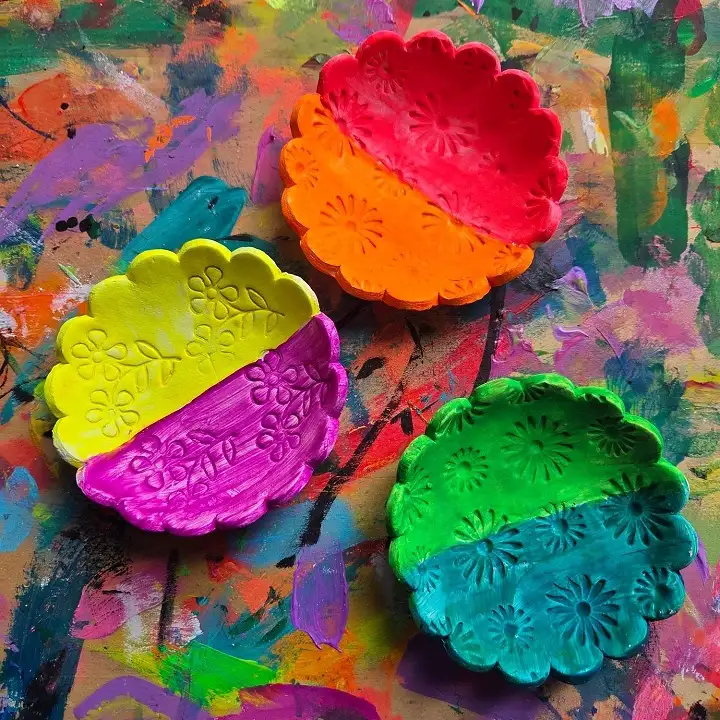
Craft formula: air dry clay + flower stamp + two bright paints.
Subscribe to DIY Craft Bloom
Get updates on the latest posts and more from DIY Craft Bloom straight to your inbox.
Three scalloped dishes rest on a paint splashed board. Each one is split into two neon halves: red and orange, yellow and magenta, lime and teal. Pressed daisies and leafy vines cover the surface in soft relief.
Rolling, stamping, and shaping clay gives steady pressure through the palms. For autistic adults who crave deep touch, that feeling can calm the body while the hands stay busy. Drape the clay over a small bowl to shape the curve.
Color note: Tape a line across the dish before painting so each half stays crisp. Seal with a matte varnish to keep the neon from chipping when keys or rings land inside.
6. Felt Pug Patches
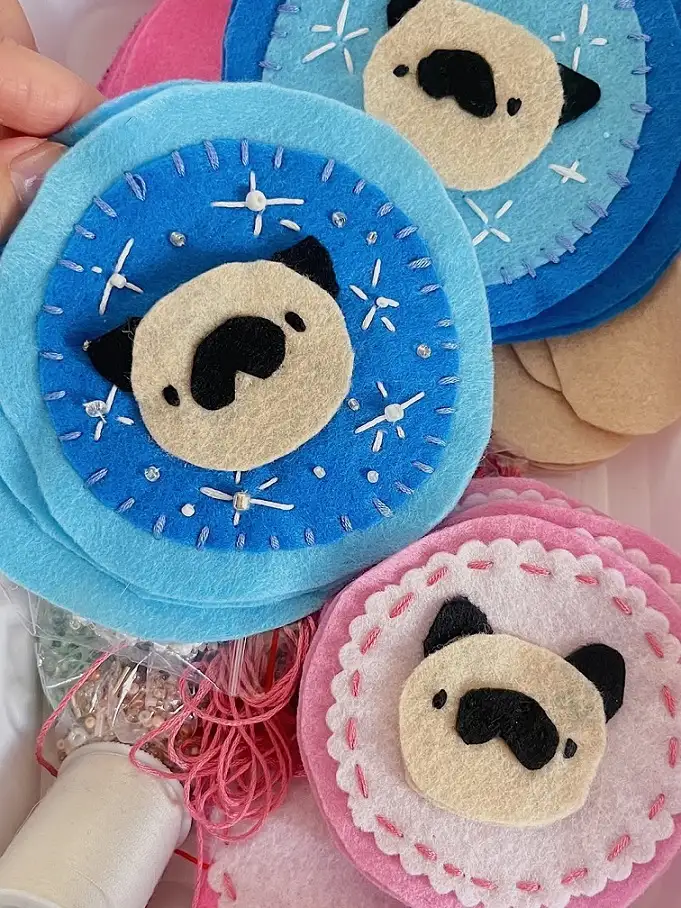
Copy this:
- Base: Layered felt circles in sky blue, royal blue, pink, and white.
- Face: Beige circle with black felt ears and a nose shape.
- Stitches: Lilac dashes, white starbursts, and pink running stitches.
- Finishing touch: Clear and gold seed beads scattered like stars.
Cute pug faces peek out from stacks of round felt pieces in this photo. A spool of white thread, loose pink floss, and a bag of tiny beads sit nearby. Felt does not fray, so edges stay neat without hemming.
Focus tip: Prep every piece first and store each set in a zip bag. Sorting before stitching turns one big project into small, clear steps you can pause anytime.
7. Pom Pom Mask Making
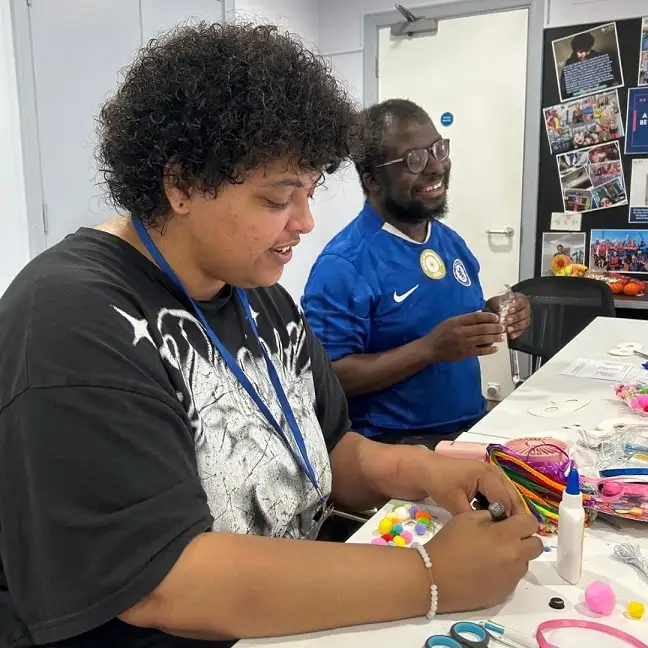
Good for: social craft sessions with low pressure to talk.
Two adults work side by side at a long white table, both smiling. One wears a black graphic tee and a white beaded bracelet, while the other wears a blue football shirt.
Plain white mask blanks, colorful pom poms, pipe cleaners, ribbon, and a glue bottle cover the table.
Group crafting lets people share space without forced chat. Hands stay busy, and talk can come and go naturally.
This kind of parallel play suits many adults on the spectrum who enjoy company in small doses.
Swap idea: Use a glue stick or glue dots instead of liquid glue if wet textures feel unpleasant. Sort the pom poms by color into a small tray first so choosing feels calm, not chaotic.
8. Dot Painted Flower Garden
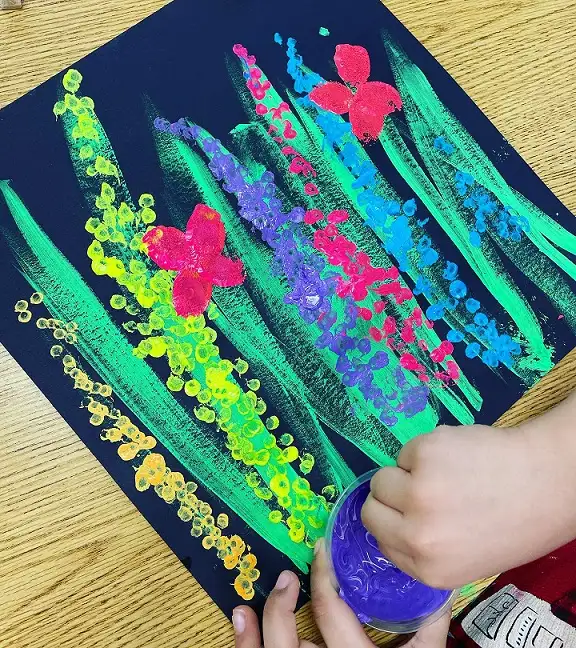
Neon dots climb up tall green brushstrokes on black paper in this bold garden scene.
Yellow, orange, purple, pink, and blue paint forms tiny bubbly blooms. Two big hot pink flowers carry a spongy stamped texture.
A hand holds a small cup of swirled purple paint, ready for the next row. Dotting is repetitive in a good way.
Each tap lands the same, and that rhythm can feel as soothing as rocking or humming.
Black paper makes bright colors pop with very little effort.
Try pencil erasers, cotton buds, or bottle caps as stamps, and give each color its own tool so shades stay clean. Finished pieces look striking framed on a wall.
9. Felt Portrait Ornament
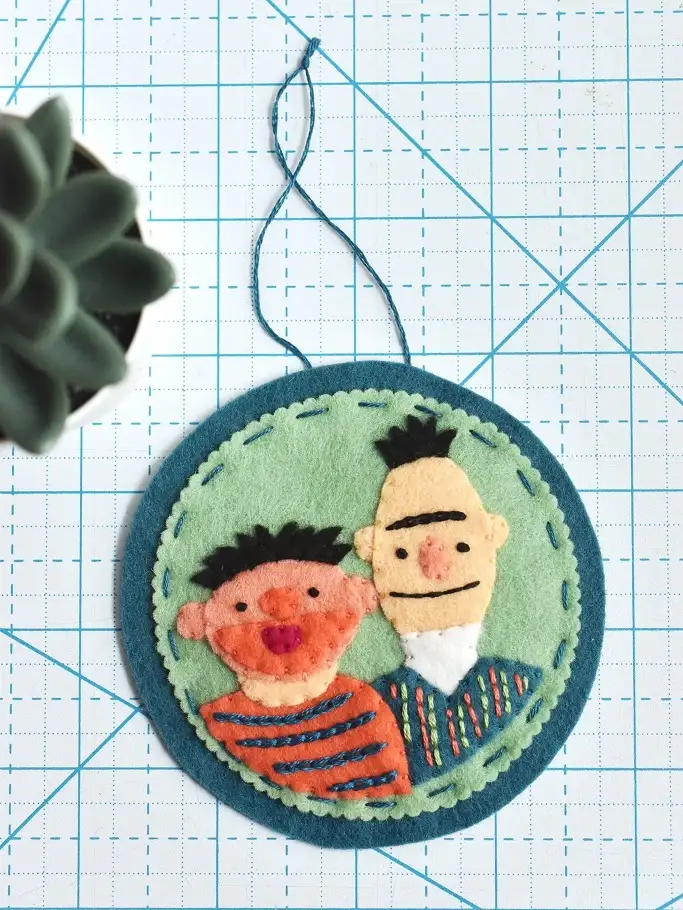
Two friendly puppet style faces fill this round felt ornament. One has orange skin, spiky black hair, and an orange striped shirt; the other has a tall yellow head, a single dark brow, and a teal sweater with colorful stitched lines.
A light green scalloped circle sits on a teal backing, and a twisted teal cord forms the hanger.
The detail to steal: Tiny dots of thread outline the faces and add texture without any paint.
Personal twist: Stitch characters from a favorite show, a pet, or yourself with a friend. Special interests drive many autistic crafters, and turning one into a keepsake feels rewarding.
Gift idea: Hang finished ornaments on a tree, a backpack, or a window latch.
10. Painted Clay Matchboxes
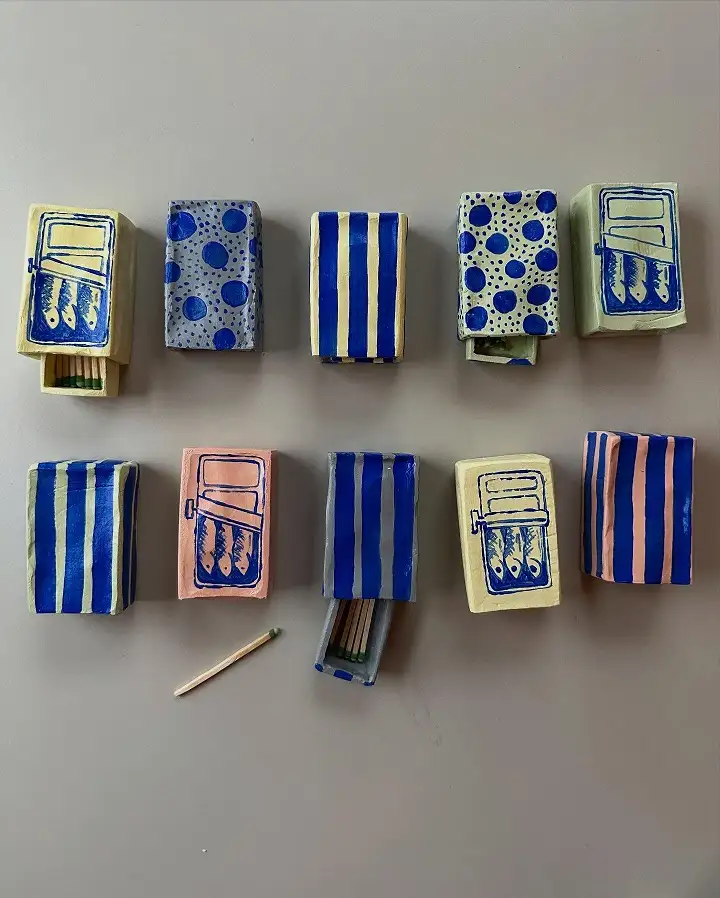
Ten little clay boxes line up in two neat rows on a gray surface. Pastel yellow, mint, peach, and gray bases carry cobalt blue designs: sardine tins, bold stripes, and big and small polka dots. Some drawers slide open to show green tipped matches inside.
Why it helps:
- One color rule: A single blue keeps choices simple and the set looks unified.
- Repeat patterns: Stripes and dots reward steady hands and patient focus.
- Useful result: Each box can store pins, beads, or tiny treasures.
Skip this: Real matches are not needed. Leave the drawers empty or line them with felt, and fill them with safer contents like earring backs or guitar picks.
Subscribe to DIY Craft Bloom
Get updates on the latest posts and more from DIY Craft Bloom straight to your inbox.
11. Felt Weather Finger Puppets
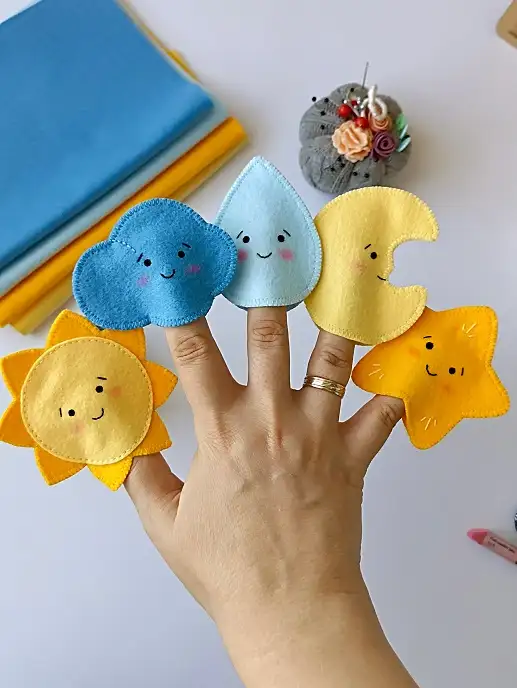
Puppet formula: two felt shapes + blanket stitch + stitched faces.
Five puppets sit on the fingers of one hand: a golden sun, a blue cloud, a pale blue raindrop, a buttery crescent moon, and a bright yellow star.
Each wears a small smile with pink cheeks. Folded sheets of blue and yellow felt and a gray pin cushion rest in the background.
Puppets give a voice to feelings that are hard to say out loud. Some autistic adults use them to practice conversations, tell a story, or show their mood for the day. Pick the cloud on a heavy day and the sun on a bright one.
Stitch note: Blanket stitch around the edge looks tidy and holds firm. Leave the bottom open, and test the fit on your finger before closing the sides.
12. Painted Glass Jars and Coasters
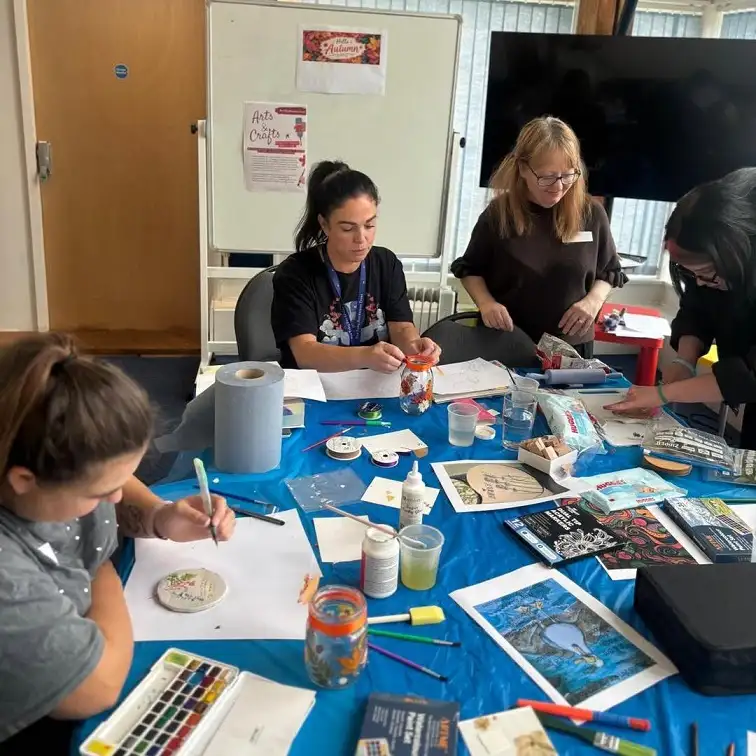
Steal the setup:
- Surface: Blue plastic tablecloth to catch spills.
- Paints: Watercolor palette and a set of paint markers.
- Base pieces: Clean glass jars and plain round coasters.
- Finishing touch: Kitchen roll and water cups within easy reach.
Four women share a busy craft table in this group session. One paints a small round coaster with soft flowers, while another holds a jar decorated with orange and red petals. An “Arts & Crafts” poster hangs on the whiteboard behind them.
Calm tip: Give each person a small tray of their own supplies. Shared piles can cause stress, so personal kits cut down on waiting and grabbing.
13. Patchwork Quilt
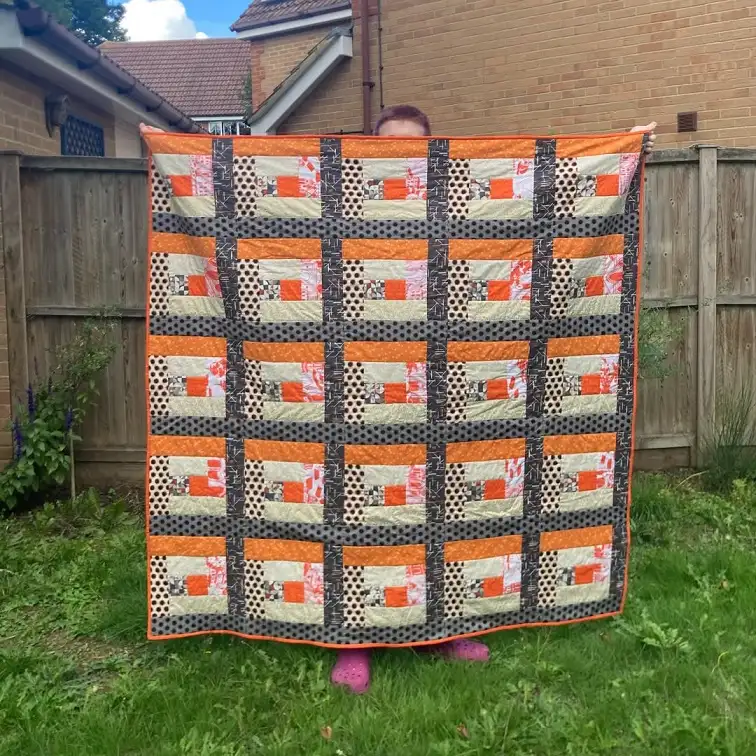
Held up in a sunny garden, this large quilt shows how far small pieces of fabric can go. Orange, cream, and pale green blocks repeat across five rows.
Black sashing with tiny dots frames every block, and a bright orange binding wraps the edge.
Repetition is the hidden strength here. Every block follows the same layout, so once you sew one, the rest feel familiar and predictable.
Many quilters on the spectrum enjoy that order, along with the satisfying stack of finished squares.
Begin with a lap quilt or a cushion cover rather than a full bed size. Pick three or four fabrics in one color family, like this warm orange set.
Patience builds row by row, and the result becomes a cozy blanket to wrap up in.
14. Beaded Cardboard Flower Art
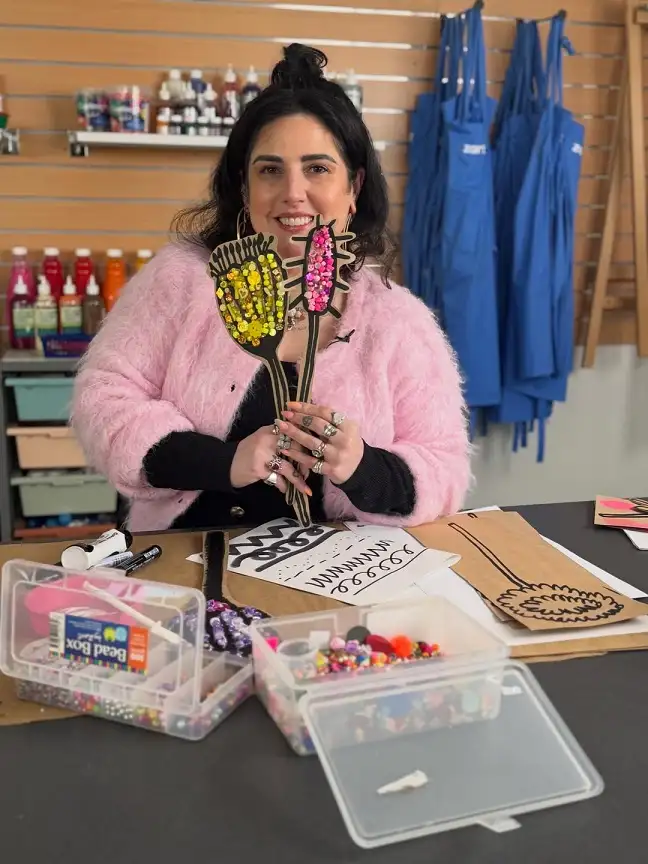
Great for: hands that love sorting, picking, and placing tiny things.
A smiling woman in a fluffy pink cardigan holds two tall cardboard flower shapes. One bloom glows with yellow beads and sequins, and the other shines in hot pink.
Open bead boxes, black markers, and sheets of practice patterns like zigzags and loops cover the table.
Kraft cardboard makes a sturdy base that will not bend under the weight of beads. Draw a simple stem and flower outline with a thick black marker, then fill the inside with glue and color.
Upgrade idea: Use a divided bead box so each shade has its own spot. Picking from tidy compartments feels orderly and keeps colors from mixing into one messy pile.
15. Textured Flower Bags to Sell
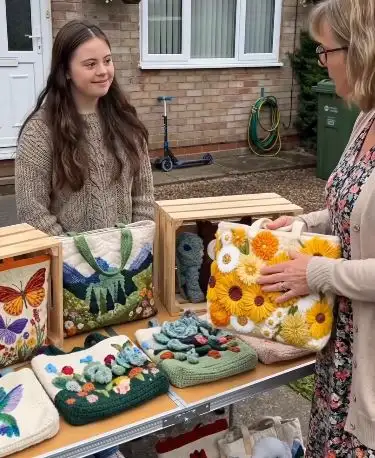
Handmade bags fill a market table outside a brick house. A young woman in a cozy knit sweater smiles beside her stall while a customer studies a cream bag covered in raised yellow and orange sunflowers.
Other designs show butterflies, pine trees under blue mountains, and soft green flowers on deep green.
Why it works:
- Purpose: Selling work turns a hobby into pride and a little income.
- Routine: Making stock follows a calm, repeatable rhythm.
- Connection: Stalls invite short, friendly chats about something you know well.
Start small: Bring five to ten items to a local fair first. Price cards on each piece answer questions before anyone has to ask, which helps autistic sellers feel less pressure.
16. Crochet Spiral Fidget
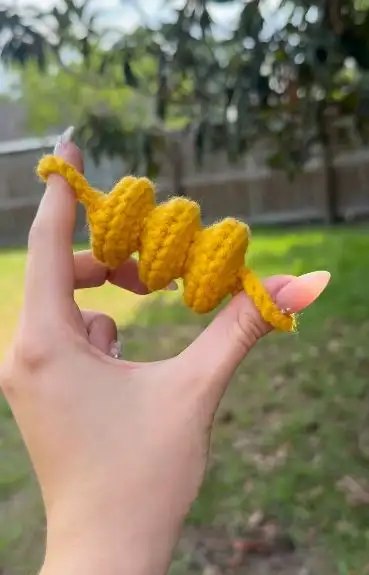
Mustard yellow yarn curls into a chunky spiral that stretches between a thumb and finger in this outdoor shot.
The coils look springy and soft, with a thinner tail at each end. Pink nails and green grass frame the little toy.
Sensory note: Twisting, squishing, and pulling a spiral gives restless hands a quiet outlet in meetings, waiting rooms, or long bus rides.
Pattern tip: Crochet a long chain, then work several stitches into each chain stitch. Crowding them forces the strip to curl on its own.
Yarn swap: Pick cotton for a firm, smooth feel or chenille for a velvety squish. Skip scratchy yarns if rough fibers bother your skin.