17 Mini Macrame Projects You Can Finish in an Hour

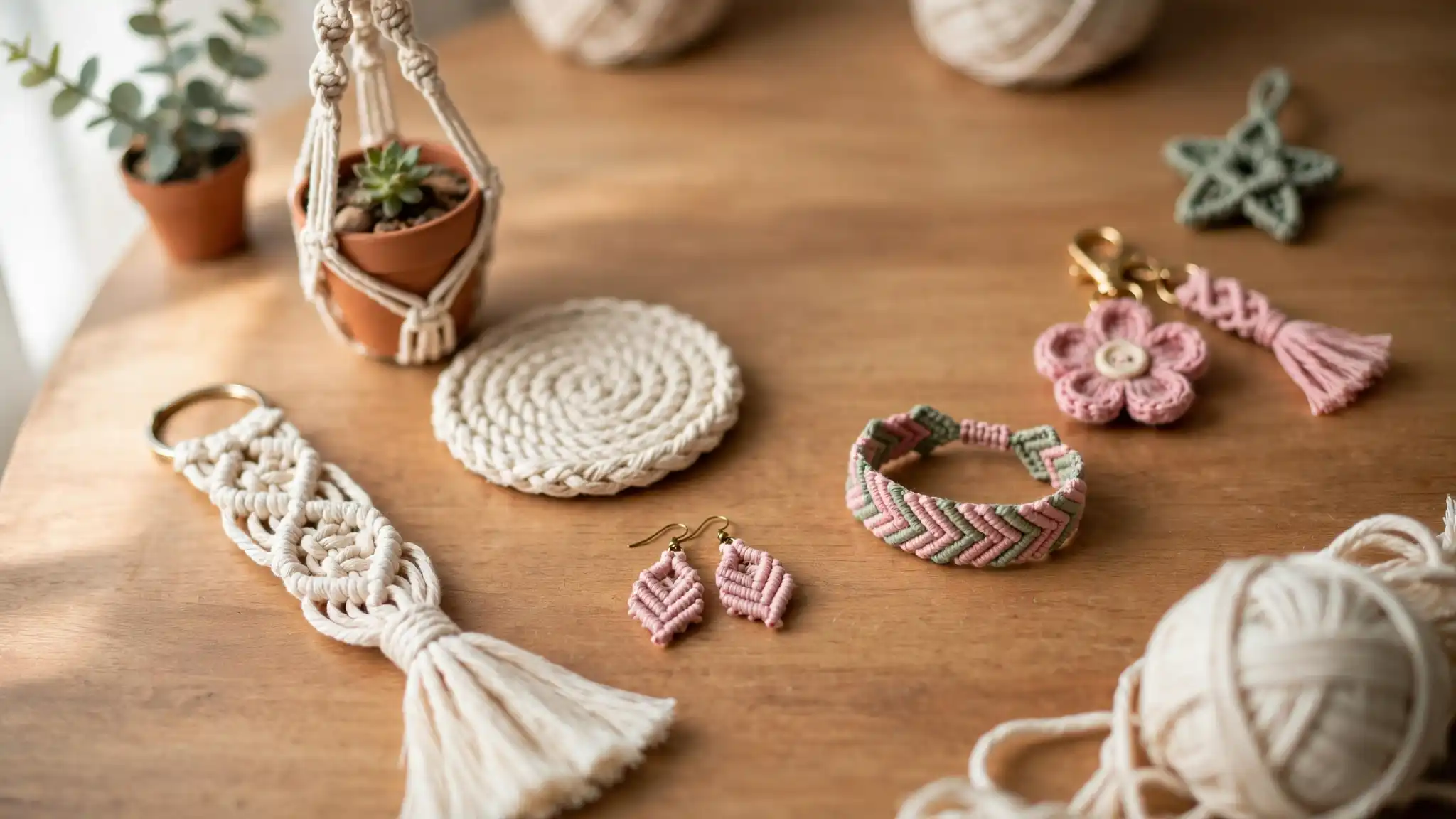
If your macrame supplies have been sitting in a bag since that one weekend workshop, this list is your way back in.
These 17 quick macrame projects range from a ten-minute mini star to a full sunburst dreamcatcher, and most of them really do wrap up before your coffee goes cold.
Keychains, bookmarks, and bag charms are the fastest entry points if you’re brand new to knotting. Wearables like the chevron bracelets and statement earrings let you practice one pattern and repeat it in new colors.
Home pieces, from jar covers to plant hangers to a full jewelry wall, turn scrap cord into something you’ll actually use every day.
Two projects on this list, the table runner and the layered dreamcatcher, run past the hour mark, but they’re built from the same small knots you’ll already know by the time you reach them.
Pick whichever one matches the cord you already have on hand, and start there.
17 Mini Macrame Projects You Can Finish in an Hour
1. Two-Knot Keychains That Use Almost No Cord
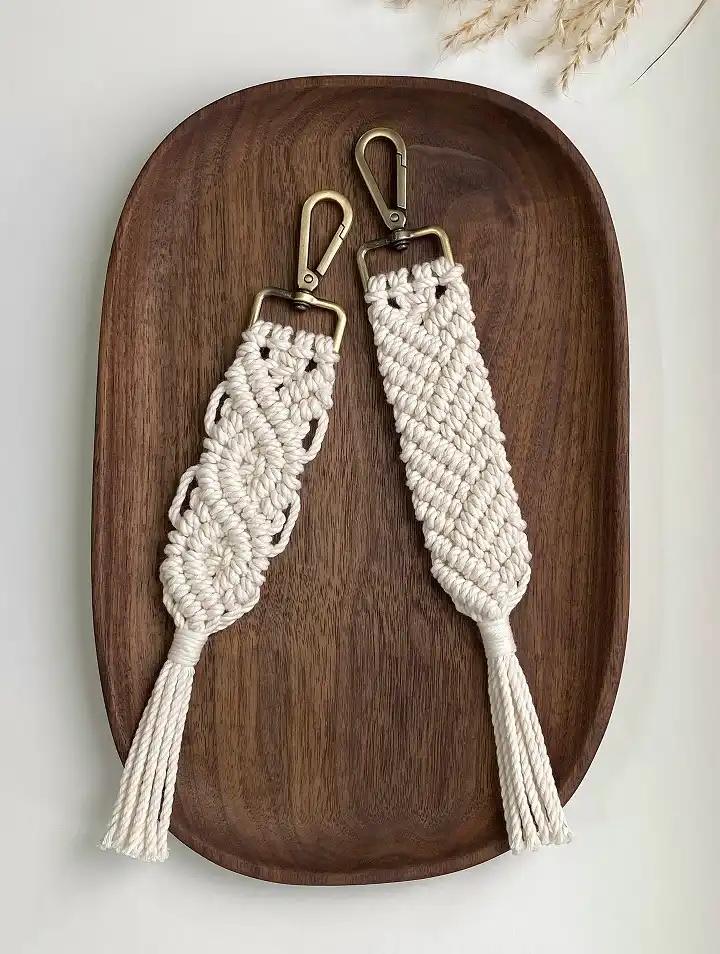
Start here if you’ve never touched a cord before. These two keychains use only a handful of knots each, just enough rows to fill out the shape before the tassel takes over.
What makes this pair work:
- The left one alternates open diamond gaps with tight knot clusters, so it looks more advanced than it actually is
- The right one sticks to one steady zigzag pattern top to bottom, which is the faster of the two to memorize
- Antique brass swivel clasps clip onto keys, bags, or belt loops without any extra hardware
- A full, brushed out tassel at the bottom hides any uneven ending knots
Pick the zigzag version first if you’re brand new. Once that pattern feels automatic, the diamond one is just a small variation on the same knot.
2. Oversized Paperclip Bookmarks With a Knotted Tail
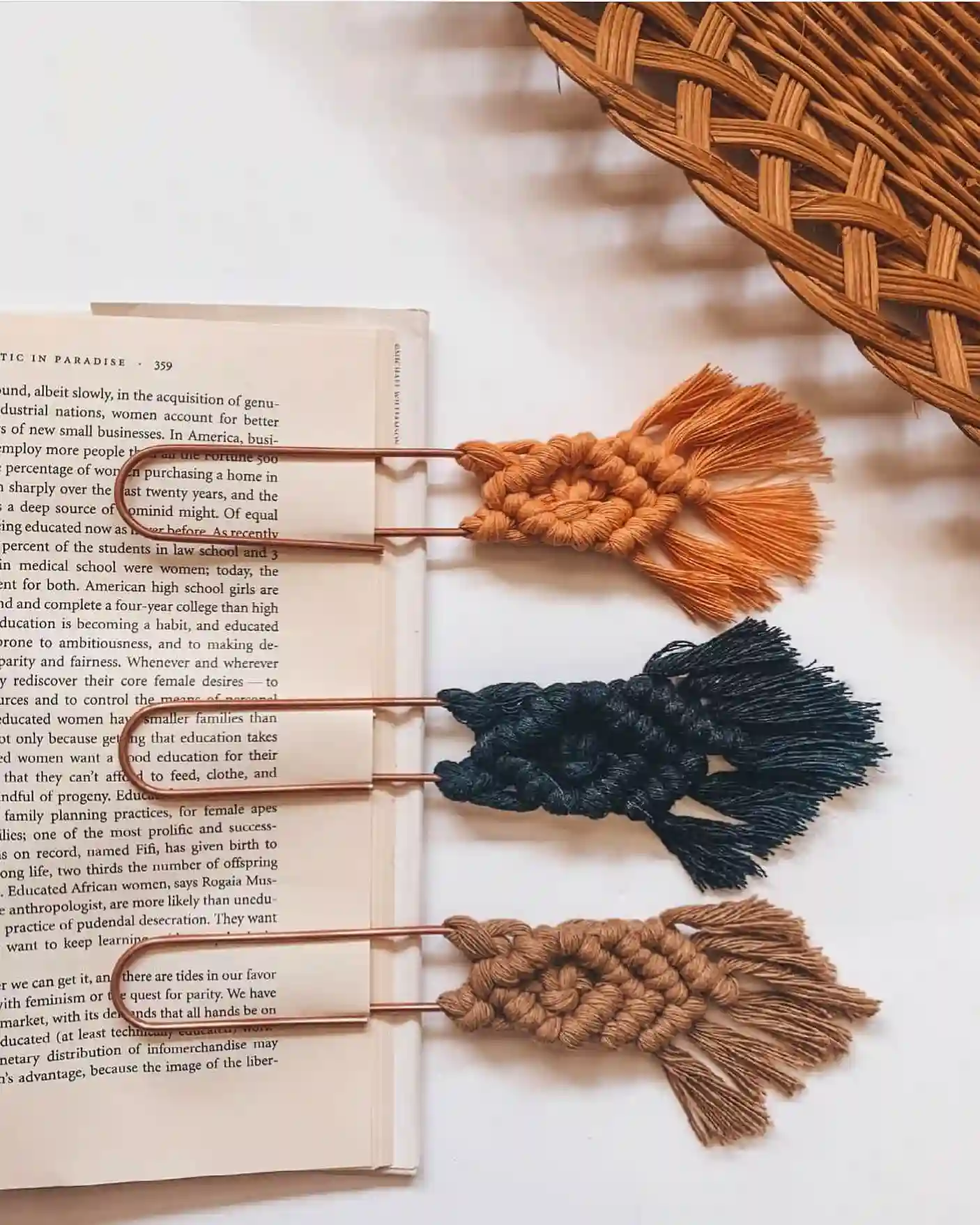
Grab a jumbo paperclip and a handful of leftover cord and you’ve got a bookmark that actually stays put. The clip does the holding, the knots just need to look good hanging off the end.
Three colorways, three moods:
Rust orange reads warm and autumnal, the deep teal almost black feels moody and modern, and the natural tan blends into any shelf.
All three use the same tight cluster of knots at the top before the fringe breaks loose, so once you know one color, you know all three.
3. Woven Coil Coasters in Sage Rope
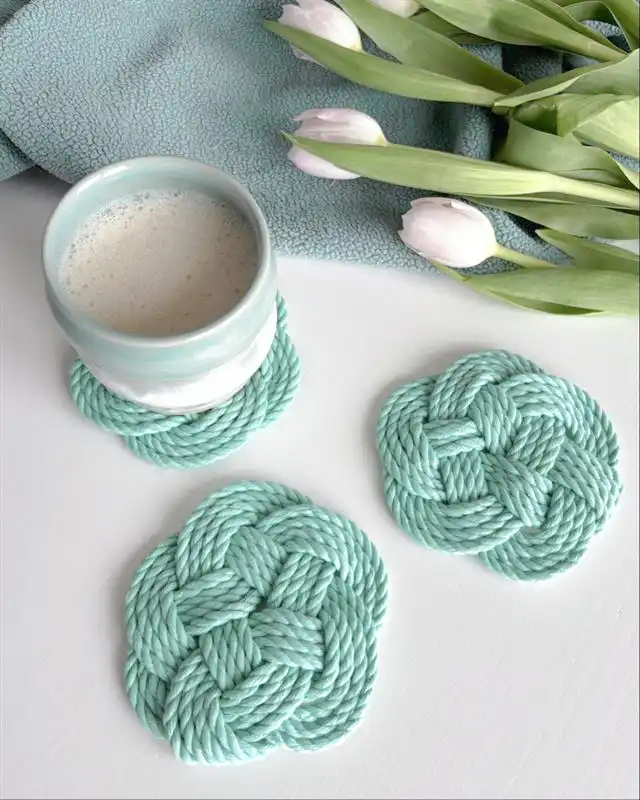
Three of these sit stacked under a cup in the photo, and the flat woven coil is what makes them read as intentional decor instead of a craft project.
No tassels, no hanging ends, just a tight braided disc that looks like something you’d find in a home goods store, not a craft fair table.
What sells the look here is the color and the finish. Sage rope against a white countertop feels calm and a little coastal, and because the coil lies flat, these stack neatly in a drawer between uses instead of tangling with tassel fringe the way keychains or bookmarks do.
They’re also forgiving. A slightly uneven weave still reads as textured and handmade rather than sloppy, which makes this a good project to practice tension control on before moving to anything with visible knots.
Cross two loops of cord to form the open lattice you see under the cup. Keep the loops loose here, you’ll tighten everything at the end.
Follow the same path with a second cord, doubling every strand so the coaster gets thickness and body. This second pass is what gives it enough weight to actually hold a cup steady.
Pull loose ends underneath the coil with a blunt needle or your fingers, then snip flush so the front stays smooth and no stray fibers poke through.
4. Chevron Friendship Bracelets Stacked in a Rainbow of Cord
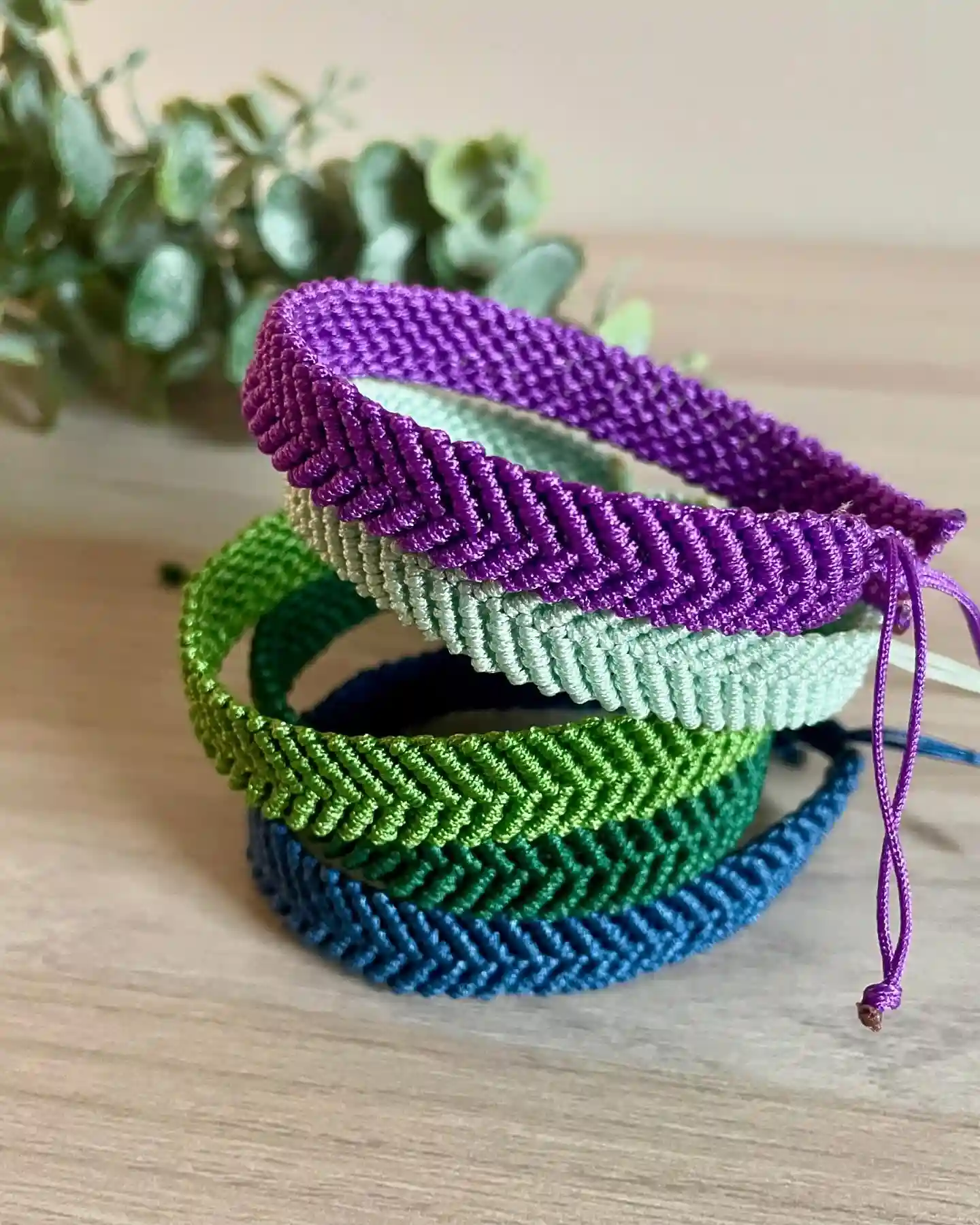
Five wide, flat bands sit stacked here in purple, sage, green, moss, and denim blue, and every single one uses the same herringbone chevron weave.
That’s the trick to this project: master one pattern once, then just swap thread colors to build out a whole stack in an afternoon.
The chevron look comes from working two colors of thread against each other in a forward knot, then a backward knot, so the V shapes point outward from the center in both directions.
It reads as complicated from a distance, but it’s really the same two knots repeated for the width of the bracelet.
Wider bands like these take a bit more thread and a bit more patience than a thin friendship bracelet, but they also sit flatter on the wrist and photograph better stacked in a pile, which is exactly why they work so well as a set instead of a single piece.
A sliding knot closure at the end, like the purple ties shown here, means one size fits most wrists without any measuring beforehand.
5. Sunset Ombre and Moonlit Navy Statement Earrings
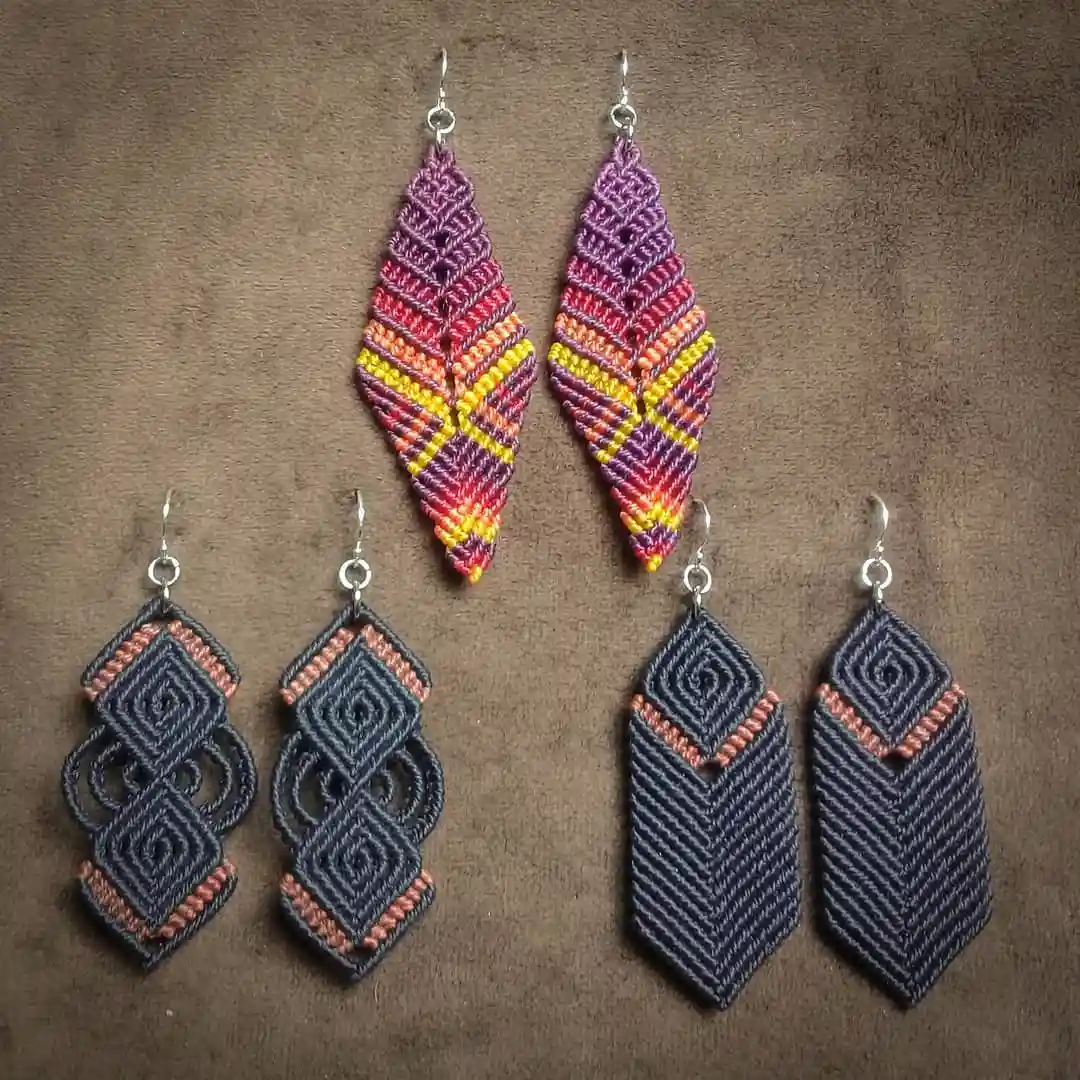
Three designs sit side by side here, and together they show just how different two knot patterns can look depending on color and shape alone.
The diamond shaped pair up top runs purple into hot pink into a streak of yellow, while both navy pairs below use the same deep thread with a coral accent row at the top.
A pointed leaf shape woven in diagonal bands, purple giving way to pink, orange, and yellow in a diamond crossover near the base.
Subscribe to DIY Craft Bloom
Get updates on the latest posts and more from DIY Craft Bloom straight to your inbox.
Two spiral diamonds connected by open ring links, with a coral striped band framing the top and bottom edges.
A single spiral knot at the top gives way to a long chevron weave, the plainest and fastest of the three to knot out.
6. Wine Red Fringe Hair Tie Built on a Basic Elastic
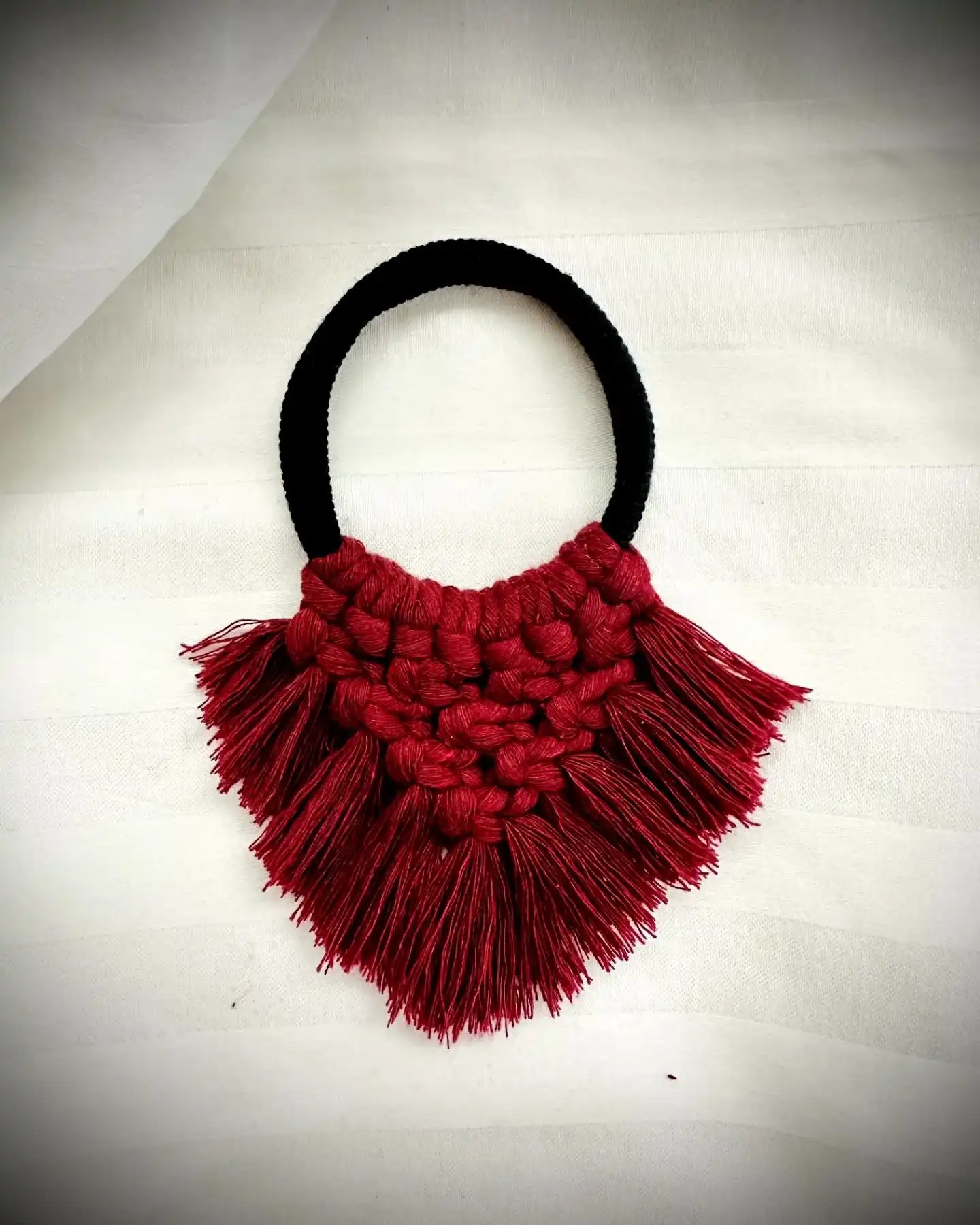
This one starts with a plain black hair elastic, the kind already sitting in a drawer, and turns it into something worth wearing on the outside of a bun instead of hiding inside one.
A thick knotted collar of deep wine red cord wraps the top half, then breaks open into a full curtain of fringe.
The knot work only covers about a third of the elastic. The rest of the effort here is really about fringe density: cutting enough strands and packing them close enough together that the tassel falls like fabric instead of looking sparse.
A darker jewel tone like this wine red hides fray marks well, which matters since a hair tie gets more daily wear than almost any other piece on this list.
A bare elastic band, plain and easy to lose in a bag.
A wine red knotted collar with a full curtain of fringe, meant to show.
7. Five-Petal Flower Bag Charms in Magenta and Blush
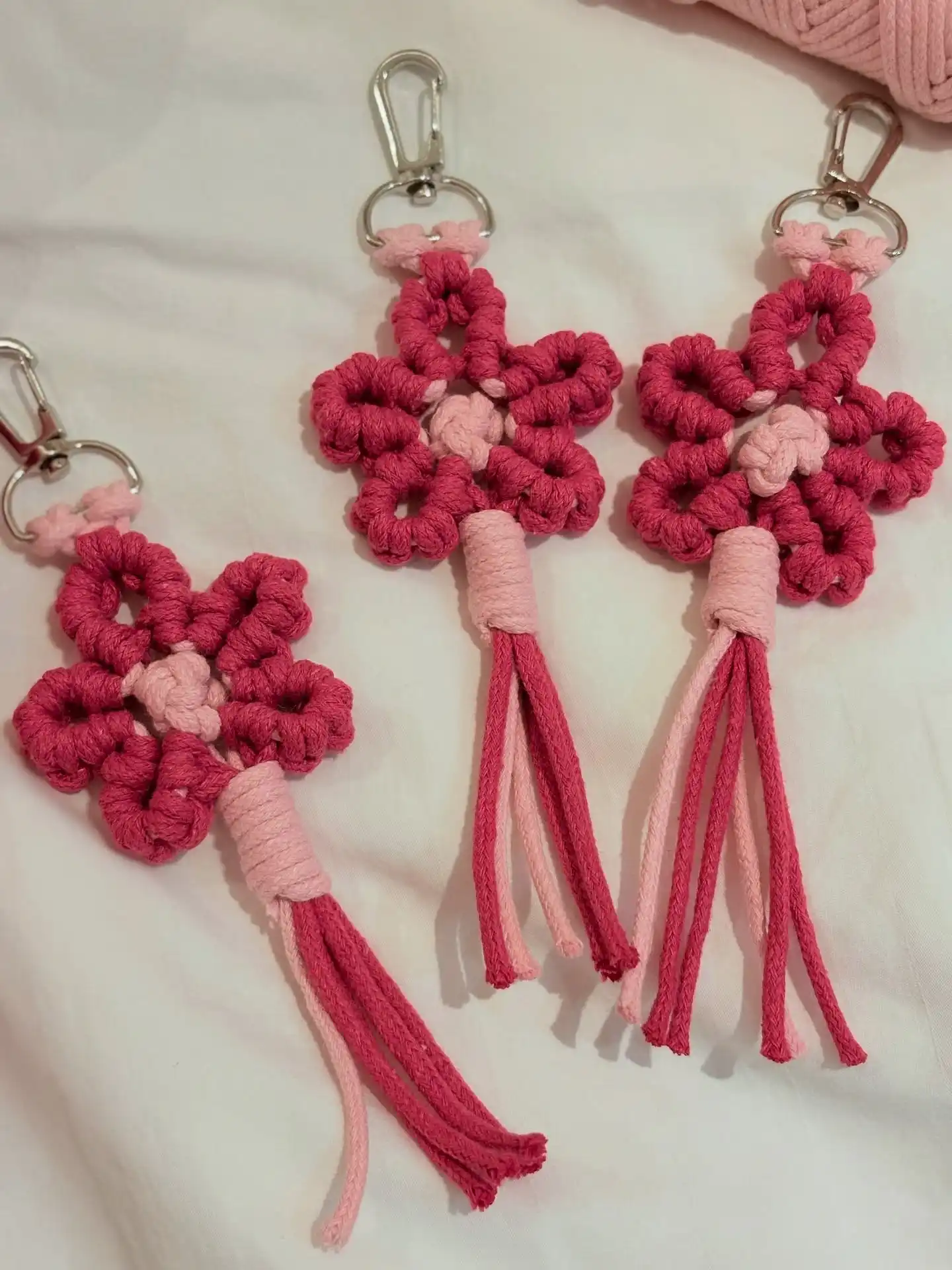
Three of the same flower knot sit here, each finished with a different tassel treatment.
That’s really the whole lesson of this entry: one knot, worked the same way every time, then styled three ways at the finish.
Look closely and the differences are all in the tails. One charm ends in a short, tidy tassel.
Another splits into a longer fringe with visible color blocking between the magenta and blush strands.
The third goes fullest, with the most individual cords fanned out at the bottom. None of that changes the flower itself, a tight cluster of looped petals with a soft pink center knot pulling the whole thing together.
8. Dowel Rail Jewelry Hangers That Double as Wall Art
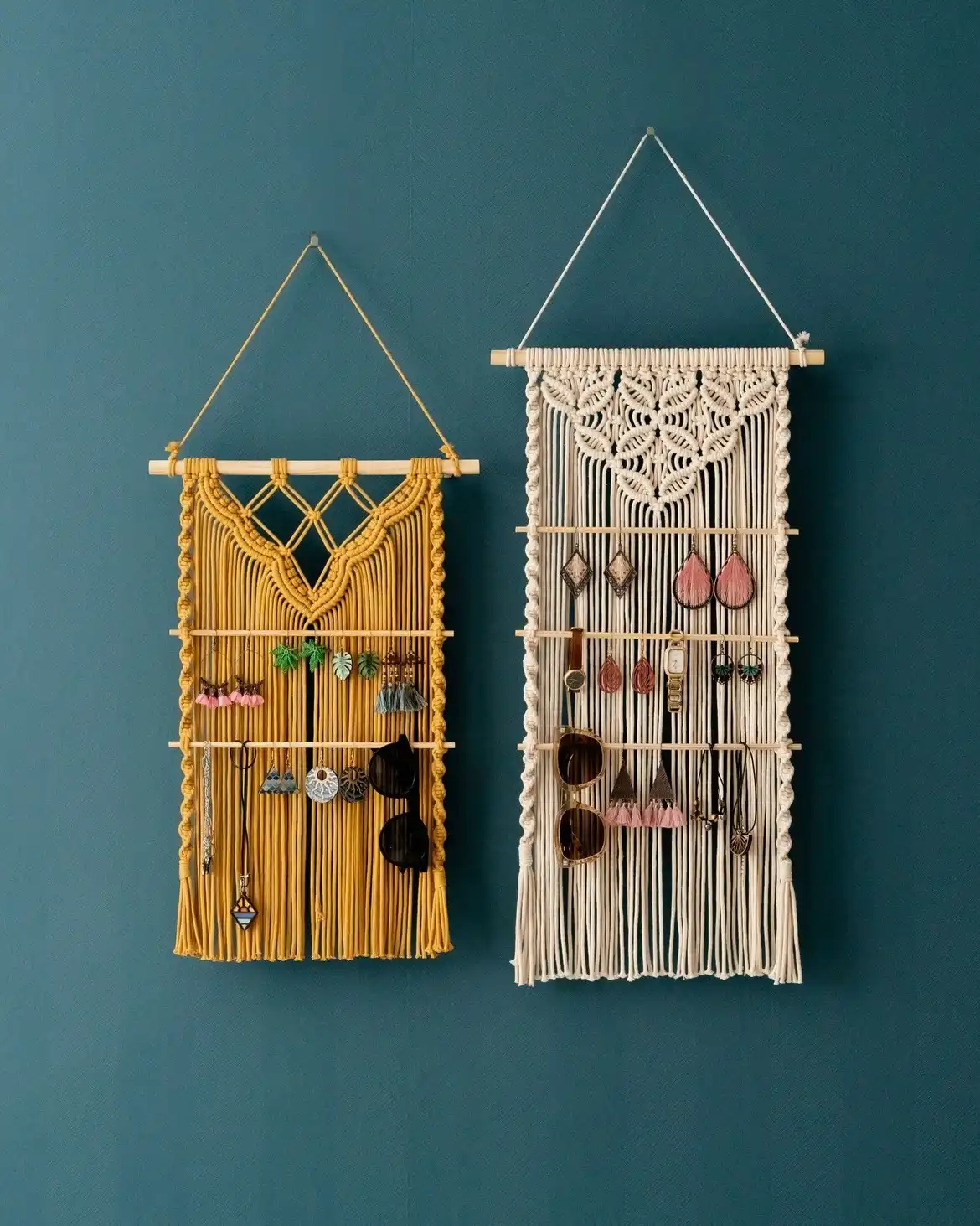
This is the payoff project on this list, the one that actually organizes something instead of just decorating it.
Two panels of hanging cord, split by wooden dowel bars, give earrings, necklaces, and even sunglasses a place to hang in full view instead of tangled in a drawer.
The mustard panel and the natural cream panel use the same build, just different cord color and a different top pattern: one opens in a simple diamond lattice, the other in a denser row of pointed leaf shapes before the fringe drops down.
Either top works, since the real function lives in the three horizontal dowels that give you rows to actually clip things onto.
9. Four Wooden Ring Plant Hangers, Each With a Different Knot Pattern
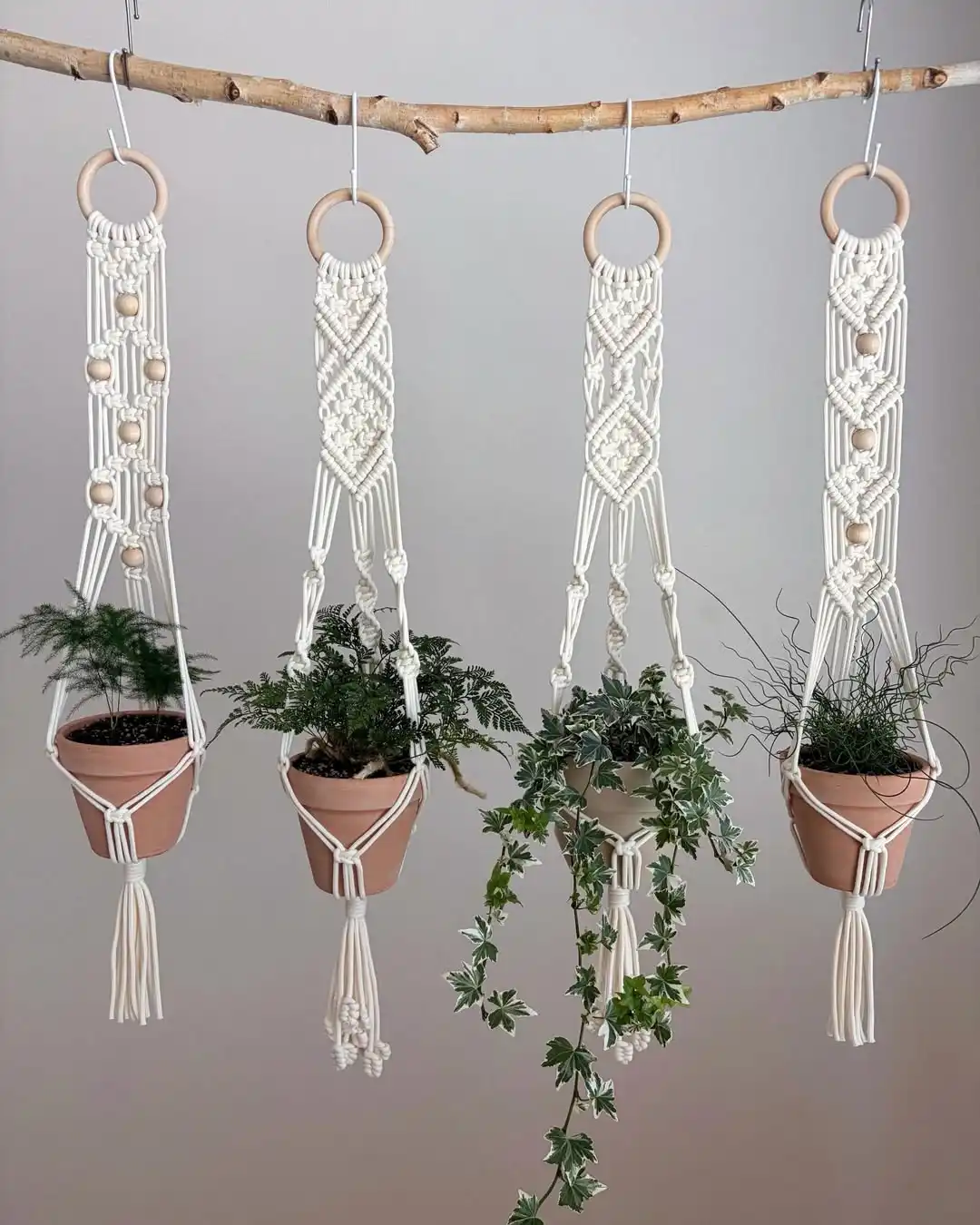
One birch branch holds four hangers here, and it’s a genuinely useful side by side for anyone trying to pick their first knot pattern.
Same cream cotton cord, same wooden ring at the top, same terracotta pot at the bottom, but the panel between them changes every time, from simple wooden beads to a full diamond lattice.
| Bead panel | Diamond lattice |
|---|---|
| Square knots spaced between wooden beads threaded onto the cord. | Diagonal double half hitches crossing to form open diamond shapes. |
| Easiest of the four, mostly straight knotting. | Takes more counting to keep the diamonds even. |
| Beads add visual rhythm without extra knot skill. | Reads as the most detailed hanger of the set. |
10. Diamond Netted Jars That Turn Recycled Glass Into Decor
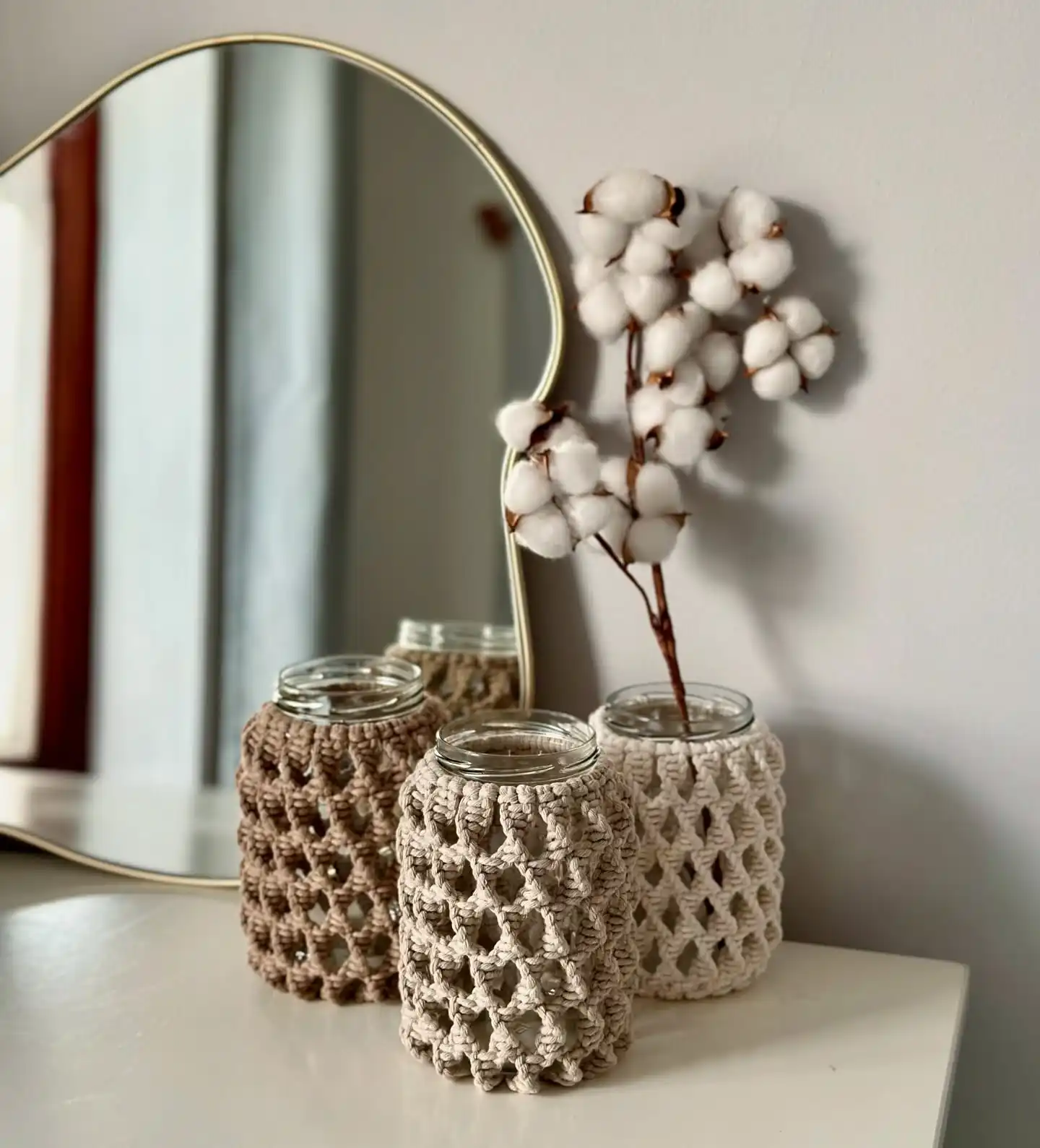
Plain glass jars, the kind you’d normally toss after the sauce is gone, get a second life here under a loose diamond net of cotton cord.
Three sit together on a dresser, one holds a cotton stem, and none of them look like they started as food packaging.
The open diamond weave is the whole point. Unlike a solid wrapped cover, this net leaves gaps between the knots, so light and a little bit of the glass still show through underneath the texture.
Two of the three lean tan and taupe, the third goes bright white, and grouping different shades together like this photo does actually reads better than matching them all.
11. Picnic Ready Bottle Netting With a Built-In Crossbody Strap
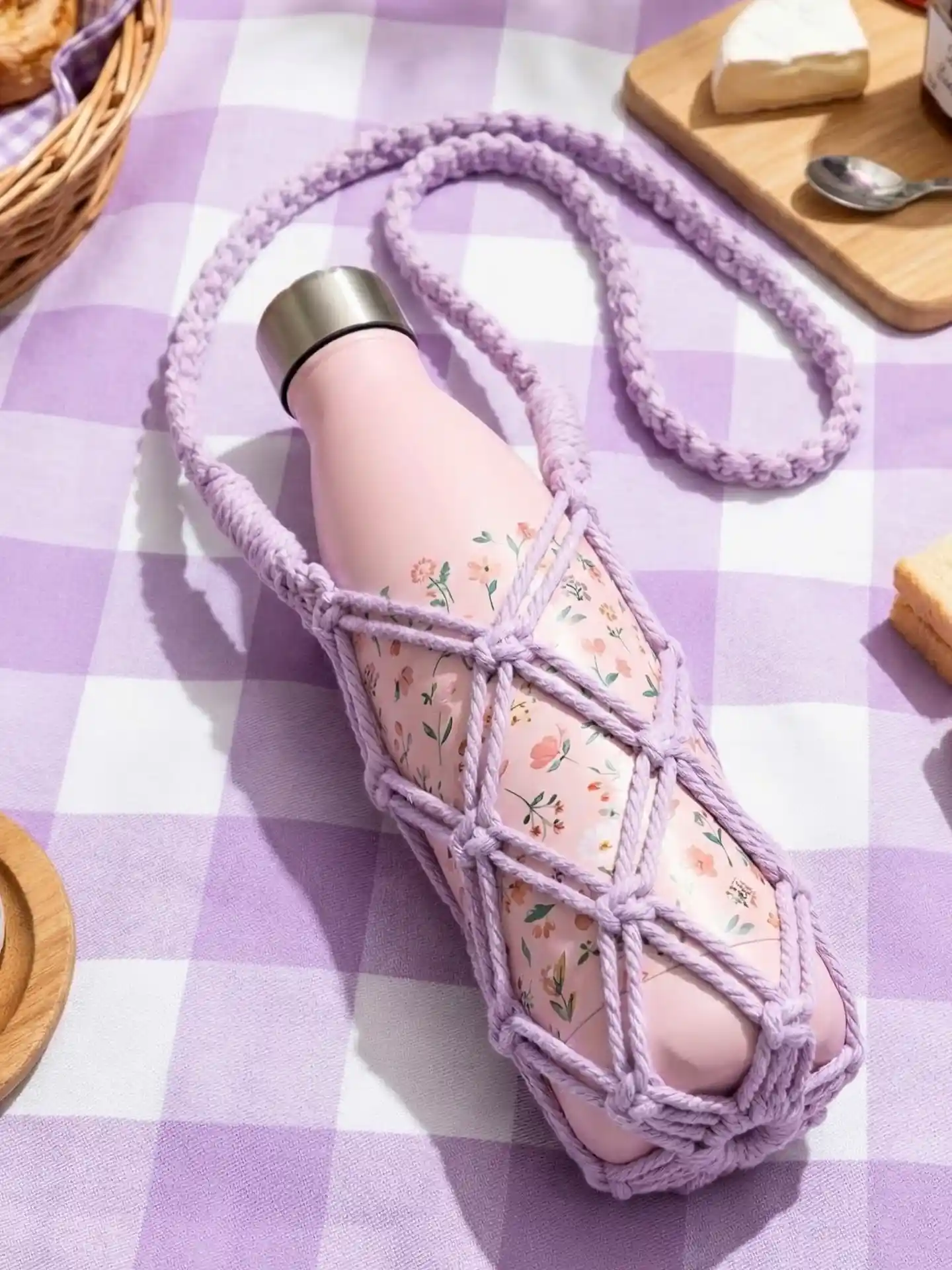
This is the project that leaves the picnic table for the trail. A wide braided strap loops up and over the shoulder, then narrows into an open diamond net that cradles the bottle from cap to base, no clipping or buckling required.
A lavender purple cord like this one hides condensation drips better than white, which matters more than you’d think for something that’s going to sweat next to sandwiches all afternoon.
The net itself needs to flex a little at each diamond junction so it can slide on and off a bottle without the knots seizing up.
Braid the strap first, long enough to cross the body comfortably.
Knot the net loose enough to slide over a full bottle.
Don’t knot the diamonds too tight, the bottle won’t come back out.
Subscribe to DIY Craft Bloom
Get updates on the latest posts and more from DIY Craft Bloom straight to your inbox.
Skip a thin strap, it will dig into the shoulder on a long walk.
12. A Feathered Curtain Tieback That Doubles as Wall Decor
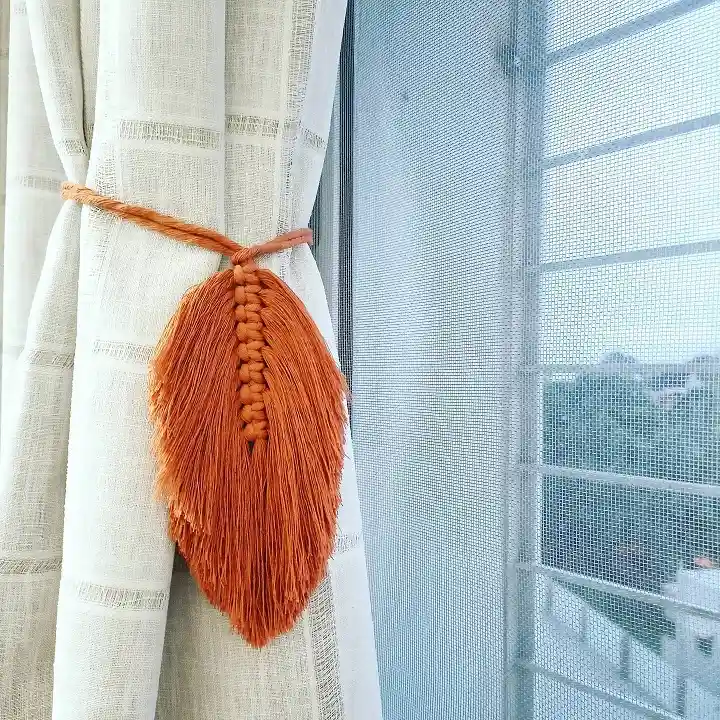
A single braided loop wraps the curtain, then drops into a wide, spine ribbed leaf shape in burnt orange.
It’s a small project with an outsized payoff, since a tieback like this stays visible all day long instead of getting tucked away like most macrame pieces on this list.
The center spine is what makes this read as a feather instead of a plain tassel. A tight column of knots runs down the middle, and individual cords are brushed out on either side to fall away from that spine like barbs on a real feather.
Burnt orange against a pale linen curtain gives it just enough contrast to catch the eye without fighting the window view.
Brush the fringe out with a wire pet brush after knotting, it separates the strands into that soft feathered shape instead of a stiff clump.
13. Mini Wall Hangings With a Woven Triangle Center
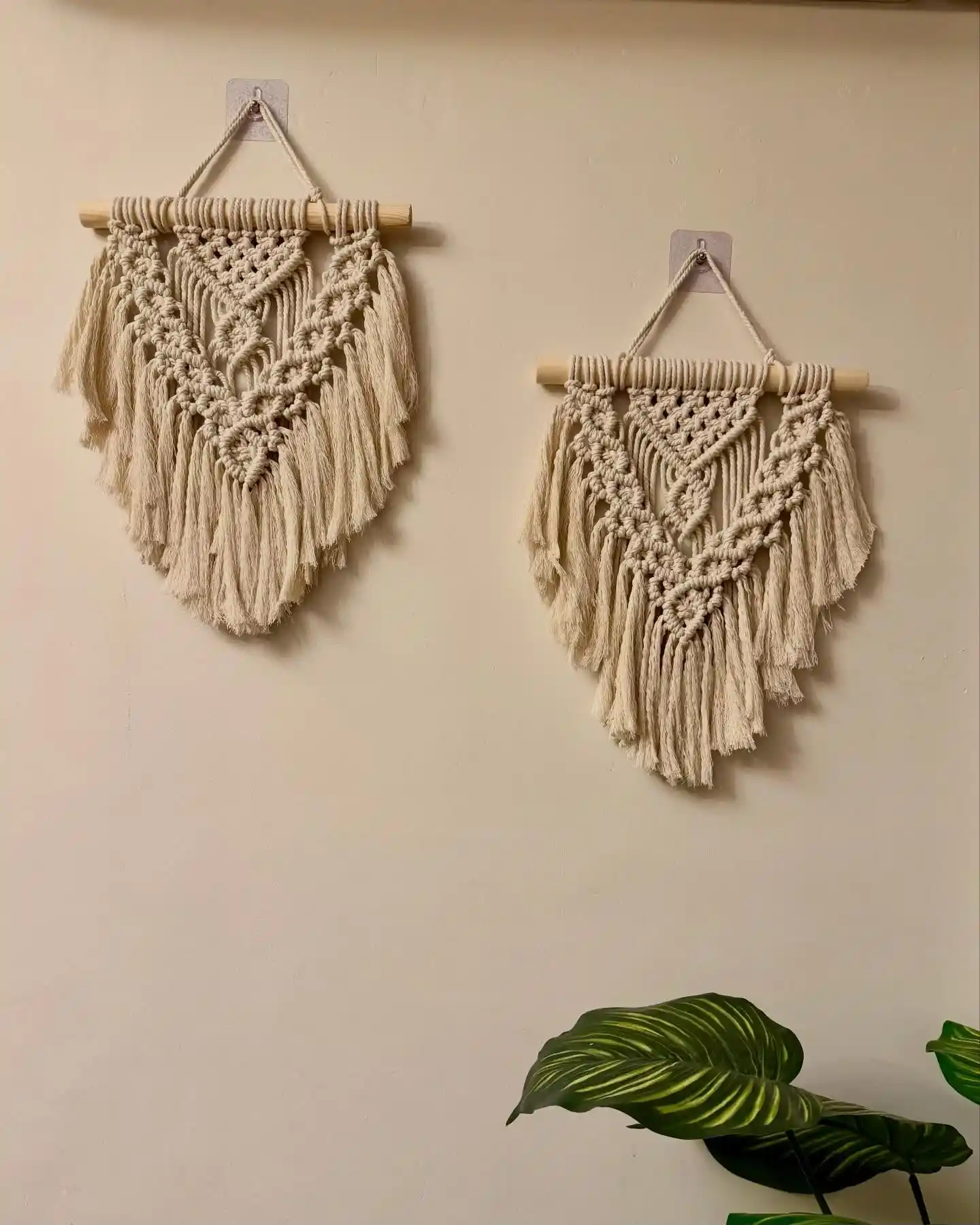
Two nearly identical hangers, mounted on simple wall hooks, prove how much a single pattern can shift just from fringe length.
Both use the same woven triangle at the top, dense rows of knots tapering to a point, but the one on the left lets its fringe fall long and even while the one on the right stair-steps into shorter layered tiers.
Dowel rods at the top keep the whole piece rigid enough to hang flat against the wall instead of curling forward.
Inside the triangle, diagonal rows of double half hitches build the woven texture, packed tight enough that almost no gaps show through.
That density is what separates a wall hanging from a plant hanger or a bag charm even though the base knots are the same.
One dense woven triangle, styled two ways just by how you cut the fringe underneath.
14. Scattered Star Ornaments in a Neutral Grey Scale
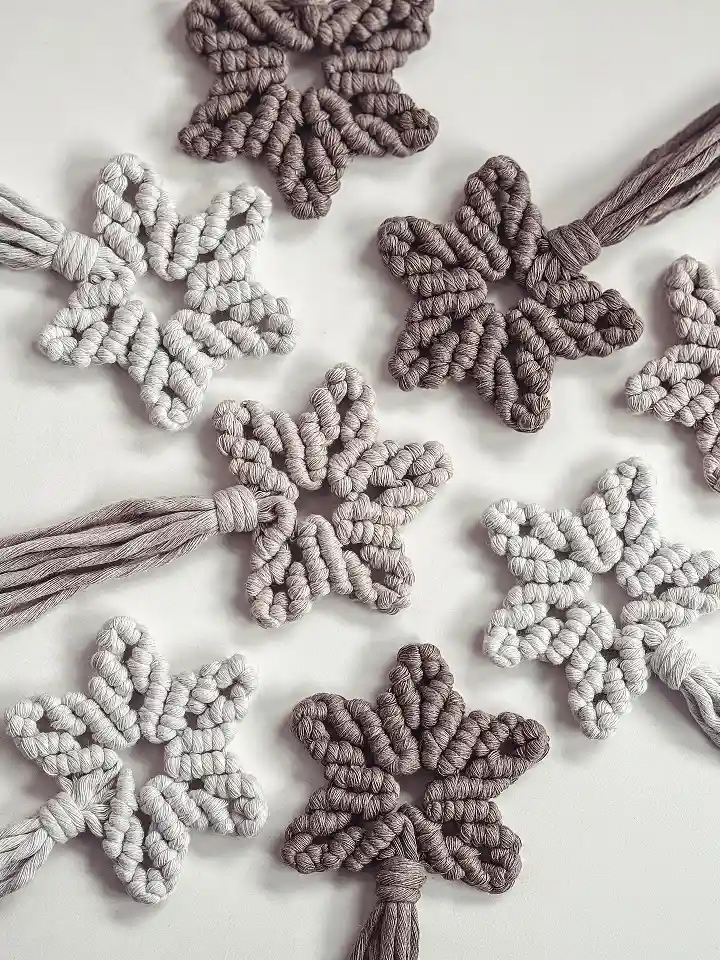
A cluster of six-pointed stars spreads across this photo in charcoal, dove grey, and warm taupe, each one small enough to finish while watching a full episode of something.
These are pure texture pieces, no functional hardware, just knotted points radiating out from a tight center.
A few things make this batch worth studying before you start your own:
- Every star uses the same basic spoke pattern, cords looped outward and knotted at even intervals to form each point
- Trailing cord ends are left long on some and trimmed short on others, giving the option to hang them or glue them flat
- Working in a tonal grey palette instead of one flat color makes a scattered pile like this look curated rather than random
- Smaller stars stack faster since each point needs fewer wraps, so start small before attempting a larger version
15. A Full Length Terracotta Table Runner, One Long Practice Piece
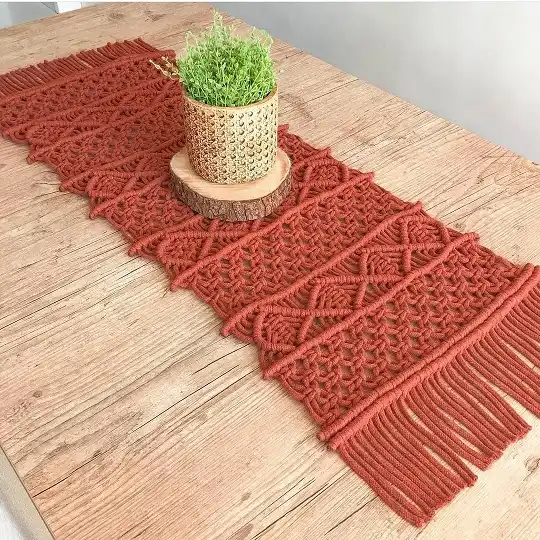
Scaling up from ornaments to something this size is a different kind of project entirely, more of a weekend sit-down than a lunch break craft.
Rows of diamonds and zigzags run the full length in a rusty terracotta, with a loose knotted fringe finishing both ends.
Unlike the smaller pieces on this list, a runner like this repeats the same few knot combinations dozens of times across the length of the fabric, so it’s less about learning new patterns and more about keeping tension consistent row after row.
That consistency is what makes the diamonds line up cleanly instead of drifting off center by the time you reach the far end.
16. A Six-Flower Garland Strung Between Two Colors
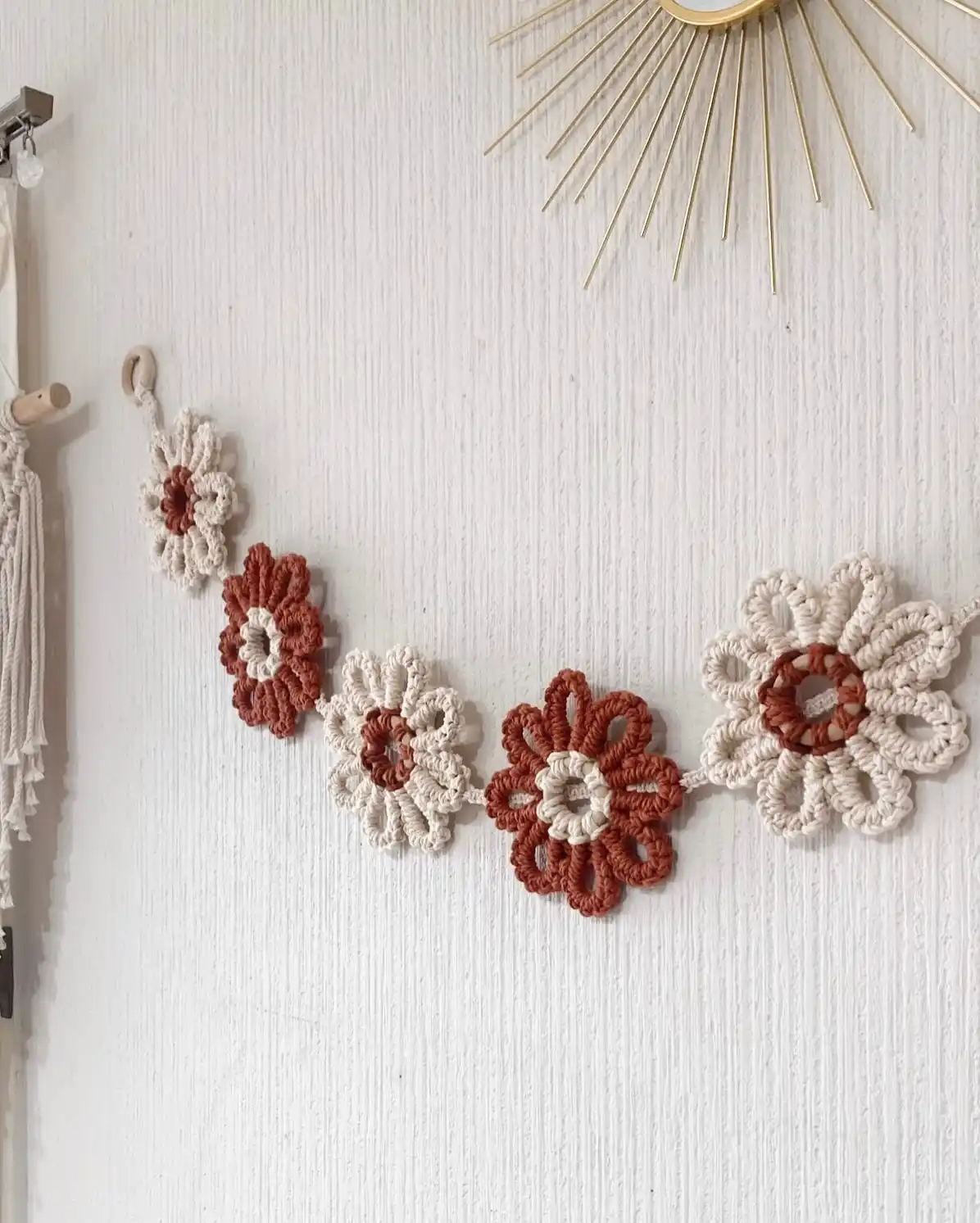
Six full flowers link together here, alternating rust red and natural cream, each one built from layered petal loops around a contrasting center.
Hung from a single wooden dowel hook, the whole garland curves in a soft swag across the wall instead of hanging straight down.
What makes this one read as a finished garland instead of six separate flowers taped together:
- Every flower shares the same center color rule, whichever shade sits on the outside petals becomes the opposite color at the middle
- Connector cords between each flower are kept short, so the blooms sit close and the swag curve stays tight
- Petal size grows slightly from the smallest flower on the left to the largest ones on the right, giving the strand a sense of movement
- A single wooden bead hook at the top is the only hardware the whole piece needs
17. A Layered Sunburst Dreamcatcher With Gold Thread Accents
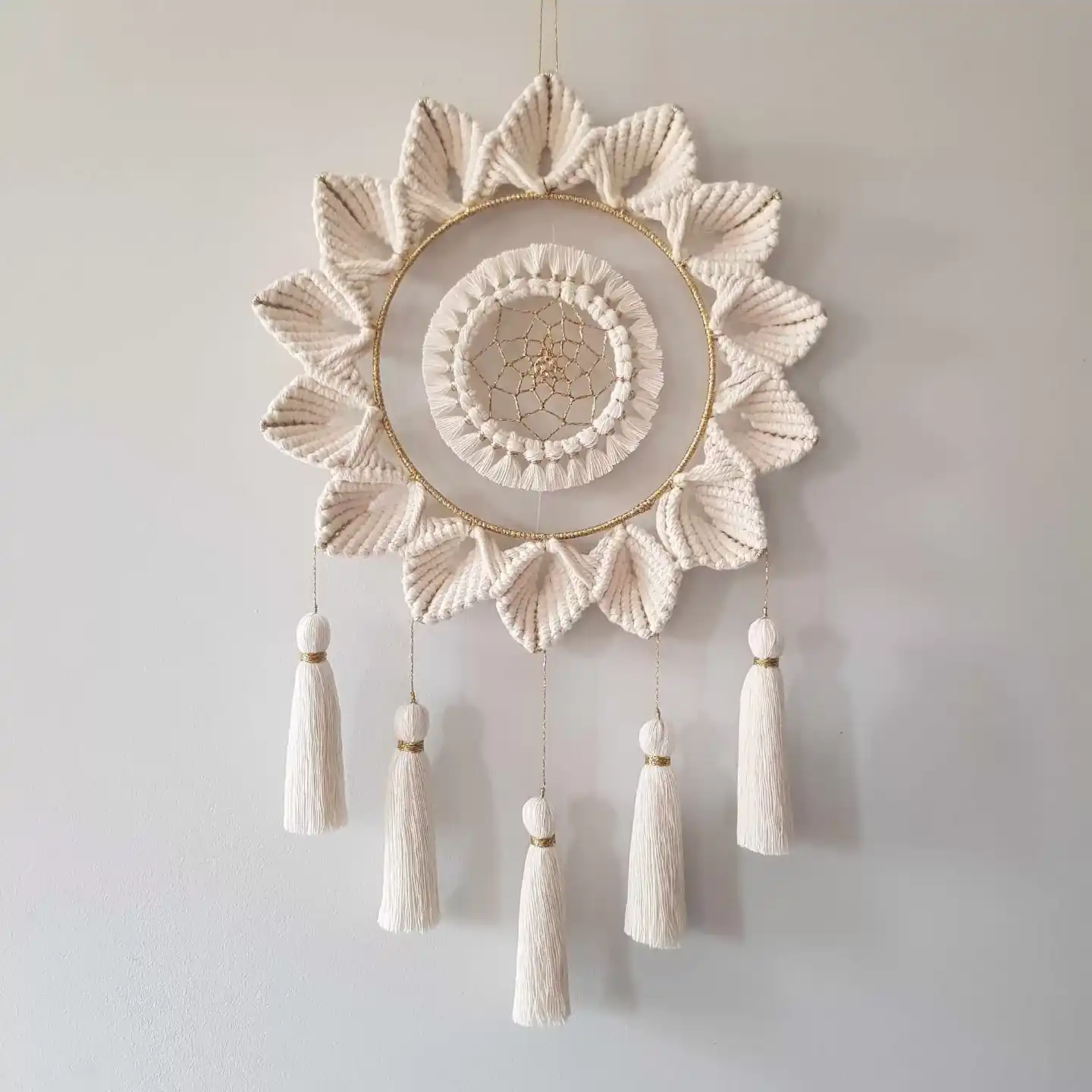
This is the showpiece of the whole collection, three concentric rings building outward from a small woven web at the center to a full ring of folded fan petals on the outside, finished with five tassels swinging below on threads of gold and cream.
It’s honest to say this one runs past the hour mark once you count all three layers, but each ring on its own is a manageable sitting.
The gold metallic thread woven through the outer ring and the center web is what lifts this from a simple dreamcatcher into something closer to sun art.
It catches light differently than the plain cotton, so the piece changes character depending on the time of day it’s viewed.
If the full three-ring build feels like too much for a first attempt, just the center web with its ring of tassels makes a complete smaller dreamcatcher on its own.
Conclusion
Seventeen projects, one skill set. Once a few basic knots feel automatic, the only real question left is which color cord to reach for next.
Start with whichever piece solves a problem you actually have, a bare keychain, a bottle with no way to carry it, a mirror that needs something above it, and let the rest of the list wait for another slow afternoon.
Save this for the next time you want fresh ideas.