How to Create Hand-Painted Mugs Step by Step

You found the perfect plain mug. Spent hours on a design. Then one dishwasher cycle later, your art peeled off like a bumper sticker.
The problem isn’t your technique. Most DIY guides skip the actual reason paint fails on ceramic: it’s a bonding issue. Fixing it starts before you ever touch a brush.
In this guide, you’ll get a step-by-step process for hand-painted mugs that actually hold up — non-toxic materials, a proper curing method, and no more peeling.
The 2026 Kit: What You Actually Need
Regular craft acrylics don’t bond with glazed ceramic. No amount of careful painting changes that. You want enamel-based or porcelain-specific paint. Pebeo Porcelaine 150 keeps coming up as the go-to — it cures into something close to a factory finish.
The personalized mug market is worth over $15 billion in 2026. People want unique, but they also want it to last. Here’s what belongs in your kit:
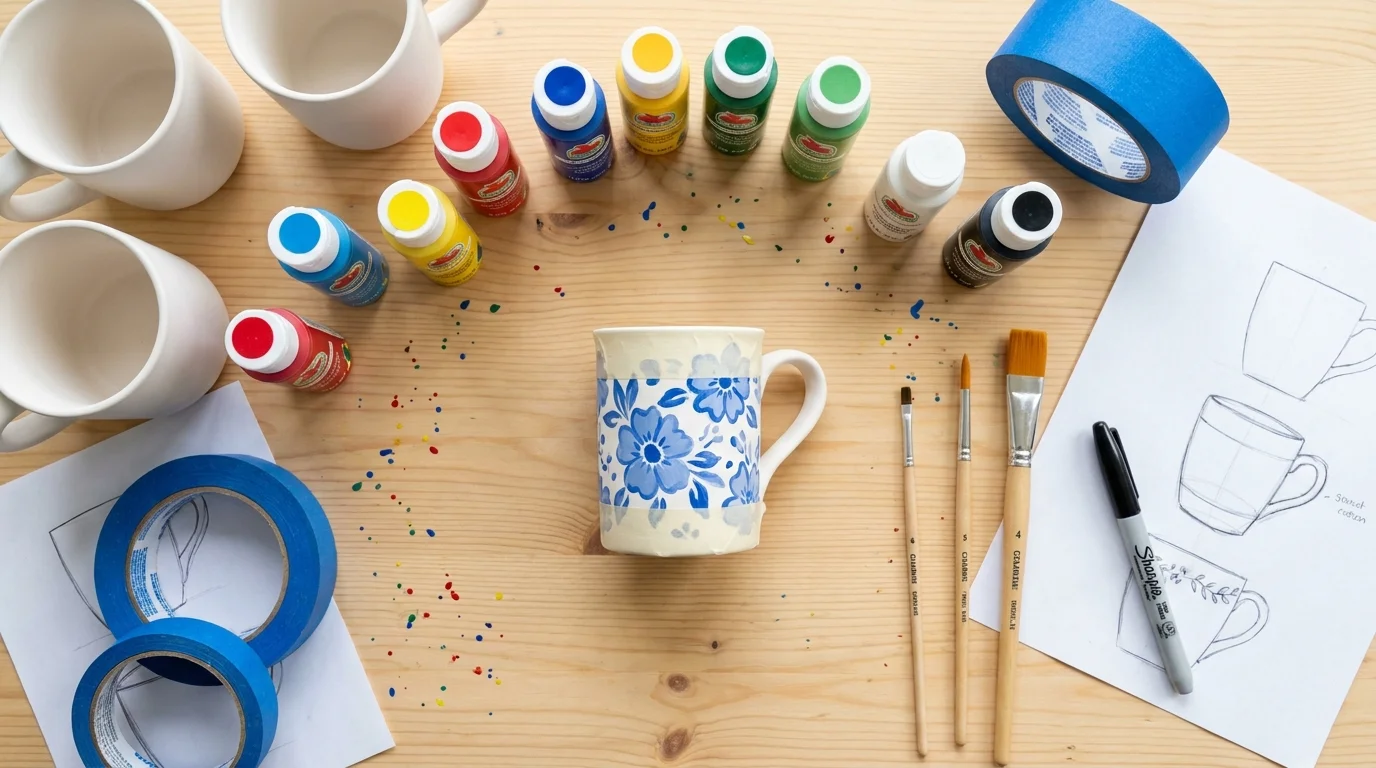
91% isopropyl alcohol: Your most important purchase. It removes the skin oils that stop paint from sticking. Oil-based porcelain markers: Better control than a brush for names, fine lines, or detailed work. Dishwasher-safe ceramic paint: Check the label for bake-on instructions before you buy.
If you use cheap paint, the design will fail no matter how careful you are. The materials matter more than the technique.
Subscribe to DIY Craft Bloom
Get updates on the latest posts and more from DIY Craft Bloom straight to your inbox.
Step 1: Prep Your Surface
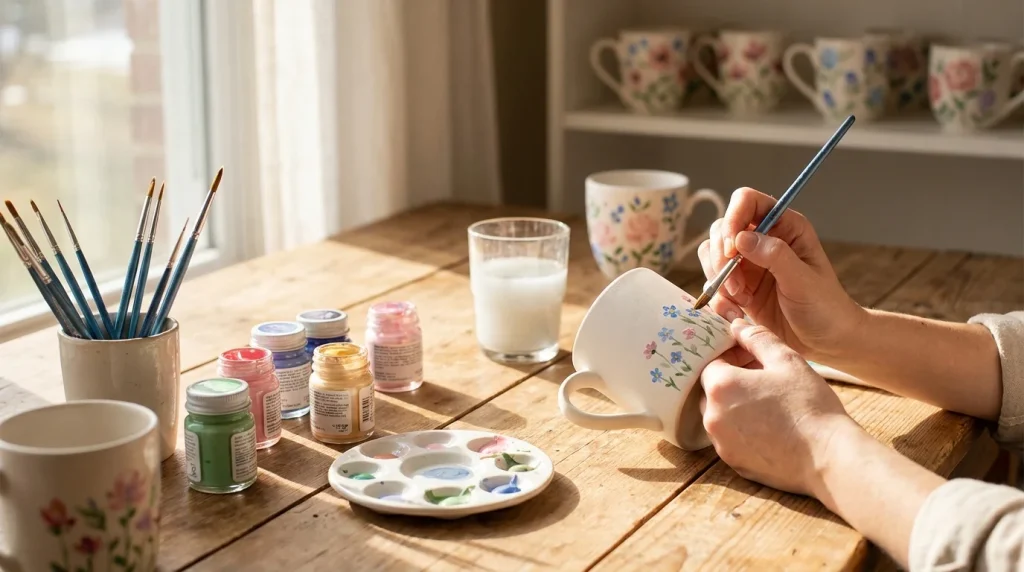
The biggest enemy of your design is invisible. Skin oil. Every time you touch the mug, you leave a residue that blocks the paint — which is why designs flake off even when everything else seems fine.
Soak a cotton pad in alcohol and wipe the entire outside of the mug. Once it’s clean, don’t touch the painting area with your bare hands. Hold it with a paper towel instead.
You also need to tape off the top inch of the mug with painter’s tape before you start. That’s the area your mouth touches. Even non-toxic paints wear down over time, and keeping that zone clear means the whole project stays food-safe from start to finish.
Step 2: Design and Application
You don’t need art school for this. In 2026, the botanical minimalist look is everywhere — simple olive branches, eucalyptus leaves, that kind of thing. Easy to pull off and it looks intentional.
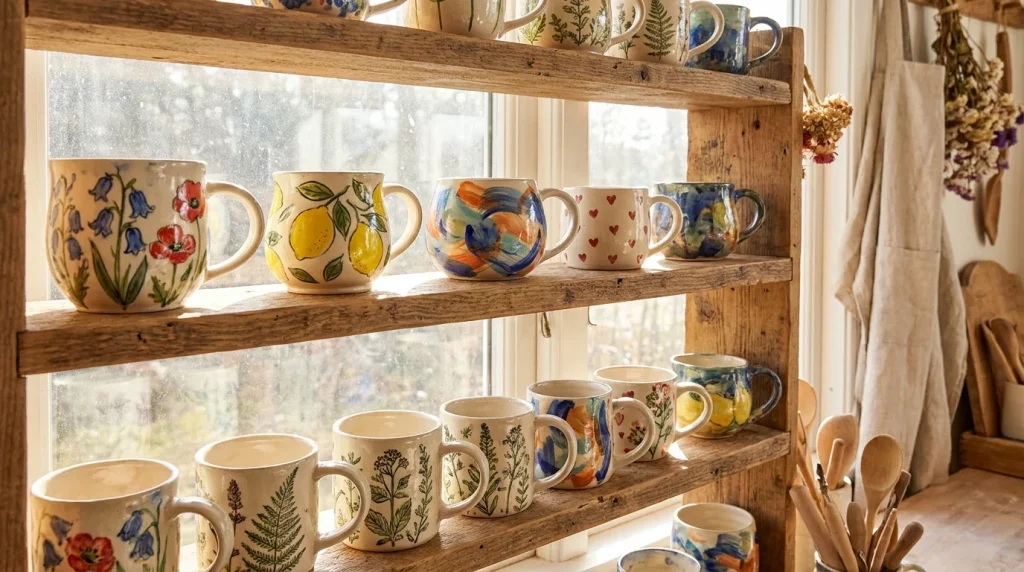
Three techniques worth knowing:
The dotting method: Press the flat end of your brush into paint and stamp straight down. Consistent circles every time, no real brushwork required. Stenciling: Use vinyl stickers or tape to block off a shape.
Paint over it, then peel while the paint is still slightly wet. Gradient blending: Use a small sponge to dab where two colors meet. Softer transitions than a brush gives you, without the streaks.
Subscribe to DIY Craft Bloom
Get updates on the latest posts and more from DIY Craft Bloom straight to your inbox.
Made a mistake? Wipe it with alcohol and start over. Before the mug goes in the oven, paint is completely forgiving.
Step 3: Baking for a Permanent Finish
This is what separates a durable mug from one that peels in a month.
Let the mug air dry for at least 24 hours first. Wet paint in a hot oven will bubble or crack. When it’s fully dry, place the mug in a cold oven — not a preheated one. Cold ceramic going into a hot oven can shatter. This is called the cold start rule, and it matters.
Turn the oven to 300°F (150°C). Once it reaches that temperature, set a timer for 35 minutes. When the timer goes off, turn the oven off and leave the mug inside until everything cools down completely.
The slow cooling keeps the ceramic intact. Industrial kilns run far hotter, but this home method gets your paint durable enough for the dishwasher. Keep your design on the outside only — regulations limit lead migration to 0.5 mg/L, and a clean exterior-only approach keeps you well inside that.
Start Painting
Making a custom mug is part creative project, part basic chemistry. Clean the surface, apply your design, bake it properly — that’s really the whole thing.
Grab a porcelain marker and start your first project. Tag us in your photos when you pull it out of the oven.