14 Small Balcony Garden For Beginners

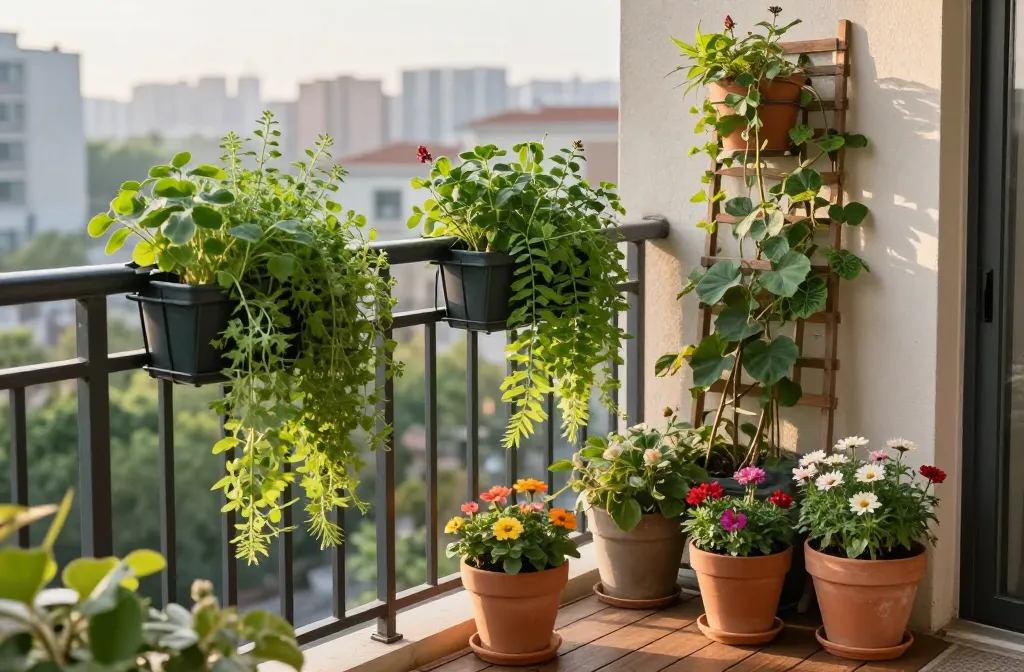
Think your shoebox balcony can’t handle a lush garden? Think again! These beginner-friendly designs prove you don’t need a sprawling backyard to flex your green thumb.
Whether you’ve got five square feet or fifty, these setups will transform your concrete slab into an Instagram-worthy oasis that even plant newbies can pull off.
The secret? Smart plant choices, vertical thinking, and embracing containers like they’re going out of style.
We’re talking herbs that actually survive, flowers that bloom without drama, and vegetables you can genuinely harvest for dinner.
No fancy equipment or master gardener skills required—just enthusiasm and maybe fifteen minutes of weekend maintenance.
1. Vertical Herb Wall With Hanging Planters
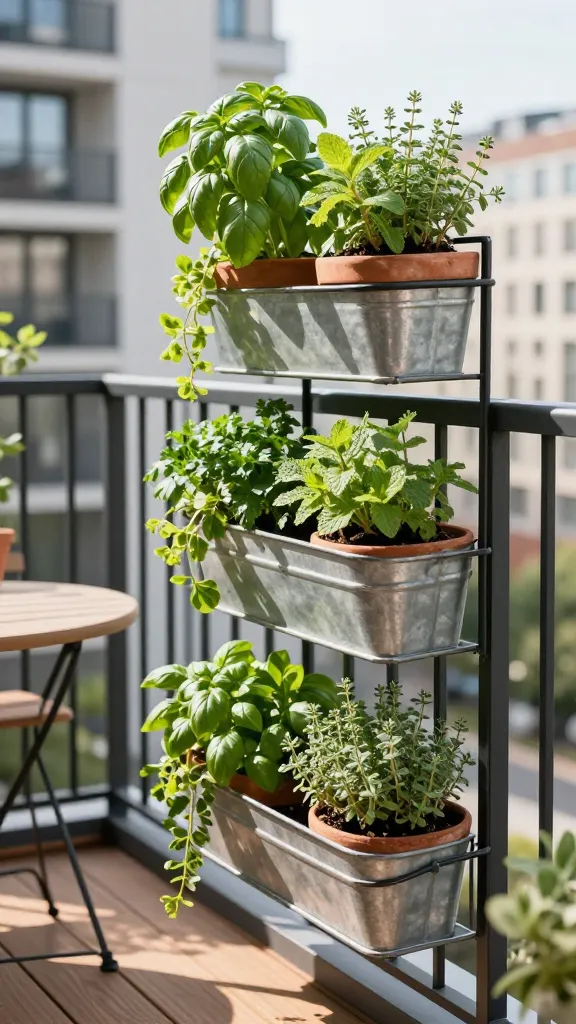
Mount tiered hanging planters along your balcony railing and watch your cooking game level up instantly. This design maximizes vertical space while keeping your floor clear for that tiny bistro set you’ve been eyeing.
Fill each tier with kitchen essentials like basil, mint, parsley, and thyme. These herbs practically grow themselves and smell amazing every time you brush past them. Use terracotta or galvanized metal containers for that farmhouse-meets-urban vibe.
Getting Started:
- Install sturdy hooks or a wall-mounted rail system
- Choose lightweight plastic or metal planters (terracotta gets heavy)
- Group herbs by water needs—Mediterranean herbs together, moisture-lovers separate
Perfect for anyone who wants fresh herbs two steps from their kitchen. Seriously, store-bought basil will never compare again.
2. Corner Jungle With Trailing Pothos and Ferns
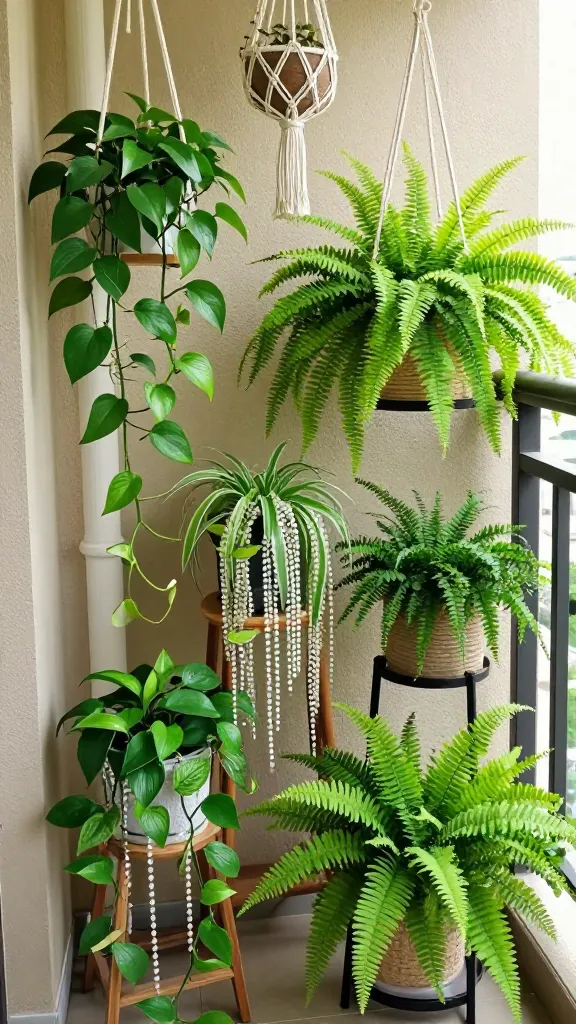
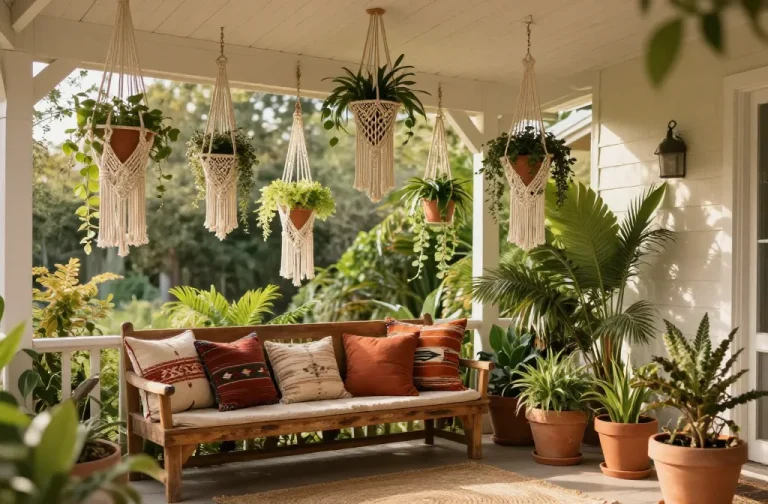
Transform that awkward corner into a cascading green waterfall using pothos, string of pearls, and Boston ferns. Stack different height plant stands to create levels, then let nature do its swoopy, trailing thing.
This design thrives in partial shade, making it ideal for north-facing balconies. Mix glossy green pothos with the delicate fronds of maidenhair ferns for serious texture contrast. Add a macramé hanger or two because why not lean into the plant parent aesthetic?
Low-maintenance and forgiving when you forget to water (we’ve all been there). The cascading effect makes your balcony feel twice as big.
3. Compact Vegetable Garden With Grow Bags
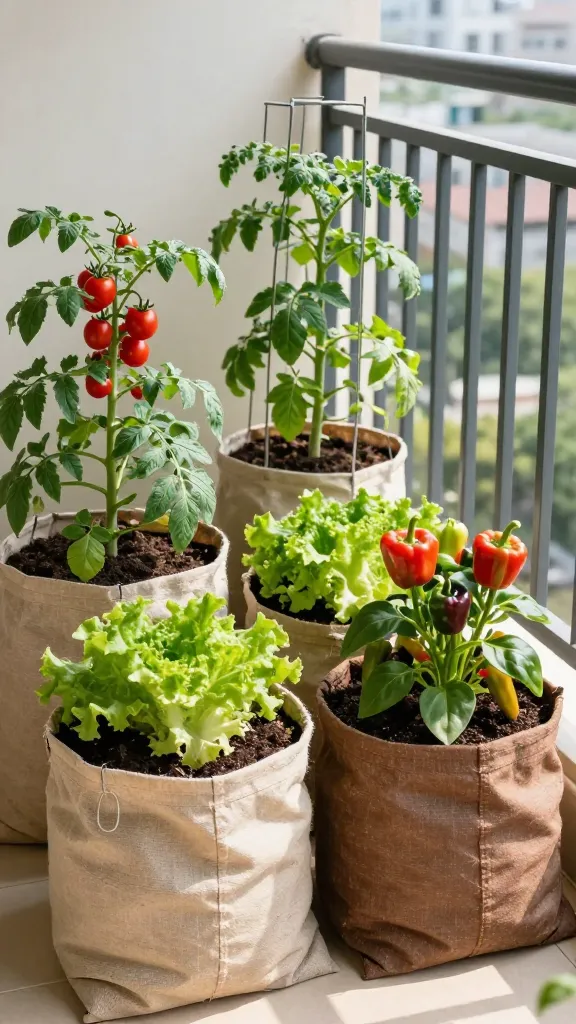
Yes, you can grow actual food on your balcony! Fabric grow bags are game-changers for small spaces—they’re lightweight, breathable, and you can move them around to chase the sun.
Start with beginner-friendly vegetables like cherry tomatoes, lettuce, radishes, and bell peppers. Choose compact varieties specifically bred for containers (look for words like “patio” or “bush” on seed packets). Use organic potting mix and add a simple tomato cage for support.
Best Picks for Beginners:
- Cherry or grape tomatoes (smaller than full-size varieties)
- Leaf lettuce and arugula (harvest outer leaves continuously)
- Radishes (ready in just 30 days!)
- Dwarf pepper plants
Nothing beats plucking sun-warmed tomatoes for your salad. Trust me, you’ll become insufferable about your homegrown produce.
4. Succulent Wonderland With Colorful Pots
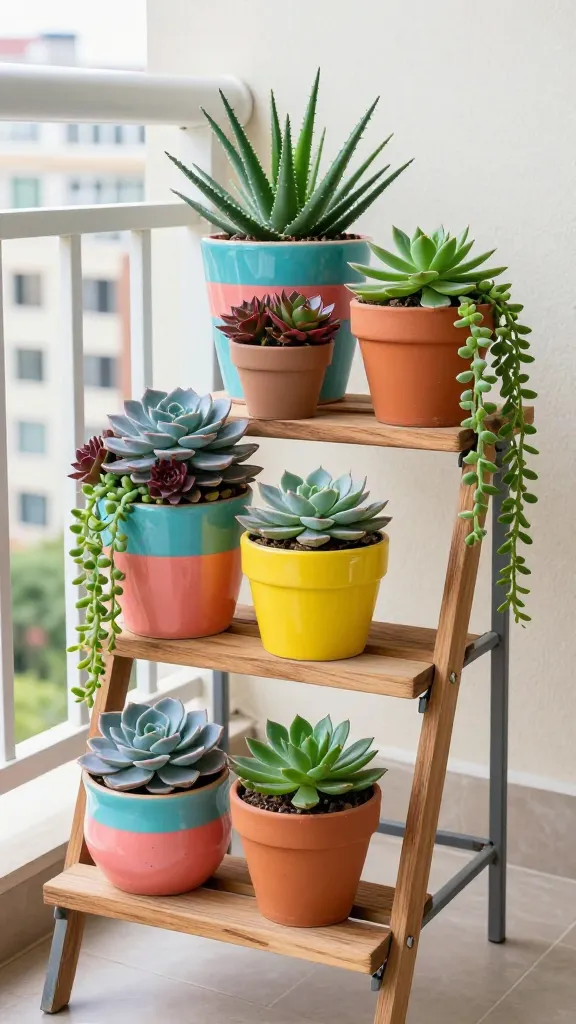
For the ultimate low-commitment garden, go full succulent mode. These drought-tolerant beauties come in wild colors and shapes, from blue-grey echeveria to burgundy sempervivum.
Arrange them in a collection of mismatched colorful ceramic pots across different levels. Mix heights and textures—spiky aloe next to rosette-shaped echeveria, trailing burro’s tail spilling over the edge. Group them on a tiered metal plant stand or wooden ladder shelf for visual interest.
Subscribe to DIY Craft Bloom
Get updates on the latest posts and more from DIY Craft Bloom straight to your inbox.
Water every couple weeks, give them sun, and they’ll basically raise themselves. Perfect for forgetful plant parents or frequent travelers.
5. Mediterranean Balcony With Olive Trees and Lavender
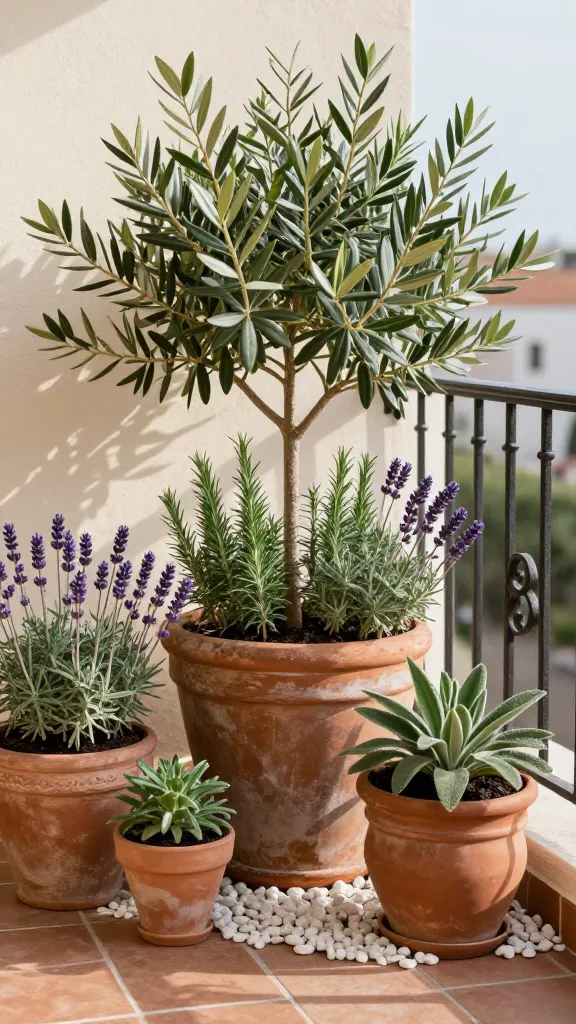
Channel vacation vibes with a mini Mediterranean garden featuring a dwarf olive tree as your centerpiece. Surround it with lavender, rosemary, and sage in weathered terracotta pots.
This design loves full sun and occasional neglect (Mediterranean plants evolved in dry climates). The silvery-green foliage creates a calming, cohesive color palette. Add some white gravel mulch on top of the soil for that authentic Greek island look.
Essential Elements:
- Dwarf olive tree in a large container (at least 15 gallons)
- Terracotta pots in various sizes
- Mediterranean herbs (lavender, rosemary, thyme, oregano)
- Well-draining soil mix with added sand
Close your eyes and you’re basically in Santorini. Plus, fresh rosemary whenever you need it!
6. Butterfly and Bee Garden With Native Flowers
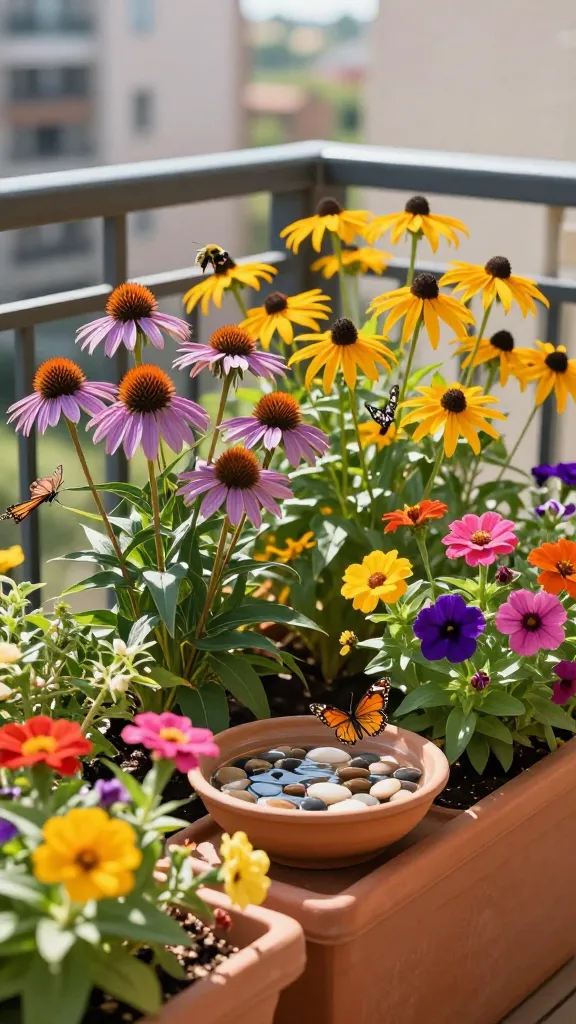
Become the cool neighbor who supports pollinators! Fill your balcony with native flowering plants like coneflowers, black-eyed Susans, and zinnias. These attract butterflies and bees while being ridiculously easy to grow from seed.
Choose bright, cheerful colors—purples, yellows, oranges, and pinks. Plant them densely in large rectangular planters for maximum impact. Add a shallow dish of water with pebbles for butterfly landing pads.
Watching butterflies visit your balcony while you sip morning coffee? Absolutely priceless. Plus you’re helping the ecosystem, which feels pretty good.
7. Shade-Loving Fern Paradise
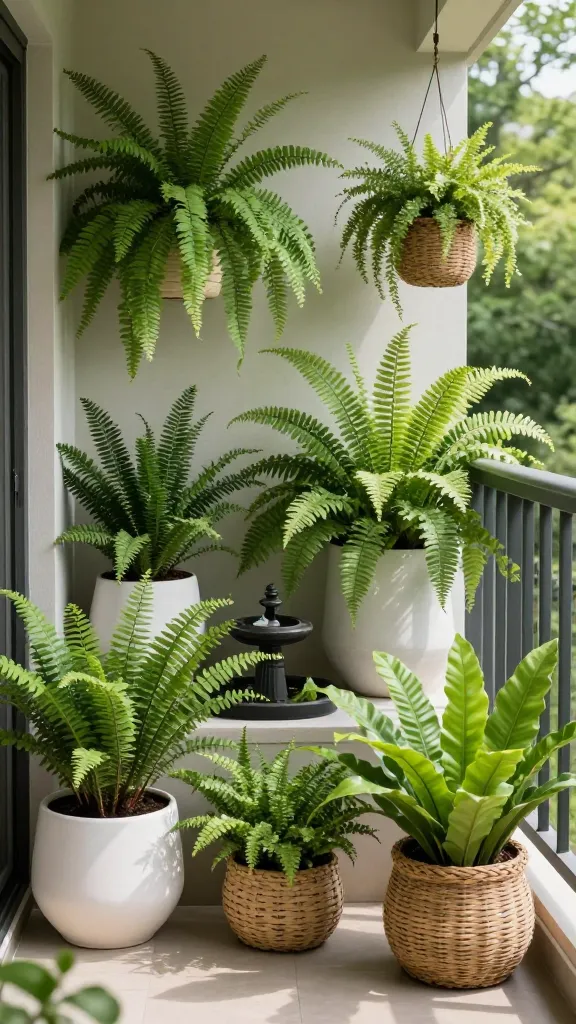
Got a balcony that never sees direct sun? Embrace it with a lush fern collection. Boston ferns, maidenhair ferns, and bird’s nest ferns thrive in shade and create that moody, woodland vibe.
Arrange them in white ceramic planters or woven baskets for a fresh, clean look. Mix different fern varieties for texture—some with delicate, feathery fronds, others with broader leaves. Add a small water feature or fountain if you really want to commit to the zen garden aesthetic.
Care Tips:
- Keep soil consistently moist (but not soggy)
- Mist regularly—ferns love humidity
- Fertilize monthly during growing season
Perfect for creating a peaceful retreat where you can hide from the world with a good book.
8. Colorful Annual Flower Display
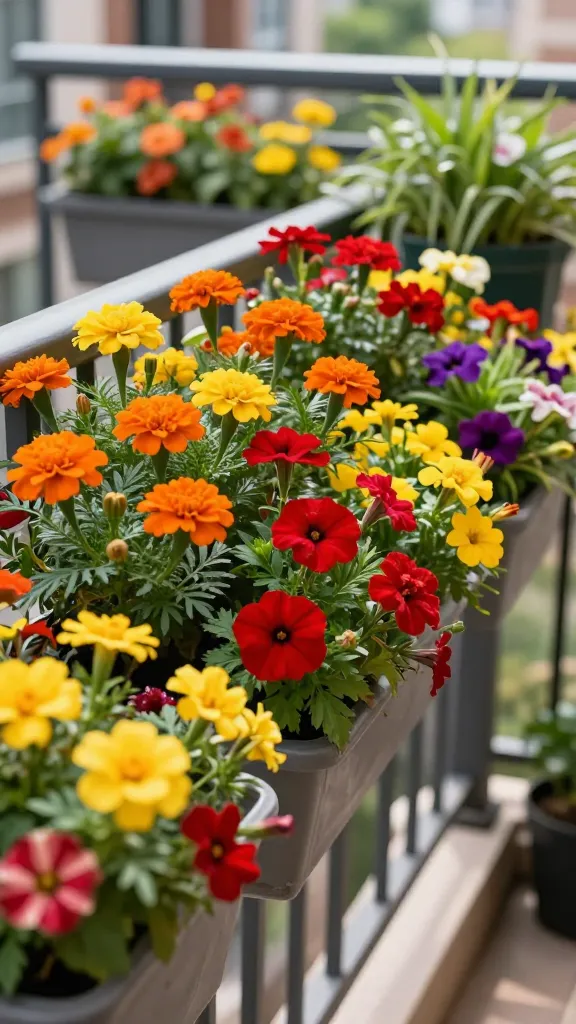
Go bold with a rotating display of annual flowers that you swap out seasonally. Spring gets pansies and petunias, summer brings zinnias and marigolds, fall showcases mums and asters.
Plant them tightly in window boxes and railing planters for maximum color impact. Choose a color scheme and stick with it—all hot colors (red, orange, yellow) or cool tones (purple, blue, white). The tight planting creates that professional garden center look.
This design requires more maintenance than perennials, but the constant blooms are worth it. Change things up every season so you never get bored!
9. Mini Fruit Garden With Strawberries and Blueberries
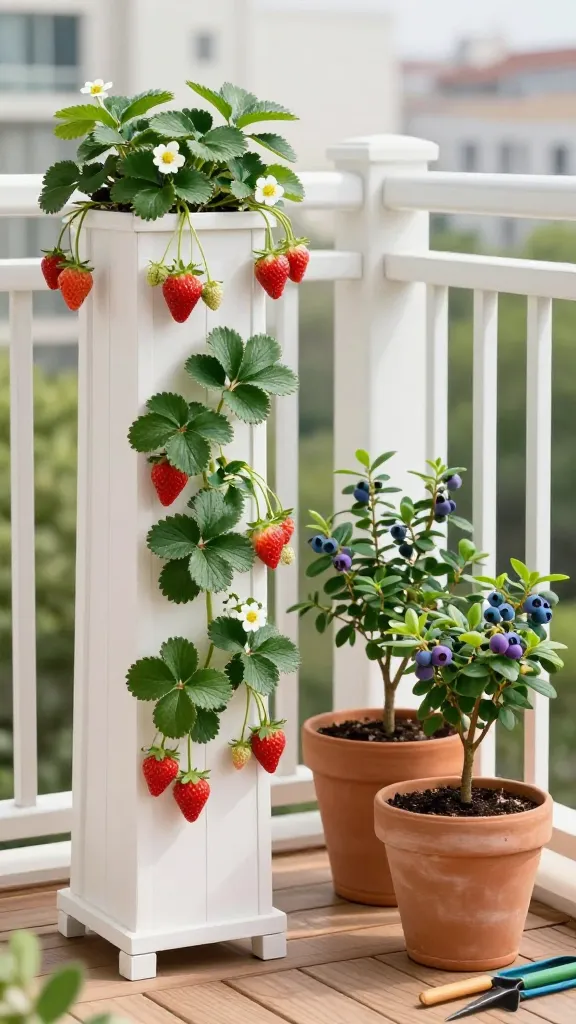
Growing your own fruit sounds fancy, but strawberries and dwarf blueberries are surprisingly beginner-friendly. Plant strawberries in a vertical tower planter or hanging basket where they can cascade down dramatically.
Add a couple dwarf blueberry bushes in large containers (they need acidic soil, FYI). Both plants produce flowers before fruit, giving you ornamental value plus edible rewards. Choose ever-bearing strawberry varieties for fruit all summer long.
Subscribe to DIY Craft Bloom
Get updates on the latest posts and more from DIY Craft Bloom straight to your inbox.
Quick Setup:
- Strawberry tower or several hanging baskets
- Two dwarf blueberry plants (you need two for cross-pollination)
- Acidic potting mix for blueberries
- Regular potting mix for strawberries
Fresh berries you grew yourself taste infinitely better than store-bought. Your smoothie game will never be the same.
10. Japanese-Inspired Zen Garden

Create a minimalist sanctuary with carefully chosen elements: a small Japanese maple in a glazed pot, bamboo in a tall planter, and moss ground cover in shallow dishes. This design is all about restraint and intentional placement.
Use a limited color palette—greens, blacks, and greys. Add smooth river rocks, a small water feature, and maybe a simple stone lantern ornament. Keep everything clean-lined and uncluttered. The goal is peaceful contemplation, not visual chaos.
This style suits anyone craving calm in their outdoor space. Meditation-friendly and incredibly Instagram-worthy.
11. Cottage Garden With Mixed Blooms

Embrace romantic chaos with a cottage garden approach—think overflowing planters packed with different flowers blooming together. Mix roses, daisies, cosmos, sweet peas, and foxgloves in a beautifully unplanned way.
Use vintage-style containers—weathered wooden crates, enamelware, old watering cans. Let plants spill over edges and intertwine naturally. Add a small trellis for climbing roses or sweet peas. The vibe is deliberately overgrown and cottagecore-perfect.
Cottage Garden Essentials:
- Mix of perennials and annuals in soft colors
- Vintage or rustic containers
- Climbing plants on trellises or walls
- Dense planting for that lush, overgrown look
This garden looks like you’ve been tending it for years, even if you planted everything last weekend. Romantic, whimsical, and totally enchanting.
12. Modern Minimalist With Architectural Plants
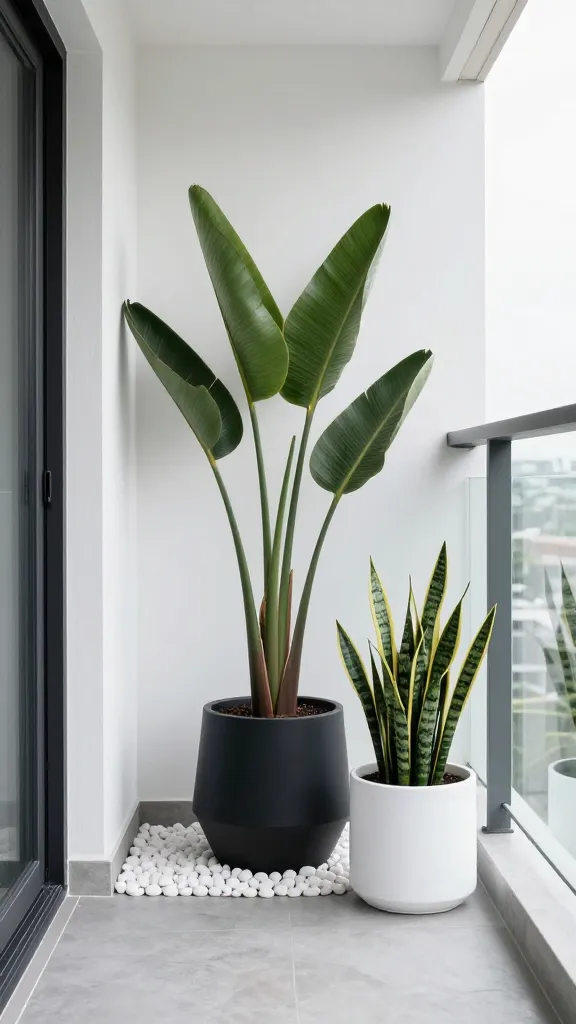
Keep things sleek with architectural plants in modern containers. Think snake plants, ZZ plants, and bird of paradise in matte black or white planters. This design uses negative space as intentionally as the plants themselves.
Choose statement pieces over quantity—one impressive bird of paradise beats twenty random plants. Use geometric planters in a monochromatic color scheme. Add white pebbles or black lava rock as top dressing for that finished, gallery-like appearance.
Perfect for design lovers who appreciate clean lines and Instagram minimalism. Low-maintenance plants mean you spend more time enjoying and less time fussing.
13. Edible Flower Garden
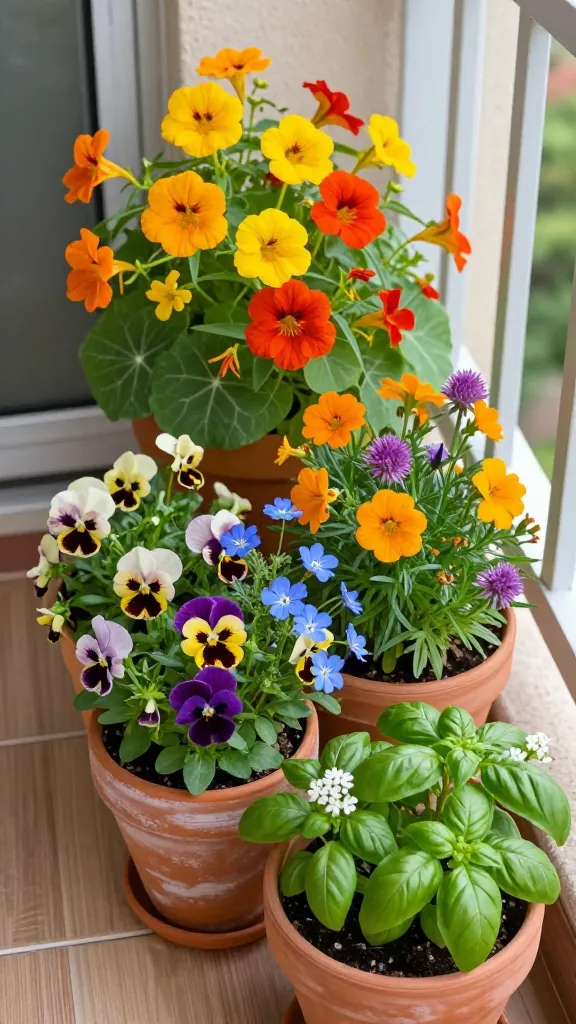
Why not grow flowers you can eat? Nasturtiums, pansies, calendula, and borage are gorgeous AND edible. They add peppery, floral notes to salads and make your dinner plates look ridiculously fancy.
Plant them in bright, cheerful containers near your kitchen door for easy harvesting. Mix colors freely—nasturtiums come in yellows, oranges, and reds that pop against green foliage. Add some edible herbs like chive flowers and basil blooms to the mix.
Best Edible Flowers:
- Nasturtiums (peppery flavor, grows like crazy)
- Pansies and violas (mild, slightly sweet)
- Calendula (adds color to salads)
- Borage (cucumber-like taste, beautiful blue flowers)
Your dinner guests will lose their minds when you casually garnish everything with fresh flowers. Peak fancy with minimal effort!
14. Tropical Paradise With Bold Foliage
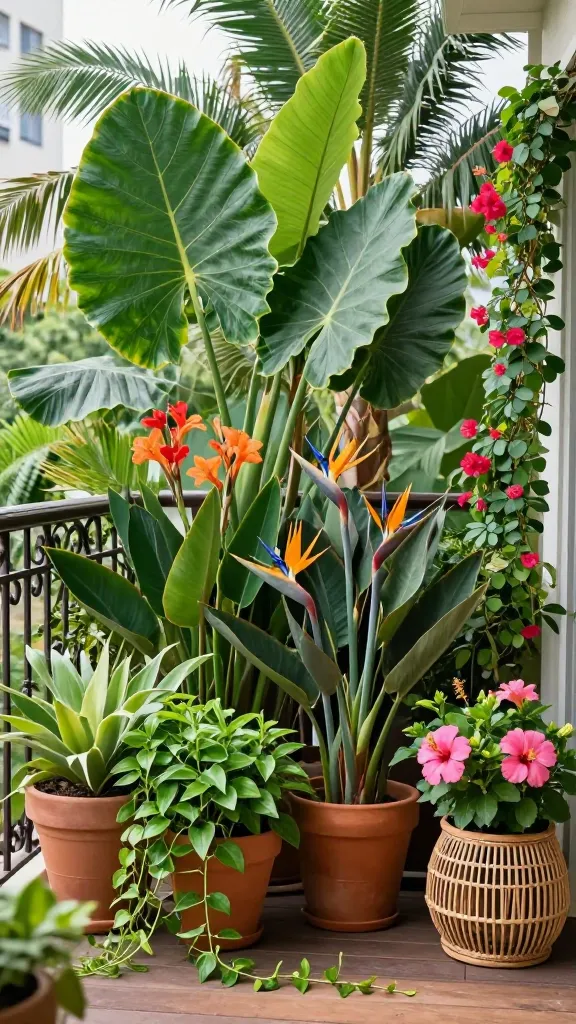
Turn your balcony into a jungle escape with large-leaved tropical plants. Think elephant ears, banana plants, cannas, and bird of paradise. These dramatic plants create instant vacation vibes even in urban settings.
Use oversized containers in natural materials like rattan or terracotta. Layer heights and textures—tall banana plants in back, medium cannas in middle, trailing pothos at edges. Add bright tropical flowers like hibiscus or mandevilla for pops of color against all that green.
Fair warning: this look requires more water and feeding than other styles, but the dramatic transformation is worth it. You’ll feel like you’re on permanent vacation every time you step outside.
Ready to get your hands dirty? Pick the design that speaks to you, grab some plants, and start creating your own balcony paradise. Remember—every master gardener started as a beginner who just went for it. Your perfect small balcony garden is waiting!