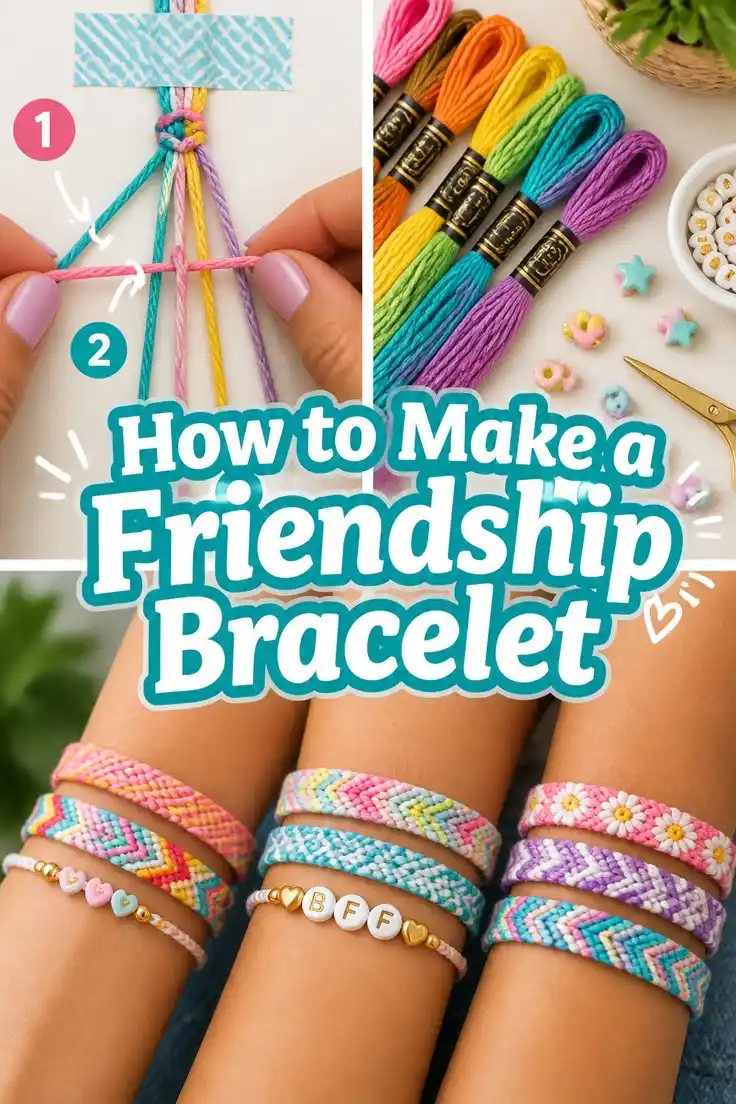
How to Make a Friendship Bracelet Step by Step: Complete Guide for All Skill Levels

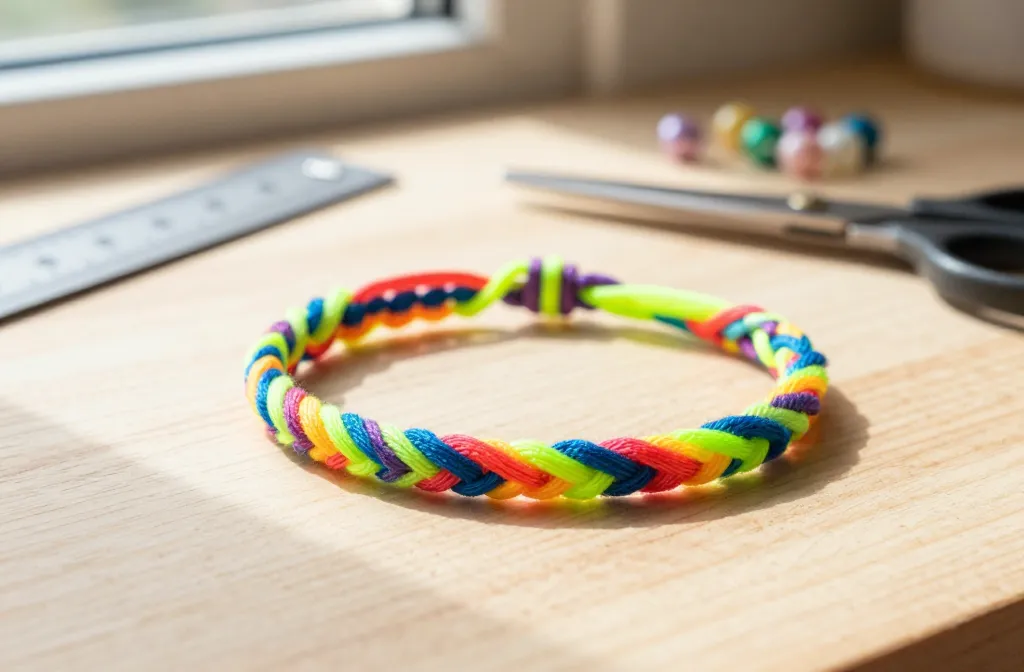
A friendship bracelet is a handmade woven accessory made from embroidery floss using simple knots to create decorative patterns and given as a symbol of friendship and connection.
This classic DIY craft teaches fine motor skills, provides therapeutic stress relief, costs less than $1 to make, and creates meaningful handmade gifts that friends treasure for years.
Ready to braid your way to brag-worthy wristwear that tells a story of true friendship?
Let’s dive in and master the techniques that transform colorful floss into tokens of connection you’ll actually wear with pride—not just admire on Pinterest.
Essential Friendship Bracelet Supplies List
You’ll need only a few basic materials to start making beautiful friendship bracelets that rival anything store-bought.
Quality supplies make the entire process smoother and more enjoyable.
Primary Materials:
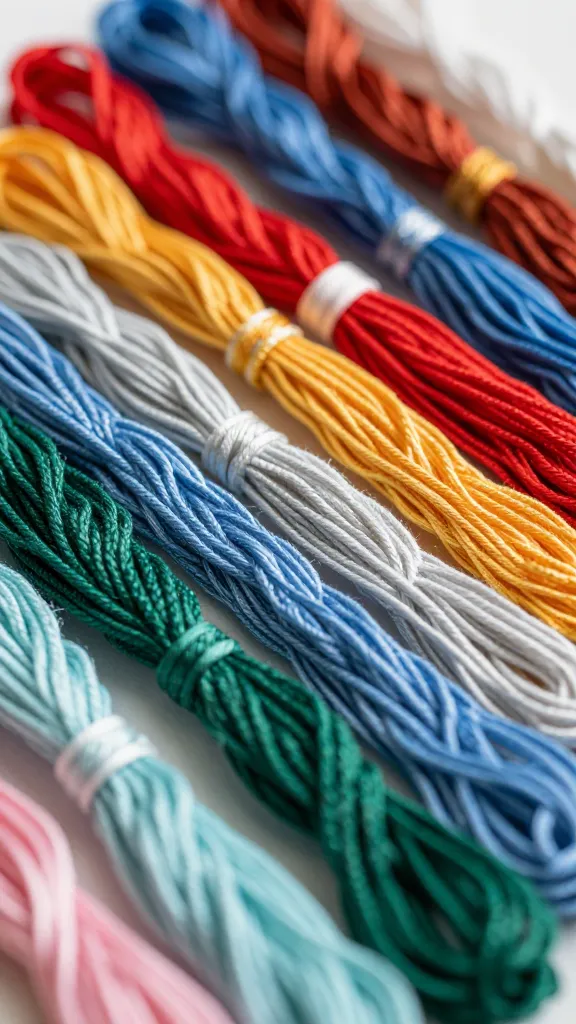
- Embroidery floss – The best thread option as it’s thin but strong, easy to work with, and comes in countless color combinations
- Scissors – Sharp ones help create clean cuts and finished edges
- Anchor system – Tape, safety pins, or clipboards to hold your bracelet while you work
Optional Enhancements:
- Beads or charms – small embellishments that add sparkle without overwhelming the design
- Measuring ruler or tape – to ensure proper length so you don’t create a bracelet that’s too small or oversized
- Yarn or thicker craft thread for chunky, textured bracelets
Pro tip: A friendship bracelet kit designed for beginners includes pre-cut floss, scissors, and simple instructions—perfect for gifts or first-timers.
Understanding the Four Basic Knots
The foundation of every friendship bracelet rests on mastering four essential knots—combinations of forward and backward movements that create different directional patterns.
Once you lock these down, advanced patterns become manageable.
Forward Knot (Left to Right)
Take the left-most strand and bend it on top of its neighbor to the right, creating a “4” shape. Wrap the tail around its neighbor by going under it and pulling the left strand through the space between strands.
Hold the interior strand straight and pull the knot up toward the top, tightening to secure. Repeat once more to complete the double knot—this is crucial because all friendship bracelet knots are technically two knots stacked together.
Backward Knot (Right to Left)
Take the right-most strand and bend it creating a backwards “4”. Wrap the tail around its neighbor by going under it and pulling through the space between strands. This mirror-image knot is your opposite movement tool.
Forward-Backward Knot (Alternating)
Combine forward and backward knots on the same strand for diagonal patterns—switch direction after each knot.
Backward-Forward Knot (Alternating Opposite)
Reverse the order from above for patterns moving in the opposite direction. Each friendship bracelet knot consists of two knots stacked on top of each other—what’s called a “hitch”—so two hitches stacked together equal one full knot.
Master Design Selection: Patterns for Every Skill Level
Choosing the right pattern sets you up for success—start with designs that build confidence before attempting complex multi-color layouts.
Your first bracelet should excite you, not frustrate you.
Beginner Patterns (2-4 strands):
- Twisted Bracelet – The easiest option requiring no knots at all; simply twist the yarn and tie off each end
- Simple Braid – Split your strands into three groups, do a basic braid, and finish with a knot—incredibly simple and forgiving
- Chinese Staircase (Spiral) – Uses only the forward knot repeatedly, letting the spiral take natural shape as you work down
Intermediate Patterns (4-6 strands):
- Candy Stripe – Create horizontal stripes by rotating which strand you use as your working thread; takes about 20-60 minutes
- Diagonal Stripes – Similar to candy stripe but creates diagonal lines instead of horizontal
Advanced Patterns (6-8 strands):
- Chevron Pattern – Forms a distinctive “V” shape pointing down; requires mirrored knots on each side meeting in the middle
- Zig-Zag and Diamond Patterns – Combine multiple knot types for 3D visual effects
How to Make a Simple Chevron Friendship Bracelet: Step-by-Step
The chevron pattern is the perfect intermediate project that looks impressive while teaching critical tension control and pattern awareness. It’s the gateway to mastering advanced designs.
Step 1: Prepare Your Materials
Cut 4 colors of embroidery thread about 72 inches long. Hold all threads together and fold in half, making a knot close to the fold to create a small loop at the bracelet’s top. This loop will help you tie it onto your wrist later.
Step 2: Set Up Your Workspace
Secure your knotted loop to a clipboard, tape it to a flat surface, or pin it to a corkboard. Using a clipboard provides flexibility since you can move around while working, which many people find more comfortable than stationary anchors.
Step 3: Arrange Your Threads
Order your thread colors so they mirror each other on each side (for example: ABCD-dcba). This symmetrical arrangement creates the perfect chevron foundation.
Step 4: Start the Left Side
Take your first thread on the left side (A) and tie a forward knot around the second thread (B). Continue to use your first thread (A) to tie forward knots around your third (C) and fourth (D) thread as well. This creates the left half of your “V” shape.
Step 5: Mirror on the Right Side
Repeat the same process but use backward knots on the right side, mirroring what you did on the left. Take the first thread on your right side (a) and do backward knots around the second (b), third (c), and fourth (d) threads.
Step 6: Complete the Center
Now that both of your first threads are in the middle (A and a), take your left-hand thread (A) and do a forward knot on the right-hand thread (a) to finish off the “V” shape. You’ve completed one row!
Step 7: Repeat the Pattern
Continue the same sequence, letting colors form your chevron naturally. Keep tension even throughout—not too tight or too loose.
Step 8: Finish Your Bracelet
When you reach your desired length (usually 6-7 inches for an average adult wrist), tie off with a simple square knot and trim the tails.
How to Make a Friendship Bracelet with 3 Strings: Simple Braided Method
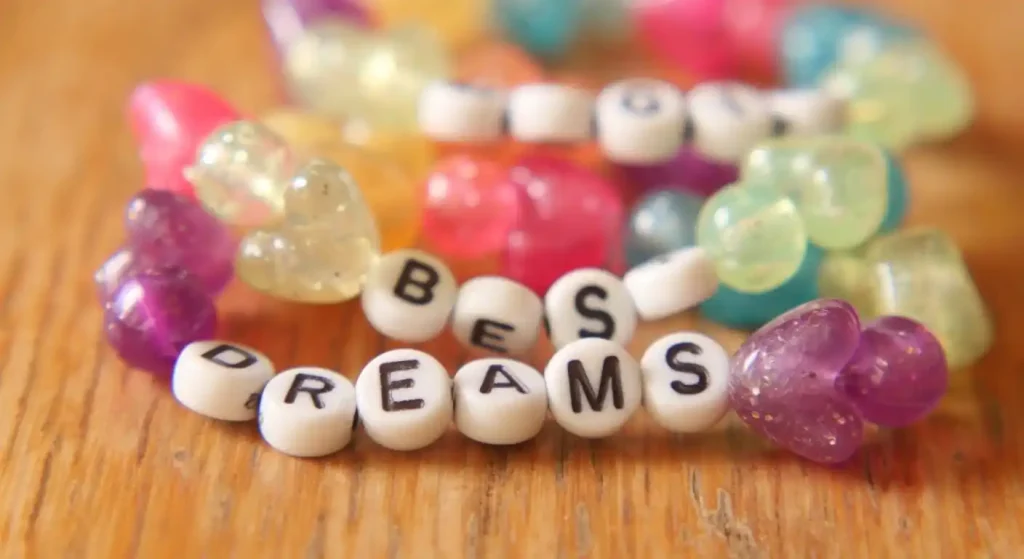
A three-strand bracelet is one of the quickest friendship bracelets to create and works perfectly for beginners who want a finished product without complex knot patterns.
You can’t go wrong with a basic 3-strand braided bracelet, which is a great way to use up smaller pieces of string from other bracelet projects.
Complete Step-by-Step Instructions:
Step 1: Cut Your Floss
Subscribe to DIY Craft Bloom
Get updates on the latest posts and more from DIY Craft Bloom straight to your inbox.
Cut three strands of embroidery floss, each 45 inches long. You can use different colors or stick to one single color—it’s entirely up to your preference.
Step 2: Create Your Starting Loop
Fold the three cords in half and form a loop at the top. Make a regular knot at the top, about half an inch from the loop. This loop serves as your attachment point when tying the bracelet onto your wrist.
Step 3: Secure to Your Anchor
Grab an exam pad or clipboard with a clip at the top and carefully clip the threads in place, clasping the cords just above the knot. Now fan out all six of your cords.
Step 4: Arrange by Color (Optional)
If you’ve used different colors, sort them so that the cords on the left mirror the three on the right (3-2-1-1-2-3). This creates a symmetrical, professional appearance.
Step 5: Begin Simple Braiding
Do a simple braid by separating the six cords into three groups of two. Take the left group over the middle, then the right group over the new middle. Continue this basic braid pattern.
Step 6: Maintain Consistent Tension
Keep your working pace steady and tension even. The repetitive motion is both meditative and muscle-memory building—your hands will remember this pattern after a few bracelets.
Step 7: Measure Your Progress
Periodically wrap the developing bracelet around your wrist (with the loop) to check length. When you’re happy with the length, simply pull all six strands into one single knot and tighten it to secure all the ends.
Step 8: Optional Button Closure
You can also attach a button at this point. Just separate the six cords into two sets of three. Then pull three strands through the button loop and use the remaining three to make a double knot to secure the button in place.
Timing: Simple patterns like three-strand braids usually take 30 minutes to an hour depending on your skill level, making them perfect for crafting sessions with friends.
How to Make a Friendship Bracelet with Yarn: Thicker, Chunkier Style
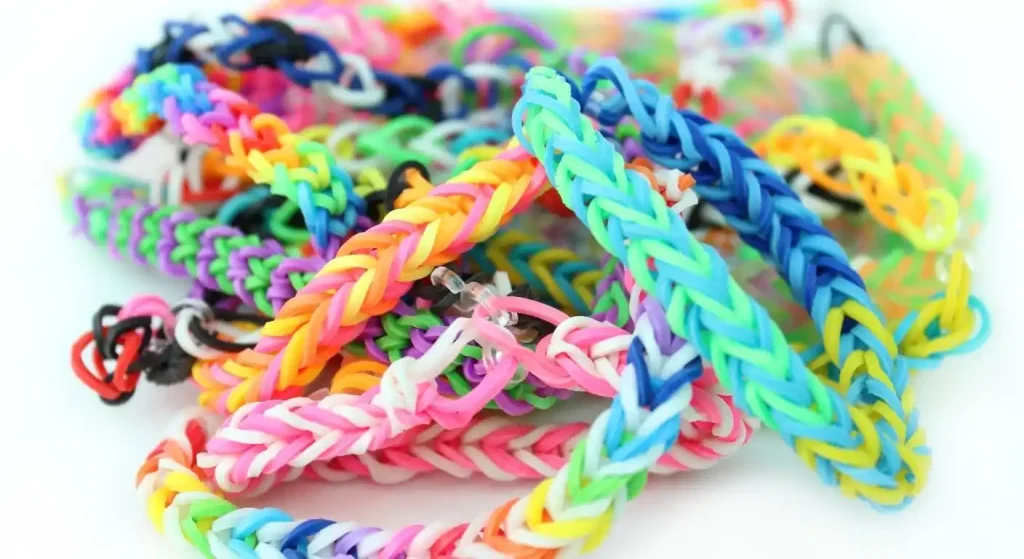
Yarn and thicker craft threads create stunning, more visible friendship bracelets that work faster and make beautiful statement pieces.
Cardboard loom bracelets work great with both ordinary wool/yarn as well as embroidery thread, and they really are so easy to make for kids of all abilities.
Why Yarn Works Differently:
You can use Omegacryl yarn or embroidery floss—yarn creates thicker, more textured bracelets than traditional floss.
Craft thread (sold next to embroidery floss) comes in a single strand that can’t be separated like embroidery floss, and both kinds come in bags with large quantities of colors.
Three Simple Methods with Yarn:
Method 1: Cardboard Loom Kumihimo Bracelet (Easiest)
Make a cardboard loom by cutting a circle from a tin can or similar, drawing 4 lines across to create 8 equal segments, making a hole in the middle, and cutting 1cm into each line.
Cut 7 strands of yarn and tie a knot at one end, then thread through the hole and slot each strand through a 1cm strip.
Take the 3rd strand to the left of the spare slot, lift it up, bring it down and put it across the spare slot. This creates a new space.
Rotate your disc and pick the strand 3 to the left and fold down. Repeat until your yarn friendship bracelet grows on the other side of the disc.
Method 2: Yarn Twisted Bracelet (Fastest – 2 minutes!)
This twisted friendship bracelet is perfect for young fingers and makes a great first bracelet for kids as young as preschool. There are no knots or braiding required—all you do is twist the yarn and tie off each end.
Cut 2 strands of yarn about 24 inches each. Secure one end with tape. Twist both strands together tightly, then tie off the other end. Done!
Method 3: Yarn Forward Knot Bracelet
Cut as many strands of yarn as you’d like to 32 inches and tie them together 3 inches down. Separate strands in the order of the pattern you want to create. The more strands you incorporate, the wider your bracelet will be.
Working from left to right, tie a forwards knot by taking the left-most strand and bending it on top of its neighbor to the right, creating a “4” shape. Wrap the tail around its neighbor by going under it and pulling through the space between strands.
Yarn Advantages:
- Creates thicker, more visible bracelets (great for gifts)
- Works faster than traditional floss (half the time)
- More forgiving of tension mistakes
- Looks more sophisticated and modern
- Easier for people with vision difficulties
How to Make a Friendship Bracelet for Kids: Age-Appropriate Guide
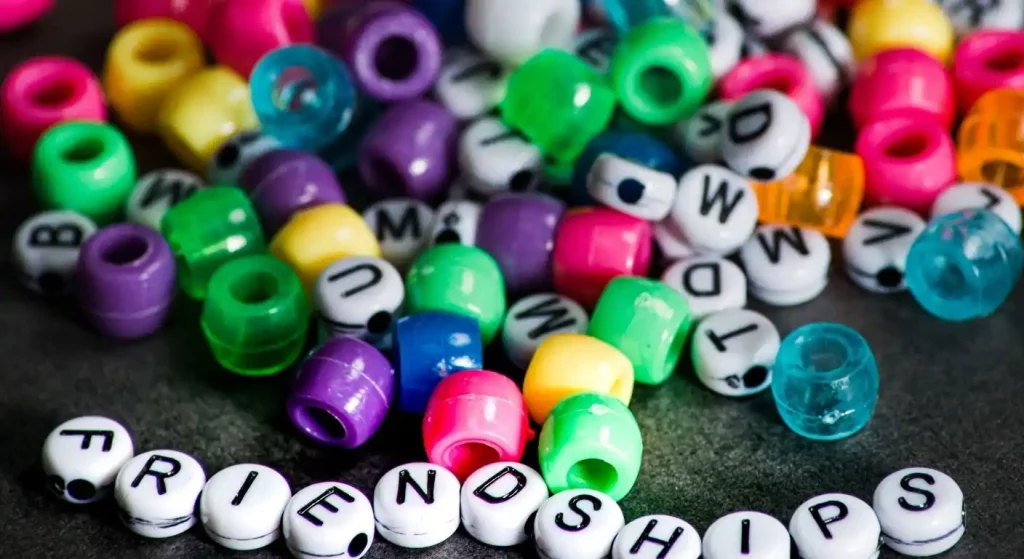
Friendship bracelets teach children fine motor skills, patience, and the joy of creating meaningful gifts while keeping them engaged away from screens.
Friendship bracelets help develop fine motor skills, give kids a chance to do something creative, allow you to make something beautiful without hours of practice, and help kids with concentration and attention skills.
Why Kids Love This Craft:
Friendship bracelets offer a perfect blend of fun, creativity, and learning. They build resilience and patience, encourage teamwork, and strengthen parent-child bonds through shared activities.
For children with autism or ADHD, bracelet-making can be therapeutic, providing a therapeutic and creative outlet that helps with focus, reduces anxiety, and builds confidence.
Age-Appropriate Recommendations:
Ages 3-5 (Preschool):
- Twisted Bracelet – The easiest way to teach young kids how to make bracelets without overwhelming them with difficult steps. They’re super quick to make—under 2 minutes with practice!
- Loose Strand Bracelet – Simply tie knots on each end with no braiding or complex patterns needed
Ages 6-8 (Early Elementary):
- Simple Three-Strand Braid – Introduce basic braiding without knot techniques
- Beaded String Bracelet – Thread 1-2 strands of embroidery thread through letter beads, spell out a word, and tie knots close to the first and last bead
Ages 9-12 (Older Elementary/Tween):
- Chinese Staircase Spiral – Uses only forward knots; teaches pattern consistency
- Candy Stripe Pattern – Create horizontal stripes by rotating which strand you use as your working thread
Ages 13+ (Teens):
- All patterns including Chevron, Diagonal, and Zig-Zag
- Multi-color complex designs
- Advanced techniques like 4 beautiful braid techniques: basic, beaded, rope and scrunchy
Key Tips for Crafting with Kids:
Always supervise younger children when they’re using scissors. Safety first is the priority.
Simple patterns like Chevron and Diagonal are beginner-friendly for children. Start simple and let them build confidence before moving to complex patterns.
Turn bracelet-making into a group activity for added fun—group crafting sessions encourage interaction and collaboration.
Subscribe to DIY Craft Bloom
Get updates on the latest posts and more from DIY Craft Bloom straight to your inbox.
Benefits for Special Needs Children:
These activities can be especially beneficial for children with autism or ADHD, providing a therapeutic and creative outlet.
The repetitive knotting motions help boost focus and reduce anxiety, encourage social skills through group sessions, build confidence through completing projects, and foster self-expression through design choices.
Color Theory and Design Strategies
Strategic color choices transform basic knot patterns into visually stunning bracelets that look intentional and professional. Color makes or breaks the final impact.
Pick Your Palette Strategically
- Pick a dominant color and a couple of accents. Too many colors can overwhelm the pattern.
- High Contrast Works: Black with neon, navy with coral, or white with jewel tones—these combinations make patterns pop
- Ombre Effects: Use gradual color transitions (light to dark) to create depth and dimension
- Complementary Colors: Purple and yellow, blue and orange, red and green create visual harmony
Color Placement Tips
- Use color blocks to emphasize the chevron or lattice pattern. It reads as intentional rather than chaotic.
- Place your brightest color in the center for focal impact
- Use neutral colors (black, white, gray) as “spacers” between bright colors
Personalization Strategies
- Make bracelets with your child’s favorite colors or their friend’s favorite colors for personalized gift-giving
- Use school colors for sports fans
- Create matching sets for best friend pairs
Adding Beads and Embellishments
Beads, charms, and decorative elements elevate a simple bracelet into a sophisticated accessory—but restraint is key. One stunning focal bead beats ten random decorations.
Bead Integration Methods:
- Pre-stringing: Thread beads onto the strand before you start weaving, creating a beaded effect throughout
- Mid-project Addition: Slide beads onto the middle sections during the creation process for strategic placement
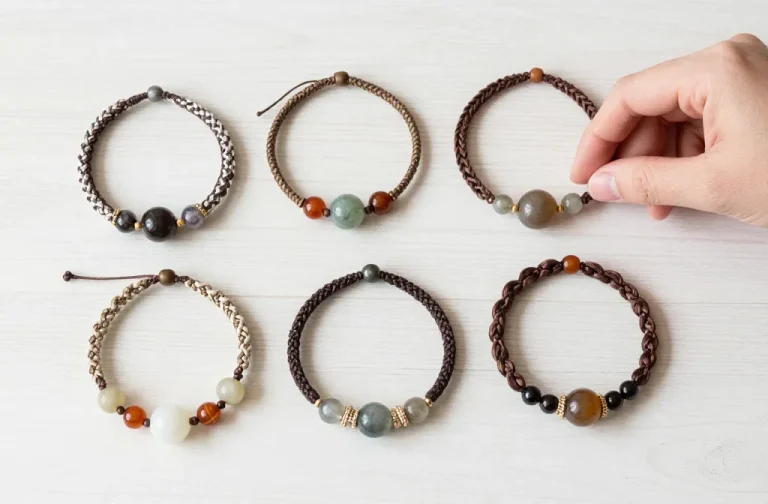
- Final Embellishment: Accessorize your bracelets with assorted beads, uplifting charms, decorative lockets and colorful clasps
Less is More:
Be careful not to overdo it. A single bead in a couple of spots can look sharp; a handful can weigh the bracelet down and distract from your knot work.
Customizing Your Bracelet as a Meaningful Gift
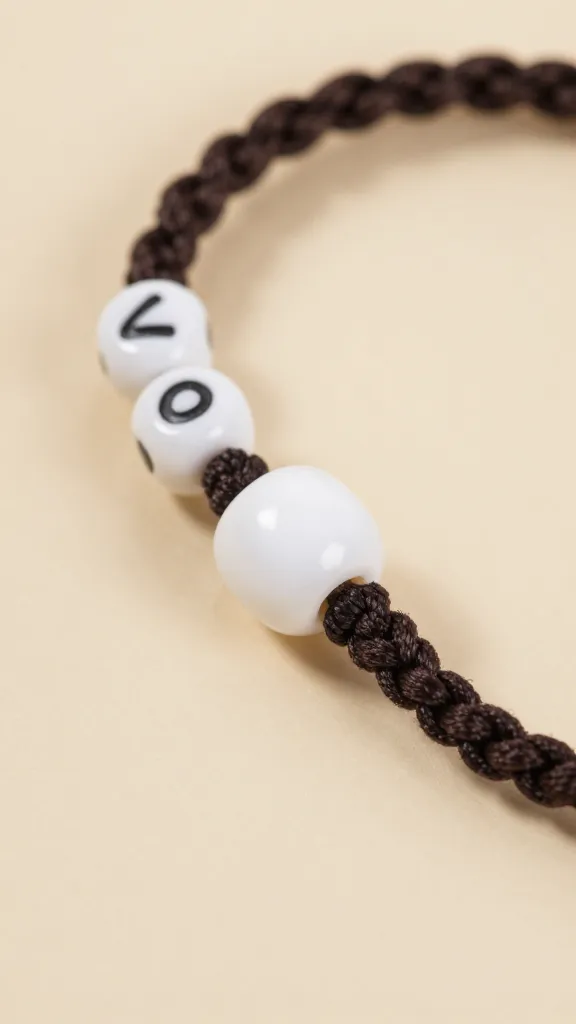
A friendship bracelet becomes precious when personalized—it’s not just about the colors; it’s about the thought behind them. The story matters as much as the craft.
Personalization Ideas:
- Create bracelets with initials woven into color blocks or small symbols like a tiny heart motif—these personal touches make bracelets feel intentional and special
- Inside Jokes: Use colors that reference shared memories (their favorite color, school colors, concert colors)
- Meaningful Messages: Write friendly messages in kindness cards and present them alongside your bracelet
- Matched Sets: Make matching bracelets for best friend pairs
Gifting Best Practices:
- Measure around your recipient’s wrist with a bit of slack. If you’re unsure, err on the longer side so it’s adjustable.
- Pair your bracelet with a note about why you chose those colors. It makes the whole thing feel intentional and thoughtful.
- Include a card explaining the knot pattern used (people love knowing the craft history)
Care, Storage, and Long-Term Maintenance
Proper care extends your bracelet’s lifespan from months to years—simple habits make all the difference. Your handmade treasure deserves respect.
Cleaning Guidelines:
- Hand wash gently with mild soap and water. Don’t soak for hours unless you want colors to run.
- Use lukewarm water, never hot
- Avoid harsh detergents that might dull colors
Drying Technique:
- Let it air dry. No heat sources to shrink or warp the threads.
- Lay flat on a clean towel rather than hanging (prevents stretching)
- Allow at least 24 hours for complete drying
Activity Precautions:
- Avoid heavy wear with rough materials. Ropes, metal cuffs, or rough fabrics can snag threads.
- Remove before swimming when possible (especially for new bracelets)
- Take off during strenuous exercise
Storage Best Practices:
- Store flat or rolled loosely to prevent tangling when you’re not wearing it.
- Use a small jewelry box or dedicated bracelet drawer
- Keep away from direct sunlight to prevent color fading
- Store in a cool, dry place away from humidity
Repair Tips:
- If a knot loosens, just re-tie it snugly. You’ll be surprised how forgiving simple knots can be.
- If you ever want to undo your bracelet, use a straight pin or sewing needle to pick at the stitches until they loosen
Common Beginner Mistakes and Solutions
Learning what NOT to do saves you hours of frustration and wasted supplies. These are the pitfalls every bracelet maker encounters.
Mistake #1: Uneven Tension
- Problem: Bracelet looks bunched on one side, loose on the other
- Solution: Hold middle strands taut against your work surface. Consistency matters more than tightness.
Mistake #2: Losing Track of Pattern
- Problem: You forget which color comes next or lose your place in the sequence
- Solution: Write down your pattern sequence or take photos of each completed row as reference
Mistake #3: Threads Tangling Together
- Problem: The longer your floss, the more likely it gets twisted and knotted
- Solution: Pre-untangle by combing through your threads with your fingers before starting
Mistake #4: Wrong Knot Direction
- Problem: Your pattern doesn’t form correctly or looks backwards
- Solution: Slow down and watch tutorial videos frame-by-frame; practice knots separately before combining patterns
Mistake #5: Bracelet Too Tight
- Problem: Difficult to tie on wrist, uncomfortable to wear
- Solution: Apply the “two-finger rule”—leave enough slack to fit two fingers between bracelet and wrist
Mistake #6: Strings Running Out of Length
- Problem: You’re halfway done and floss is too short
- Solution: Cut longer than you think you need (extra 12 inches never hurts)
Mistake #7: Uneven Knot Sizes
- Problem: Some knots are loose, some are tight, creating bumpy texture
- Solution: Practice the motion 10 times before starting your first bracelet; develop muscle memory
Friendship Bracelet Traditions and Cultural Origins
Understanding the cultural roots of friendship bracelets adds meaning to this beloved craft.
The origins of the friendship bracelet are said to lie with the Indigenous Peoples in Central and South America.
According to tradition, one places a bracelet onto the wrist of a friend as a symbol of friendship and may wish for something at that moment. The bracelet is worn to honor the time, energy, and love put into their friendship.
Modern Traditions:
- In the 70s, America was undergoing a radical change with an anti-war movement. The focus centered around unity and all things “peace and love,” and in the midst, friendship bracelets became a trend. Friends exchanged bracelets in an effort to unite.
- Summer camp staple since the 1980s
- Festival and concert trading tradition (especially Taylor Swift’s Eras Tour events)
- Birthday and celebration gifts among teens and young adults
Why They Matter:
Teenagers gift friendship bracelets to their pals on their birthdays, but they make for the perfect surprise gift as well. A friendship bracelet is a bracelet given by one person to others as a symbol of friendship.
The most popular style is an embroidered string, which is very durable and designed to last a lifetime.
Advanced Patterns to Master After Mastering Basics
Once you’ve conquered chevron and candy stripe, try these sophisticated designs:
- Zig-Zag 3D Pattern – Creates an optical illusion of depth and dimension
- Diamond Pattern – Combines multiple color transitions for geometric precision
- Diagonal Stripes – Slanted lines across the bracelet width
- Arrow Pattern – Points radiating from the center
- Heart Pattern – Romantic design using mirrored stitches
- Multi-Strand Braids – 8+ threads creating thick statement pieces
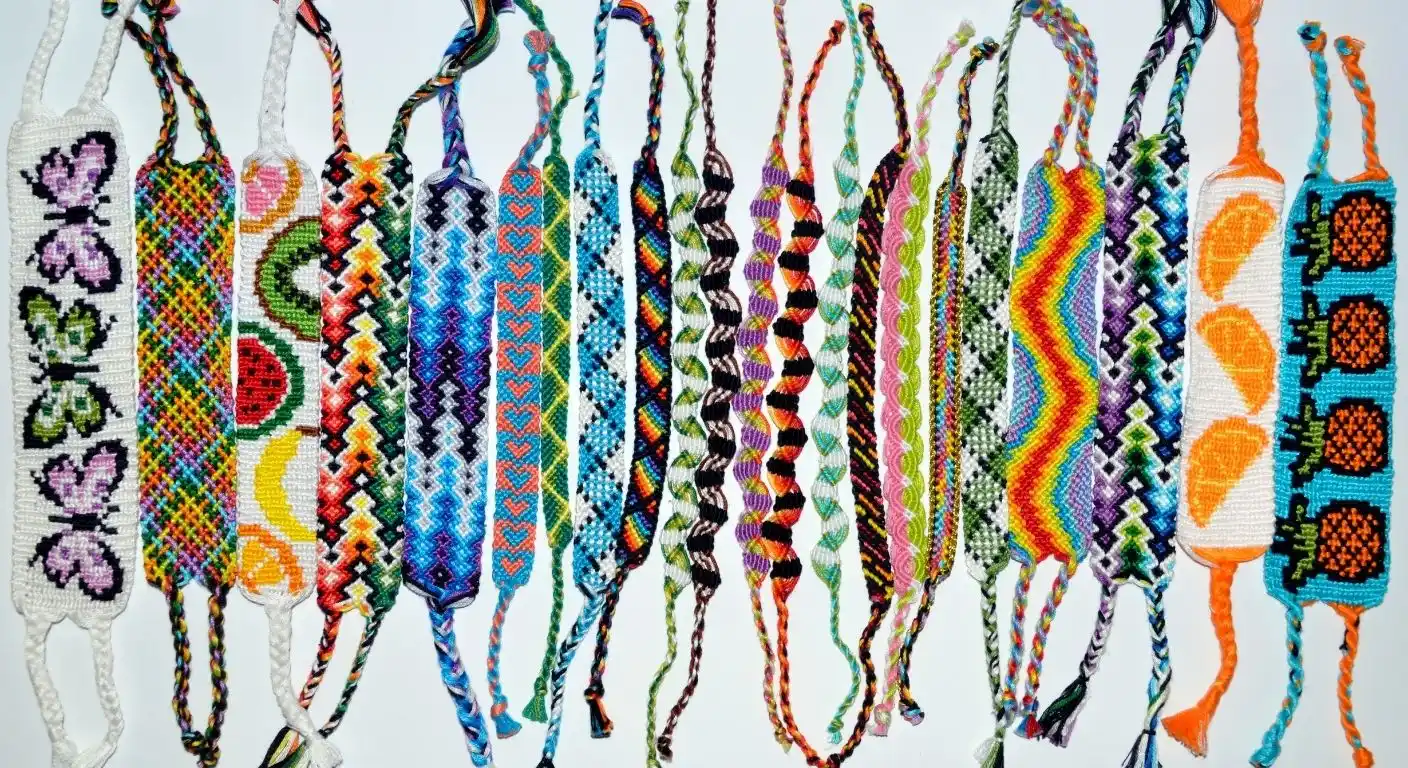
You’ll find all sorts of different patterns, like chevrons, braids, stripes, hearts, and so much more. This basic striped bracelet can be made as wide as you want, but it’s recommended to start with 5-6 strands for your first attempt.
Conclusion
Making friendship bracelets is more than a craft—it’s a ritual of connection that transforms simple thread into meaningful tokens of friendship.
Whether you’re creating your first twisted bracelet at age five or perfecting complex chevron patterns as a teenager, the joy comes from the knots you tie and the friends you give them to.
You didn’t come here to be perfect; you came here to make something with your own hands and share a little joy.
Start with the pattern that excites you, practice patience with your learning process, and remember that every friendship bracelet carries the story of your effort and care.
The best part? Watching your friend tie it on their wrist knowing you made it with them in mind.
Frequently Asked Questions
Q1: How long does it take to make a friendship bracelet?
A: Simple twisted bracelets take 2-5 minutes; three-strand braids take 15-30 minutes; patterned bracelets (chevron, candy stripe) take 45-90 minutes depending on your skill level and pattern complexity.
Q2: What’s the difference between embroidery floss and yarn for bracelets?
A: Embroidery floss creates thinner, more detailed bracelets with intricate patterns; yarn creates thicker, chunkier bracelets that work faster and are easier for young children to handle.
Q3: Can I use regular thread instead of embroidery floss?
A: Regular sewing thread is too thin and frays easily; embroidery floss is specifically designed for strength and color vibrancy—invest the extra dollar or two.
Q4: How many strands should I use for my first bracelet?
A: Start with 3-4 strands for braiding methods; use 4-6 strands for knot-based patterns like chevron. More strands = wider bracelet but more complex tension management.
Q5: What if my bracelet is too loose or too tight?
A: Loose: Use the two-finger rule (enough space for two fingers between bracelet and wrist). Tight: Add 1-2 inches to your pattern. You can always adjust the tightness of individual knots as you work.
Q6: Do friendship bracelets wash out or fade?
A: Quality embroidery floss is colorfast and designed to last. Hand wash gently with mild soap and avoid prolonged soaking or hot water to prevent fading over time.
Q7: Can adults wear friendship bracelets?
A: Absolutely! Modern friendship bracelets are fashion-forward accessories. Stack several together for a bohemian look, or wear a single sophisticated pattern.