15 Everyday Wreath Ideas That Are Not Seasonal

Most wreaths get retired the minute the calendar flips. You hang something orange in October, swap it for red and green in December, then scramble for a placeholder the rest of the year.
These everyday wreath ideas skip that cycle entirely. Instead of leaning on pumpkins, ornaments, or anything tied to a single holiday, they lean on texture, restraint, and color choices that don’t announce a season the moment someone walks up your steps.
What ties all fifteen together isn’t a single look. Some go dense and wild with dried botanicals, others strip down to one glossy leaf and an oversized ribbon.
A few lean pastel, a few go jewel-toned, one skips flowers altogether in favor of pinecones and acorns.
What they share is a refusal to commit to red-and-orange or red-and-green as the default palette, which is really the only thing that makes a wreath feel stuck to one month.
If your door has been sitting bare between holidays, or you’re tired of buying three wreaths a year, there’s a style below worth stealing.
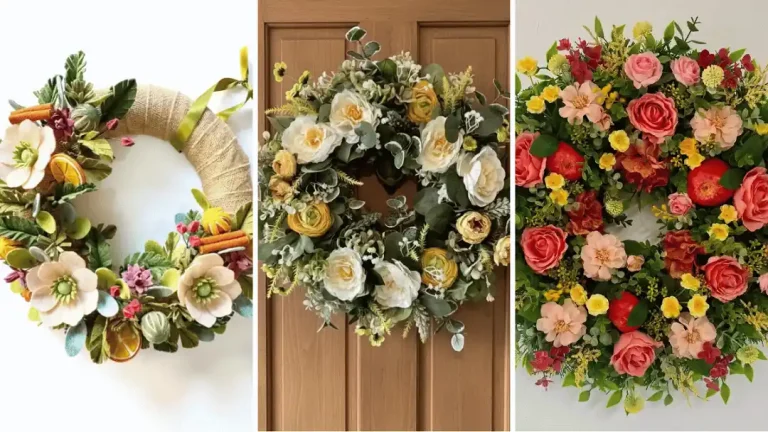
15 Everyday Wreath Ideas That Are Not Seasonal
1. A Loose Greenery Wreath With Wildflower Pops That Never Reads Seasonal
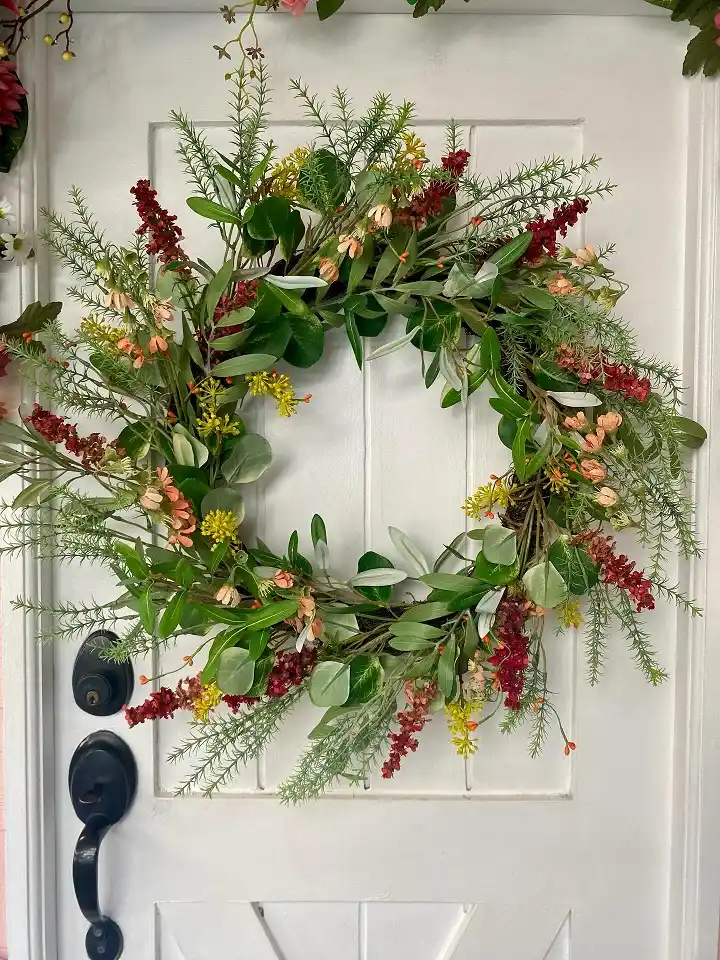
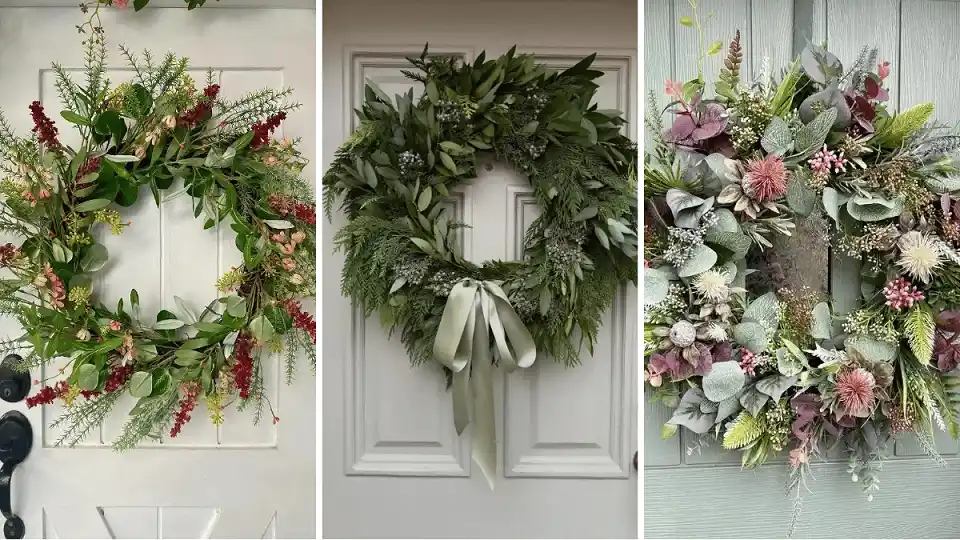
This one works because it skips the obvious wreath shape. Instead of a tight, even circle, the greenery is layered unevenly, longer on some sides than others, so it looks more like something you’d cut from a garden than something bought at a craft store.
What’s actually holding it together:
- A base of mixed greenery, some smooth eucalyptus-style leaves, some feathery fern-like sprigs, for texture contrast
- Small wine-red flower spikes tucked in at a few points, not evenly spaced
- Soft yellow and peachy-coral blooms scattered in, never clustered in one spot
- An open center so the door itself still shows through
Skip anything with a fixed color story tied to a holiday. Wine red and mustard yellow read as rich and grounded year round, not autumn-specific, as long as you keep the greenery as the dominant note.
2. An All-Green Wreath That Trades Color For Texture
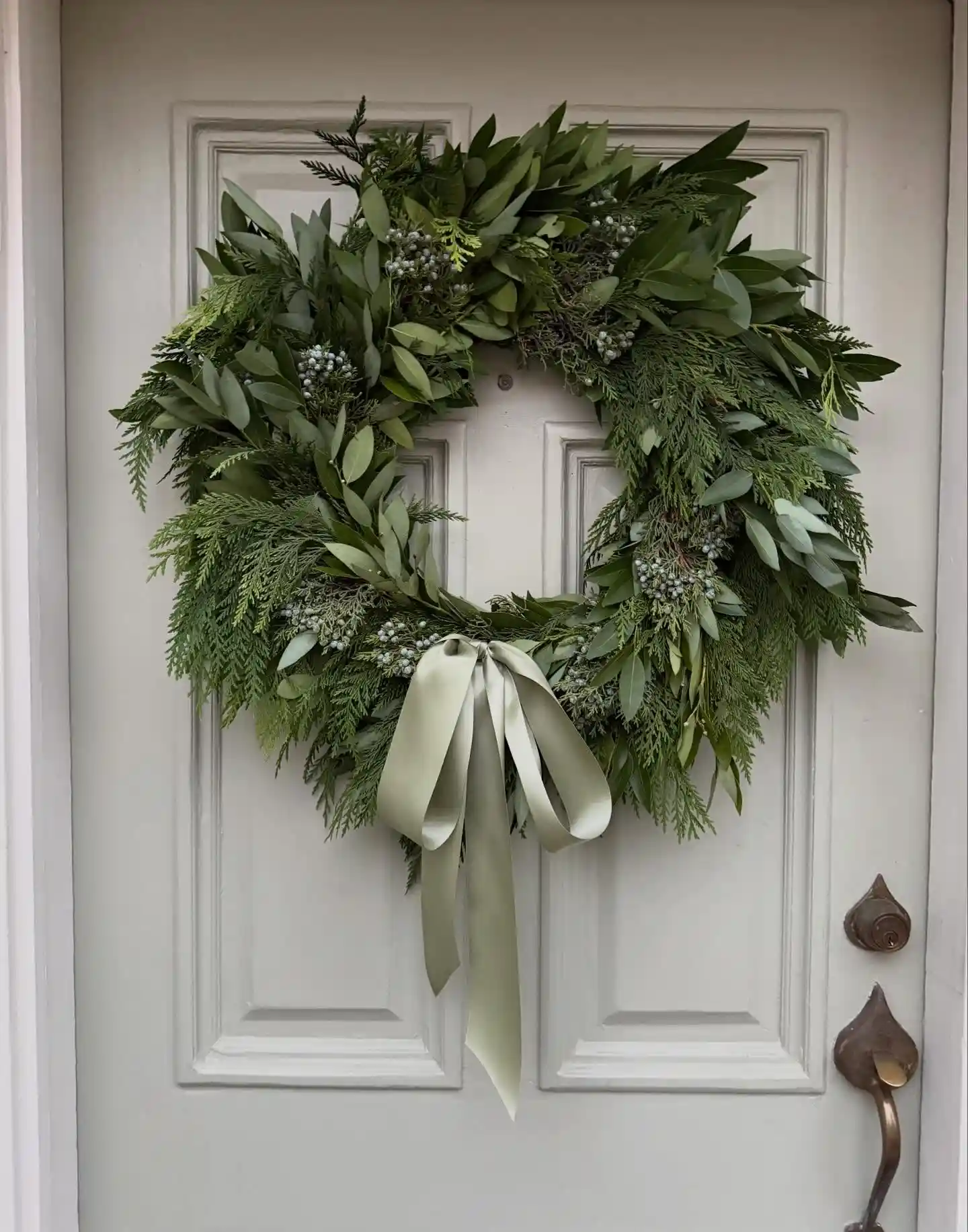
Skip color altogether and lean on shape instead. Broad bay-style leaves, feathery cedar, and dusty blue-green berries sit together here without a single bloom, and it still reads as rich and layered because the textures are doing all the work.
A soft satin ribbon in a muted sage tone finishes it off without adding a new color to track.
Green-only wreaths like this one are the easiest to keep up all year, since there is no palette to swap out when the season changes.
Pair a broad, flat leaf with something feathery, like cedar or fern, so the eye has contrast without color.
Dusty blue-green berry clusters add depth without breaking the all-green look.
A muted sage or stone-toned satin bow keeps it soft and works with any front door color.
3. A Dried-Botanical Wreath That Reads More Like a Garden Cutting Than a Craft Piece
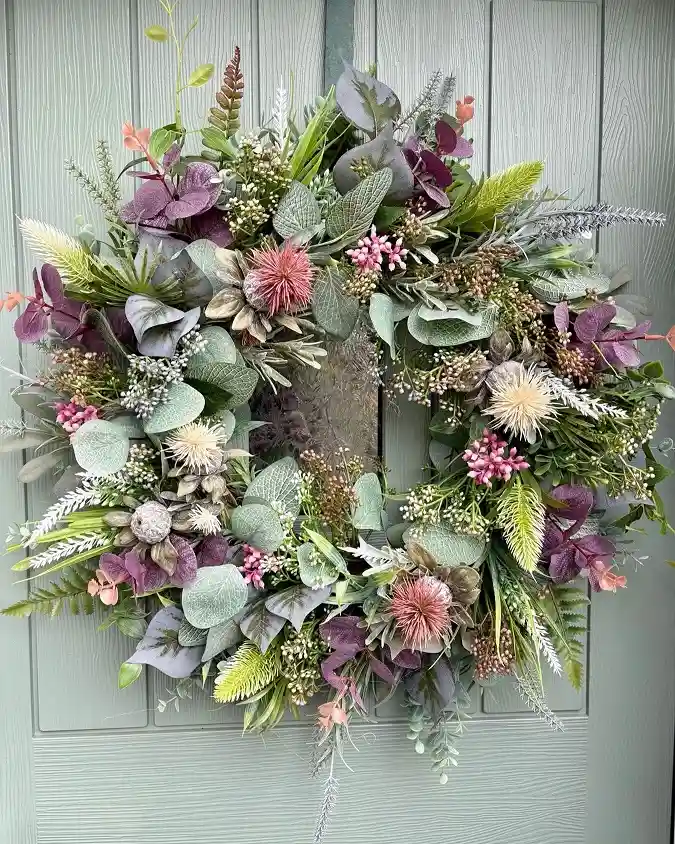
Muted purples, dusty pink, sage, and cream carry this one, and nothing here is a single bold statement bloom.
Preserved eucalyptus with a purple cast, silvery fern fronds, and small protea-style flowers are layered so densely that the wreath looks like it was gathered from a garden rather than built from a kit.
What makes it work is restraint in the wrong place and excess in the right one. The colors stay muted and close together on the wheel, but the texture goes all in, feathery next to broad next to spiky, so your eye keeps finding something new.
It also sits especially well against a colored door, since the muted tones read as an extension of the paint rather than a contrast to it, which is part of why it never feels tied to one holiday or one month.
Density is what actually sells the look. Pack the greenery in tight first, let it overlap and layer, and only then start tucking in the dried blooms one at a time so nothing looks placed.
Ties the muted palette together and reads as neutral, not seasonal.
Give texture and a focal point without the fragility of fresh flowers.
Break up the density and catch light so the wreath doesn’t read flat.
4. A White-And-Green Wreath That Reads Like a Fresh Bouquet Left On The Door
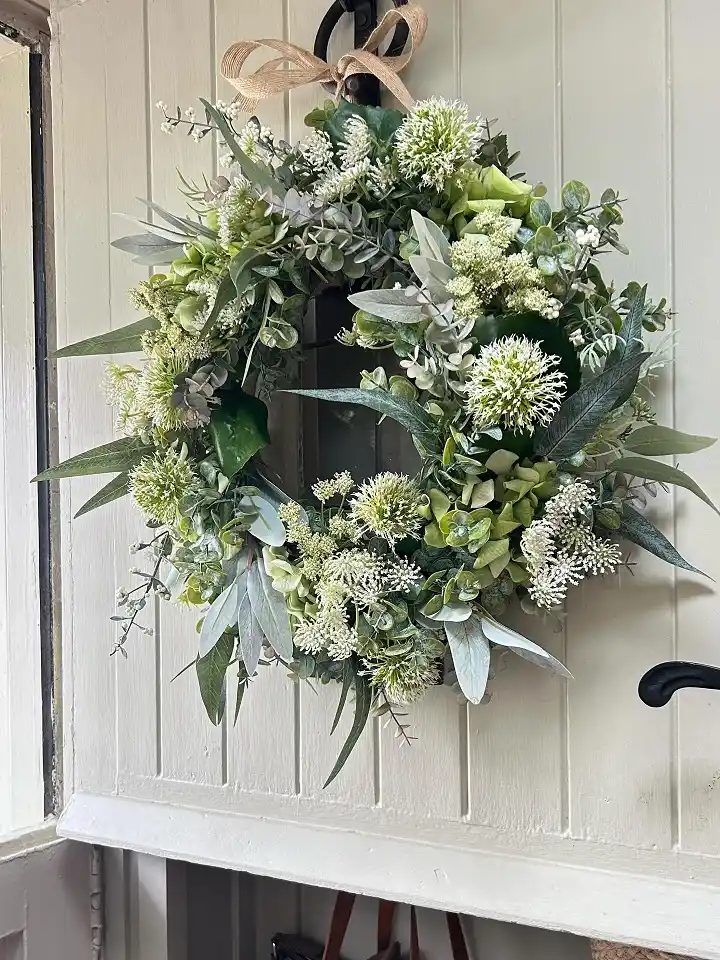
White allium-style blooms, small green hydrangea clusters, and silvery dusty miller leaves keep this one in a tight two-color range, so it feels more like a florist arrangement propped against the door than a traditional wreath.
A loose jute bow at the top adds warmth without introducing a third color into the mix, and it stays soft enough to work whether your door is painted white, sage, or something darker.
The trick to this look is letting go of the perfect circle. Some stems reach up past the top of the ring toward the bow, others hang down loose at the bottom, and the whole thing sits slightly overlapping the doorframe here.
Subscribe to DIY Craft Bloom
Get updates on the latest posts and more from DIY Craft Bloom straight to your inbox.
That imperfect edge is what makes it look gathered instead of manufactured, and it photographs better for it too.
Because the palette never leans into orange, red, or gold, it skips reading as autumn even though the shape and fullness could easily pass for a fall wreath.
Stick to two colors, white blooms plus one shade of green, so it stays calm.
Let some leaves and stems hang loose past the ring for a gathered look.
A bright or patterned ribbon, it fights the soft palette instead of framing it.
Trimming every stem flush, it flattens the shape and loses the bouquet feel.
5. A Grassy, Textured Wreath Where the Ribbon Does Half the Work
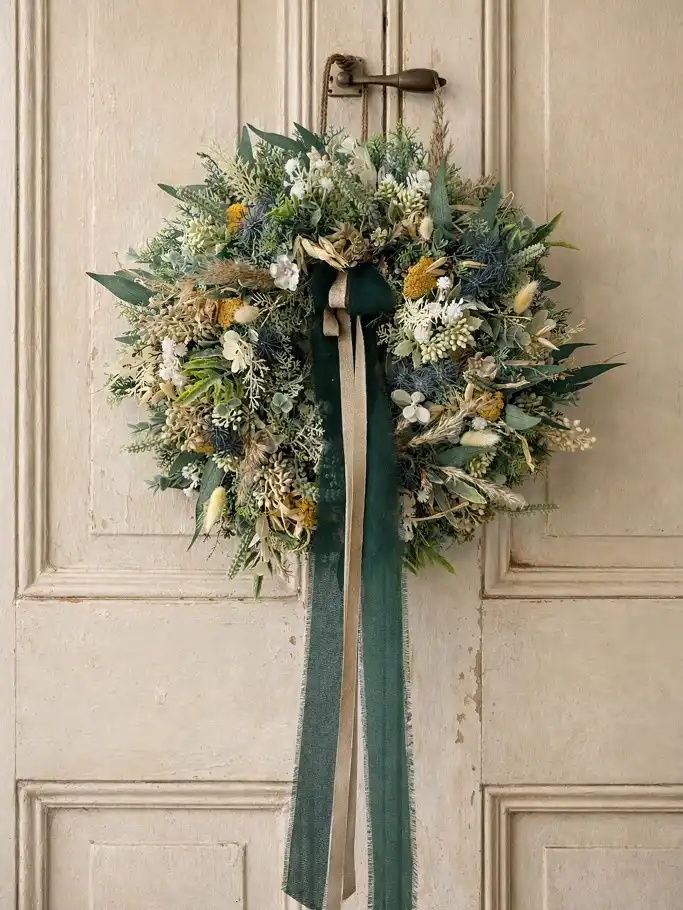
The ribbon does half the work here. A wide, deep green velvet tail with a thin gold edge runs almost to the floor, and it’s what turns an otherwise quiet mix of dried grasses and small blooms into something that feels finished rather than half done.
The wreath itself stays low-key on purpose: pampas-style grass, tiny yellow craspedia balls, white statice, and a few dusty blue-green sprigs, none of it shouting for attention.
That restraint is the point. Because nothing in the wreath is a bold seasonal color, the whole thing can hang from spring through winter without looking out of place, and swapping the ribbon color is really the only “refresh” it ever needs.
A dark, substantial ribbon like this one also does more visual weight-lifting than three extra flowers would.
6. A Foraged-Looking Wreath Built From Unripe Fruit and Wild Seed Heads
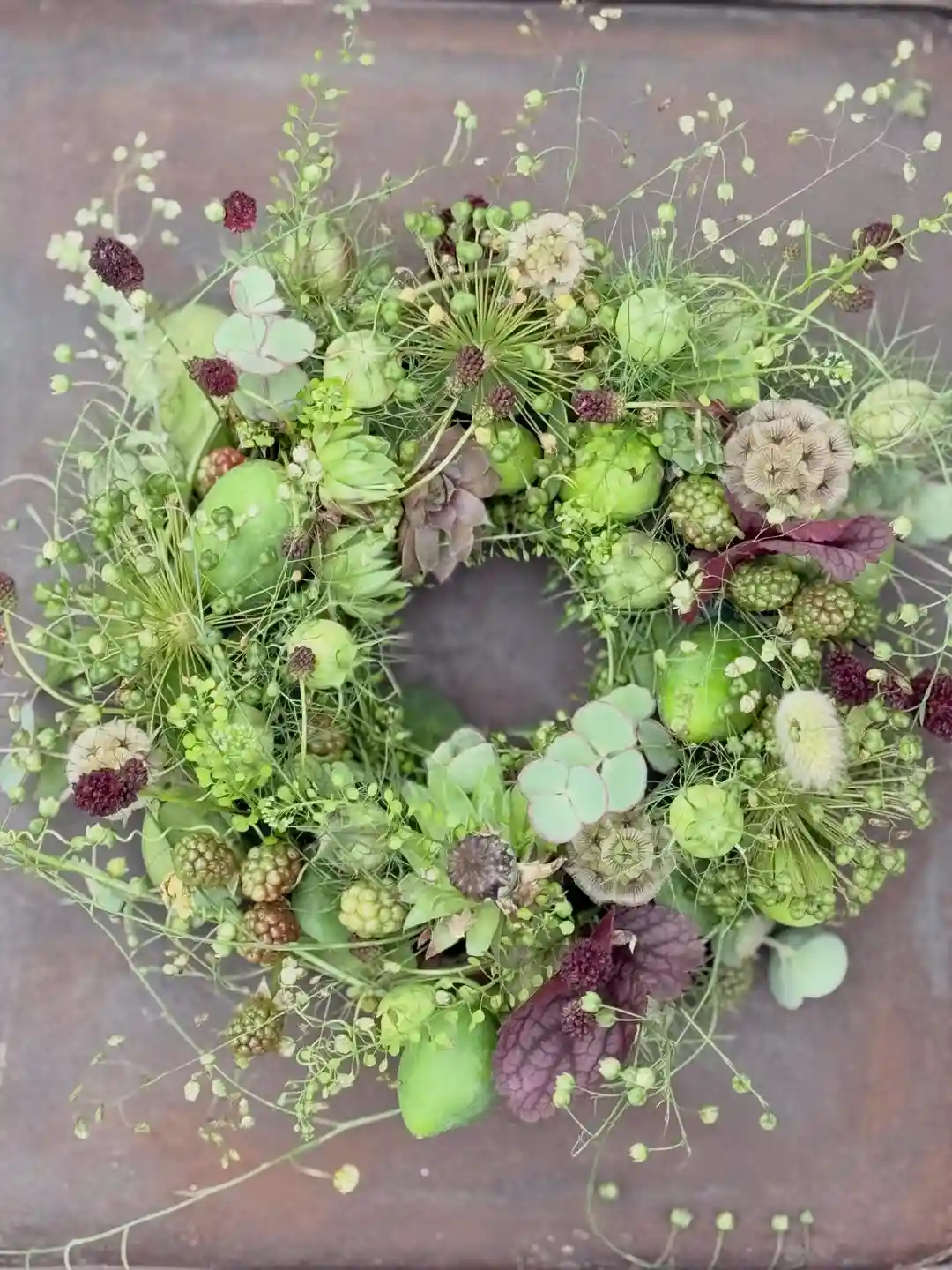
Small green fruit-like pods sit next to wispy grass seed heads, wine-colored sanguisorba blooms, and heart-shaped purple leaves here, and none of it feels arranged in the usual sense.
It looks closer to something pulled straight from a hedgerow, stems and all, than a wreath assembled from a supply list.
The wispy bits matter as much as the solid ones. Those thin, branching grass seed stems reaching out past the main ring keep the whole thing from looking dense or heavy, even with this much packed into it.
Photographed flat like this, laid on a rusted surface instead of hung on a door, it also shows how much texture is really doing the work once you take the door and the ribbon out of the equation.
Save the trim scissors for last. Cutting back the wispy stems too early is the fastest way to lose the wild, gathered look this style depends on.
7. A Faux Wreath That Convincingly Fakes the Fresh Flower Market Look
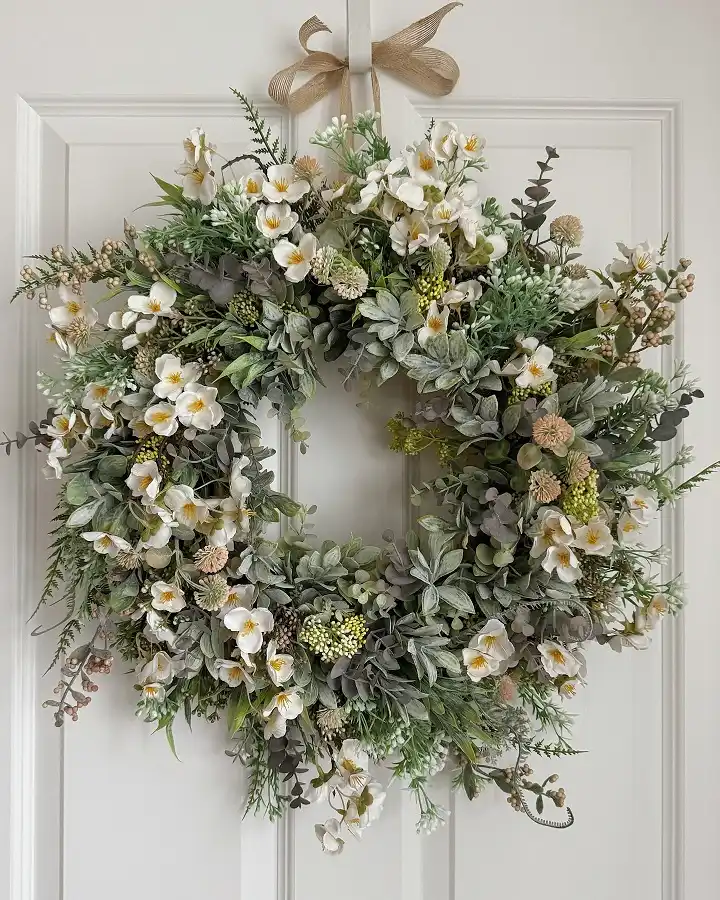
Cream flowers with soft yellow centers, likely a faux hellebore or anemone style, are scattered generously across a base of dusty miller leaves, feathery greenery, and small tan pom-pom blooms.
What sells the realism is the density and the mixed leaf shapes underneath, not just the flowers themselves, since a wreath that leans too hard on one bloom type tends to read as artificial no matter how good the individual flowers look.
A sheer white ribbon paired with a burlap bow at the top keeps the hanging hardware from competing with all that white and cream below it.
| Fresh version | Faux version |
|---|---|
| Needs replacing every one to two weeks. | Holds this exact look year round. |
| Sun and rain fade the blooms fast. | Handles a covered porch with no fading. |
| Higher upfront and ongoing cost. | One cost, no upkeep after that. |
8. A Big-Bloom Wreath Where Fewer, Larger Flowers Do the Heavy Lifting
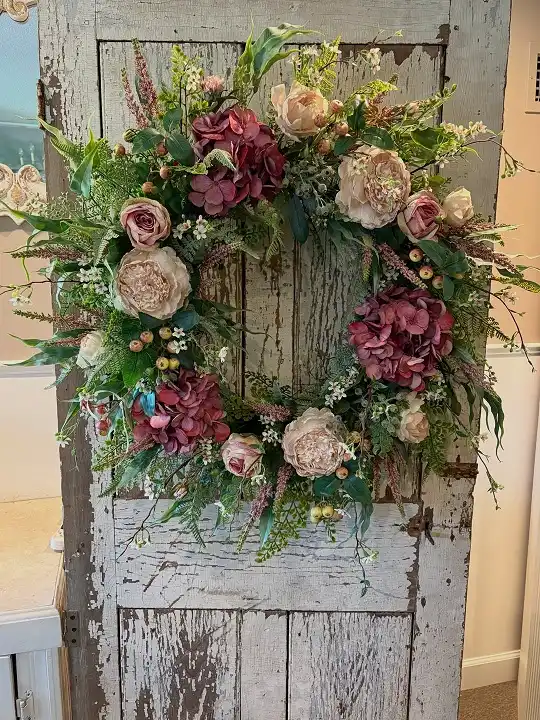
Large blush peonies and dark rose blooms sit at a handful of points around the ring here, spaced with real breathing room between them, while deep pink hydrangea clusters fill the gaps lower down.
It’s a different math than most of the wreaths in this roundup. Instead of dozens of small blooms scattered evenly, a handful of oversized flowers carry the whole thing, and the loose greenery, ferny sprigs, and small white filler flowers around them just support the show rather than compete with it.
That spacing is the real lesson here. Crowd big blooms too close together and they start to fight each other for attention.
Give each one its own patch of greenery to sit in, the way this wreath does, and even three or four flowers can look full.
Fewer, bigger blooms with room to breathe read as more expensive than a wreath packed edge to edge with small flowers.
9. A Leaf-and-Berry Base That Lets an Oversized Ribbon Steal the Show
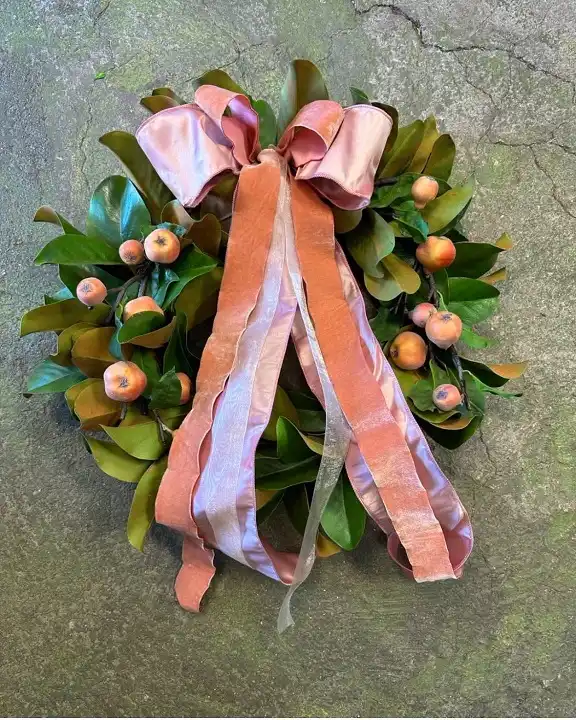
Glossy, broad leaves carry this one, and there is barely anything else going on besides them.
Small orange-apricot berries are tucked in here and there for a little color, but the real focal point is the ribbon: a wide velvet bow with two-tone streamers that cascade well past the bottom of the wreath itself.
It’s proof that a wreath doesn’t need a busy mix of blooms to feel finished, sometimes one dramatic element is enough to carry the whole thing.
Subscribe to DIY Craft Bloom
Get updates on the latest posts and more from DIY Craft Bloom straight to your inbox.
10. A Jewel-Toned Wildflower Wreath That Skips the Usual Holiday Colors on Purpose
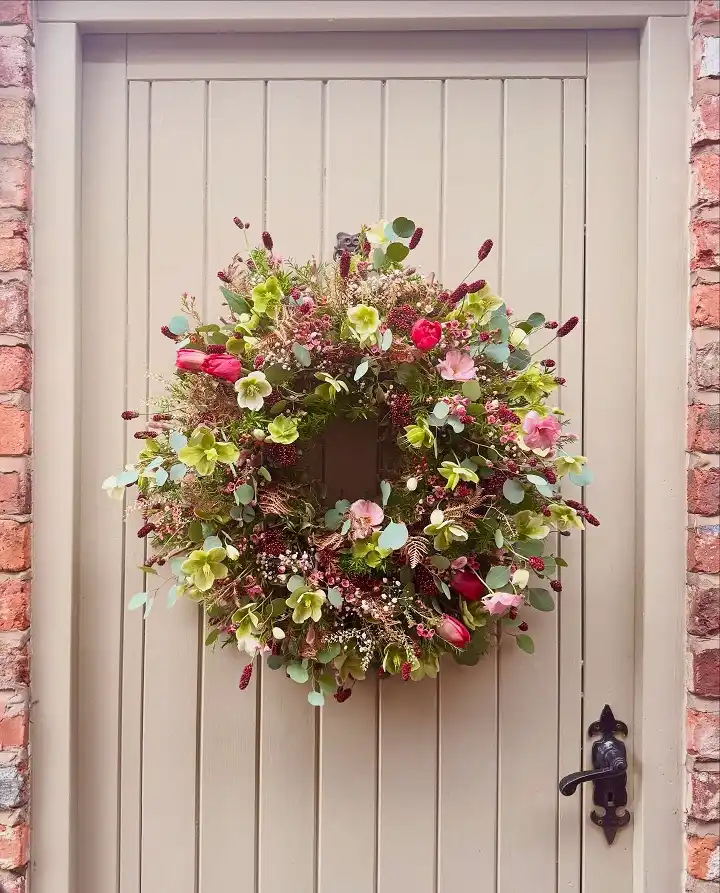
Magenta tulips, soft pink ranunculus, chartreuse hellebores, and deep burgundy sanguisorba spikes crowd together here in a way that reads more like a cutting garden bouquet than a store-bought wreath.
Blue-green eucalyptus and wispy dried grasses fill in the spaces between blooms, keeping the whole thing from tipping into looking like a bunch of cut flowers stuck to a ring.
The color choice is doing the real work of keeping this non-seasonal. Pink, magenta, and green skip past the reds and oranges that usually signal a holiday, and the jewel-tone mix reads as garden-fresh in April just as easily as it would in October.
Against a neutral beige door, those saturated colors get to be the whole story instead of competing with anything else.
11. A Pinecone-and-Acorn Wreath That Reads Woodland, Not Autumn
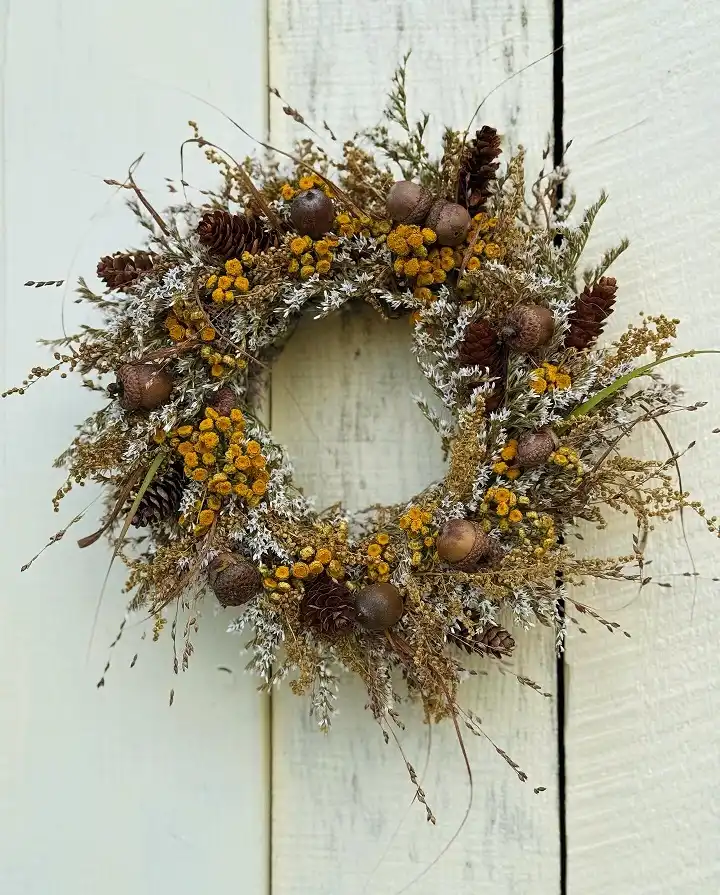
Mustard yellow tansy clusters, small pinecones, real acorns, and a wash of white dried baby’s breath make up this one, and the brown-and-gold palette could easily get filed under fall.
What keeps it from landing there is the framing: nothing here points to a holiday specifically, it’s closer to what you’d gather on a walk through the woods any month the ground is dry.
Two things separate a woodland wreath from a fall wreath using the same materials.
Skip anything shaped like a leaf, maple or oak leaves are the giveaway, and keep the color story muted gold and brown rather than full orange and red.
Dried, sturdy materials like these also hold up outdoors far longer than fresh greenery, so this is one of the lower-maintenance styles in the whole roundup.
12. A Rope Hoop Wreath That Leaves Half the Ring Bare on Purpose
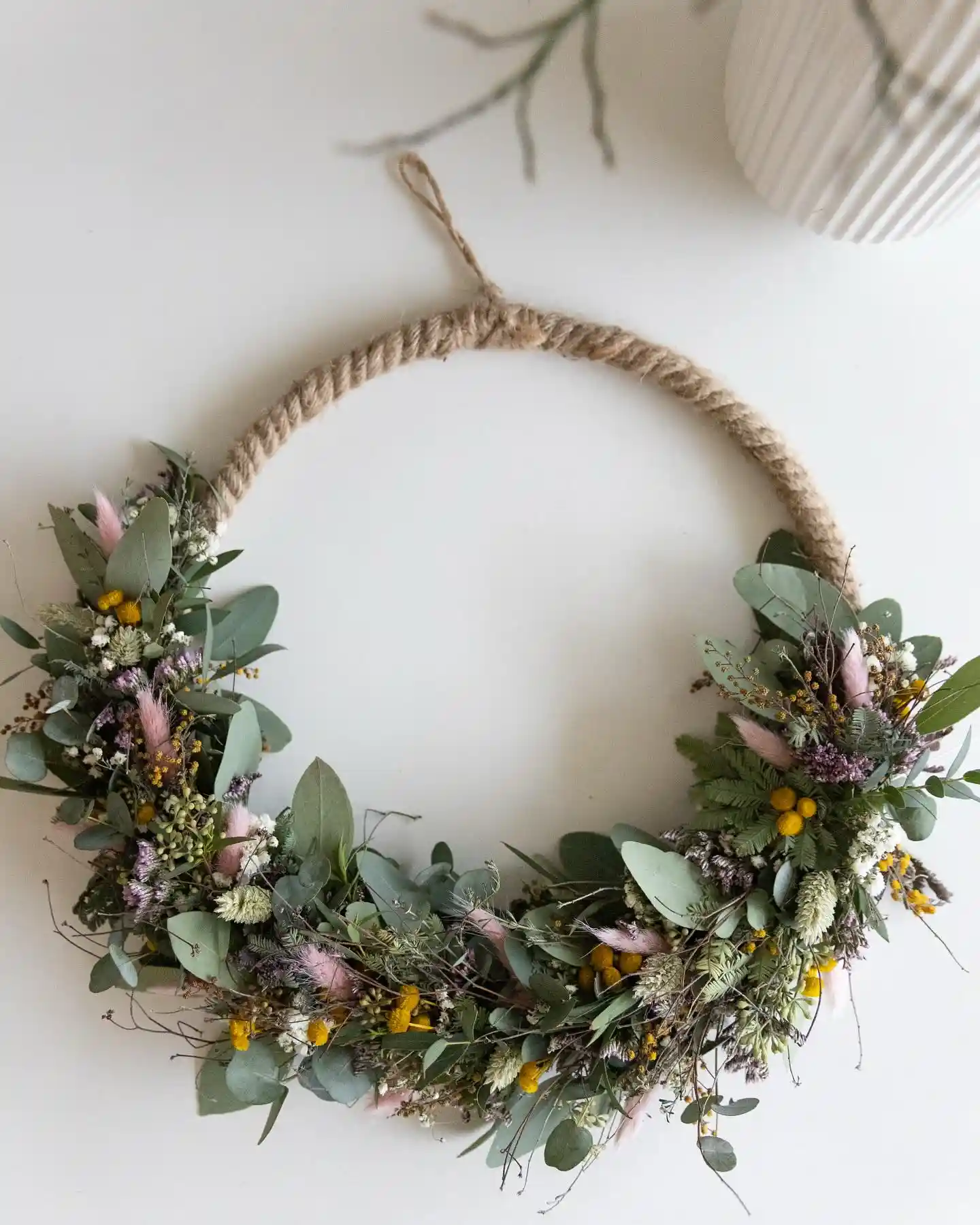
Rope replaces the usual wire or straw base here, and instead of covering it edge to edge, the greenery and dried blooms only wrap the bottom two-thirds.
The top curve stays exposed, thick jute rope with visible texture, which turns what could be a plain hoop into a design choice instead of an unfinished one.
Dusty pink bunny tail grass, small yellow craspedia, and pale lavender sprigs are tucked into a eucalyptus base along both lower sides.
This is one of the easier styles to build yourself, since you’re not trying to hide a full ring, just anchor florals at two points and let them trail toward the bottom.
13. A Pastel Mixed-Bloom Wreath Built Almost Entirely on Blue and Lavender
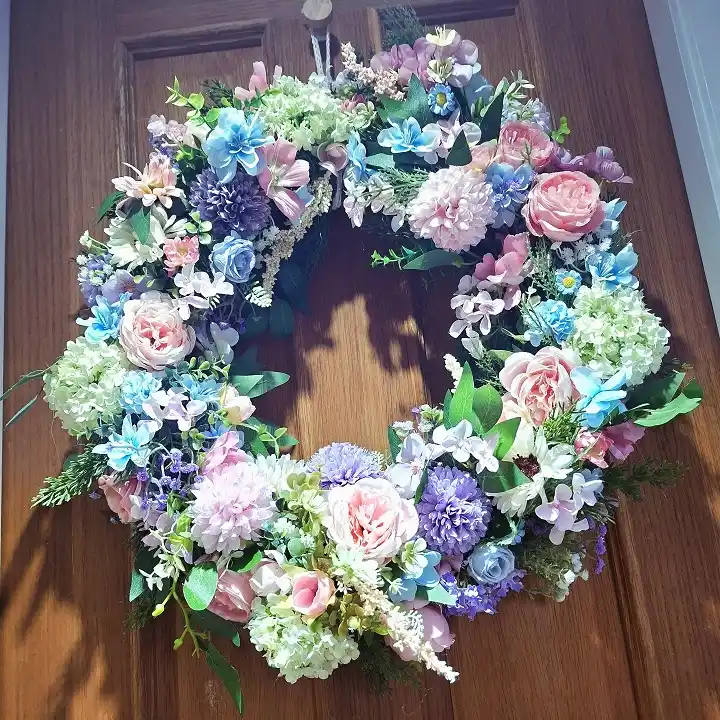
Peonies in soft pink sit next to lavender mums, sky blue hydrangea florets, and pale green blooms here, and the whole thing skews cooler and softer than almost every other wreath in this roundup.
It’s the kind of color story that usually gets labeled spring, but pull out the greenery accents and lean fully into the pastel palette and it reads more like a permanent garden piece than a seasonal marker.
Dense clustering is what keeps this from feeling scattered. The blooms sit shoulder to shoulder with almost no visible base showing through, so even with five or six different flower types in the mix, the overall effect stays cohesive instead of busy.
This style works best on a warm wood or dark door where the pastels get real contrast to pop against.
14. A Protea Wreath That Brings a Tropical Note Into an Everyday Rotation
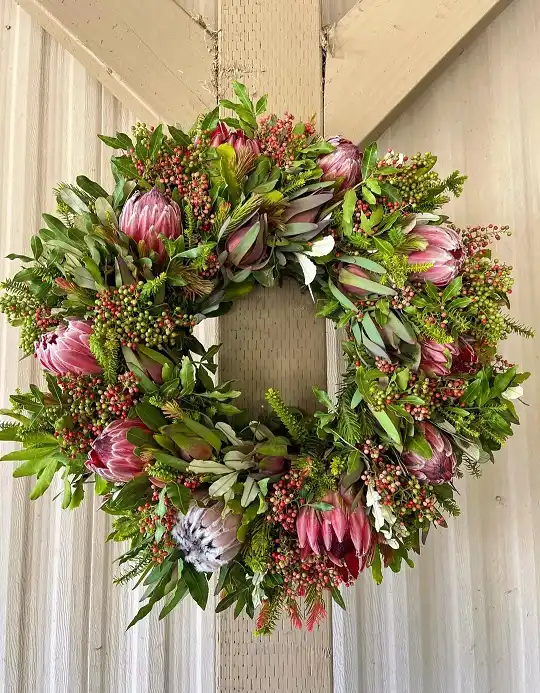
Spiky pink and mauve protea blooms anchor this one, paired with small clusters of red berries and loose green foliage that keeps the whole thing from feeling too formal.
Proteas read as exotic almost anywhere in the country, which is exactly why this wreath doesn’t slot into any obvious season, nobody associates that particular flower with a specific holiday.
The berry clusters do quieter work than they get credit for. Scattered in small groups rather than one dense mass, they add just enough texture and color variation to keep the eye moving without pulling focus from the protea itself.
Left alone, a wreath built only from big blooms like this can start to feel static, and the berries are what keeps it from getting there.
One statement flower plus a scattered second element beats one statement flower alone.
15. A Straw-Colored Dried Flower Wreath That Packs In a Full Spectrum of Color
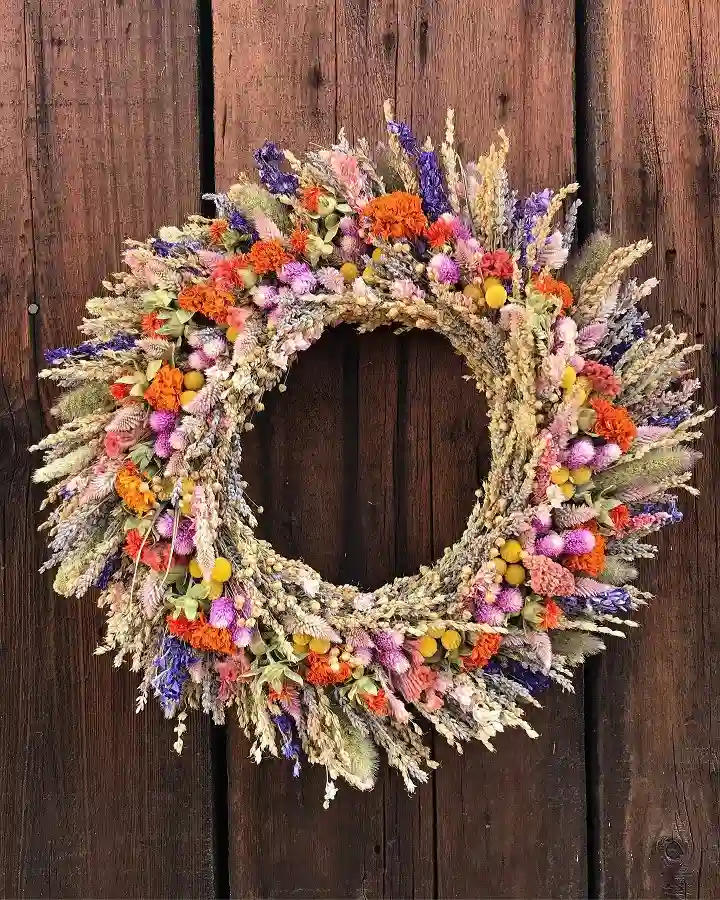
Purple larkspur, orange marigolds, hot pink statice, and small yellow craspedia balls are woven into a pale straw and wheat base here, and the effect is closer to a dried wildflower field than any single flower type.
Nothing in the mix reads as a holiday color on its own, red mixes with purple mixes with orange, and because it’s all dried rather than fresh, that busy palette holds steady instead of fading or wilting.
This is the wreath to reach for if the rest of your entryway leans neutral and needs one loud moment.
Everything else on this list plays it relatively calm, but a wreath this saturated works precisely because it’s the exception, not the rule, on a plain wood or painted door.
conclusion
There’s no single formula running through this list, and that’s really the point. A wreath built from one glossy leaf and a dramatic ribbon works just as well as one packed edge to edge with dried wildflowers, as long as the colors and materials aren’t shouting a specific holiday.
Pick whichever direction matches your door and how much upkeep you actually want to deal with, since dried and faux versions will outlast fresh greenery by months.