17 Grapevine Wreath Decorating Ideas

If you have ever stood in front of a bare grapevine base wondering what to do with it, you are not alone. The wreath itself is only half the project.
The real decisions come after, what florals to add, how full to build the cluster, whether a bow earns its spot or gets left off entirely.
That is where most of these grapevine wreath ideas start, not with a shopping list but with a single choice about shape, color, or texture that changes the whole feel of the door.
This roundup pulls from real wreaths people have actually built and hung, from a blackened vine dressed in blush anemones to a bare ring with nothing but a thin band of dried strawflowers.
Some lean into a single dramatic bow. Others skip ribbon altogether and let foxtail millet or a length of jute twine do that job instead.
A few keep most of the vine exposed on purpose, because sometimes the wood is the best part of the wreath and it deserves to show.
17 Grapevine Wreath Decorating Ideas
1. Blush Pumpkin Swag With a Velvet and Gold Bow
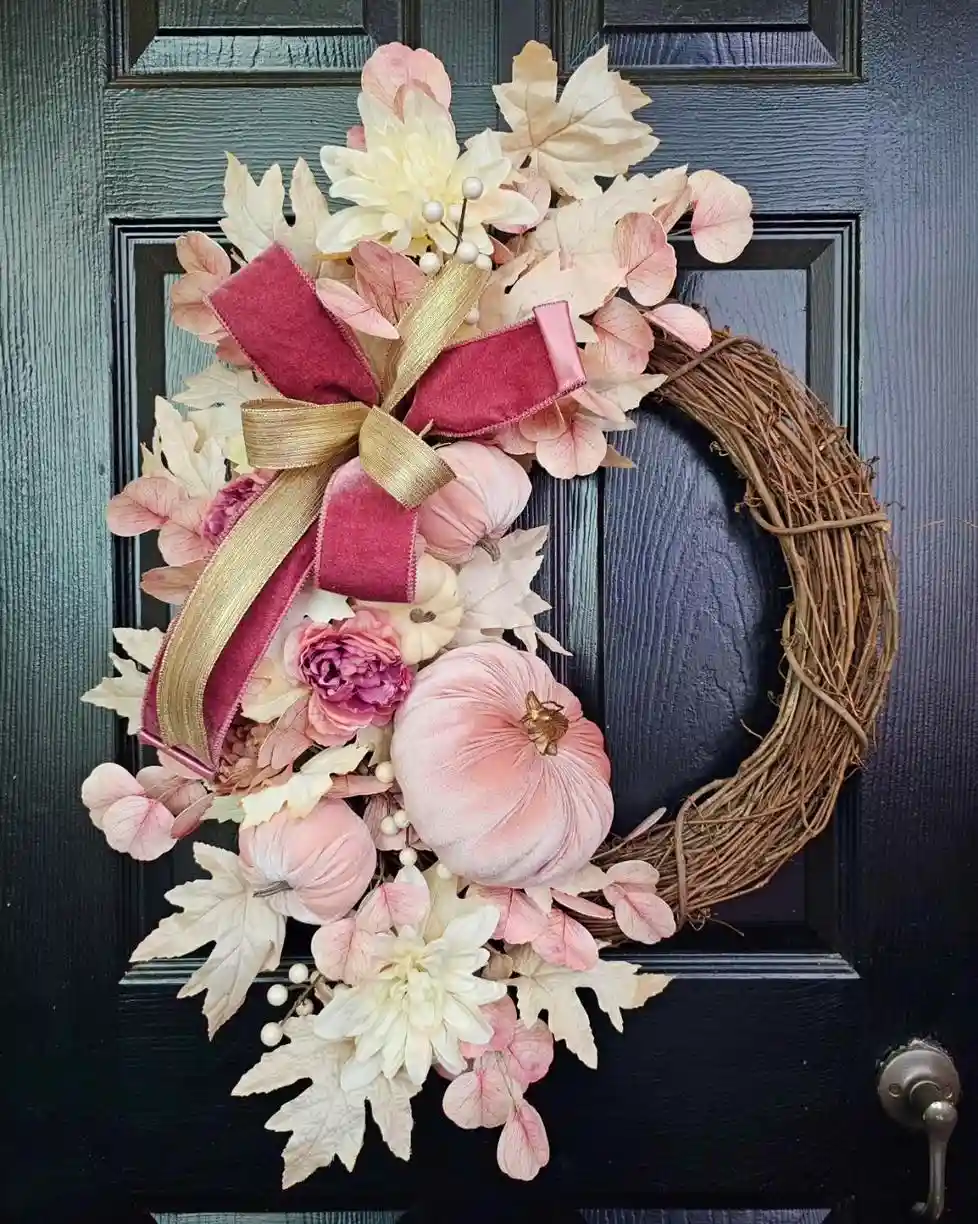
Half the vine stays bare on this one, and that’s exactly what makes it work. The florals cluster into a heavy swag on one side, blush velvet pumpkins nestled in among cream dahlias and soft pink maple leaves, while the rest of the ring shows off its natural woven texture.
The real star is the bow. A wide burgundy velvet ribbon crosses over a shimmery gold mesh one, tied loose and asymmetrical right at the center of the cluster. It’s the kind of detail that photographs well from across the yard.
To recreate it:
- Start with a fuller grapevine base so the exposed side still looks intentional, not empty
- Layer florals from the back out, big blooms first, then leaves, then berries last
- Add the ribbon after the florals are set, not before, so it tucks in naturally
2. Frosted Greenery Wreath With Red Berry Sprays and a Double Bow
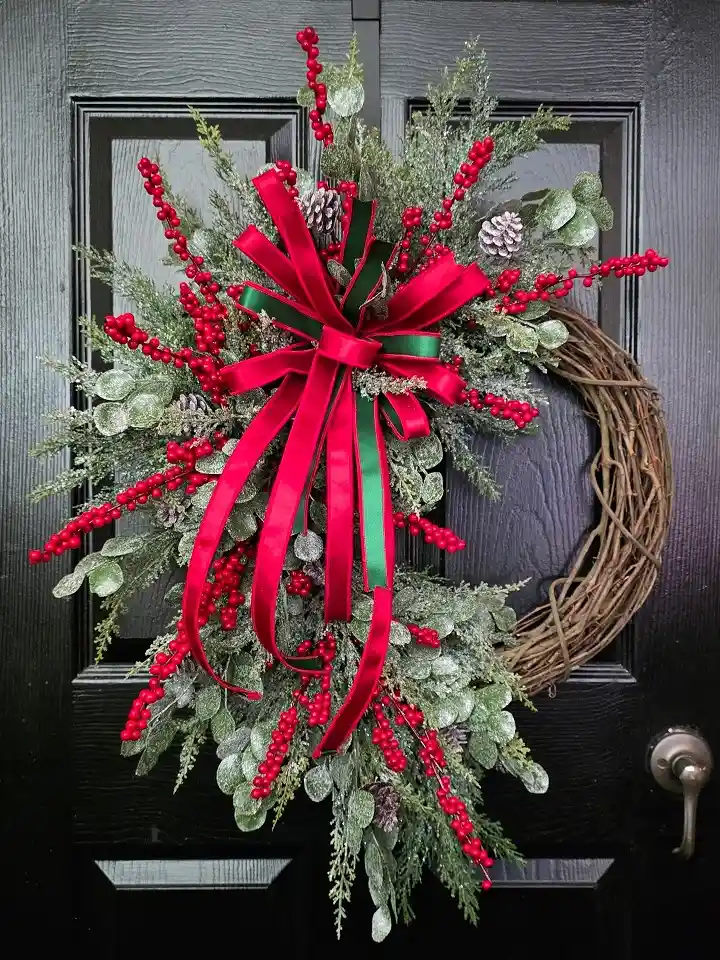
Snow dusted eucalyptus and cedar branches shoot out in every direction here, giving the wreath a wild, just cut from the forest feel instead of a tidy round shape.
Bright red berry sprays poke through the frosted green at odd angles, which is what keeps the whole thing from looking stiff.
At the center sits a two color bow, a deep red satin ribbon layered over a darker green one, both left long enough to trail down past the greenery. Small pinecones tucked into the mix add weight without adding bulk.
Watch out for using too many tight, matched sprigs. The uneven, slightly wild placement of the berry stems is what sells the natural look. Perfectly symmetrical branches read artificial fast.
Uneven berry sprays and a trailing double bow do more for a holiday wreath than any amount of extra greenery.
3. Bottom-Heavy Floral Ring With a Raffia Hanger
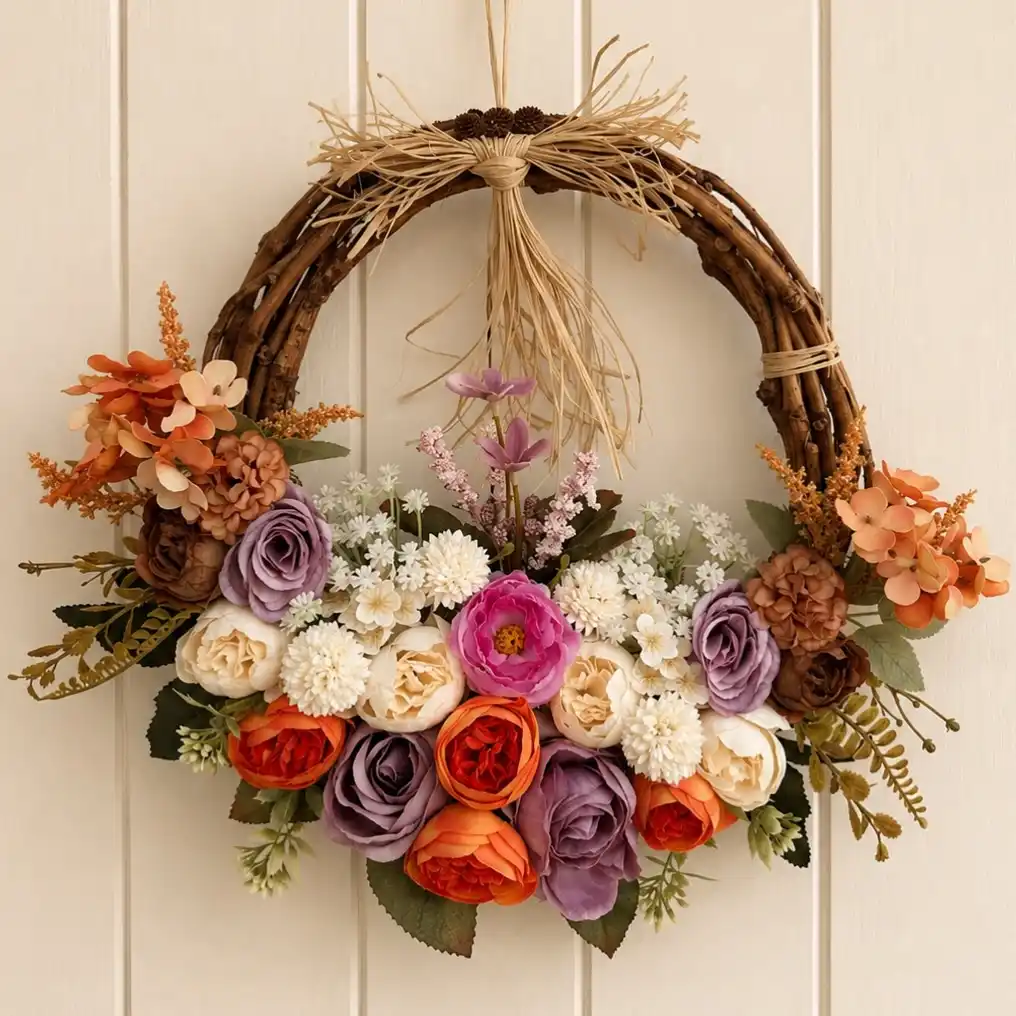
Purple, orange, and cream rarely get put in the same bouquet, but here they work because the color weight sits low.
Every bloom, from the plum roses to the burnt orange ranunculus, is packed into the bottom third of the ring, leaving the top bare except for a loose raffia bow and a couple of pinecones.
That raffia detail matters more than it looks like it should. Instead of a stiff ribbon, the natural fringe softens the whole piece and doubles as the hanger, so there’s no separate hook or wire showing.
Rule of thumb: when you’re mixing this many colors, keep the shape simple. One dense cluster reads as designed, scattered blooms read as messy.
| Warm Tones | Cool Tones |
|---|---|
| Burnt orange ranunculus for punch. | Dusty plum roses for depth. |
| Rust hydrangea clusters up top. | Lavender sprigs woven through center. |
| Cream peonies to soften the mix. | White filler blooms to cool it down. |
4. Peony and Fern Wreath With a Layered Plaid Bow
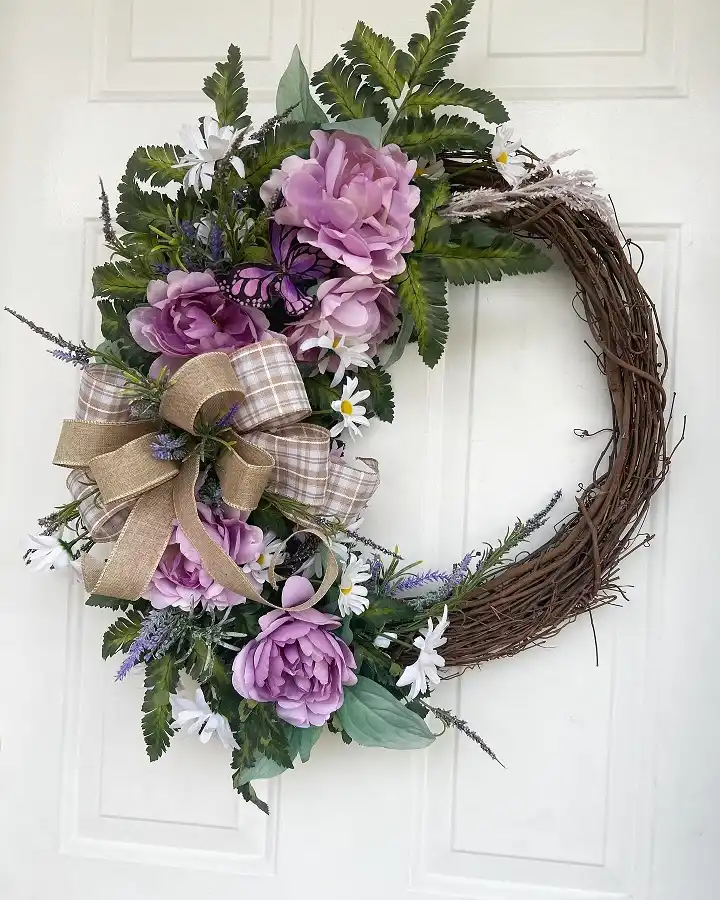
Purple peonies climb up one side of this wreath while ferns fan out behind them, giving the arrangement real height instead of the usual flat cluster look.
Two small butterflies rest right in the greenery, easy to miss at first glance but a nice touch once you spot them.
The bow does a lot of the work here. It’s actually two ribbons layered together, a plaid one over a solid burlap, tied full and loose so the tails spill down past the flowers instead of hanging stiff.
- Lavender sprigs tucked low, almost hidden in the greenery
- White daisies scattered for contrast against the purple
- Sage green leaves used as a base layer under everything else
The bare vine on the lower right keeps the whole thing from feeling too full.
5. Two-Cluster Sunflower Wreath With a Plaid Bow Anchor
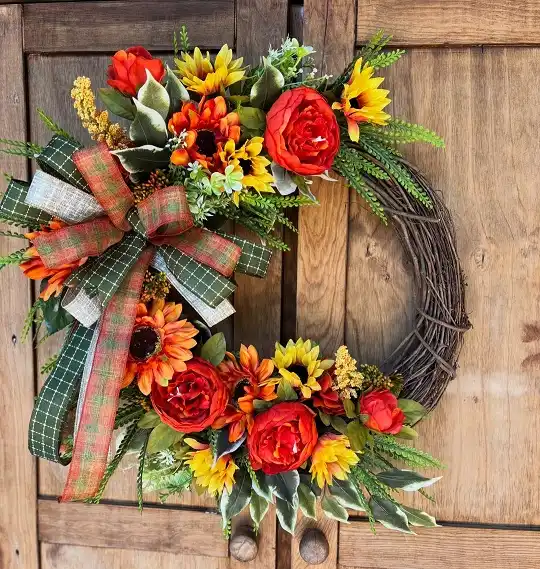
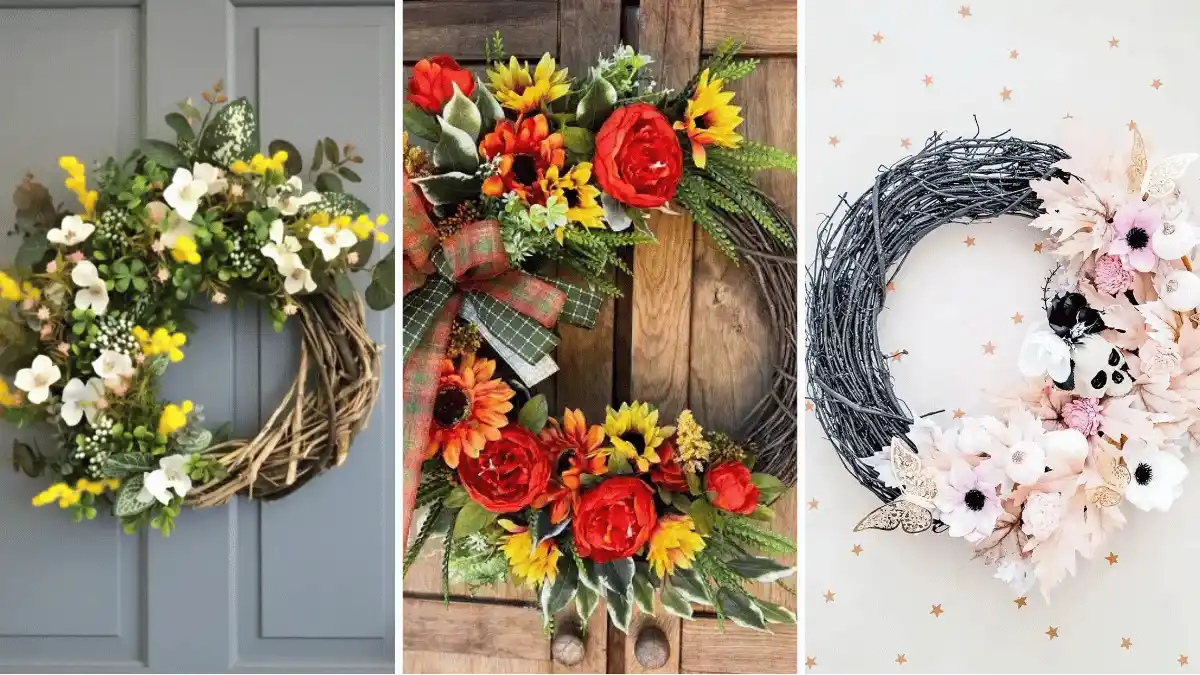
This one skips the single big cluster and splits the florals into two separate groups, one at the top and one lower down, with plenty of bare vine and a plaid bow bridging the gap between them.
Sunflowers and red peonies repeat in both spots, which keeps the two ends feeling connected instead of like separate decorations.
Green trailing greenery threads through both clusters and down past the bow tails, softening the transition between the woven vine and the flowers.
Good to know: splitting the florals like this works best on a wider door or a larger wreath size. On a smaller base, the gap can end up looking unfinished instead of intentional.
6. Dried Wildflower Arc With a Pale Pink Bow at the Base
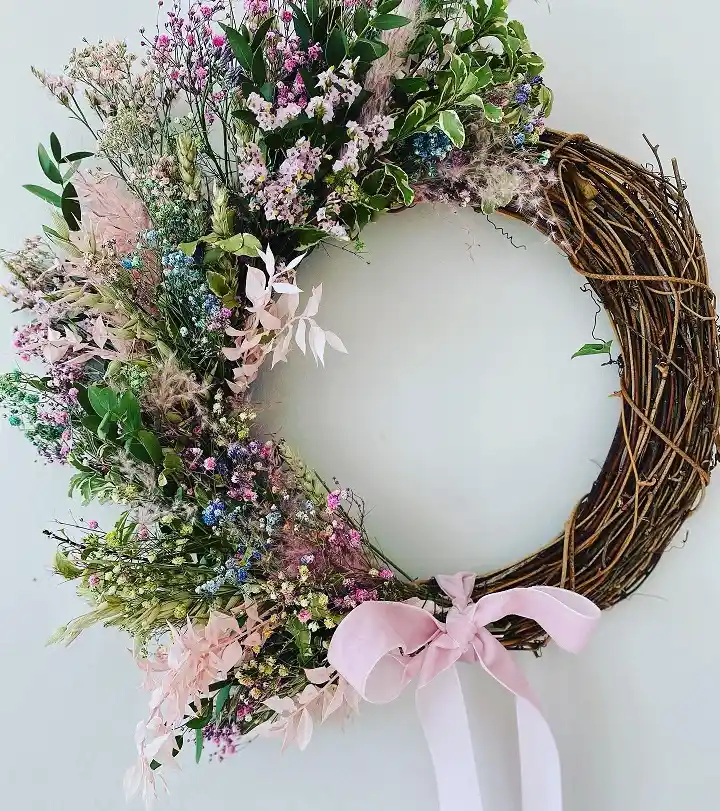
Loose sprays of pampas grass, baby’s breath, and pressed leaves sweep across the top left of this wreath, leaving most of the ring exposed on the right.
It’s a dried floral take rather than silk, which gives the whole piece a faded, slightly vintage color palette instead of the usual bold spring tones.
Subscribe to DIY Craft Bloom
Get updates on the latest posts and more from DIY Craft Bloom straight to your inbox.
A single pale pink velvet bow sits low at the bottom, almost as an afterthought, which balances out the busy top arc without competing with it for attention.
- Pampas and bunny tail grass for texture and movement
- Tiny dried blooms in blue, lavender, and blush scattered throughout
- Trailing greenery left long on the outer edge for a wild, gathered look
7. Blackened Vine Base With Blush Florals and Gold Butterflies
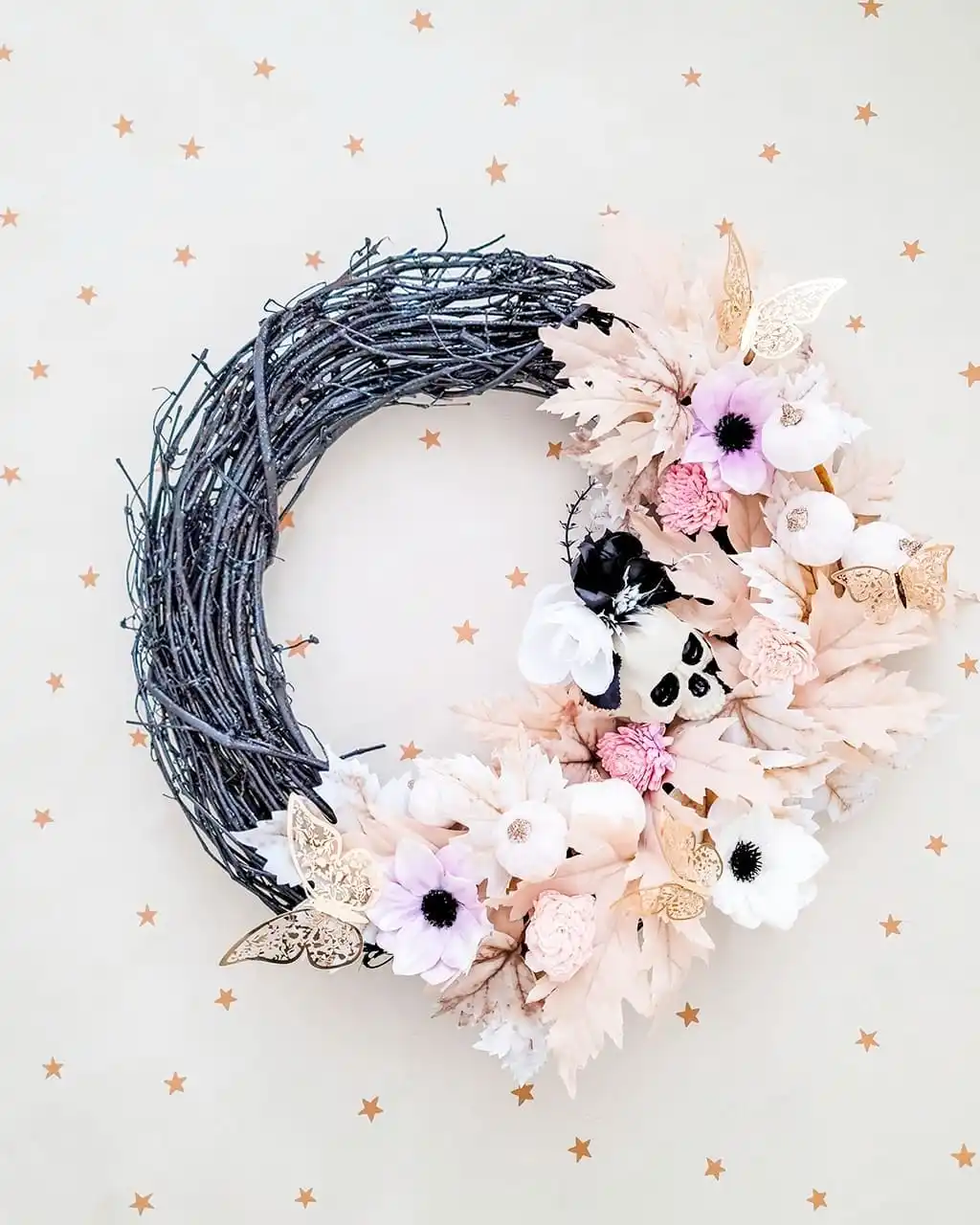
A blackened base flips the usual grapevine look on its head, and it’s the contrast that carries this whole design.
Instead of leaving the vine natural, it’s been painted a deep charcoal, which makes every blush and cream bloom on the right side pop that much harder against it.
Laser cut gold butterflies are scattered through the florals rather than clustered together, landing on petals and leaves like they actually stopped there.
A tiny skull tucked among the anemones and dahlias keeps the Halloween tie in without leaning into anything gory or over the top.
Fully paint the vine, not just parts of it.
Scatter butterflies instead of clustering them.
The classic orange and black combo.
Overcrowding the skull with florals.
8. Neutral Harvest Wreath With Cotton, Wheat, and a Layered Plaid Bow
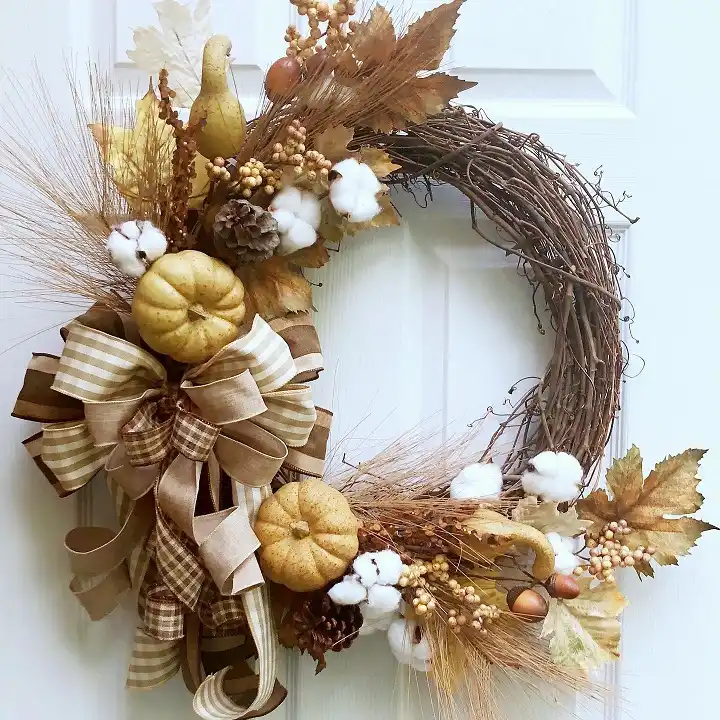
This one leans all the way into texture instead of color. Wheat stalks fan out from behind, cotton bolls sit open and fluffy against smooth mini pumpkins, and a decorative gourd pokes up at the very top like a finishing flourish.
Nothing here is bright, and that’s the point, the whole thing reads as one soft, tonal palette from cream to caramel.
The bow does the heavy lifting on visual interest. Three different ribbon patterns, a plaid, a stripe, and a solid, are layered and left long, tumbling almost a third of the way down the wreath.
Tie the widest, most patterned ribbon first and let the tails hang loose.
Cross a narrower stripe or solid over the first knot, slightly offset.
Nestle the pumpkins and cotton right where the ribbons meet.
9. Minimalist Vine Wreath With Scattered Strawflowers
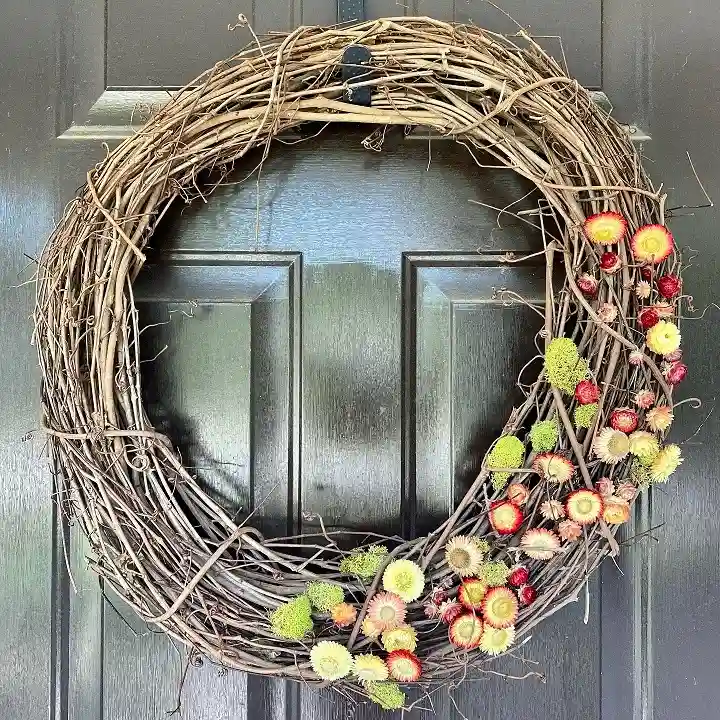
Sometimes the vine itself is the whole point. This wreath leaves the bulk of the ring completely bare, its loops and curling tendrils on full display, and lets a single band of dried strawflowers run diagonally across just one section.
Rust, cream, and chartreuse blooms sit low and close to the vine rather than piled on top of it.
What makes it feel intentional instead of unfinished is restraint. There’s no bow, no greenery filler, no extra layer competing with the texture of the wood.
10. Eucalyptus and Wildflower Wreath With Trailing Branch Accents
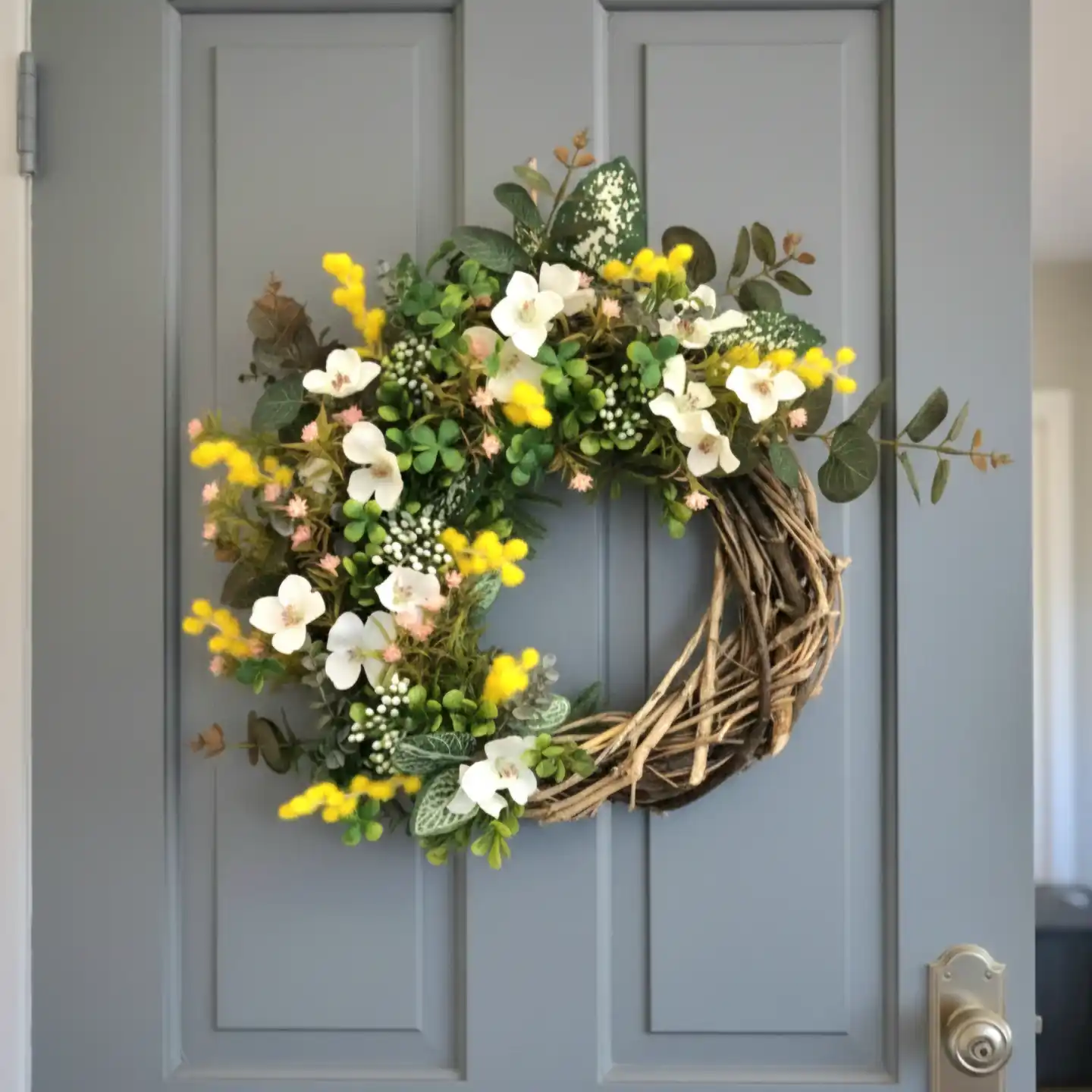
Yellow mimosa and white dogwood blooms scatter across a thick greenery base here, but what sets this one apart is the eucalyptus branch left to trail off the right edge, well past the edge of the vine itself.
It breaks the expected round silhouette and gives the whole piece a gathered, fresh cut feel instead of a tightly shaped one.
Speckled dusty miller leaves and small pink filler flowers fill in the gaps between the larger blooms, keeping the green from reading as one flat mass.
Let one eucalyptus stem run past the edge of the wreath instead of trimming it flush. That single trailing branch does more for the handmade look than any extra flower.
11. Black Painted Wreath With a Long Trailing Plaid Swag
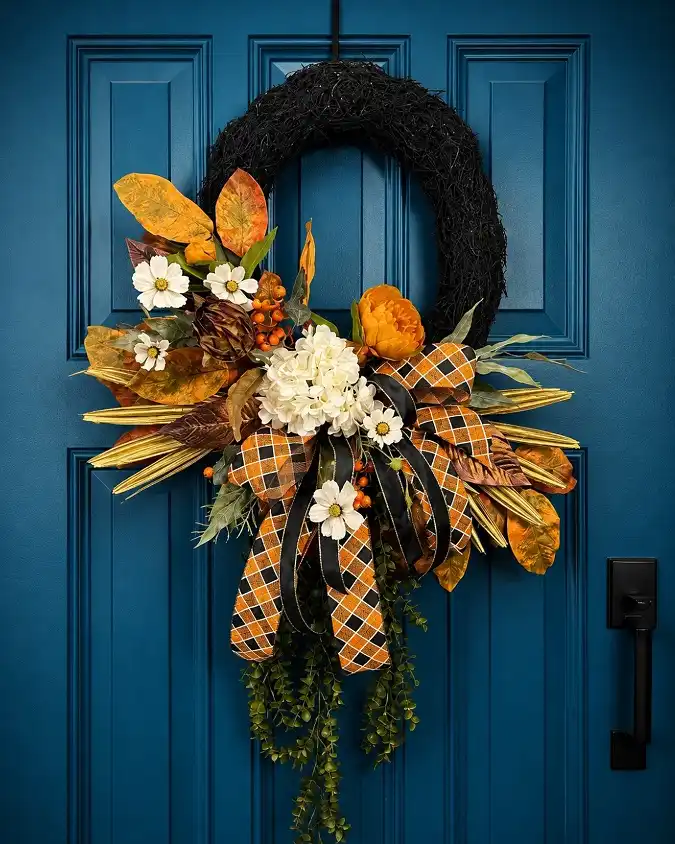
The drama here comes from length as much as color. A black painted vine forms the base, but the floral swag drips almost two feet down, ending in loose strands of greenery that hang well past where most wreaths would stop.
Corn husks and dried leaves fan out wide on either side before the eye ever reaches the trailing plaid ribbon at the bottom.
Orange and black checked ribbon threads through the whole arrangement rather than sitting as one simple bow, giving it a woven, almost layered look instead of a single focal knot.
Sets a dramatic base that makes every color pop harder.
Threads through the swag instead of tying off in one spot.
Extends the swag well below the floral cluster for drama.
Subscribe to DIY Craft Bloom
Get updates on the latest posts and more from DIY Craft Bloom straight to your inbox.
12. Velvet Pumpkin Duo Layered Under a Printed Ribbon Bow
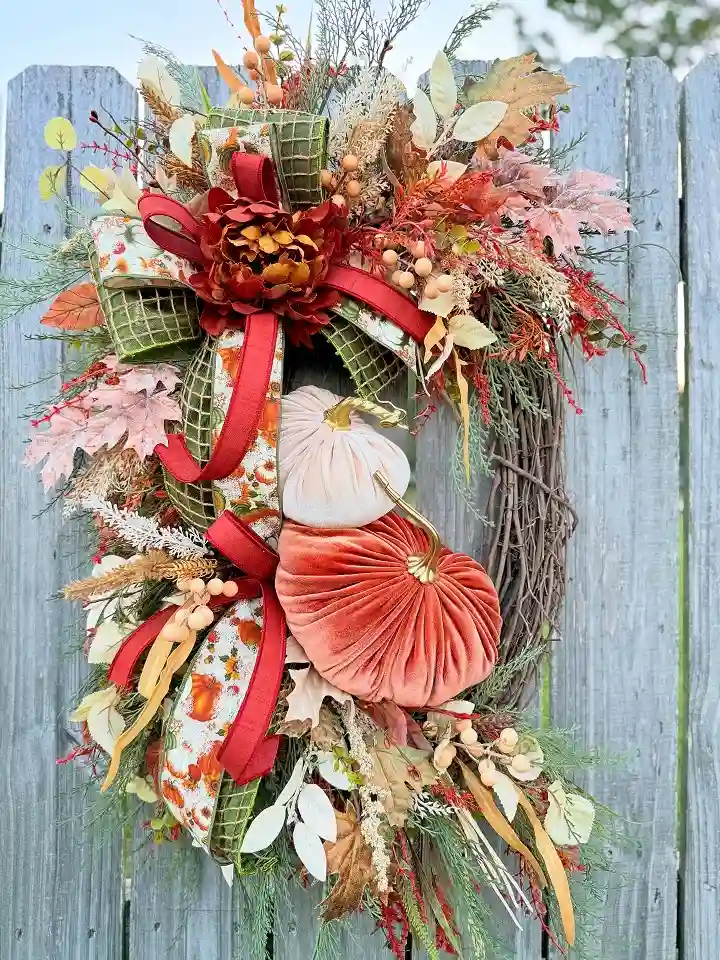
Two velvet pumpkins, one blush and one coral, sit stacked at the center like the focal point they’re meant to be.
Around them, the wreath goes heavier on texture than most in this roundup: dried ferns, wheat, and faded oak leaves in muted pink and sage build out in every direction, giving it a full, gathered look rather than a tidy round shape.
The bow ties it together with three patterns at once, a sage check ribbon, a red satin one, and a floral print, all crossing over each other instead of sitting side by side.
It’s a lot of pattern, but keeping the color palette limited to reds, sage, and dusty pink stops it from feeling chaotic.
Layer as many ribbon patterns as you like, just let one color repeat through all of them.
13. Full-Circle Dried Wreath With a Jute Twine Wrap
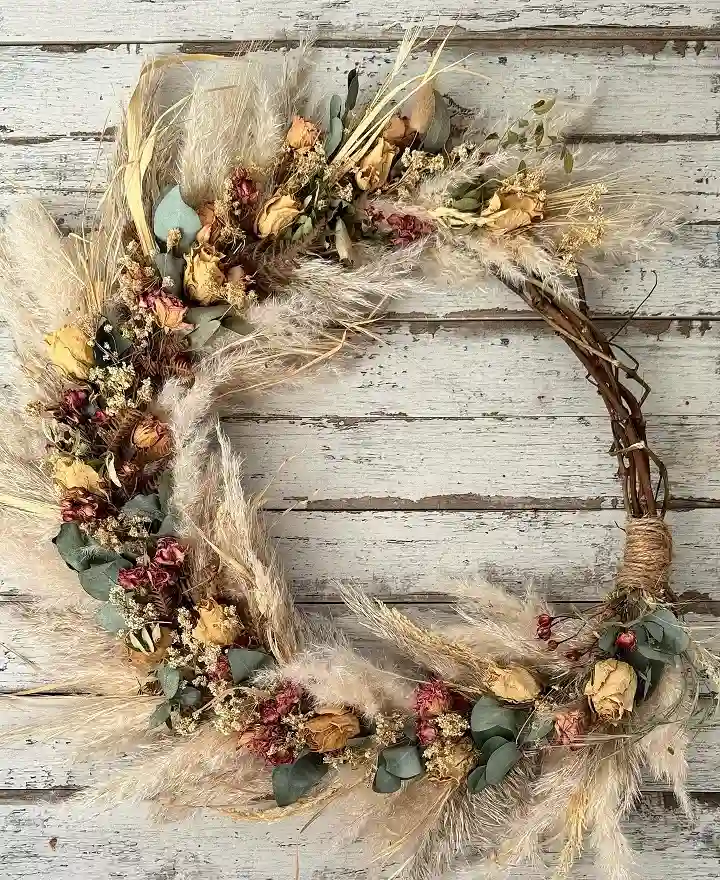
Muted rose, faded eucalyptus, and pampas grass wrap almost the entire ring on this one instead of clustering to one side, which is a shift from the arc and swag styles covered so far.
Rust colored roses and dried baby’s breath fill the gaps low and close to the vine, keeping the texture dense without any single bloom standing out too much.
Down at the lower right, a length of natural jute twine wraps around the vine in place of a bow.
It’s a small detail, but it keeps the whole piece feeling handmade and unfussy, like something pulled together from a garden rather than a craft store.
14. Feathery Fern Fronds With a Three-Color Ribbon Burst
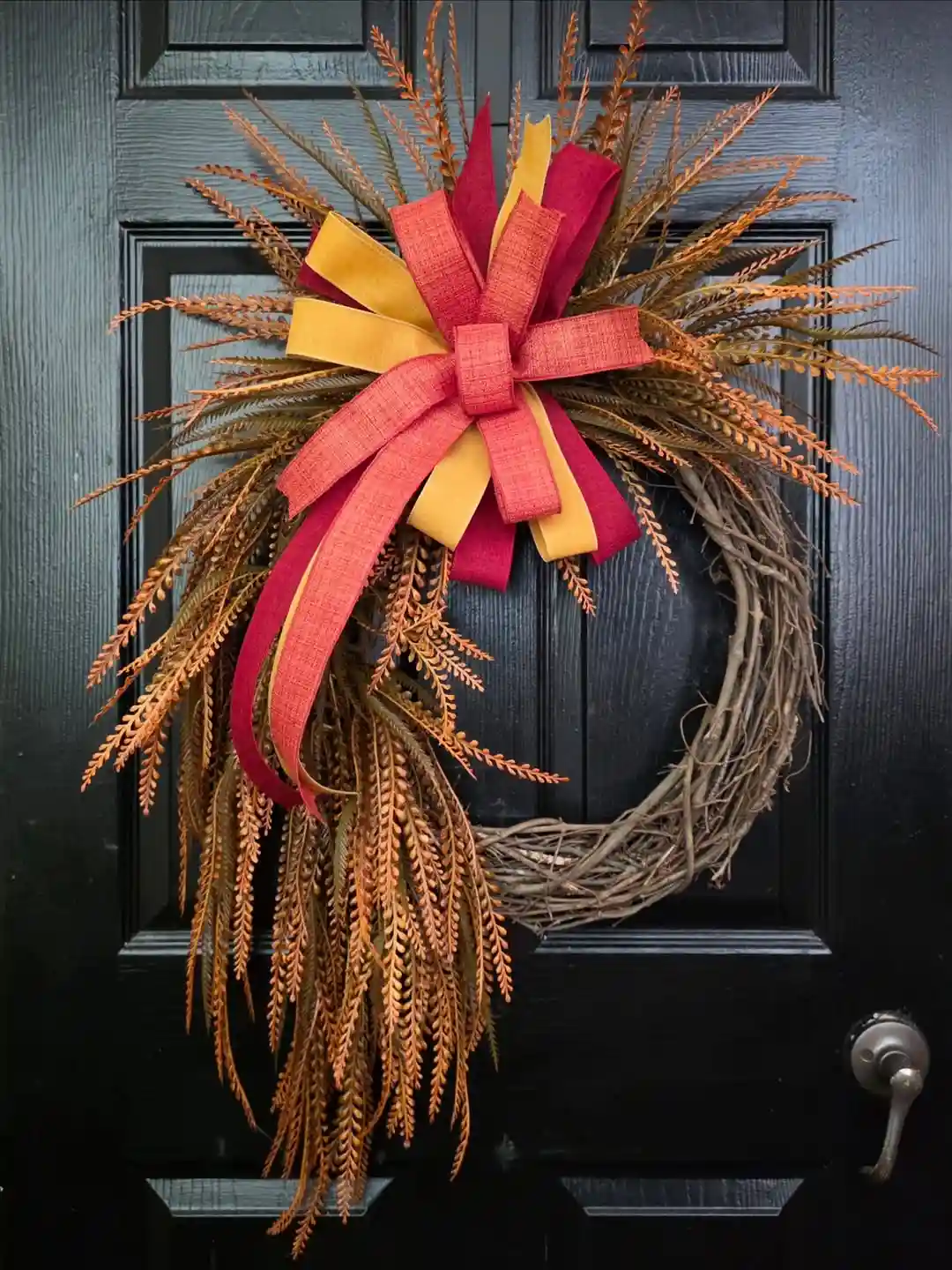
No florals at all show up in this one, just layers of coppery, fern-like fronds that spray out in every direction and cascade nearly two feet down one side.
It proves you don’t need blooms to make a wreath feel full, texture alone carries the whole design here.
The ribbon is what turns simple greenery into a statement piece. Mustard, coral, and deep red loops stack directly on top of each other at the center, with two long streamers left to trail all the way down through the fronds.
- Loose, feathery greenery instead of structured leaves or petals
- Three ribbon colors stacked rather than tied side by side
- Tails left long enough to weave through the lower fronds
15. White Hydrangea and Burlap Bow on a Full Greenery Wrap
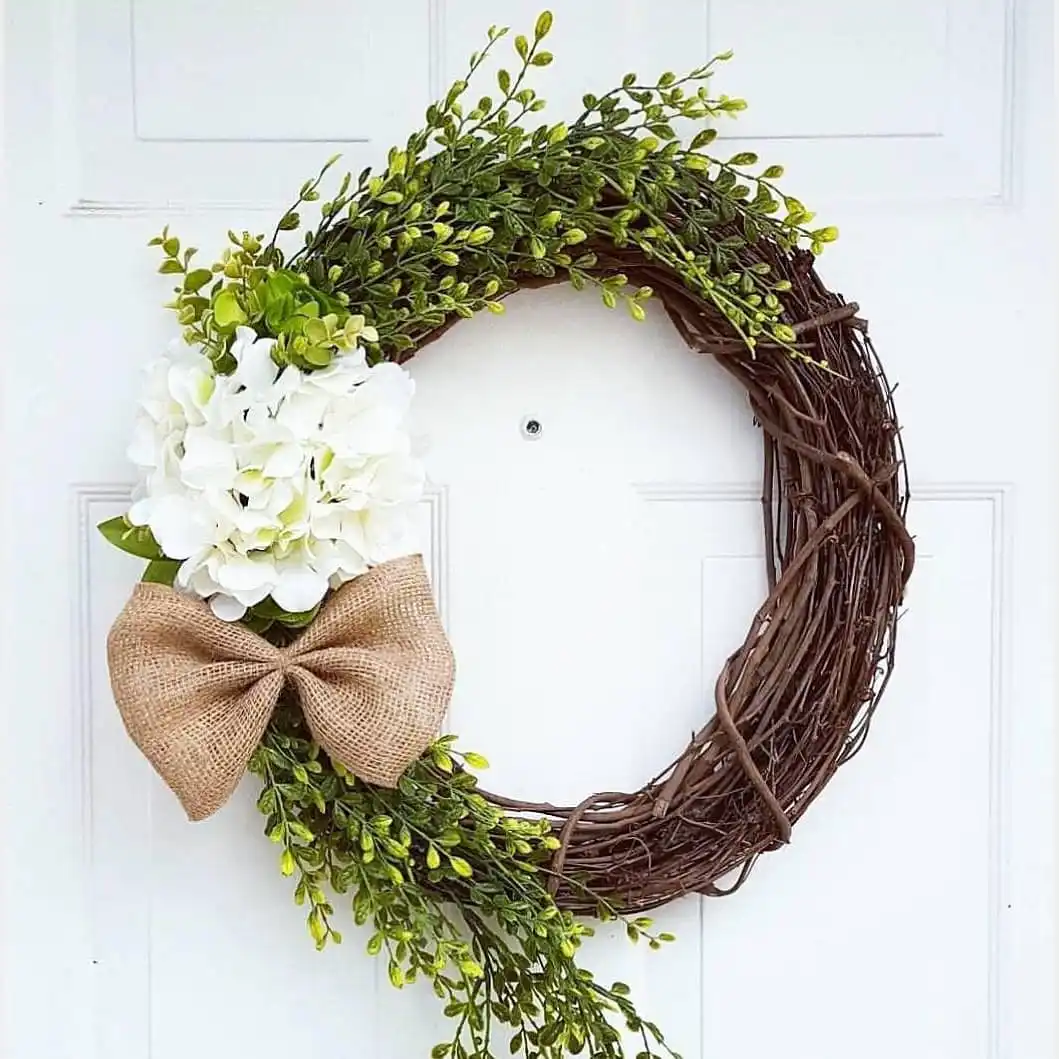
Sprigs of budded greenery wrap almost the entire circle on this one, thinner and more delicate than a full leaf, so the vine still peeks through in places instead of disappearing completely. That light touch is what keeps a simple farmhouse wreath from feeling sparse.
One full white hydrangea bloom anchors the lower left, paired with a classic burlap bow tied plain and stiff, no extra ribbon layered on top.
Compared to the busier florals-and-multi-ribbon entries earlier in this list, the restraint here is the whole appeal.
A single greenery stem trails down below the bow, echoing the same wrap that runs around the top of the ring, so the whole piece feels connected rather than split into a top half and a bottom half.
Layered ribbons or oversized florals crowding the bloom.
One hydrangea bloom, one plain bow, thin greenery wrap.
16. Wooden Flower Wreath With a Rustic Peace Sign Center
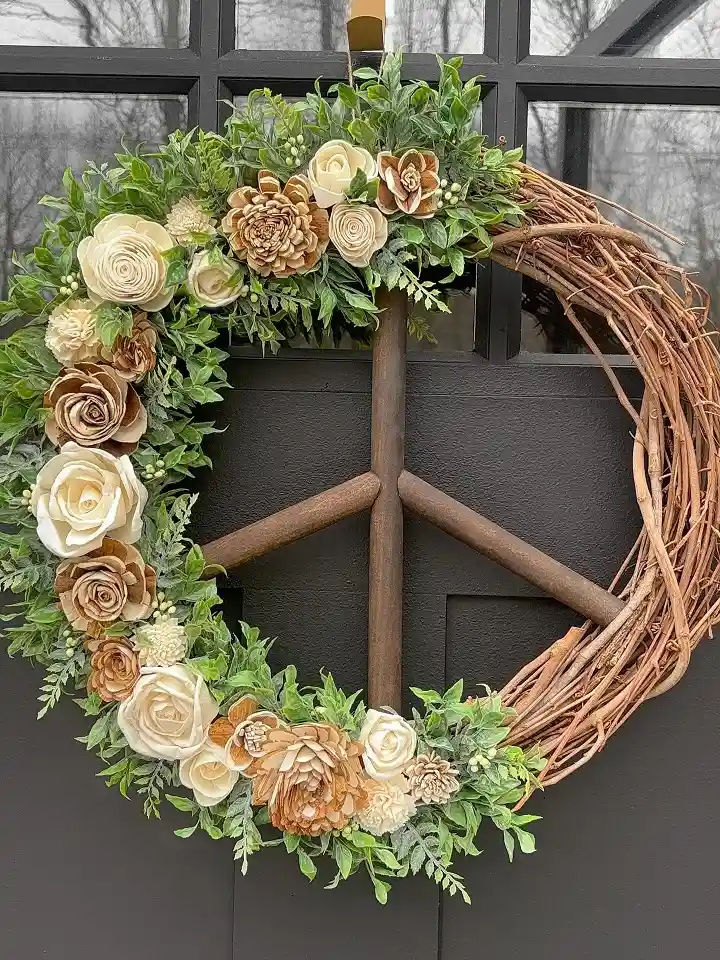
The wreath here is really a frame for something else entirely. A weathered wooden peace sign fills the open center, and the florals wrap around it in a thick crescent rather than spreading evenly, so the sign stays the clear focal point instead of getting crowded out.
Every bloom is sola wood, not silk, in shades of cream, tan, and warm brown that echo the wood tone of the peace sign itself.
Real preserved boxwood and fern threaded underneath gives the arrangement its only true green.
- Sola wood roses in three sizes, largest at the bottom curve
- Preserved greenery tucked low, never covering the blooms
- One side of the vine left bare to keep the peace sign visible
- No ribbon or bow, letting the wooden centerpiece stay uninterrupted
17. Sage Eucalyptus Cascade With a Velvet Pumpkin and Trailing Foxtail
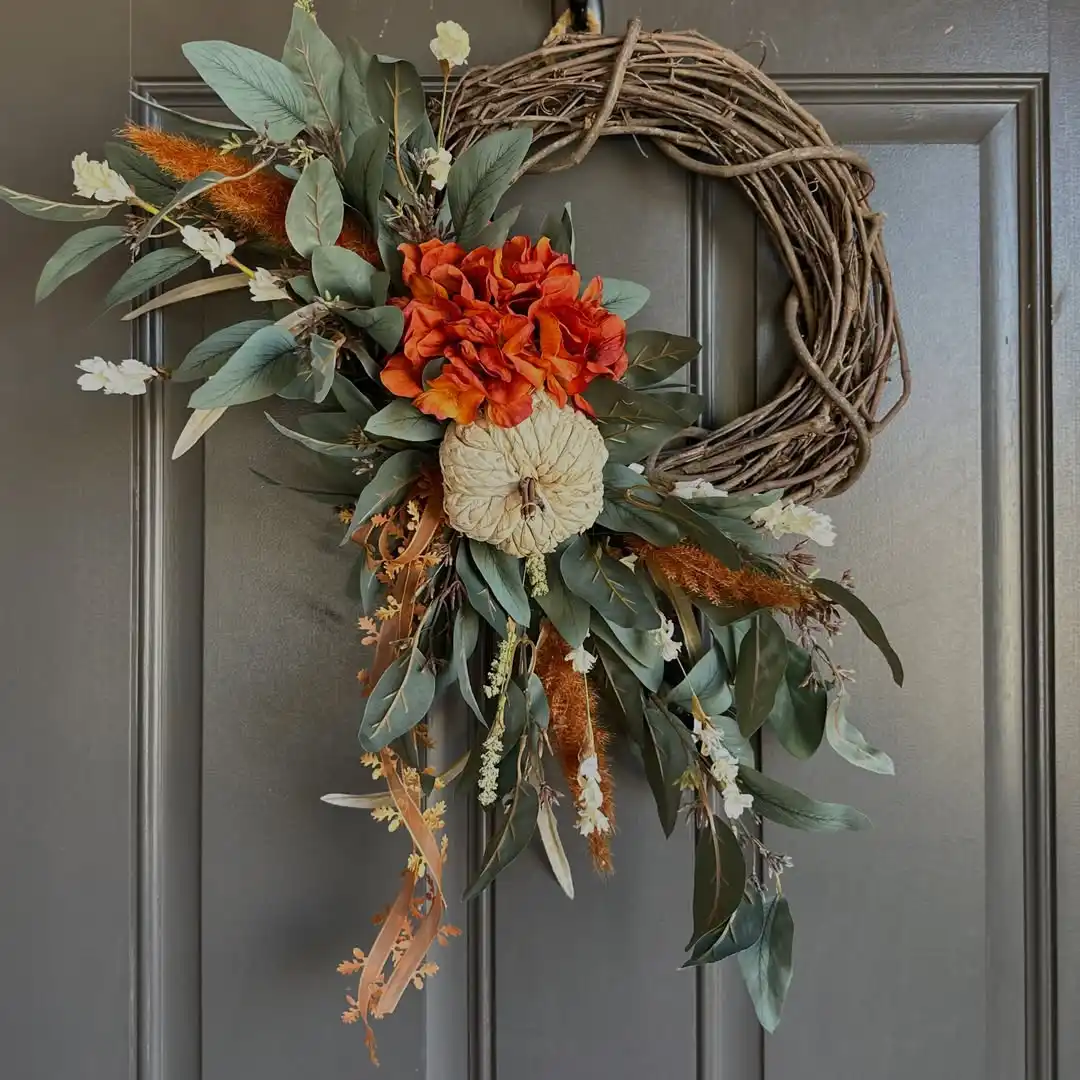
Long eucalyptus leaves in dusty sage dominate this wreath, cascading down nearly a foot below the main cluster and giving it the same trailing shape as a floral swag without needing an actual swag of flowers to do it.
A single burnt orange hydrangea bloom sits at the very center, with a cream velvet pumpkin tucked just below it like the two were always meant to be paired.
Rust colored foxtail millet threads through the greenery at odd angles, standing in for a ribbon entirely.
No bow shows up anywhere in this one, which is unusual for a fall wreath this full, and it works because the millet does the same visual job a trailing ribbon would.
Conclusion
Seventeen wreaths, seventeen completely different approaches, and honestly, that is the best argument for making your own instead of buying one off the shelf.
A grapevine base can go quiet and minimal or full and dramatic depending on what you build around it, and there is no rule saying you need a bow, a matched color palette, or a symmetrical cluster to make it work.
Pick the direction that fits your door and your season, then build from there one layer at a time.
Save this for the next time you want fresh ideas.