How to Make Mugs Food Safe: The Potter’s Guide

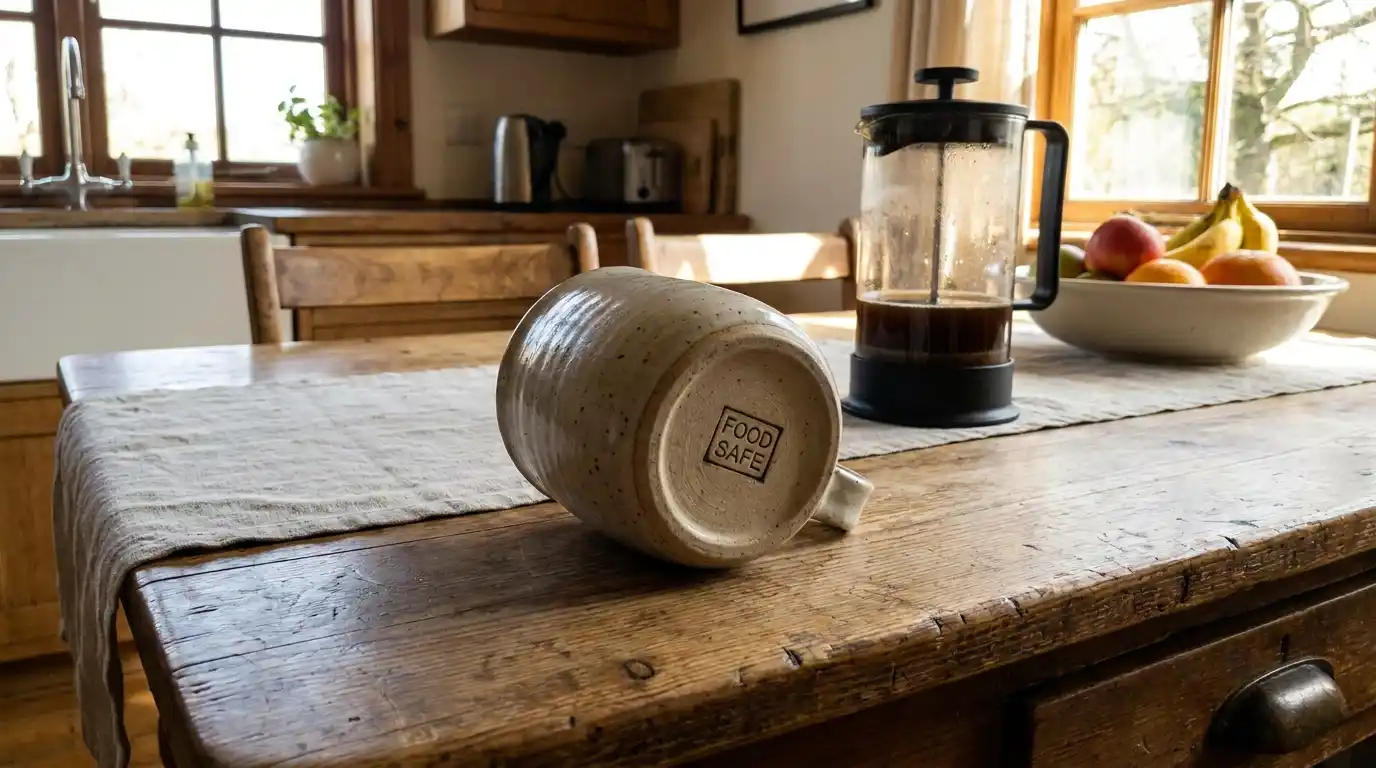
That first sip of hot coffee in the morning feels like a hug. But if you made that mug yourself, or bought it from a local fair, it might be hiding a secret. Your favorite mug could be leaching heavy metals into your drink.
Many people think “non-toxic” means a mug is safe to drink from. But it isn’t that simple. In 2026, the FDA and EU have much stricter rules for lead and cadmium in pottery. This is because even small amounts of these metals can cause health issues over time.
You need to know how to make mugs food safe before you take another sip. This guide will teach you about glaze chemistry and the right way to fire your clay. You will also learn the newest ways to test your work so you can drink with peace of mind.
Why “Non-Toxic” Labels Can Be a Trap
When you buy a jar of glaze, it might say “non-toxic.” This sounds great, but it only means the wet glaze won’t hurt you if it touches your skin.
Once that glaze goes into a hot kiln, the chemistry changes. A glaze that is safe in the jar can become dangerous if it isn’t fired correctly.
For a mug to be “Food Safe,” the surface must be smooth and hard. It should not react with acidic drinks like orange juice or coffee.
Look for “Dinnerware Safe” labels instead. This means the surface is scratch-resistant and won’t leak chemicals.
You should avoid crackle glazes or very matte surfaces for the inside of your mug. These look cool, but they have tiny holes or rough spots.
Subscribe to DIY Craft Bloom
Get updates on the latest posts and more from DIY Craft Bloom straight to your inbox.
Bacteria can hide in these gaps and grow, even if you use a dishwasher. In 2025, the FDA warned that many handmade pots still leak lead because the glazes aren’t stable enough for daily use.
Pro Tip: If a glaze feels like a chalkboard or has visible cracks, keep it on the outside of the mug only. Use a smooth, clear liner glaze for the inside.
Use High Heat to Seal the Surface
Vitrification is a big word for a simple idea. It means heating clay until it turns into a solid, glass-like block. If your clay isn’t vitrified, it acts like a sponge. It will soak up water and bacteria.
Many DIY potters use low-fire clay because it is cheaper. But low-fire clay (fired under 2,100°F) is very porous.
If your glaze has even one tiny pinhole, the clay inside will absorb your drink. This can lead to mold inside the walls of your mug.
For the best results, aim for “Mid-fire” temperatures. This is usually around 2,142°F or higher. At this heat, the clay and glaze melt together to form a permanent bond.
This makes the mug much stronger and safer. We follow ASTM C738-94 standards to make sure nothing moves from the mug into your food.
Pro Tip: Always check your kiln’s temperature with “cones” to be sure it reached the right heat. Don’t just trust the digital screen.
Subscribe to DIY Craft Bloom
Get updates on the latest posts and more from DIY Craft Bloom straight to your inbox.
Choose the Right Food Safe Ceramic Glaze
Choosing a food safe ceramic glaze is the most important step. Some colors are riskier than others. Bright reds, deep oranges, and sunny yellows often use cadmium to get those bold hues. If the glaze isn’t perfectly balanced, that cadmium can leach into hot tea.
The safest choice for the inside of a mug is a “liner glaze.” These are usually clear or white. They are designed to be very stable and easy to clean.
You should also do a “Smoothness Test.” Run your fingernail across the fired glaze. If it feels rough or makes a scratching sound, it will be hard to sanitize. Smooth surfaces are easier to keep clean and stay safe for years.
Pro Tip: Avoid using epoxy resin to fix or seal the inside of a mug. In 2026, there are no resins proven to be safe for hot, acidic liquids. Stick to ceramic glazes.
3 Ways to Test Your Mug at Home
How do you know if your mug is actually safe? You can’t see lead or cadmium with your eyes. But you can use these tests to check your work.
- The Lemon Test: Cut a lemon in half and squeeze the juice into your mug. Let it sit for 24 hours. Wash the mug and look at the spot where the juice was. If the color changed or the glaze looks dull, the glaze is leaching. It is not food safe.
- The Dishwasher Stress Test: Put your mug through 50 cycles in a hot dishwasher. Look closely for “crazing” or tiny spider-web cracks. If cracks appear, the glaze is weak and can trap germs.
- Lead Swab Kits: You can buy these at hardware stores. They provide a quick check, but they aren’t perfect. For a 100% answer, you would need to send a piece to an ISO-accredited lab for a professional scan.
Safety Isn’t an Accident
Making a mug is fun, but making it safe is a responsibility. Safety comes from using stable glazes and firing them to the right temperature. If you follow these steps, you can create beautiful pieces that are healthy for you and your family.
Don’t guess when it comes to your health. Use these 2026 standards to ensure every cup of coffee is as safe as it is delicious.
What will you do next? Check your current glazes for “Dinnerware Safe” ratings. If you aren’t sure, run the lemon test tonight!