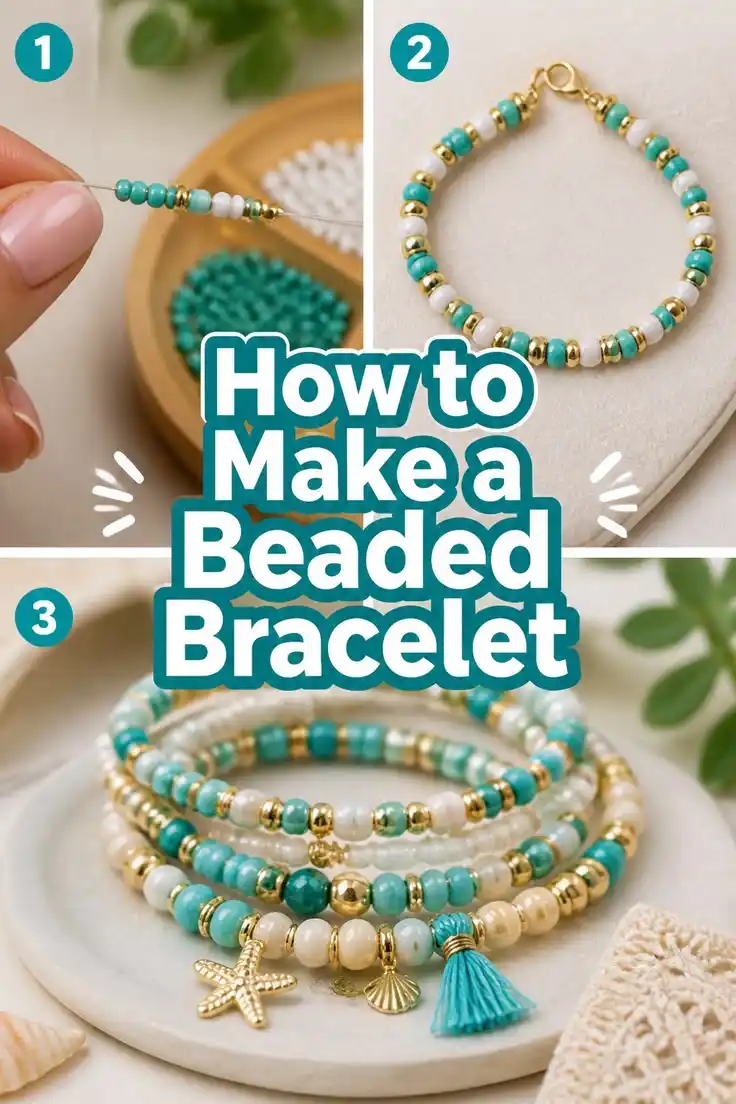
How to Make a Beaded Bracelet: Complete Step-by-Step Guide for Beginners

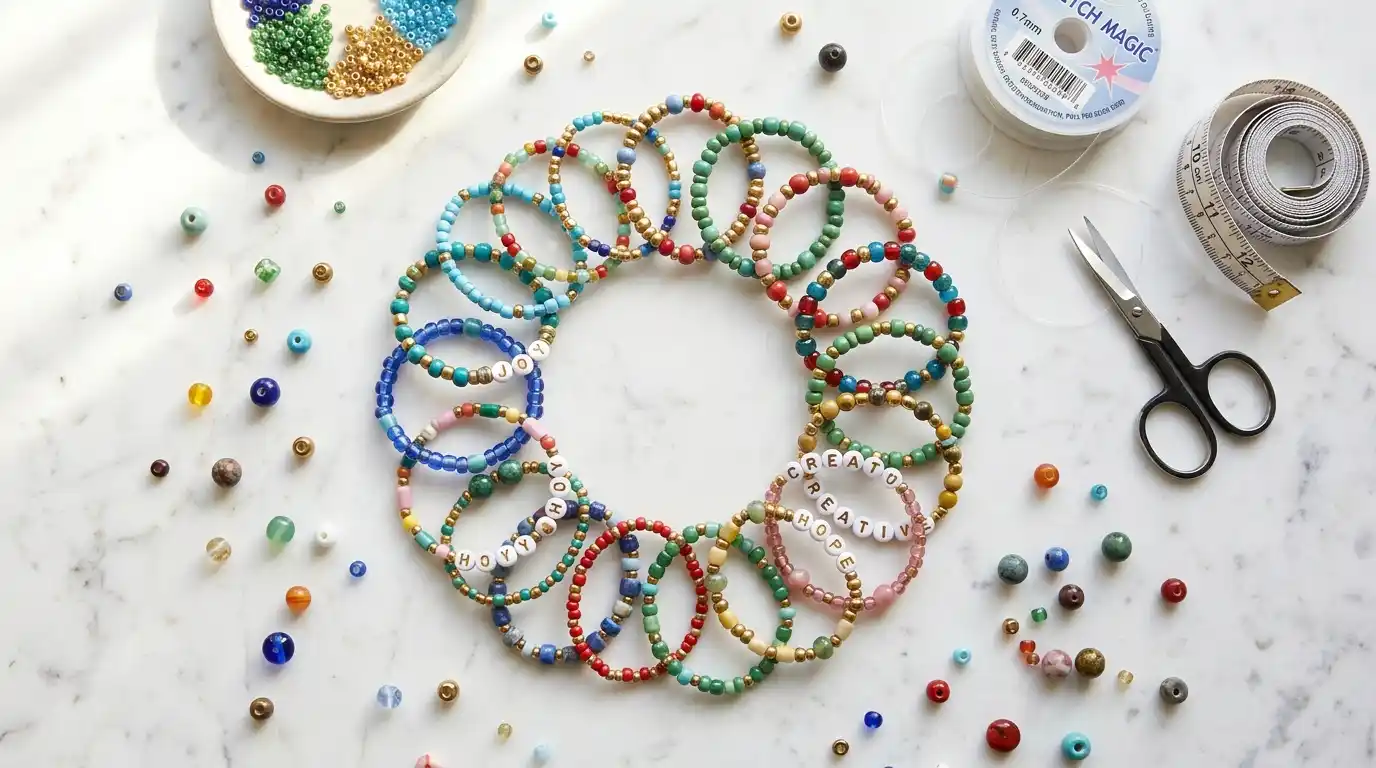
A beaded bracelet is a handmade piece of jewelry made by threading decorative beads onto cord, thread, or elastic string and securing the ends with knots or clasps. This popular DIY jewelry project is affordable, creative, and perfect for crafters of all skill levels, costing just $4-5 to make instead of $20-50 to buy.
Ever scrolled through Instagram and spotted those gorgeous beaded bracelets that made you think, “I could totally make that”? Well, you absolutely can!
Making beaded bracelets is more than just a fun craft—it’s therapeutic, affordable, and gives you the freedom to express your personal style through color, texture, and design.
Beaded Bracelet Making, at a Glance
Fit It Right
Use the two-finger rule: your bracelet should sit 0.5–1 inch larger than your wrist for all-day comfort.
Pre-Stretch Elastic
Tug your cord in 4-inch segments before beading so it won’t sag or gap after a few wears.
Knot It Securely
A surgeon’s knot plus a tiny dab of jewelry glue keeps your bracelet from ever popping open.
Budget-Friendly
A handmade bracelet costs about $4–5 in materials — versus $20–50 to buy one ready-made.
Essential Beaded Bracelet Supplies List
- Elastic Bracelet String Cord
- Stretchy Elastic String
- Glass Seed Beads Kit
- 4-Piece Jewelry Pliers Set
- Bamboo Bead Board
- G-S Hypo Glue
- Big Eye Beading Needles
- 6mm Glass Bead Kit
- Letter Beads Kit
- 6-Roll Elastic Cord Set
What is the Two-Finger Rule for Bracelets?
The Two-Finger Rule
Slide two fingers between your wrist and the fastened bracelet. Both should fit comfortably — that’s your perfect fit, about 0.5–1 inch larger than your wrist.
The two-finger rule refers to allowing enough space between the bracelet and the wrist to comfortably fit two fingers, which helps ensure the bracelet is neither too tight nor too loose.
This simple guideline prevents discomfort and keeps your bracelet secure throughout the day.
To apply this rule, fasten your bracelet and slide two fingers side by side between the inside of the bracelet and your wrist—if both fingers fit comfortably without forcing, you’ve achieved the perfect fit.
This means your finished bracelet should be about 0.5 to 1 inch larger than your wrist measurement.
For beginners, this rule ensures your creation looks professional and feels comfortable for all-day wear.
Essential Materials and Tools for Beaded Bracelets
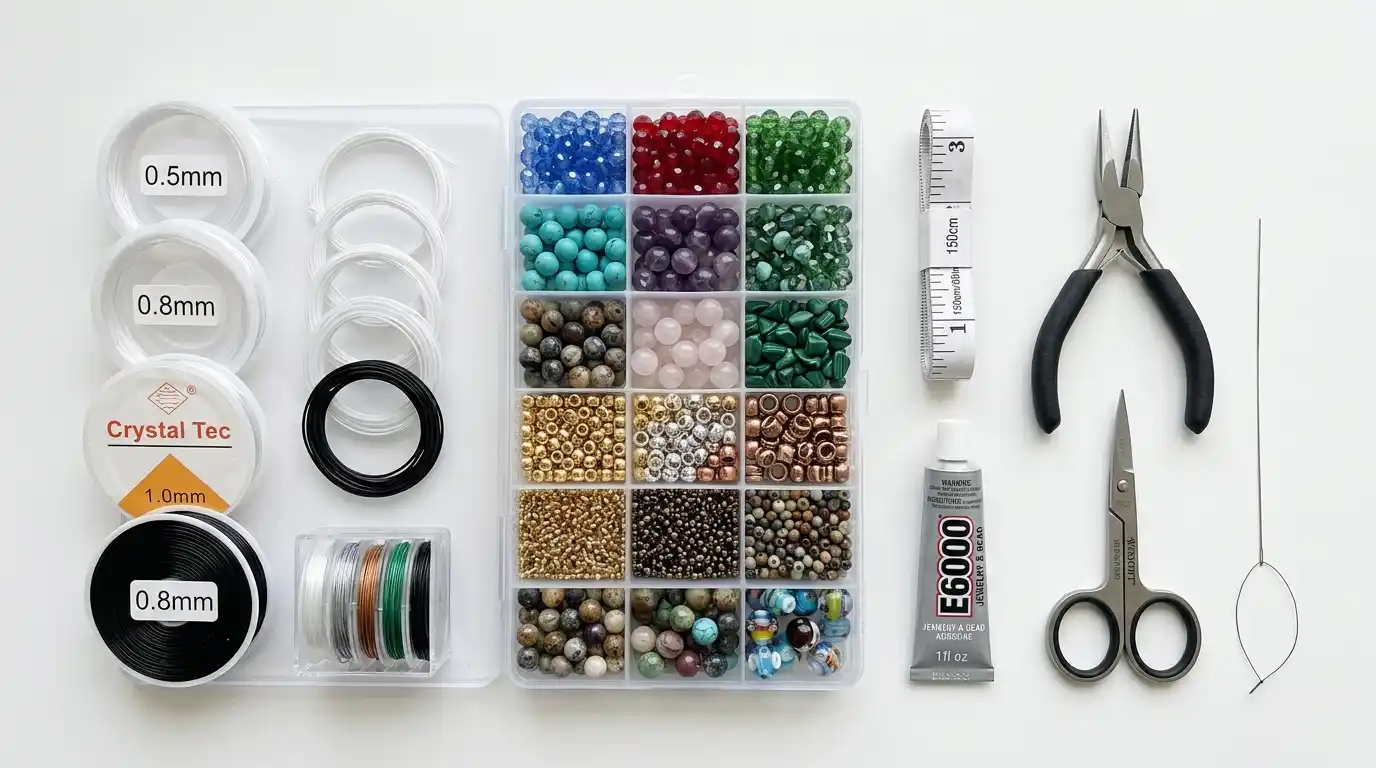
To make a beaded bracelet, you’ll need beads, stringing material (elastic, thread, or wire), and basic tools like scissors, a measuring tape, and optionally, a beading needle and clasp.
Different materials work better for different designs.
You have many bead options including glass seed beads (small and colorful, perfect for detailed designs), gemstone beads (made from real stones in shapes like round, square, and hearts), and metal beads (silver, gold, or bronze colored for a bold look).
Stringing Materials Guide:
Elastic Cord
0.5mm–1.0mm widths, no clasp needed. Thicker cord for heavier beads.
Beading Wire
Won’t kink easily. Needs crimp beads to secure the ends.
Nylon Thread
Strong yet flexible, thin enough to stay nearly invisible.
Tools you’ll need: Sharp scissors, measuring tape, bead stopper or binder clip, optional beading needles, and jewelry glue for added strength.
How to Measure Your Wrist: The Foundation of Perfect Fit
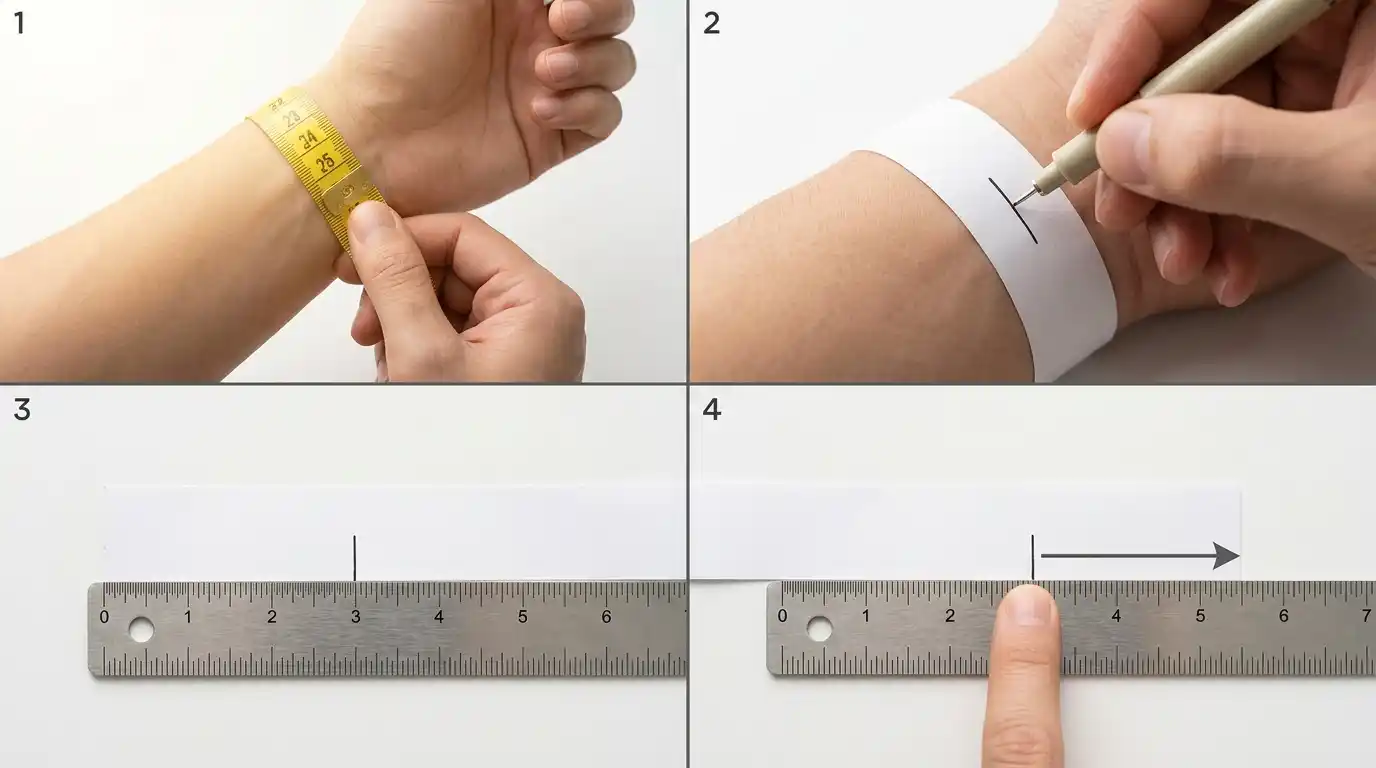
Accurate wrist measurement is crucial for creating a bracelet that fits comfortably and looks professionally made.
Incorrect sizing leads to bracelets that either slip off or feel too tight.
Step-by-step measurement process:
- Hold elastic around your wrist (not too tight), remove from your wrist while holding it together, use a pencil or pen to make a mark next to your fingers—these markings show where to place your beads
- Add 1-2 inches for comfort, and for stretchy styles, cut elastic to 8-10 inches
- Use a flexible measuring tape for accuracy, or wrap a paper strip and measure with a ruler
- Account for the clasp length if you’re using one—include it in total measurement
Pro tip: About 80-120 beads are needed for a 7-inch wrist, depending on size (8mm beads are beginner-friendly)—this helps you calculate how many beads to buy.
Easy Bead Bracelet Ideas for Beginners
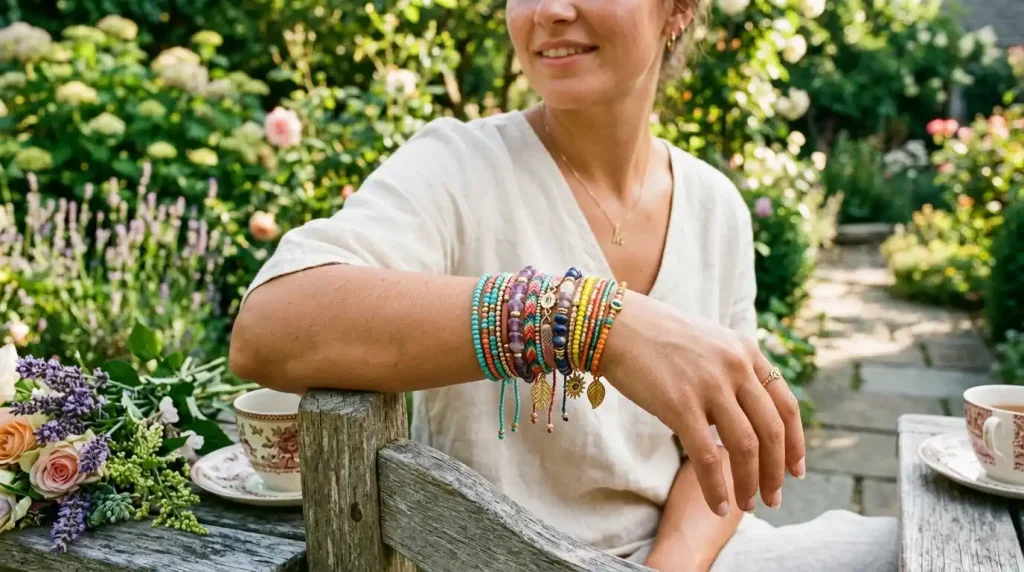
Simple beaded bracelet designs for beginners focus on single-strand patterns, solid colors, or basic two-color combinations that build confidence before attempting complex patterns.
Popular beginner-friendly designs include:
- Monochrome Bracelets – Choose one color and varying bead sizes for visual interest
- Alternating Pattern – Switch between two complementary colors in a consistent pattern
- Rainbow Stretch Bracelets – Use colorful beads to create friendship bracelets with tiny letter beads or a mix of seed beads, clay beads, and acrylic crystal beads
- Natural Stone Style – Combine gemstone beads with metal spacers for an elegant look
- Pony Bead Classics – Use shaped beads like hearts with colorful pony beads (popular for crafting with kids)
Design tip: A mix of small and large beads keeps things looking interesting, or stay within one color family for a clean, minimalist statement. Don’t overthink it—start simple and upgrade your designs as you gain confidence.
Step-by-Step Guide: How to Make a Beaded Bracelet with Elastic String
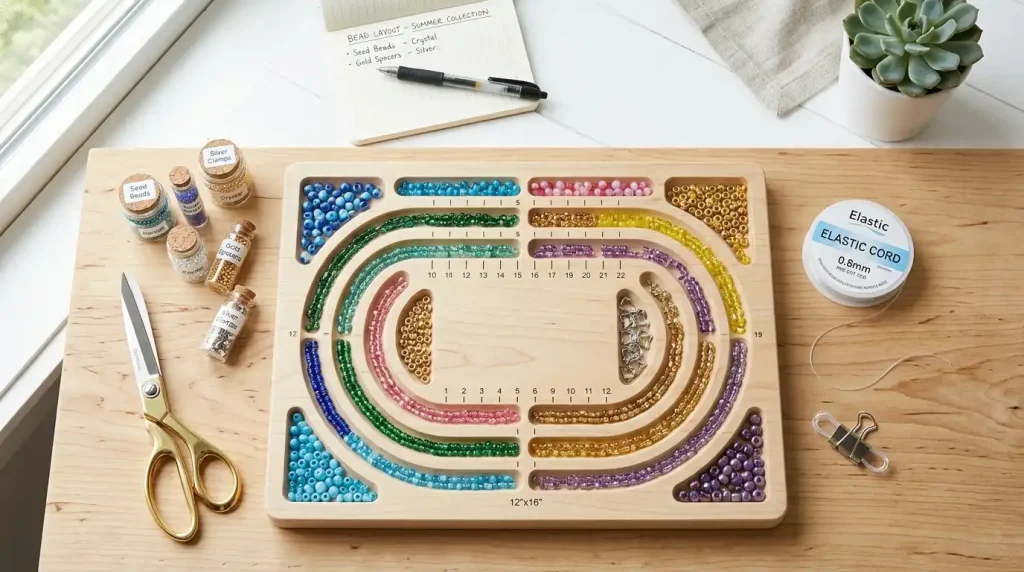
Making a stretchy beaded bracelet is the easiest method for beginners since it requires no clasp and the elastic stretches over your hand.
Materials needed:
- Elastic cord (0.5mm-1.0mm thickness)
- Beads of your choice
- Scissors
- Bead stopper or binder clip
- Jewelry glue (optional)
Complete step-by-step instructions:
Step 1: Prepare Your Workspace
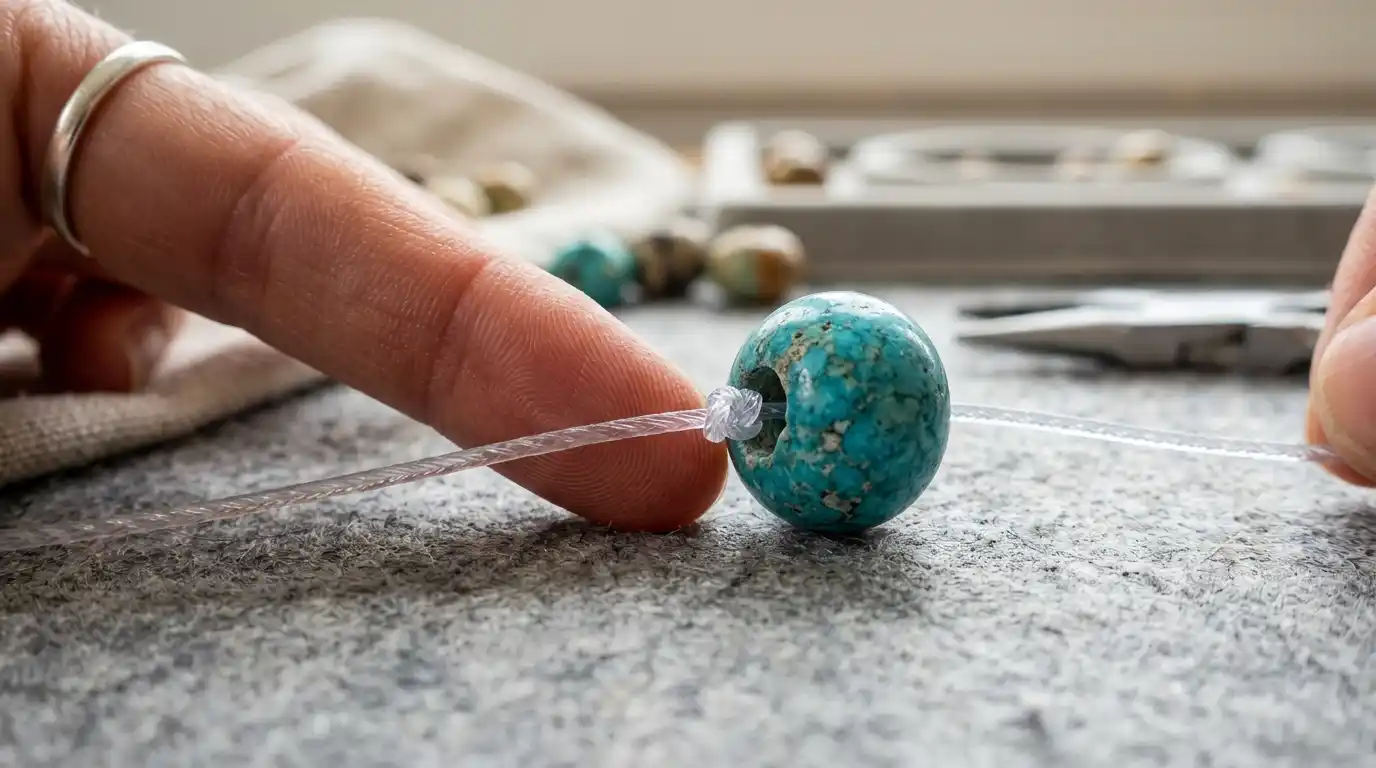
Using a binder clip, some tape, or a clipboard to hold the other end of the elastic string will prevent the beads from slipping off. Lay out beads in your desired pattern on a bead board or flat surface.
Step 2: Pre-Stretch the Elastic
Subscribe to DIY Craft Bloom
Get updates on the latest posts and more from DIY Craft Bloom straight to your inbox.
Tug the elastic in ~4-inch segments along its whole length before beading. This “pre-stretch” step is what stops your finished bracelet from sagging or gapping after just a few wears.
Tug on the stretchy string to “pre-stretch” it—this ensures the bracelet won’t become loose and show gaps between beads once you wear it.
Pull the string apart in ~4″ segments and work your way through the length of the whole string. This critical step prevents your bracelet from sagging after a few wears.
Step 3: Thread Your Beads
Thread the beads onto the elastic string in the order you laid them out. Work slowly and steadily to avoid mistakes. If using tiny beads, a large-eye beading needle makes threading easier.
Step 4: Check the Fit
Hold your bracelet around your wrist to see if you like the fit—you can add or remove beads to adjust.
Ideally, the bracelet should fit close but not be tight so you can wear it comfortably. Aim for the two-finger rule: about 0.5-1 inch of slack.
Step 5: Tie a Secure Knot
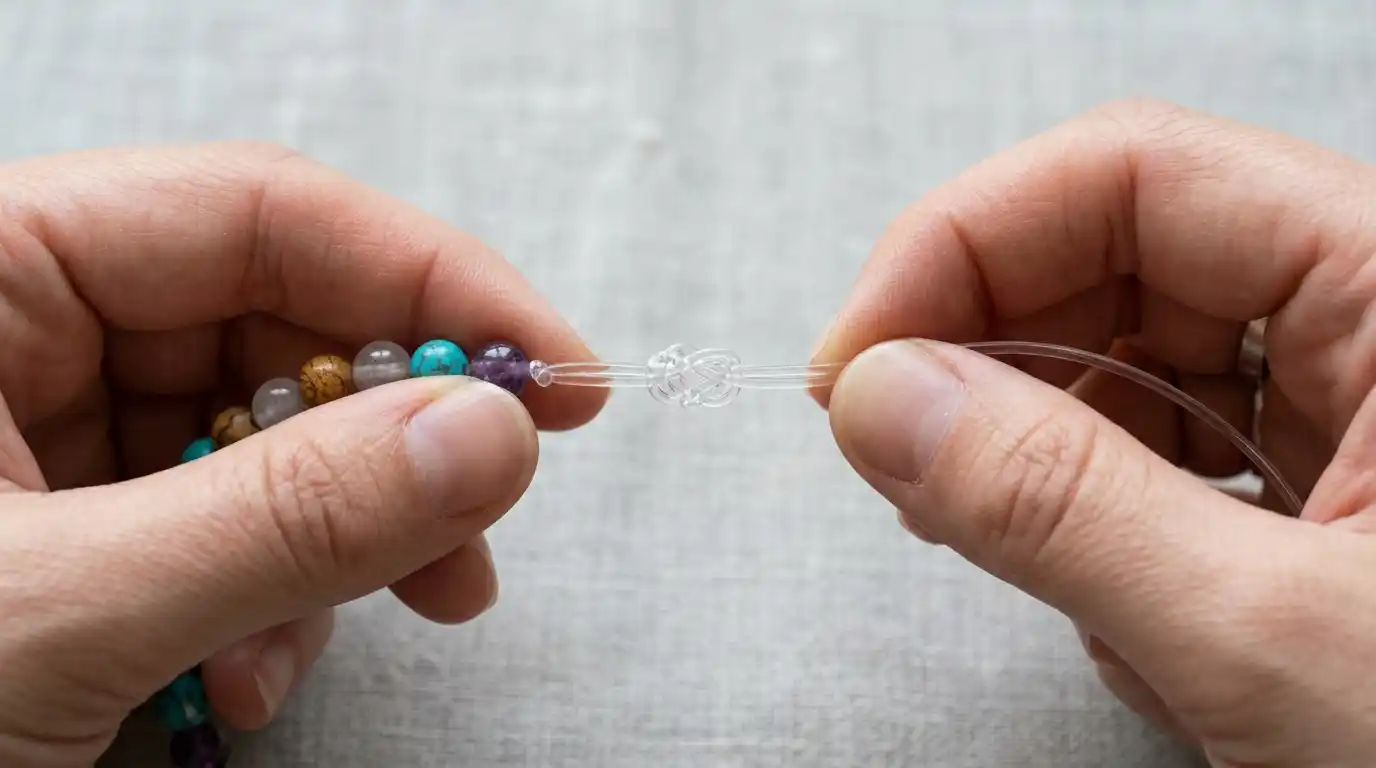
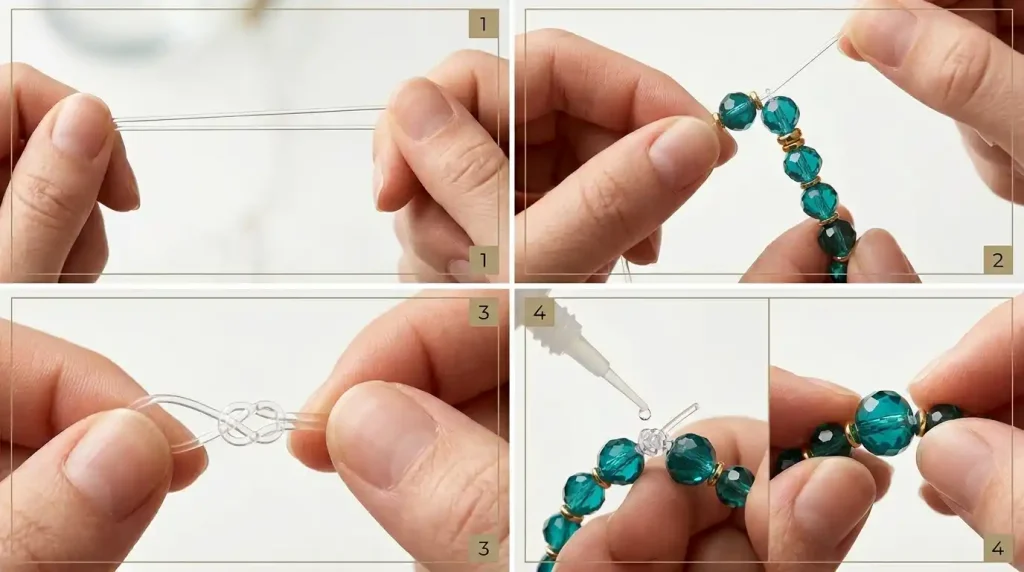
For an elastic cord, make a surgeon’s knot or a double knot if additional strength is desired—pull the knot and stretch it to make sure it’s big enough that it will not pop.
A surgeon’s knot is the strongest option for beginners.
Step 6: Seal and Trim
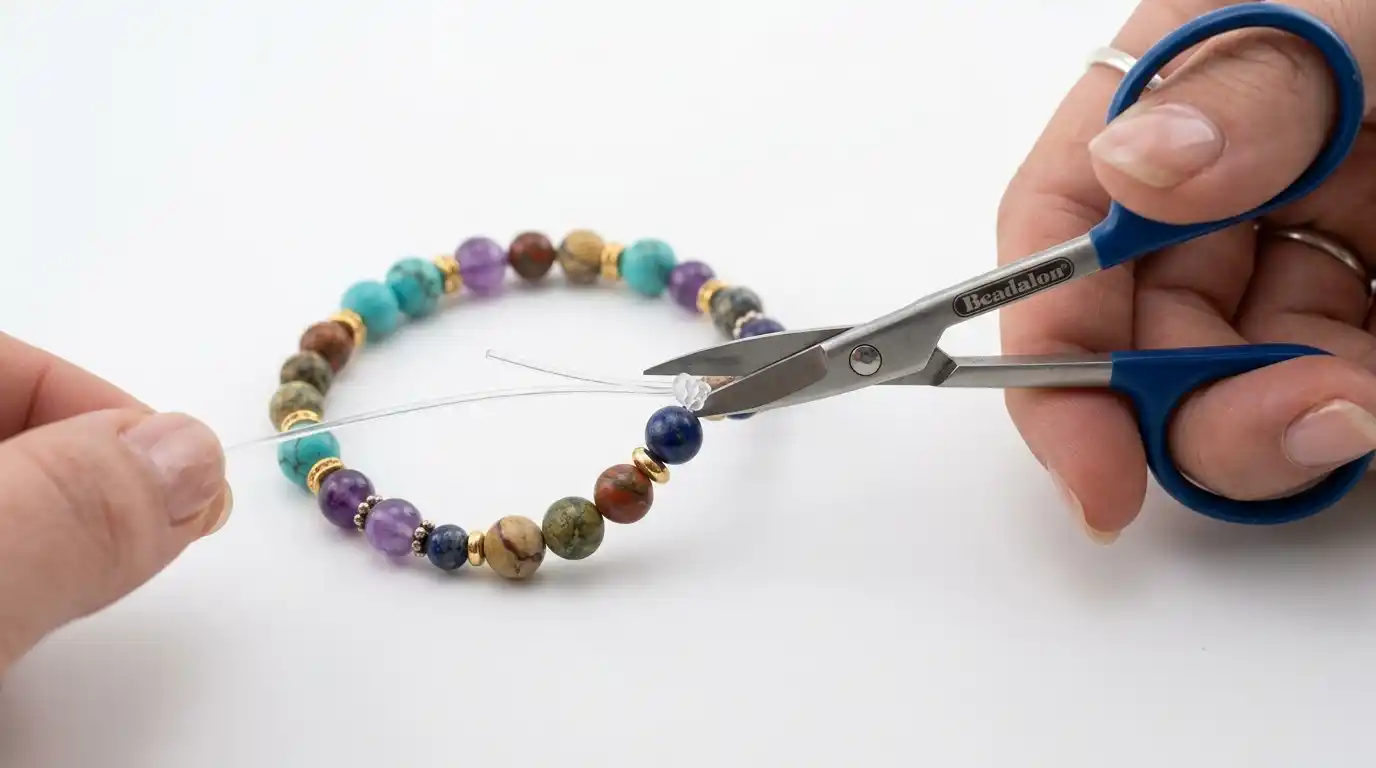
One small dab of jewelry glue will prevent the knot from working itself loose. Wait 24 hours for the glue to cure completely before wearing.
Trim excess cord with sharp scissors for a clean finish.
How to Make a Beaded Bracelet That Won’t Break
Creating durable bracelets requires using appropriate materials, securing knots properly, and handling the finished piece with care during wear.
Key durability factors:
1. Choose the Right Stringing Material
The general rule is the heavier the bead, the thicker your stretch elastic should be—many people advise using the thickest elastic that will fit inside your beads. For heavy gemstone or metal beads, use 0.8mm-1.0mm elastic or beading wire with crimp beads.
2. Reinforce Your Knots
Pull the knot and stretch it to make sure it’s big enough that it will not pop—one small dab of jewelry glue will prevent the knot from working itself loose. Double-knot for extra security.
3. Use Quality Beads
Lower-quality beads with rough edges can fray your stringing material. Invest in mid-range beads from reputable craft suppliers for better longevity.
4. Proper Wearing Technique
Do not stretch the bracelet when putting it on—roll it on and off your wrist to avoid stretching the cord and fraying it too soon. This simple habit extends your bracelet’s lifespan significantly.
5. Storage and Maintenance
Keep it in a jewelry box or jewelry bag, which protects it to keep a bright shine and make it look new. Avoid exposing to direct sunlight and moisture, which can weaken elastic over time.
How to Make a Beaded Bracelet with Clasp
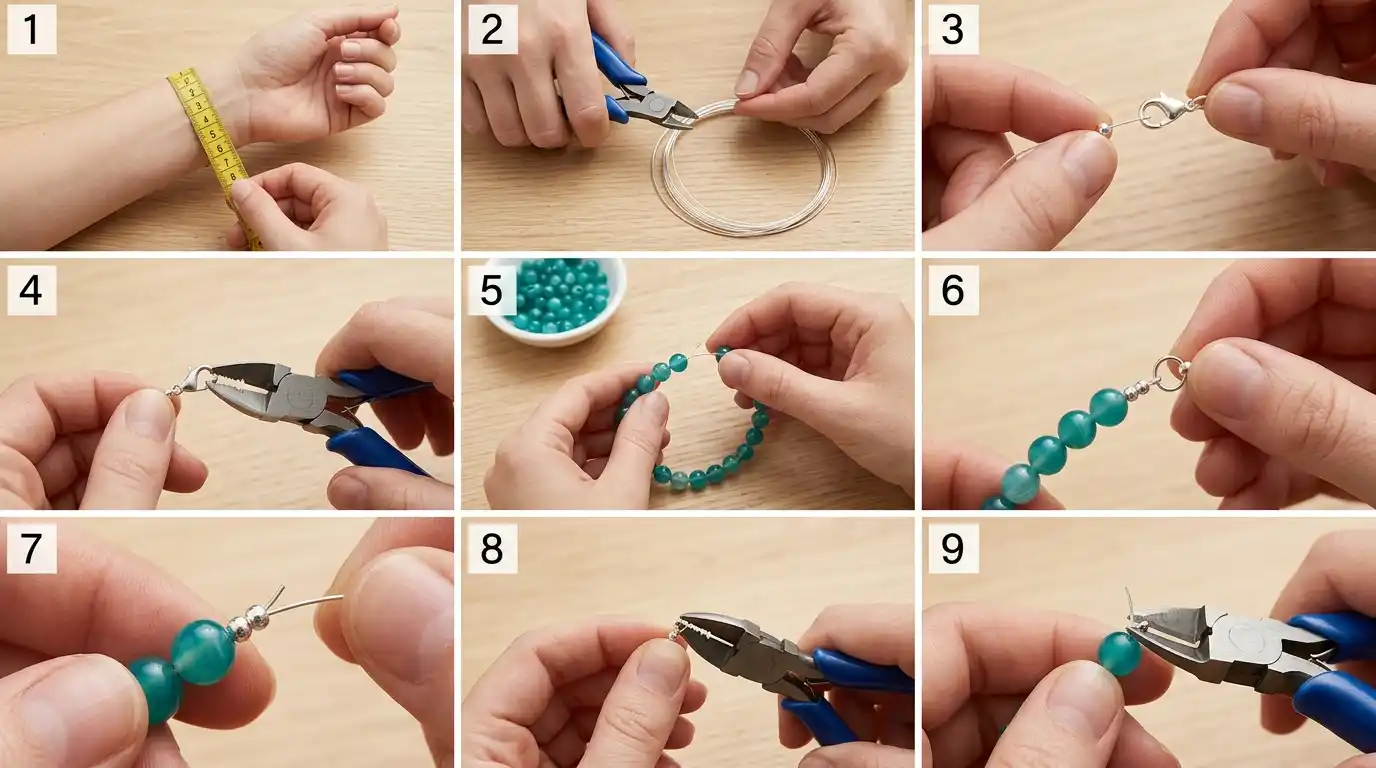
A clasp-style bracelet offers a more professional, adjustable fit and works better for designs using beading wire or thread instead of elastic.
What you’ll need:
- Beading wire or thread
- Clasp (lobster claw, toggle, or spring ring)
- Crimp beads
- Crimping pliers
- Beads
- Measuring tape
Instructions for Clasp Installation:
Step 1: Attach to Clasp
Fold the thread perfectly in half, pass the looped end through the ring on your clasp, then guide the two loose ends of the thread through that loop and pull tight—this creates a secure, knotless attachment.
Step 2: Thread Your Beads
String your beads onto both sides of the thread using a two-needle weaving technique for maximum strength. This creates balanced tension.
Step 3: Crimp the Other End
Once all beads are threaded, use crimp beads to secure the other end of the wire to the clasp’s other ring. Use crimping pliers to flatten the crimp bead securely.
Step 4: Test for Security
Check that the bracelet is fastened correctly in place and check the balance of colors and shapes as you work before considering the bracelet complete.
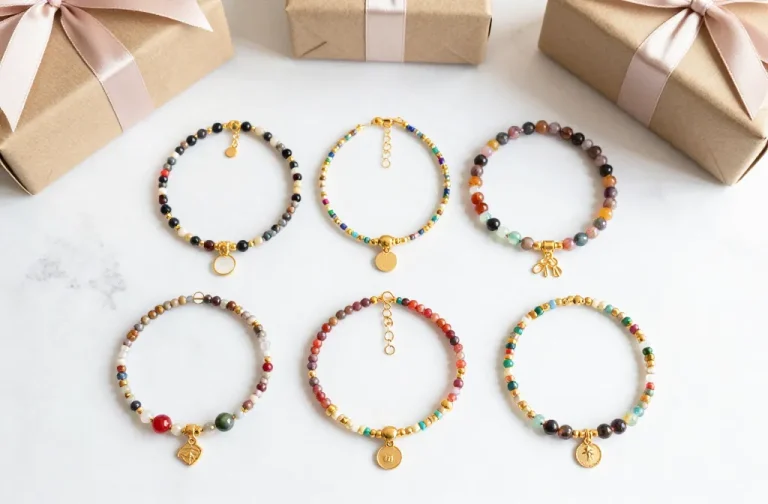
Advantage: A kit for making bracelets that includes an extender chain is helpful if you’re making a gift and don’t know the person’s wrist size, as it typically allows the wearer to adjust the piece to their own “2-finger” comfort level.
Subscribe to DIY Craft Bloom
Get updates on the latest posts and more from DIY Craft Bloom straight to your inbox.
Beaded Bracelet Design Ideas with Charms and Spacers
Adding charms and decorative spacer beads transforms simple bead designs into personalized statement pieces with unique flair.
Popular combinations:
| Design Style | Bead Types | Charm Suggestions | Best For |
|---|---|---|---|
| Boho Chic | Gemstone + wooden beads | Tassel, feather, moon | Free spirits |
| Minimalist | Seed beads + metal spacers | Tiny pendant | Professionals |
| Statement | Large crystal + accent beads | Chunky charm, initial | Bold personalities |
| Stackable | Mixed sizes + connector beads | Small tags, rings | Layering lovers |
You can include small pendants, beads, and charms in the entire layout, and some makers include a metal clasp for a professional finish. Mix metallic finishes (matte, shimmering, metallic) with bold and demure colors to create visual interest.
Design process: Ensure your beads are spelled correctly (for letter beads) and ensure the letters are oriented the way you want—take the time to make sure your words are spelled correctly. Lay out your design before stringing to preview the final look.
How to Make Adjustable Beaded Bracelets with Sliding Knots
Adjustable sliding knot bracelets allow the wearer to customize the fit without requiring professional sizing, making them perfect as gifts.
Materials:
- Waxed cord or nylon thread
- Beads with large holes
- Scissors
- Lighter (for sealing cord ends)
Single Sliding Knot Method:
- Take the cord bundle and wrap the cord around your wrist loosely 3 times, then measure and cut out the cord (2.5 or 3 times more than your wrist size)
- Select your wooden beads or any kind of beads which can be inserted into the cord, then fill the cord (a little less than your wrist size’s length) with beads or use 5 or 6 beads
- Form a ring by overlapping both cord ends, slightly bigger than your wrist size
- Create the sliding knot by wrapping one cord end around the overlapped point, threading it through the loop multiple times
- Trim the open ends if they’re too long and use a lighter to burn the open ends to secure the cord threads don’t wear out
Double Sliding Knot Method: Form the knot with one open end and its adjacent closed-end (right side), then use the other open end to form the 2nd knot with its adjacent closed-end (left side). This creates balanced adjustment points.
Benefit: The cost of 2 or 4 bracelets won’t be much if we calculate approximately, because you will have 90% of the materials left even after crafting 4 bracelets—a bundle of 100 feet of waxed cord will cost around $10 and a package of 300 wooden beads will cost around $11, so the cost of this project would be around $4 to $5.
Advanced Techniques: Multi-Strand and Woven Beaded Bracelets
Multi-strand and woven designs require advanced threading techniques but create stunning, professional-quality pieces that command higher prices.
Two-Needle Weaving Technique:
Cut your thread to about one full arm’s length (this prevents you from running out of thread mid-project).
Attach the clasp by folding the thread perfectly in half and passing the looped end through the ring on your clasp, then thread one needle onto each end of the thread to set up for the two-needle weaving technique.
This technique creates rectangular links that frame larger focal beads like briolettes. Perfect for elegant, sophisticated designs that look like they came from a boutique.
Care, Cleaning, and Storage of Your Handmade Bracelets
Proper care extends your beaded bracelet’s lifespan and keeps it looking new and vibrant for years to come.
Cleaning guidelines:
- Wipe gently with a soft, dry cloth after wearing
- Avoid immersing in water if using natural cord (can weaken it)
- For elastic bracelets, gentle hand-washing is okay if necessary, but air-dry completely
- Don’t use harsh chemicals or abrasive cleaners
Storage best practices:
- Keep it in a jewelry box or jewelry bag to protect it and keep a bright shine—it will protect the donut necklace to get a bright shine and make it look new
- Store away from direct sunlight and heat sources
- Keep in a cool, dry place away from humidity
- Use silica gel packets to absorb moisture in humid climates
Daily care tips:
- Remove before swimming or showering if possible
- Avoid sleeping in elastic bracelets to prevent stretching
- Inspect knots and clasps monthly for wear
- Remove before vigorous exercise or sports
Common Mistakes to Avoid When Making Beaded Bracelets
Beginners usually ignore the measuring part, but measuring is important for your bracelet fit when you are done. Other common mistakes include:
Undersized fit — always apply the two-finger rule when measuring.
Weak knots — a surgeon’s knot holds far better than a single knot.
Wrong elastic thickness — thin cord breaks fast under heavy beads.
Skipping pre-stretch — leads to sagging and gaps after a few wears.
Making Beaded Bracelets for Kids: Fun Family Craft Project
Beaded bracelets are perfect for teaching children fine motor skills, color coordination, and creativity while creating wearable art they’ll treasure.
This is super helpful if you’re crafting with kids who may need a lot of help through each of the steps—you can use Silkie’s Necklace and Bracelets which are perfect for making pony bead projects with kids.
As they have an easy closure so you don’t have to worry about it coming apart, no need for tying knots, using special glue or finishing off the ends.
For more details on making beaded bracelets with elastic check out Damask Love, I found this helpful.
Kid-friendly setup:
- Use pre-strung bracelet bases to skip complex knotting
- Choose large beads (8mm+) for easier handling
- Use bright, appealing colors
- Let them design freely without judging
- Make it a group activity for social fun
Conclusion
Making beaded bracelets is an accessible, affordable, and rewarding craft that anyone can master with these step-by-step instructions and materials.
Whether you choose stretchy elastic designs for quick projects or clasp-style bracelets for heirloom-quality pieces, the two-finger rule ensures perfect fit and comfort.
Making beaded bracelets is a fun and creative way to express yourself—so gather your supplies, follow these proven techniques, and start creating beautiful jewelry today!
FAQs About Making Beaded Bracelets
Q1: How many beads do I need for a bracelet?
For a 7-inch wrist, plan for 80-120 beads depending on bead size; 8mm beads are beginner-friendly, requiring fewer pieces.
Q2: What’s the strongest string for beaded bracelets?
Nylon-coated wire or FireLine thread withstands daily wear better than regular thread; for stretch bracelets, use 0.7mm-1.0mm elastic.
Q3: Can I use regular thread for beading?
Regular thread frays quickly; upgrade to waxed nylon or beading thread for professional, long-lasting results.
Q4: How long should the elastic be for a bracelet?
Cut elastic about 1 inch longer than your wrist measurement for a snug, comfortable fit that won’t be too loose.
Q5: How do I hide bracelet knots?
Use bead covers over knots before tying, or push knots inside larger bead holes—alternatively, tie knots and seal with jewelry glue for seamless appearance.