7 Father and Son Craft Ideas for Teen Boys

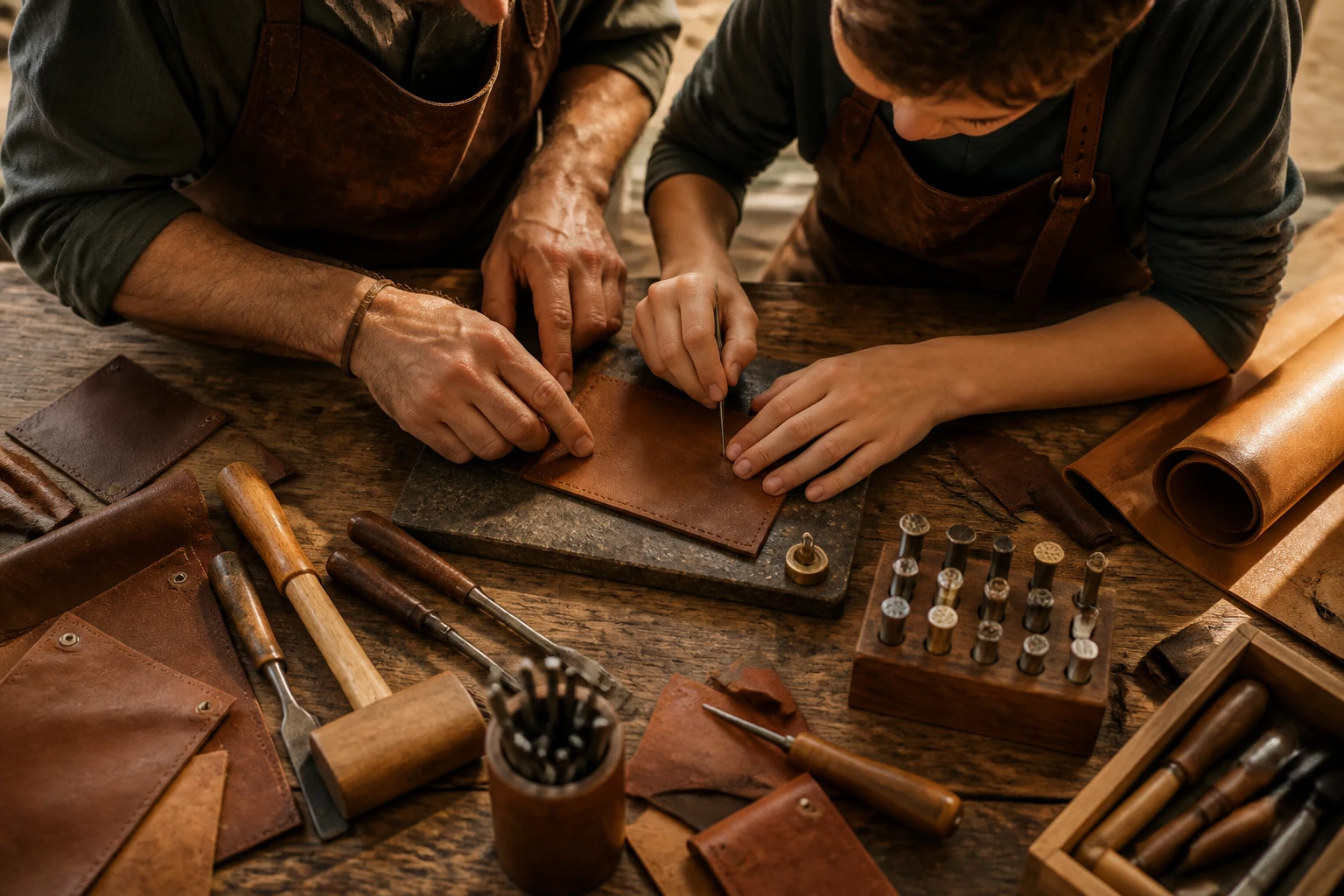
Looking for ways to spend quality time with your teenage son that doesn’t involve screens?
These craft projects are perfect for dads and teen boys who want to create something cool together while actually having fun.
From practical woodworking to personalized gear, these hands-on projects give you both something to be proud of—and they’re way more interesting than awkward small talk over dinner.
1. Custom Leather Wallet With Personalized Stamping
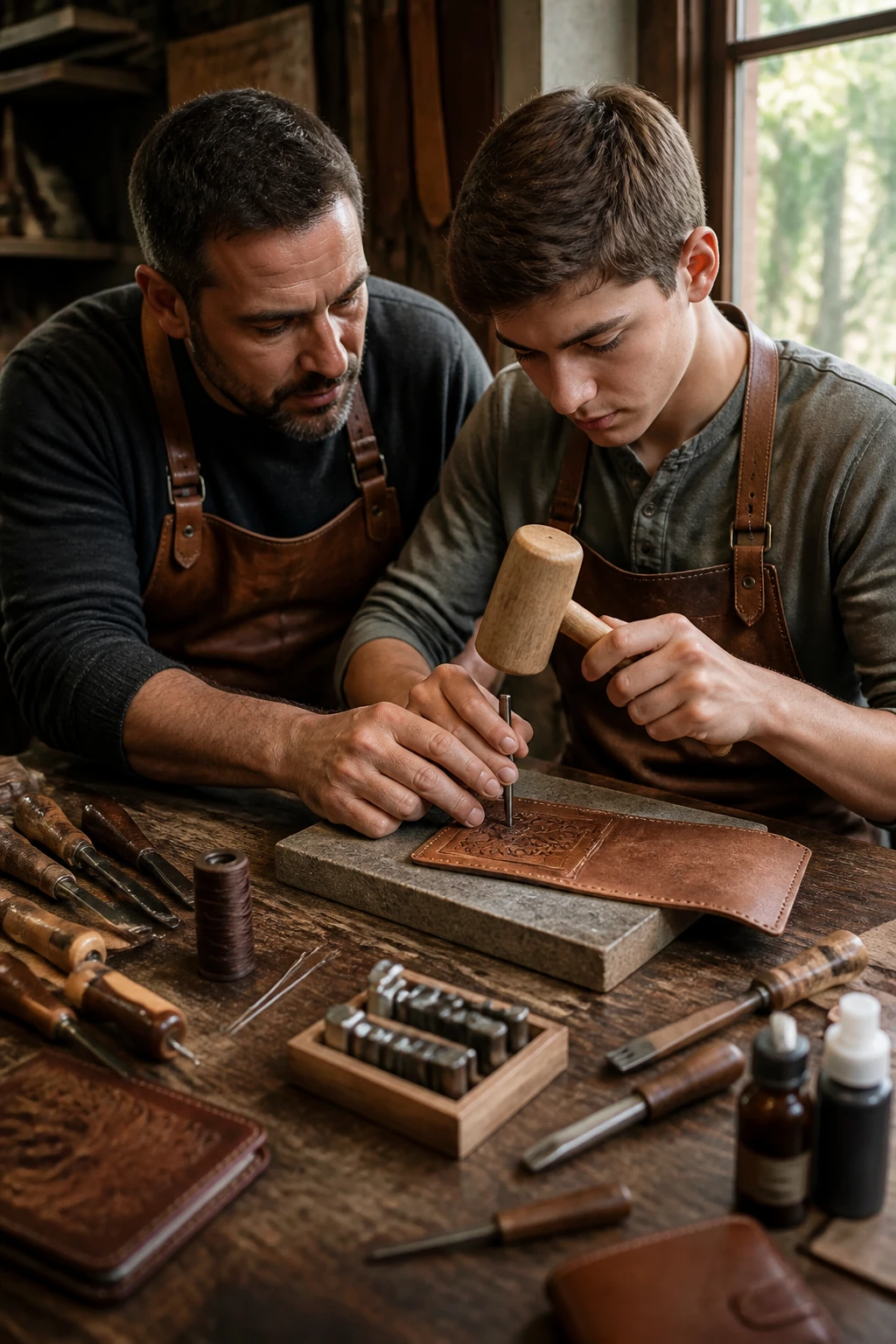
Nothing says “I made this” quite like a hand-tooled leather wallet. This project combines practical skills with serious style, and your teen will actually use what he makes.
Plus, working with leather has this satisfying, old-school craftsman vibe that feels pretty awesome.
Materials Needed
- Vegetable-tanned leather pieces (pre-cut wallet kits work great)
- Leather stamping tools and alphabet stamps
- Mallet or wooden hammer
- Leather dye or finish
- Waxed thread and needles
- Edge beveler and burnishing tool
How to Make It
Start by designing the layout together—will it be a bi-fold or tri-fold? Let your son personalize it with stamped initials or a design that means something to him.
The stamping process is surprisingly therapeutic: you position the stamp, hit it with the mallet, and watch the pattern appear in the leather.
Dyeing the leather is where the magic happens. Choose classic brown, edgy black, or even a bold burgundy.
Once it’s dry, you’ll hand-stitch the pieces together using a saddle stitch technique that looks professional and holds forever. Finish by burnishing the edges until they’re smooth and polished.
Pro Tips
Practice stamping on scrap leather first—those impressions are permanent. The hand-stitching looks complicated but follows a simple over-under pattern.
This wallet will develop a rich patina over time, making it look even better with age. It’s a project that teaches patience and precision, and honestly, your teen will love pulling out a wallet he made himself.
2. Reclaimed Wood Floating Shelf With Industrial Pipe Brackets
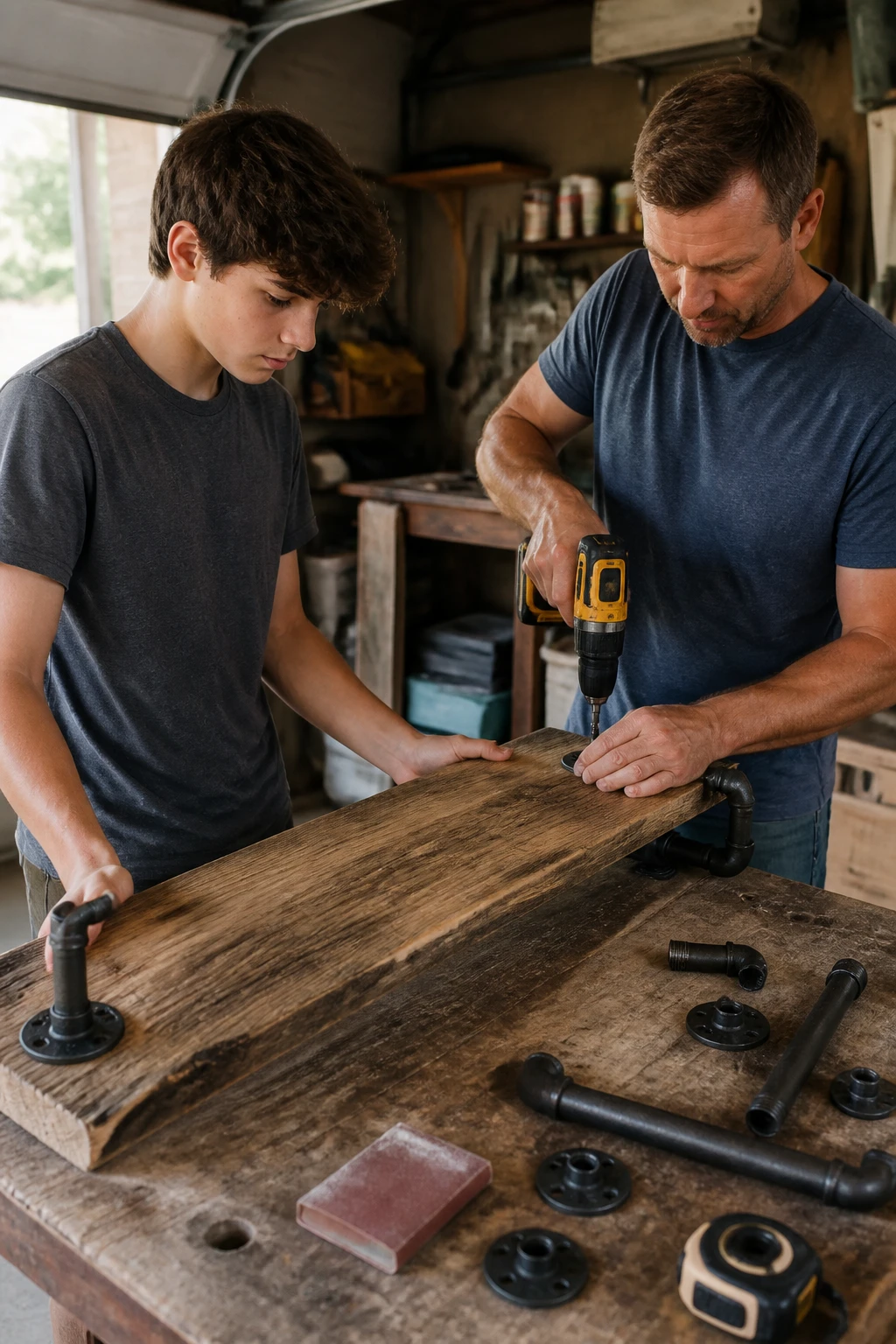
This project combines rustic wood with industrial metal for a shelf that looks like it came from an expensive boutique.
It’s perfect for displaying his collectibles, books, or gaming gear, and the building process teaches real woodworking and hardware assembly skills.
Materials Needed
- Reclaimed wood plank (barn wood or pallet wood works perfectly)
- Black iron pipe fittings and flanges
- Wood stain or sealant
- Sandpaper (various grits)
- Drill and drill bits
- Level and measuring tape
- Wall anchors and screws
How to Make It
Start by sanding the reclaimed wood to remove rough spots while keeping that weathered character intact. Decide together on the finish—natural, dark walnut, or maybe a gray wash for that modern farmhouse look.
While the stain dries, assemble the pipe brackets by screwing the flanges onto short pipe sections.
The installation part is where you work as a team: one person holds the level while the other marks the drilling spots.
Mount the brackets securely (find those wall studs!), then slide the finished wood plank onto the pipes. The result is a shelf with serious style that can actually hold weight.
This project is awesome because it’s functional, looks professionally made, and gives your teen a sense of pride every time he looks at his wall.
Plus, you’re teaching him skills he’ll use when he has his own place someday.
3. Concrete and Wood Desk Organizer With Phone Stand
Subscribe to DIY Craft Bloom
Get updates on the latest posts and more from DIY Craft Bloom straight to your inbox.
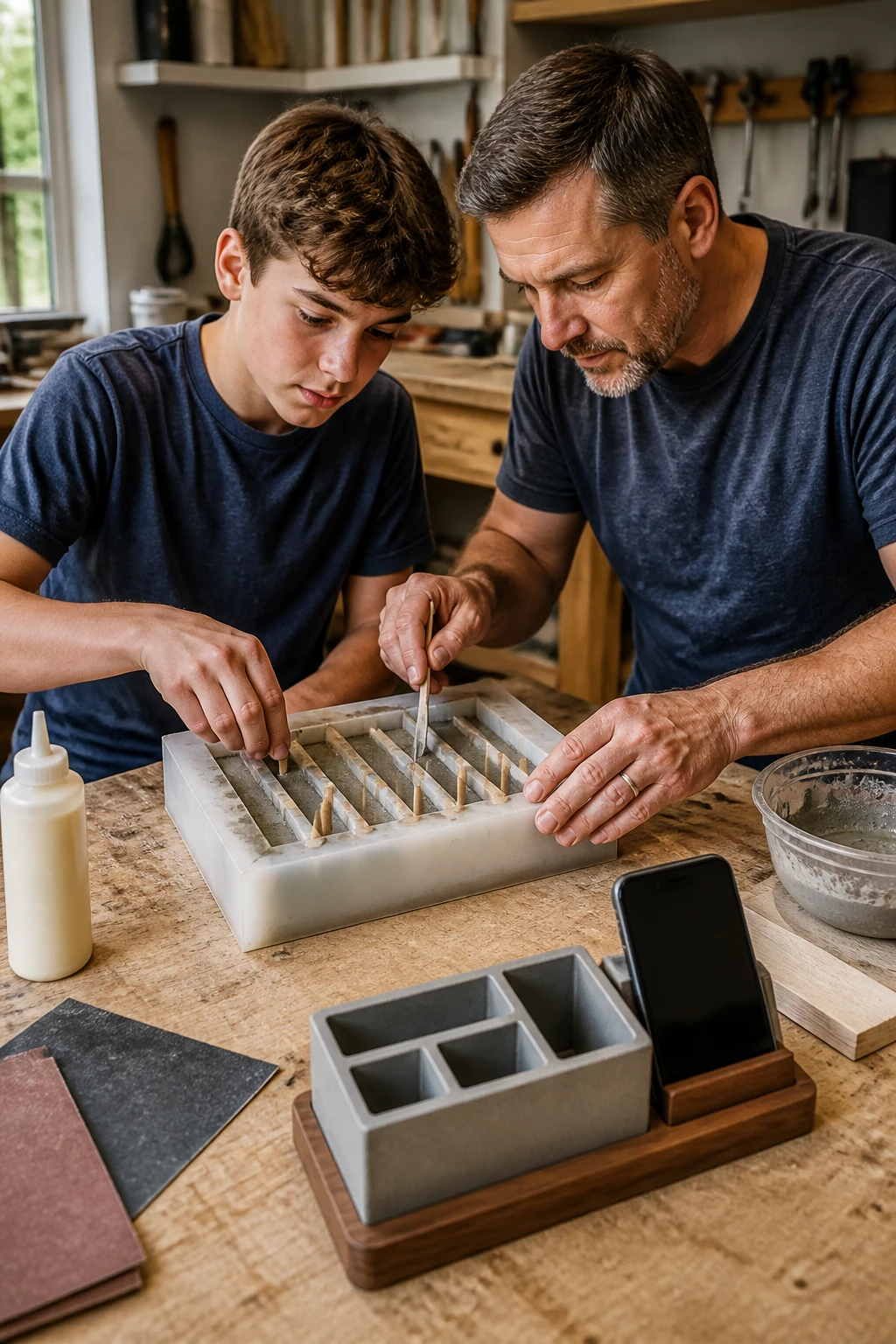
Working with concrete might sound intimidating, but it’s actually super forgiving and creates these amazing modern pieces.
This desk organizer combines poured concrete compartments with a wooden base and built-in phone stand—perfect for keeping his space organized while looking seriously cool.
Materials Needed
- Quick-setting concrete mix
- Cardboard or silicone molds for shaping
- Wood base piece (pine or oak)
- Sandpaper and sealant
- Small wooden dowels or pencils for creating compartments
- Wood glue
- Concrete sealer
How to Make It
Create your molds using cardboard boxes or containers in different sizes—one for pencils, one for paper clips, one for his earbuds.
Mix the concrete according to package directions (this is surprisingly fun and a little messy). Pour into the molds, using greased pencils or dowels to create the hollow spaces inside.
While the concrete cures overnight, work on the wooden base. Sand it smooth and cut a slanted slot for the phone stand using a handsaw. Once the concrete pieces are set, pop them from the molds and sand any rough edges.
Arrange them on the wooden base in a layout that makes sense, then secure everything with strong adhesive.
FYI, you can customize this by adding color to the concrete or leaving it natural gray.
The contrast between industrial concrete and warm wood creates this sophisticated aesthetic that doesn’t look like typical teen room stuff. It’s functional art that actually keeps his desk from becoming a disaster zone.
4. Custom Screen-Printed T-Shirts With Your Own Designs
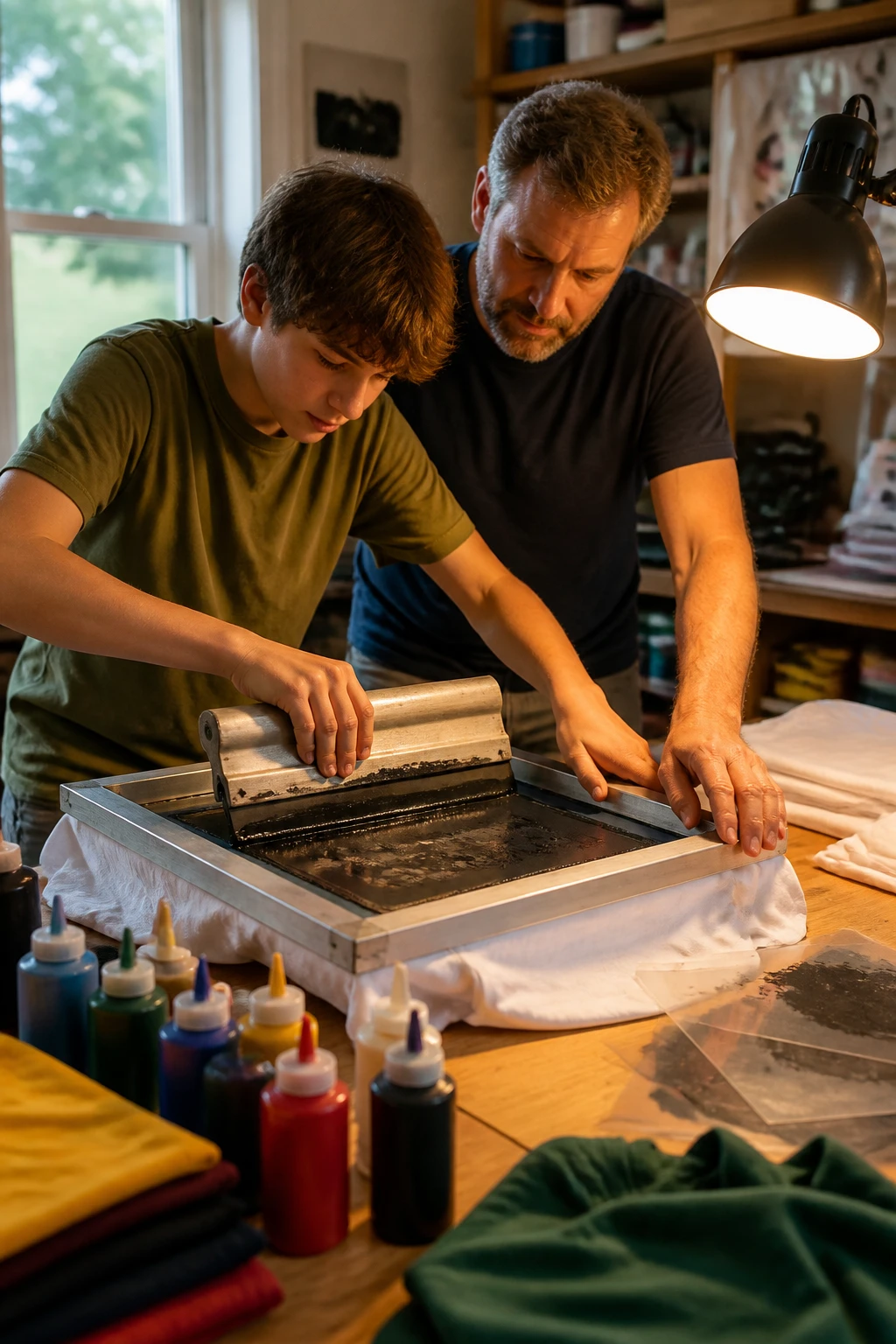
Screen printing lets you create truly original apparel that reflects your teen’s personality, favorite quotes, or inside jokes between you two.
This project involves chemistry, art, and technique—plus you both end up with unique shirts nobody else has.
Materials Needed
- Screen printing kit (frame, squeegee, photo emulsion)
- Plain t-shirts in your chosen colors
- Fabric ink
- Transparency film for designs
- Bright light source or sunshine
- Design software or hand-drawn artwork
How to Make It
Start by creating your designs together digitally or by hand—maybe a logo he designed, a funny phrase, or a graphic that represents something you both enjoy.
Print these onto transparency film. Coat your screen with photo emulsion in a dark room (this part feels like a science experiment), then place your transparency on the screen and expose it to bright light.
After washing out the unexposed emulsion, you’ll have your custom screen ready. Position it on the shirt, apply ink, and pull the squeegee across firmly.
Lift the screen to reveal your design perfectly transferred to the fabric. The first successful print is seriously satisfying.
You can make matching shirts, create a whole series with different colors, or even start a small side business.
This skill is reusable—once you have the equipment, you can print on bags, hoodies, or whatever else you want to customize. Trust me, wearing something you screen-printed yourself hits different.
5. Restored Vintage Radio Converted to Bluetooth Speaker
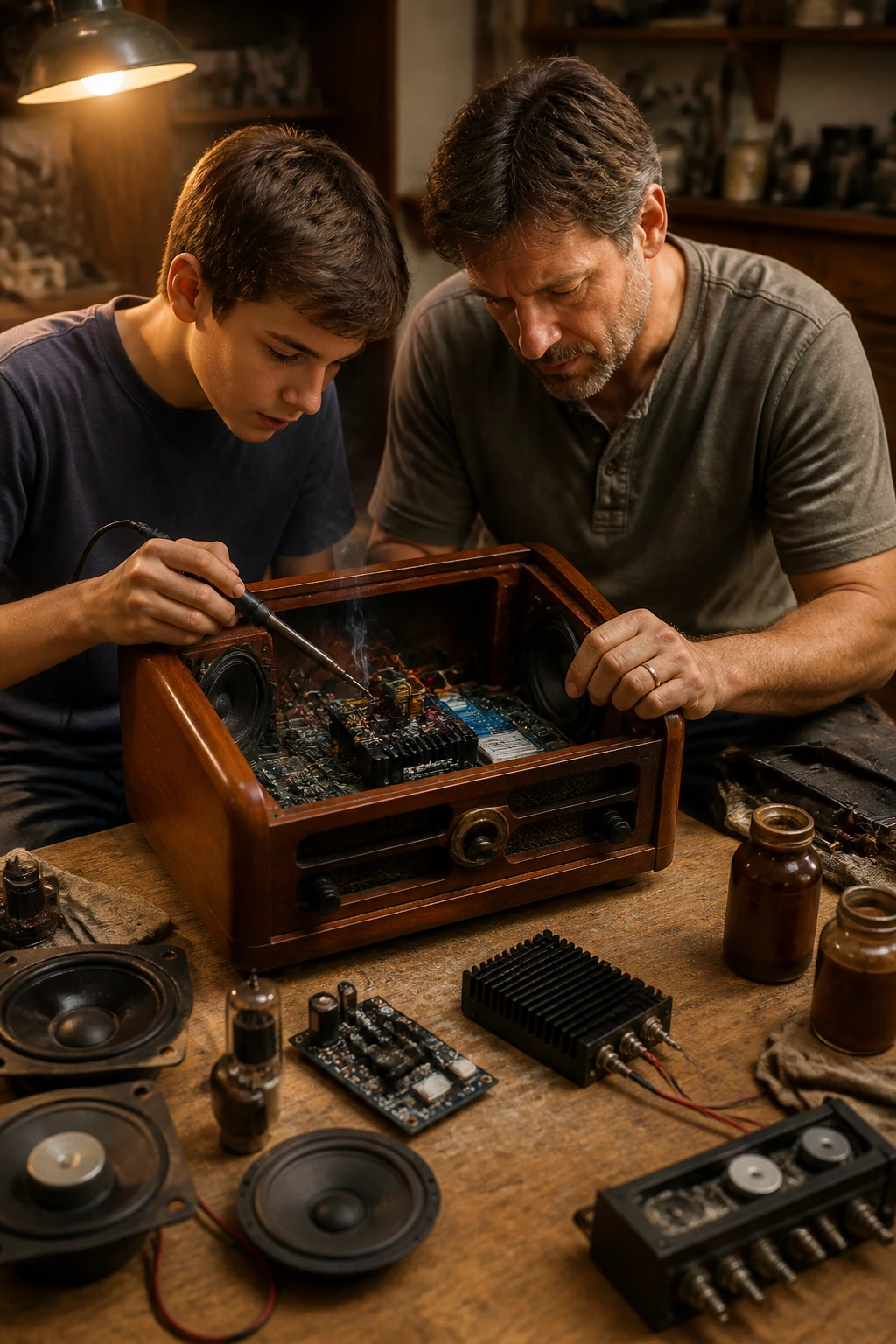
This project combines nostalgia with modern technology by gutting an old vintage radio and installing contemporary Bluetooth speakers inside.
It’s part electronics, part restoration, and completely unique—you’ll end up with a conversation piece that actually functions as a killer sound system.
Materials Needed
- Vintage radio shell (thrift stores and estate sales are goldmines)
- Bluetooth speaker amplifier kit
- Quality speakers that fit the cabinet
- Soldering iron and solder
- Wood polish or restoration supplies
- Wire strippers and electrical tape
- Rechargeable battery pack or power adapter
How to Make It
Begin by carefully disassembling the vintage radio and removing the old components (keep the knobs and faceplate—those are the character pieces).
Clean up the wooden cabinet and restore it with appropriate polish or light sanding. This step alone teaches appreciation for craftsmanship from another era.
Subscribe to DIY Craft Bloom
Get updates on the latest posts and more from DIY Craft Bloom straight to your inbox.
Install the modern Bluetooth amp and speakers inside the cabinet, connecting everything according to the kit instructions.
If your teen is into electronics, let him handle the soldering and wiring. The goal is making it look untouched from the outside while being completely modern inside.
When you power it up and connect your phone, hearing quality sound come from a 1940s radio is genuinely magical. You can keep the original tuning dial as a volume knob or leave it decorative.
This project bridges generations—literally combining your dad knowledge of vintage aesthetics with his teen tech savvy.
6. Paracord Survival Bracelets With Custom Clasps and Designs
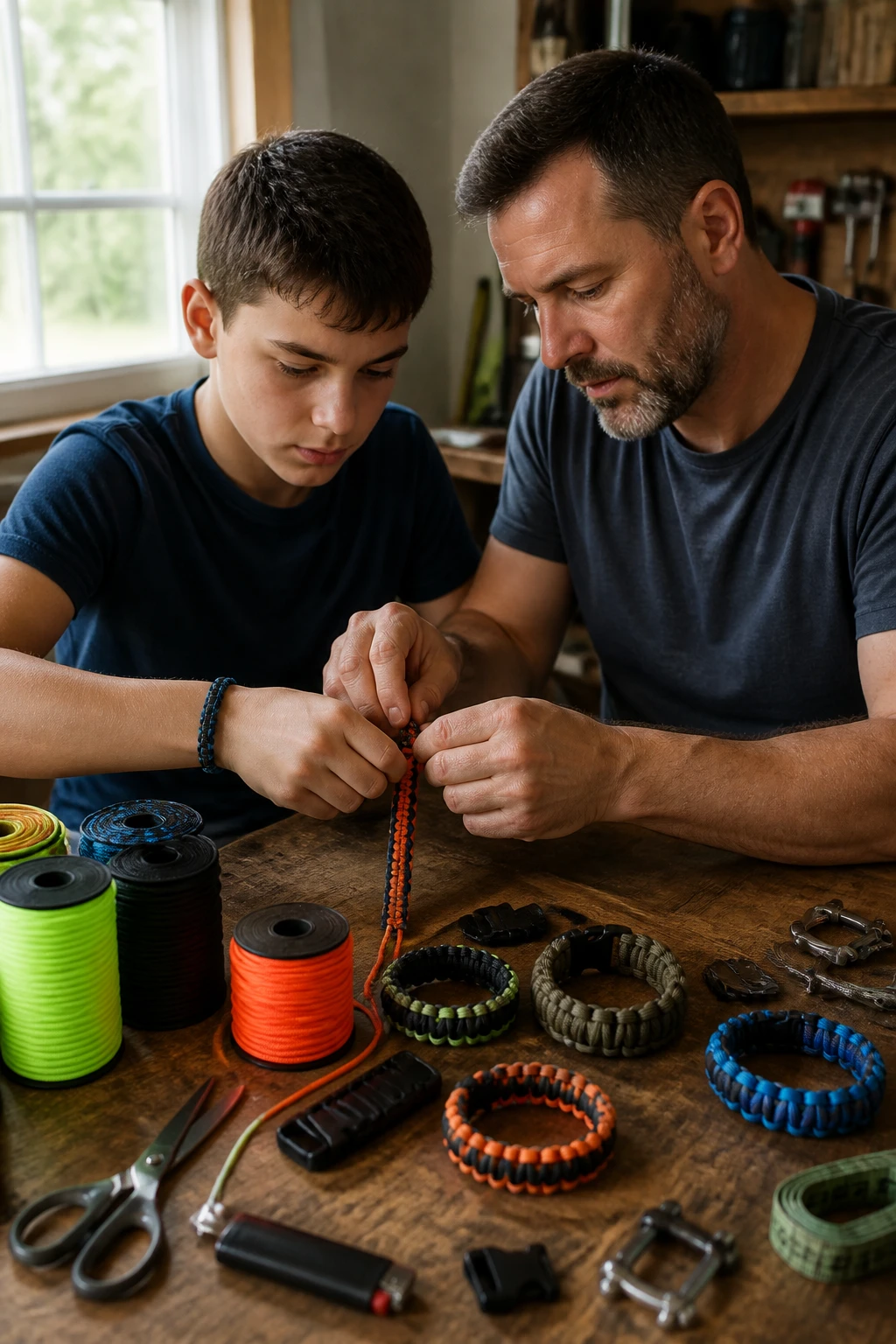
Paracord bracelets are way more than summer camp accessories—they’re functional survival gear that also look great.
Learning different weaving patterns together is meditative, and you can create designs ranging from simple to incredibly complex. Plus, your teen can make extras for friends or even sell them.
Materials Needed
- 550 paracord in various colors
- Metal buckles, clasps, or shackles
- Scissors and lighter
- Measuring tape
- Optional: beads, compass attachments, fire starters
How to Make It
Start with classic patterns like the cobra weave or Solomon bar, then progress to more advanced designs like the king cobra or trilobite.
Measure the wrist, calculate the cord length needed (usually about 10 feet for an 8-inch bracelet), and start weaving. The repetitive motion is surprisingly relaxing, and you can talk while working.
Experiment with color combinations—maybe school colors, favorite sports teams, or camo patterns.
Add functional elements like small compass buttons or fire starter beads woven into the design. When finished, seal the ends by melting them slightly with a lighter and pressing them flat.
Pro Tips
These bracelets unravel into several feet of incredibly strong cord that’s useful for camping, emergencies, or fixing stuff.
Make a matching set, create different styles for different occasions, or challenge each other to master the most complex pattern. Seriously, once you start making these, it’s kind of addictive.
7. DIY Skateboard Deck From Laminated Wood Veneers
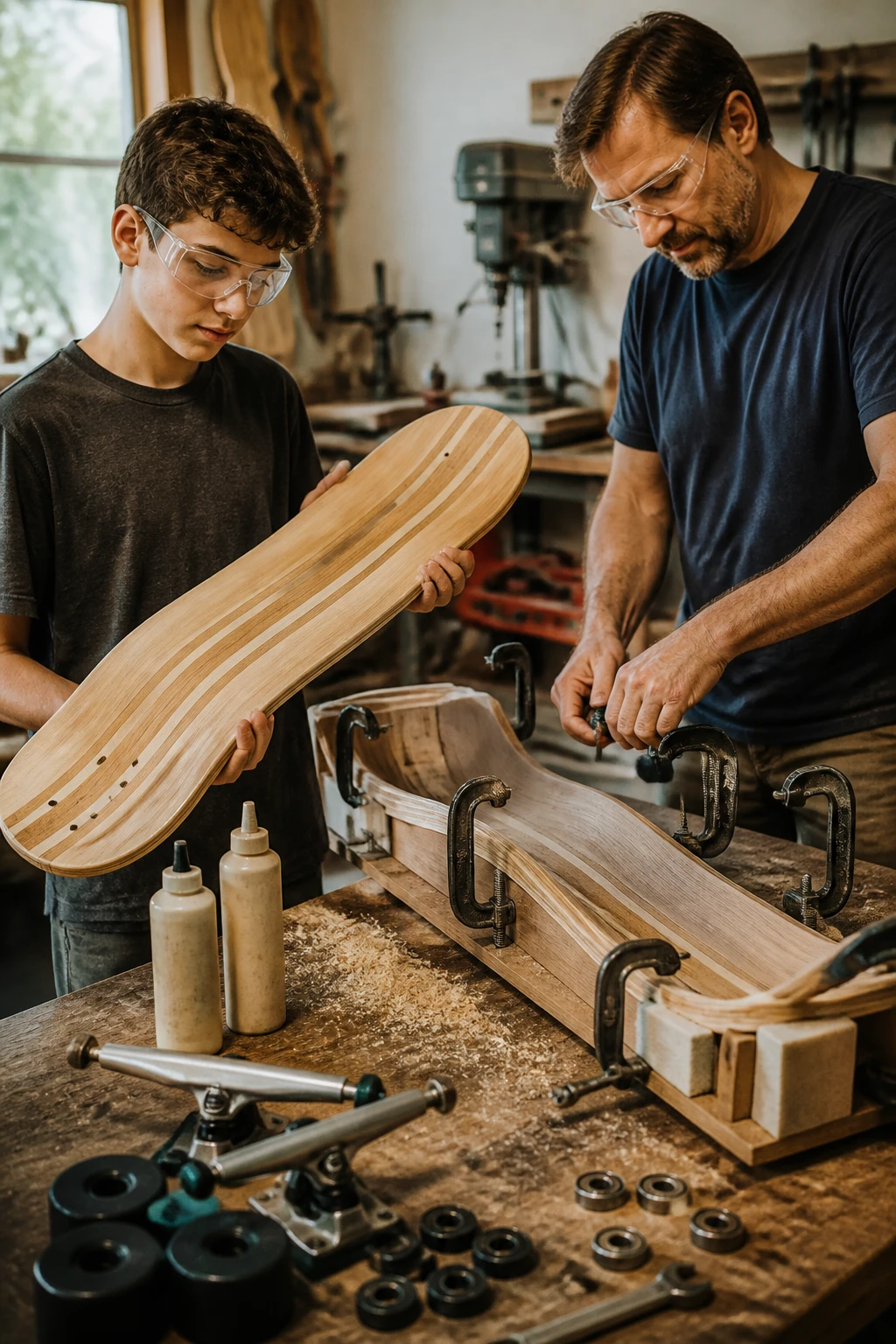
Building an actual skateboard from scratch is an ambitious project that delivers huge rewards.
You’ll laminate thin wood veneers in a custom mold to create the curved deck shape, then finish and assemble it with trucks and wheels.
This is advanced-level bonding time that results in a fully functional board.
Materials Needed
- 7-9 sheets of maple or birch veneer
- Wood glue (waterproof)
- Foam and curved mold (DIY or purchased)
- Heavy-duty clamps or vacuum bag
- Skateboard trucks, wheels, bearings, and hardware
- Grip tape
- Paint, stain, or clear coat for finishing
- Jigsaw and drill
How to Make It
Create or buy a curved mold that shapes the deck’s concave and nose/tail kicks. Apply wood glue between each veneer layer, stacking them with the grain alternating directions for maximum strength.
Place the stack in the mold, apply pressure with clamps or a vacuum bag, and let it cure for at least 24 hours.
Once cured, trace your desired deck shape onto the laminated blank and carefully cut it out with a jigsaw. Sand the edges smooth and round them slightly. Drill the mounting holes for the trucks using a template for accurate placement.
Now comes the creative part—design the bottom graphics together. Paint it, burn designs into it, or apply a beautiful clear finish that shows the wood grain.
Apply grip tape to the top, mount the trucks and wheels, and you’ve got a legitimate custom skateboard. The first ride on a board you built together is unforgettable.
Even if your teen isn’t a serious skater, having a deck this unique is seriously cool, and the skills learned—laminating, shaping, finishing—are applicable to tons of other projects.