Baked Vs Air-Dry Mugs Durability

You spent hours sculpting the perfect mug. You smoothed the edges and painted the details. But will it survive its first wash? Or worse, will it fall apart when you pour in a hot cup of coffee?
Many beginners make the mistake of thinking “hard” means “durable.” This confusion leads to air-dry mugs that dissolve in water or polymer mugs that snap off the handle. To get the best results, you need to know the baked vs air-dry mugs durability facts.
In this guide, you will learn the science behind these clays and the truth about food safety. You will also see which material wins a real-world stress test.
Why One Clay Fails and the Other Thrives
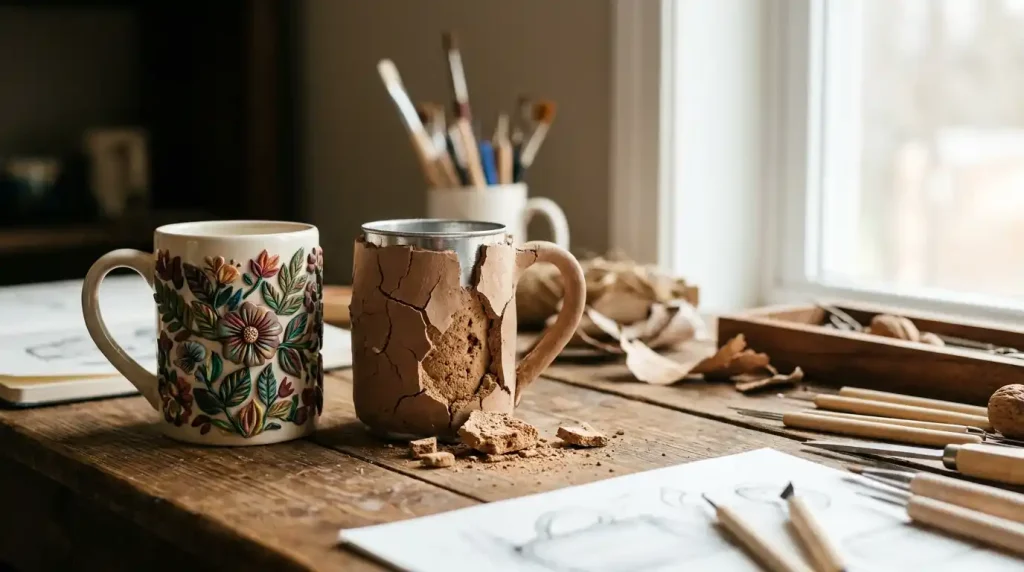
To understand why some projects last for years while others crumble, we have to look at the molecular level. These two clays may look similar on your desk, but they harden in completely different ways.
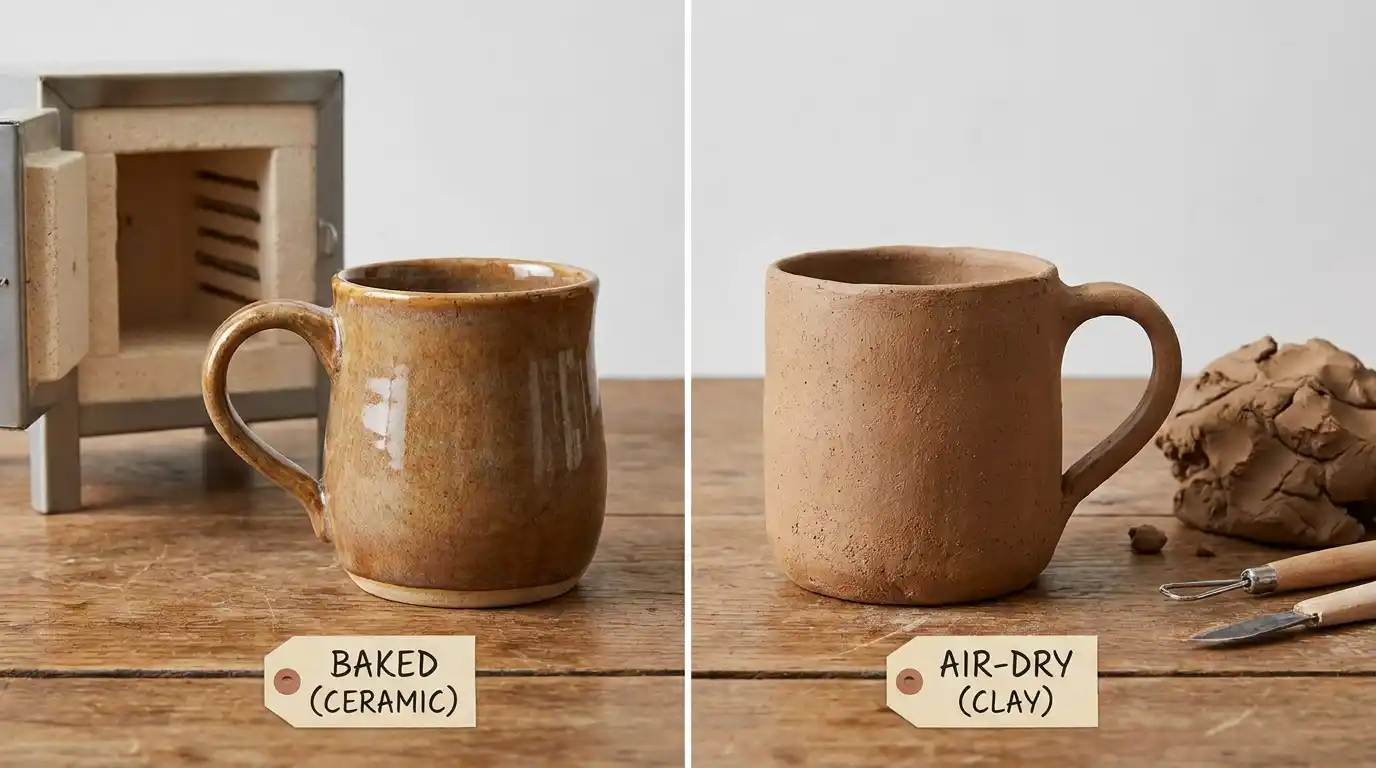
Air-dry clay hardens through evaporation. This means the water inside the clay leaves as it sits in the air. As the water leaves, it creates a tiny pore structure throughout the material.
These microscopic holes are like a sponge. Even when the clay feels “rock hard,” it is still ready to soak up moisture from the air or your sink.
Baked clay, also known as polymer clay, goes through a process called polymerization. When you put it in the oven, the heat creates a permanent chemical bond. It turns the clay into a waterproof plastic.
You also need to watch the shrinkage rate. Air-dry clay shrinks by 5% to 10% as it dries. If you mold it around a glass mug, it will likely crack as it gets smaller. Polymer clay stays almost exactly the same size. This structural difference is why one is a sponge and the other is a shield.
Pro-Tip: If you want to wrap clay around an existing mug, polymer clay is the only safe choice. Air-dry clay will pull away and crack during the drying process.
3 Tests: Which Clay Survives the Sink?
In a drop test, the results are rarely a tie. You want a mug that can handle a little rough use.
- The Impact Test: Polymer clay is impact-resistant. Because it is a plastic, it stays slightly flexible. If you drop a polymer-decorated mug, the clay usually bounces or stays attached. Air-dry clay is brittle. One drop and your hard work will shatter into pieces.
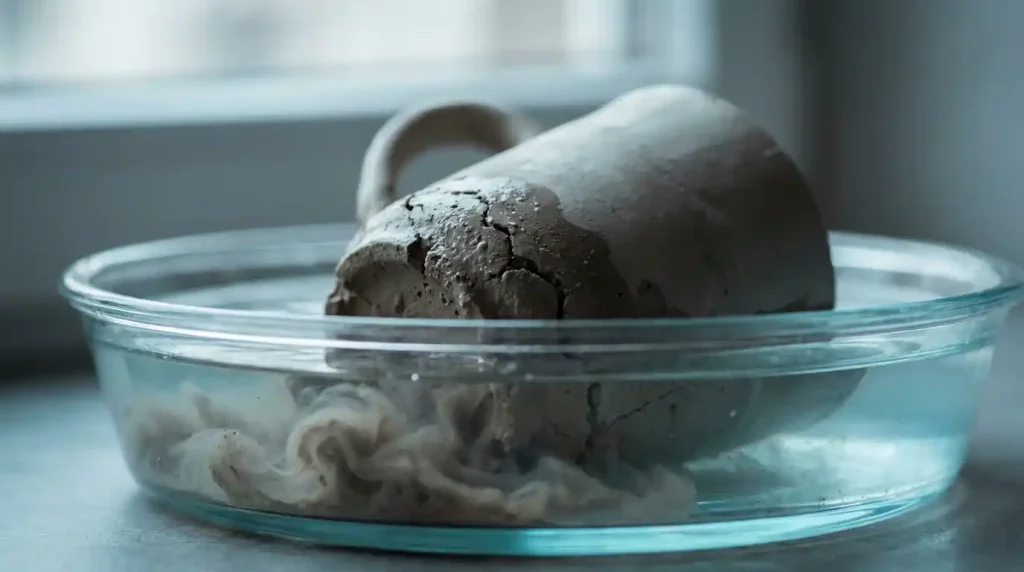
- The Water Test: Air-dry clay is not waterproof. If you leave an air-dry mug in water, it undergoes “slaking.” This is a fancy word for turning back into mud. Even if you use a sealer, moisture can still get in through tiny cracks. Polymer clay is naturally waterproof because it is plastic.
- The Heat Test: Hot coffee creates thermal stress. This can cause air-dry glazes to peel off or bubble. Baked polymer clay handles warm liquids much better, though you should still wash it by hand.
However, air-dry clay is much easier for kids to use since it doesn’t need an oven. But for a mug you want to keep, the durability of baked clay wins every time.
Subscribe to DIY Craft Bloom
Get updates on the latest posts and more from DIY Craft Bloom straight to your inbox.
| Feature | Air-Dry Clay | Polymer Clay |
|---|---|---|
| Waterproof? | No | Yes |
| Flexible? | No | Yes |
| Shrinkage? | High | Low |
| Best Use | Decor only | Functional gifts |
Why You Shouldn’t Drink Directly from Clay
There is a dangerous misconception in the DIY community regarding food safety. You might see “non-toxic” on a package, but that does not mean a material is food-grade.
Neither air-dry nor polymer clay is safe to touch your lips or your drink. Bacteria can hide in the small pores of the clay. Also, chemicals from the clay could leak into your drink over time. This is called toxic leaching.
So, how do you make a clay mug? You use the hybrid solution. Buy a plain ceramic or glass mug. Apply your clay only to the outside of the mug. Leave at least one inch of space at the top so your lips only touch the glass.
Also, keep these mugs out of the dishwasher. High heat and strong soap will make polymer clay brittle and cause air-dry clay to fall apart. Stick to a quick hand wash with cool water.
How to Keep Your Mug Safe:
- Only decorate the exterior.
- Leave the rim of the mug bare.
- Never put clay in the microwave.
- Hand wash only.
Which Clay Should You Choose?
For a mug that lasts for years, baked polymer clay is the clear winner. Its plastic-like durability makes it the only smart choice for gifts or items you handle every day.
Air-dry clay is better for practice or for making “art mugs” that just sit on a shelf.
When you start your next project, think about the goal. Do you want something easy to mold, or something that survives the sink?
Choose polymer for durability and air-dry for simple decor. Now go out and create something that lasts!